March 18, 2026

Design Innovation: The X Series Downlights Honored with a GOOD DESIGN® Award

Recognized for Design Flexibility, Aesthetics and High Performance
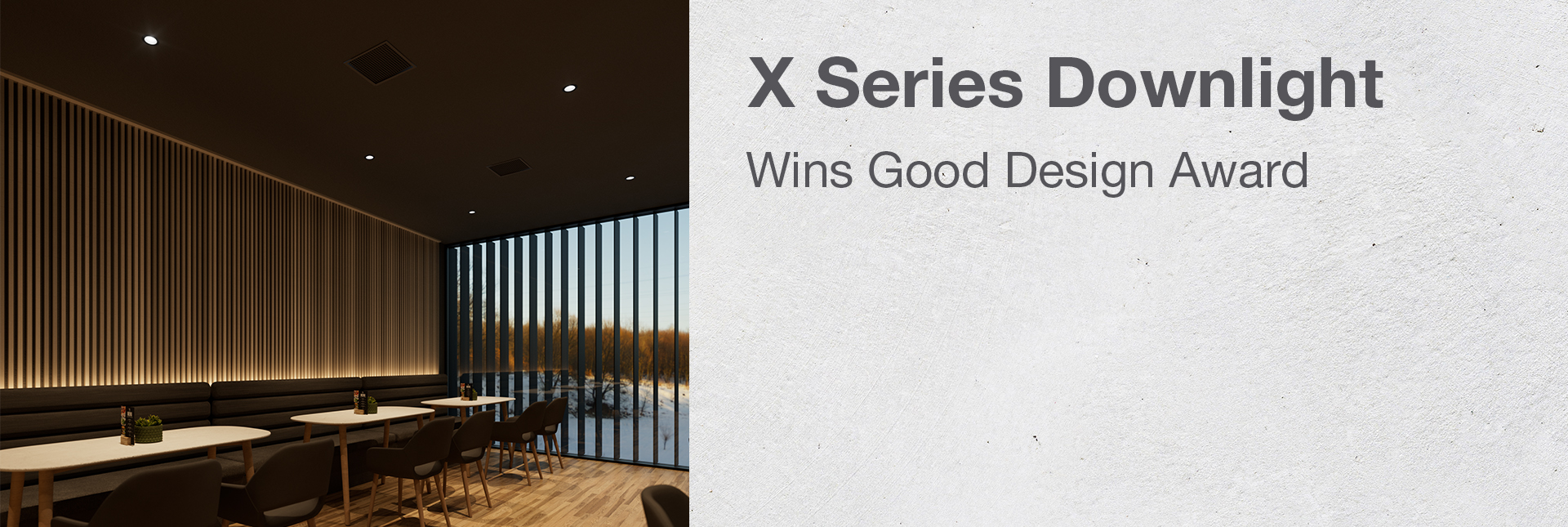
The X Series Downlights have been honored with a prestigious GOOD DESIGN® award, a testament to the product’s innovative design excellence.


Presented by the esteemed Chicago Athenaeum Museum of Architecture and Design and Metropolitan Arts Press Ltd., the annual GOOD DESIGN® Awards Program celebrates the world’s most forward-thinking industrial, product and graphic designs. For over seventy years, this program has fostered a renewed appreciation for contemporary design, honoring both products and the industry leaders in design who set new standards for products competing globally.


The essence of the GOOD DESIGN program is dedicated to upholding the highest standards of form, function and aesthetics — going beyond conventional boundaries to promote lasting product quality and a strong public presence.


Each submission is evaluated by the original 1950 criteria of innovation, technological advancement, materiality, construction, conceptual clarity, utility, energy efficiency and environmental sensitivity. 


DMF Lighting’s 2-inch modular downlights exemplify this ethos, offering unparalleled performance and effortless installation and serviceability. The inventive design features include tool-less, field-changeable trims, modules and optics, empowering designers with maximum flexibility and the ability to adjust projects onsite. The LED light engine modules, offered in downlight and adjustable configurations, deliver advanced optical performance in a compact footprint, while integrated drivers within the modules and a unique housing trap door ensure space efficiency and unprecedented ease of maintenance. 


The die-cast aluminum trims, available in a variety of styles and finishes — including custom colors — are fully interchangeable, allowing easy design changes onsite. Innovations such as the Precision Lock Collar guarantee flawless installation, eliminating common errors and streamlining the process for both drywall and millwork applications.


The modular system’s thoughtful design enables housings and modules to ship separately, supporting project timelines and minimizing onsite storage.


Sustainability is at the heart of the design, with compliance to California’s Title-24 JA8, ENERGY STAR® and Declare Listed standards for Living Building Challenge and LEED projects.


Notably, DMF Lighting was among the first to achieve Declare Listing, ensuring all product SKUs are free from toxins and harmful chemicals, and proudly bearing the Declare Label.


Complementing the downlights, the X Series includes a family of cylinders in pendant, surface-mount, and ADA-compliant wall-mount forms, all unified by consistent light quality, color and output for a cohesive look across a campus – both indoors and outdoors.  


View on the GOOD DESIGN Awards Website – https://gooddesignawards.org/project/x-series-downlights-2023/


February 19, 2026

Essential Safety: Why Fan-Rated Junction Boxes are Required

Understanding NEC 2020 mandates, UL testing standards, and the importance of proper installation for ceiling fan support

Why Fan-Rated Junction Boxes Matter


Ceiling fans place unique stresses on electrical boxes as ordinary boxes for lighting weren’t built to handle the vibration and movement of a fan. To ensure safety and compliance, only fan-rated junction boxes, tested and certified by UL and required by the National Electrical Code (NEC), should be used. 


NEC 2020 Requirements


The 2020 NEC mandates fan-rated boxes in any habitable room where a ceiling fan could be installed, even if no fan is present during construction. This prevents unsafe retrofits and ensures long-term safety.


Testing Standards (UL 514A)


Fan-rated boxes undergo rigorous static and dynamic load tests. They must support fans up to 35, 50, or 70 pounds, with clear markings indicating their capacity. Testing simulates real-world conditions, including imbalanced loads and loosened screws, to guarantee reliability. 


Box Ratings & Markings


Boxes are labeled by their tested weight limits (35, 50, or 70 pounds in the US and Mexico). In Canada, any fan over 16 kg must be independently supported. Screw types and installation hardware differ by country. 


Where Are Fan-Rated Boxes Required?


Fan-rated boxes are required in all habitable rooms except bathrooms, closets, hallways, and similar spaces. Exceptions include areas too close to walls or above certain countertops. 


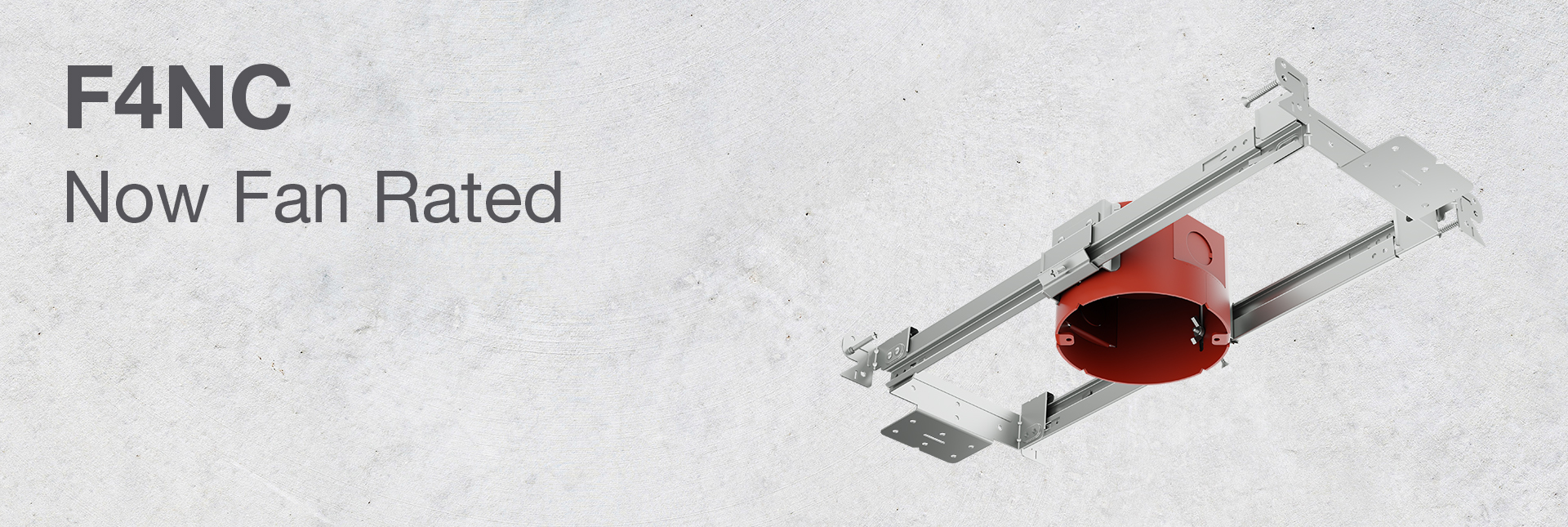
Product Example: DMF’s F4NC Housing


DMF’s F4NC junction box meets UL 514A requirements and is rated for fixture support up to 50 pounds in the US, Canada, and Mexico, and for ceiling-suspended fan support up to 35 pounds and up to 16-inch joist spacing in the US and Mexico.


Additionally, the F4NC boasts STC/IIC Sound Rating, ASTM E283 Air Tight rating, and is code compliant for use in appropriate fire-rated assemblies for up to two hours.


The F4NC features a highly durable, universal bar hanger design, accommodating joist spacing from 14 to 24 inches  (up to 16 inches maximum joist spacing for fan-rated applications) — or even down to 8 inches with simple field modification. For secure installation, the F4NC is supplied with two #8-32 screws for fixture support and six pre-installed screws to fasten the bar hangers to joists. Note that for ceiling suspended fan support, the F4NC may be installed into wood joist or studs only and all 6 joist screws must be fastened.


DMF Product Solutions

F4NC Housing

For a deeper dive on fan-rated standards, testing, ratings and requirements, review the Fan-Rated Junction Boxes Technical Bulletin.


February 9, 2026

Performance Decorative Lighting Application Guide

High Aesthetics, High Performance with Decorative Pendants and Trims

Performance Decorative Lighting masterfully blends striking aesthetics with advanced technical capabilities, empowering designers to create spaces that are both visually captivating and highly functional. This harmonious integration ensures that style never comes at the expense of performance, allowing every environment to shine with both beauty and purpose.


Key Highlights & Benefits

Design Flexibility & Sustainability

Lighting products that feature a modular systems offer effortless customization, allowing you to refresh the ambiance of any space by simply replacing decorative components.


These interchangeable elements enable cost-effective updates, ensuring the core lighting infrastructure remains intact — saving both time and money.

Enhanced Performance

Decorative elements like trims and shades improve lighting performance by increasing shielding and diffusion, reducing glare and enhancing visual comfort.

Solving for Style & Space Pendant Lighting


Pendants are versatile, seamlessly fitting into various lighting designs and layouts to provide focused, low glare illumination. An ideal solution for spaces where recessed fixtures can’t fit including shallow plenums and open ceilings, pendants provide the essential downlight layer, while also offering an optional layer of indirect light (uplight), adding depth and ambiance to a space.


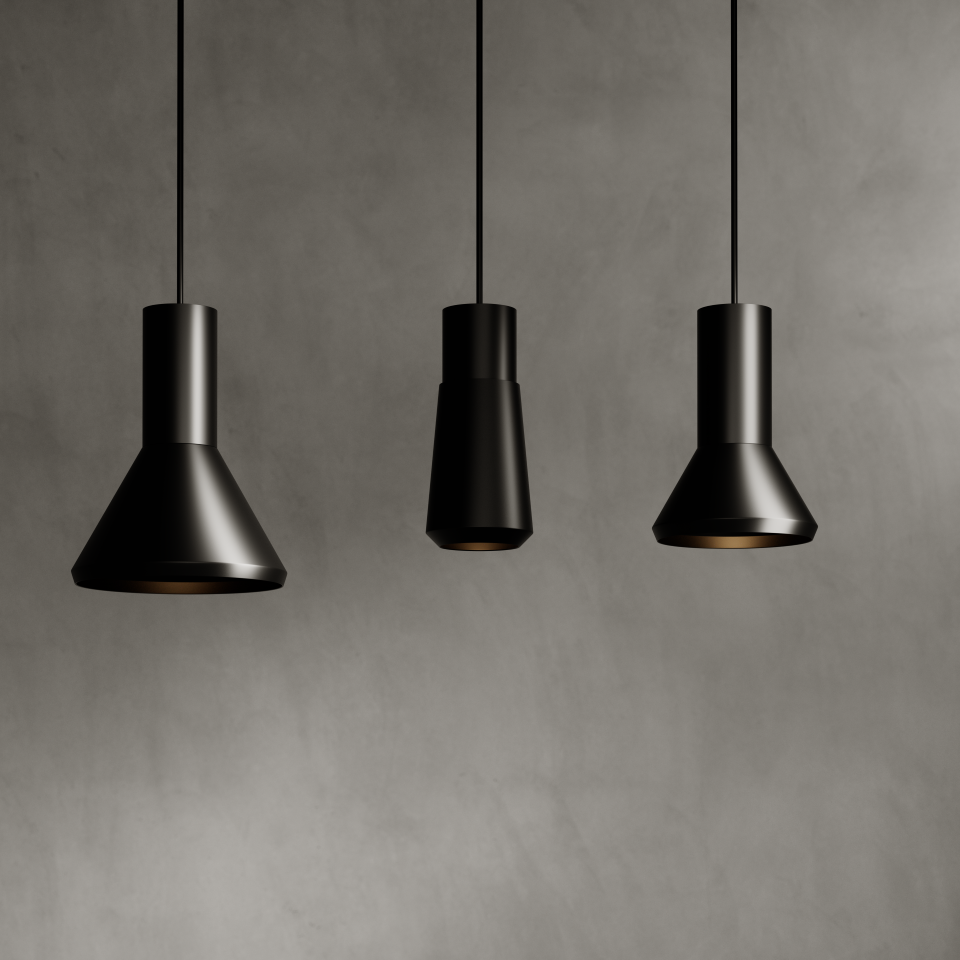
DMF has introduced highly configurable Decorative Pendants with Shades with a diverse array of silhouette options to suit any design preference. The newest additions to the company’s 3-inch aperture X Series and 4-inch aperture M Series cylinder collections, the 15 decorative performance pendants are offered in three complimentary shade designs (Wide, Medium and Narrow) and in multiple lengths, giving designers distinctive solutions for architecturally demanding indoor and outdoor spaces.


Decorative Pendants Performance Benefits


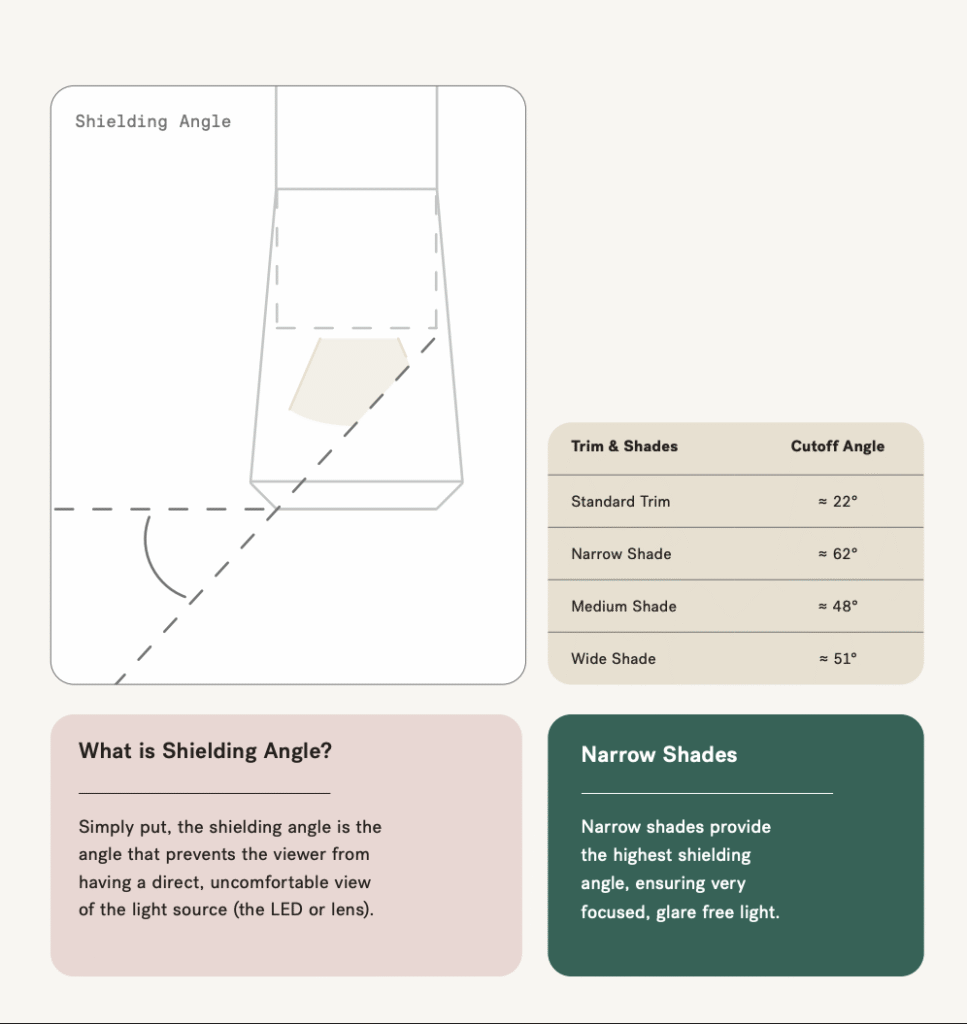
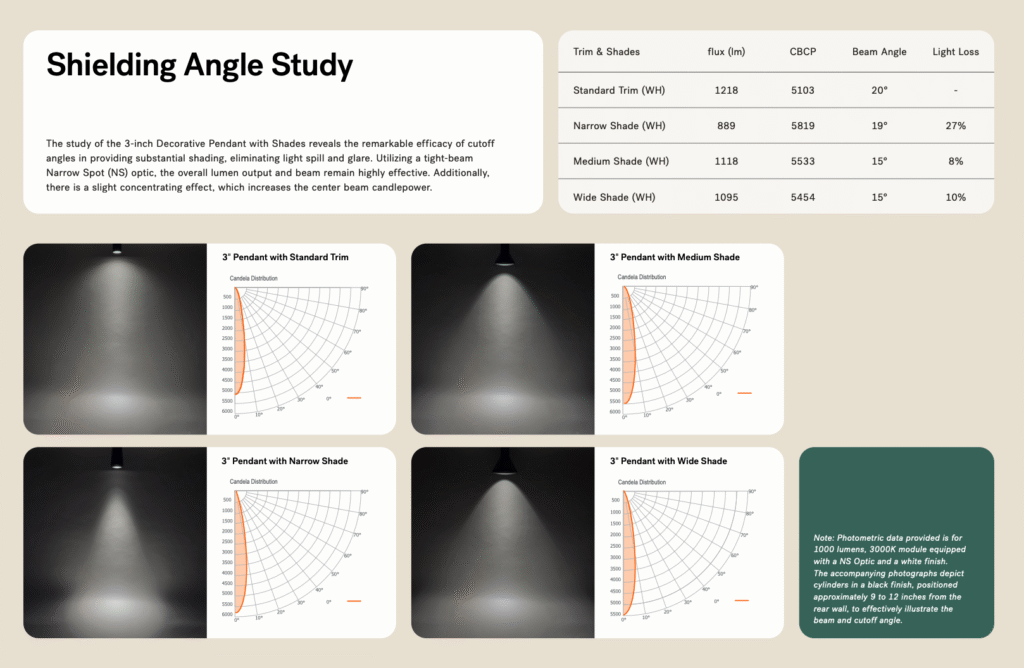
The pendant’s decorative shades improve comfort by effectively extending the edge of the fixture, which increases the shielding angle, providing a higher level of visual comfort. By shielding the viewer from the direct light source, shades mitigate unwanted glare, resulting in a more comfortable and better-quality lighting experience.


Shielding Angle Study


The study of the 3-inch Decorative Pendant with Shades reveals the remarkable efficacy of cutoff angles in providing substantial shading, eliminating light spill and glare. Utilizing a tight-beam Narrow Spot (NS) optic, the overall lumen output and beam remain highly effective. Additionally, there is a slight concentrating effect, which increases the center beam candlepower.

Note: Photometric data provided is for 1000 lumens, 3000K module equipped with a NS Optic and a white finish. The accompanying photographs depict cylinders in a black finish, positioned approximately 9 to 12 inches from the rear wall, to effectively illustrate the beam and cutoff angle.


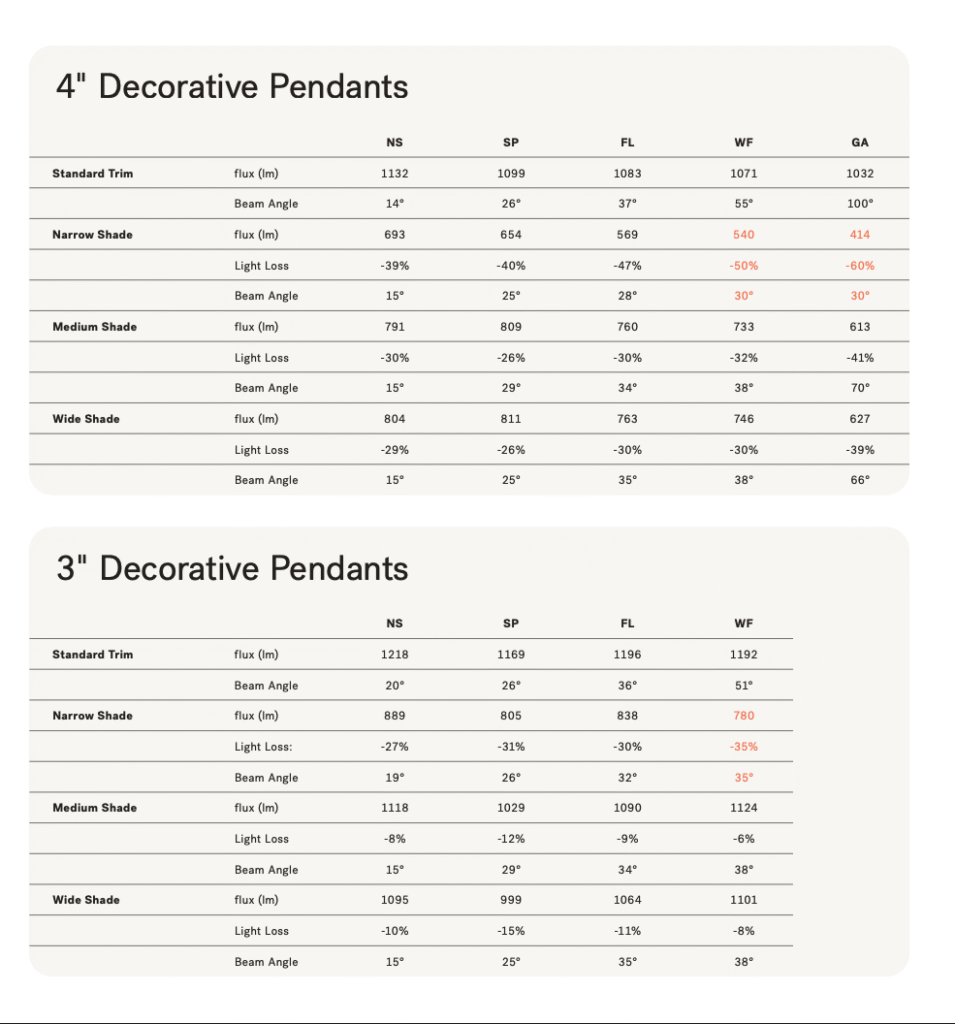
Decorative Pendants Photometric Performance


The adjacent tables demonstrate how cylinder shades

influence both total lumen output and beam angle across

various shade profiles and optic combinations.

It is important to recognize that increasing the shielding angle may diminish overall light output—this effect is especially pronounced with the Narrow Shade when paired with broader beam spreads.


Choice of Optic

For Narrow shades, the Narrow Spot (NS) and Spot (SP) optics are the most effective, offering minimal light loss.

When utilizing the Medium or Wide Shade profiles, there is greater flexibility to employ a wider optic if needed.

Note: Photometric data provided is for 1000 lumens, 3000K module in a white finish. Black finishes further reduce output by approximately 1%. Items shown in ORANGE denote shade-optic combinations with diminishing returns in terms of beam spread, which are not recommended combinations.


Decorative Pendant Applications


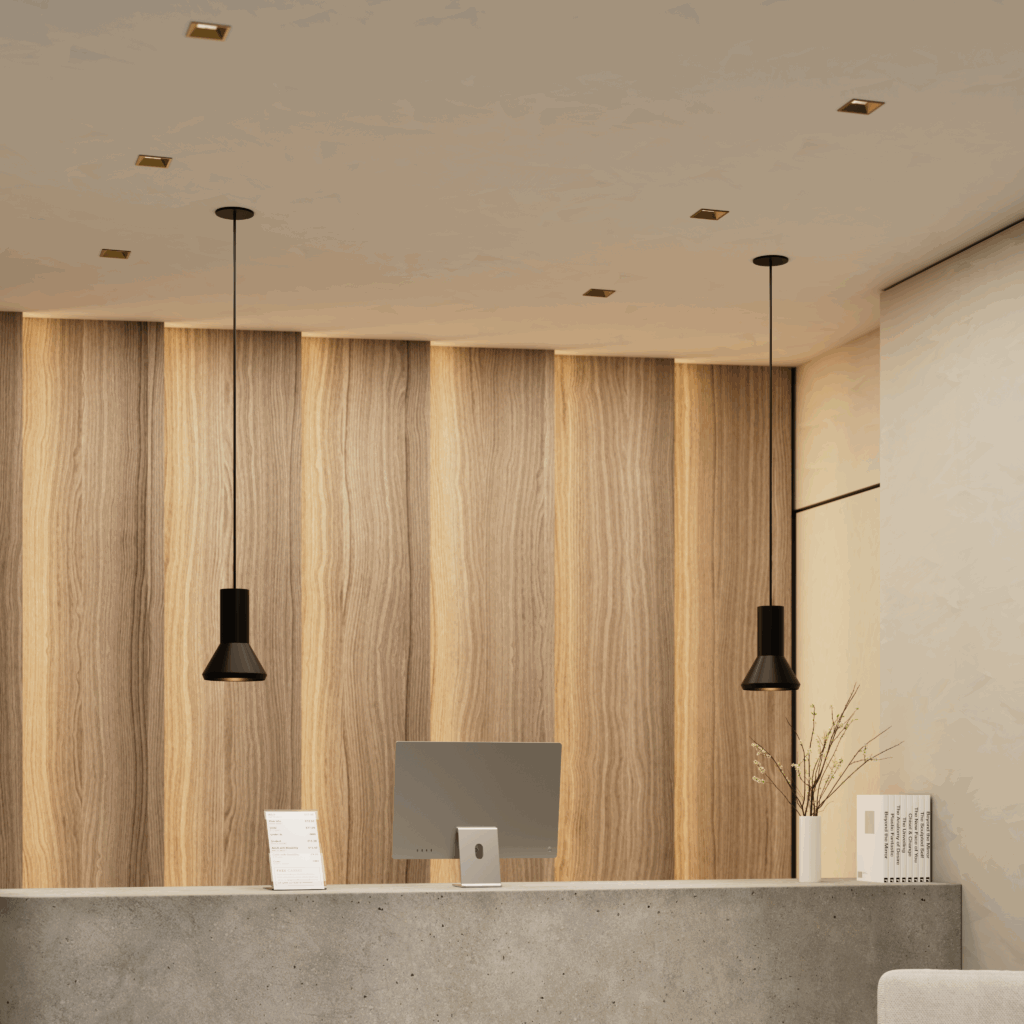
DMF’s Decorative Pendants with Shades deliver focused, low glare downlighting, available in a diverse array of silhouette options to complement any design aesthetic.


Expertly merging high-performance illumination with exceptional shielding, these pendants are ideally suited for:


Task Lighting: Perfect for illuminating countertops, reception desks and workstations.


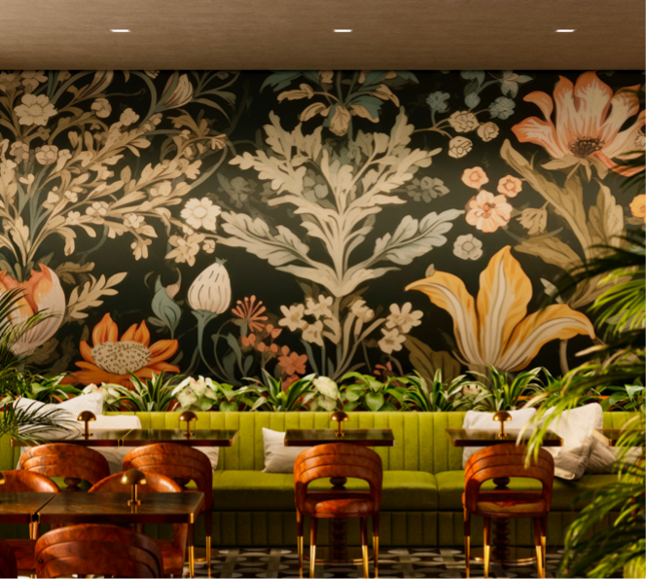
Hospitality Spaces: Elevating the ambiance of hotels, bars and dining areas by creating an intimate and inviting atmosphere.


Open Offices: Offering stylish, controlled illumination that ensures a low-glare, productive work environment.

Decorative Downlight Trims


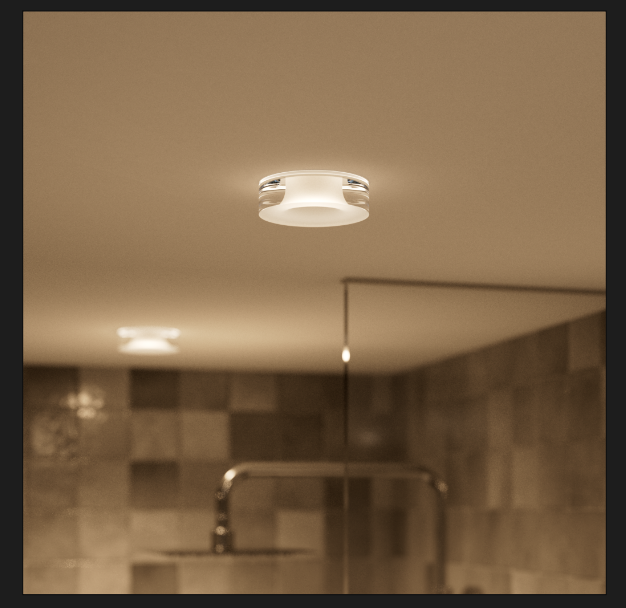
DMF’s M and X Series decorative trims introduce an elevated sense of style and visual intrigue to any space. Crafted from optical-quality acrylic and available in finishes ranging from frosted to clear, these trims are thoughtfully designed to interact with light in captivating ways. Their versatility makes them especially well-suited for low ceilings, compact areas, and environments that benefit from wide, soft illumination.


Below-Ceiling Intrigue: Each trim features an acrylic element that sits below the ceiling plane, capturing light and adding depth.


Custom Translucency:

Choose from varying levels of translucency —from fully frosted to clear to control the light effect.


Uninterrupted Beam:

The X Series Round Decorative Trims are fully open to the optic, allowing the beam of light to travel completely uninterrupted while still adding a decorative accent.


Decorative Trim Applications


Low Ceilings: 

The high diffusion and somewhat decreased center beam candle power make these trims great for low ceiling applications where wide beam spreads are needed to adequately cover a space.  


Tight Spaces:

These decorative trims also cast a higher percentage of light up walls, making tighter spaces such as powder rooms and corridors feel brighter and more expansive, especially when there isn’t space for dedicated wall washing or accent lighting.


Decorative Focal Points:

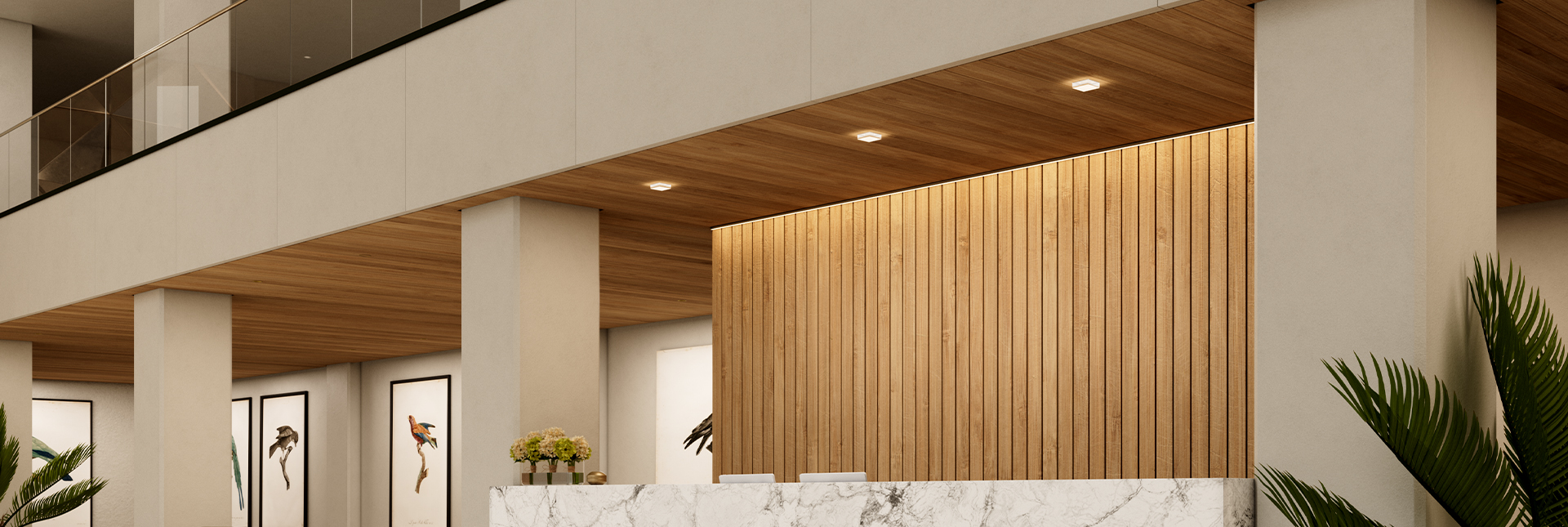
Reception desks, display areas, and shelving units can be transformed by the distinctive aesthetic of decorative trims, elevating ordinary spaces into striking visual features.  


Spas, Beauty Salons & Gyms

In settings where patrons may recline and gaze upward, decorative trims offer significant benefits. The lower center power, combined with higher diffusion and beam spread, can

significantly reduce disability glare from looking towards light sources.


For more information including detailed information on the Decorative Trims photometry, please reference our Performance Decorative Lighting Application Guide.


November 17, 2025

Reframing Sustainability CEU

Taking a broader view of sustainability in lighting

A New Perspective on Sustainability

Traditionally, lighting sustainability focuses on energy efficiency metrics like lumens per watt, controls, and daylighting strategies. While important, they are only part of the story. A broader view of sustainability includes reliability, modularity, serviceability, and material transparency. These concepts directly impact real-world design outcomes and contribute to long-lasting lighting systems.


Rethinking Sustainability: What truly makes lighting sustainable?

Efficiency is just the starting point, not the end goal. Consider what happens after installation: serviceability, replacement parts, and matching output over time. These factors are crucial for long-term sustainability but are often overlooked. We need to look beyond consumption and consider how long a fixture lasts, how easily it can be maintained, and whether it supports the evolving needs of the space.

The Reality of Today’s Specification Process.

Lighting must support evolving demands over time, not just day-one aesthetics. Architects and designers face increasing complexity, balancing visual outcomes, meeting codes, integrating systems, navigating supply chain realities, and delivering long-term value within compressed timelines. Often one of the last systems specified, lighting is highly visible when issues arise.

Sustainability is not isolated; decisions about lighting are influenced by budget, performance expectations, aesthetics, and future service needs. These constraints shape possibilities. It’s time to redefine sustainability, considering the total experience over time, not just consumption.

A New Lens on Lighting Sustainability: The Five Pillars of Reframed Sustainability

Let’s redefine sustainability to encompass how lighting is designed, built, maintained, and evolved over time. This broader definition supports occupant health, safety, environmental responsibility, and long-term value.


Instead of focusing solely on energy performance, we introduce five key concepts that affect the full lifecycle of a lighting system: modularity, reliability and longevity, serviceability, backward compatibility, and material transparency. These elements contribute to better outcomes for both the space and its occupants.

Modularity as a Sustainable Strategy, Enabling Longevity

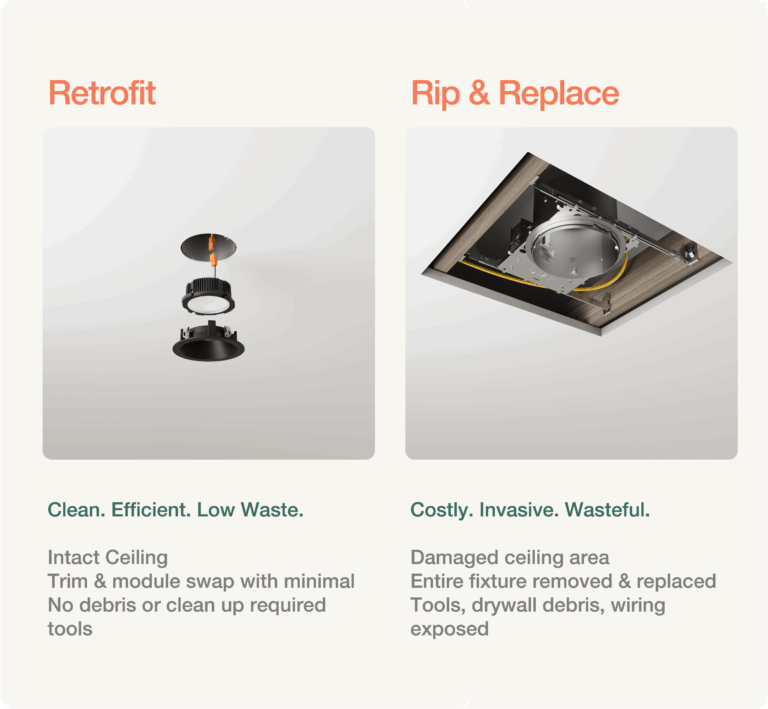
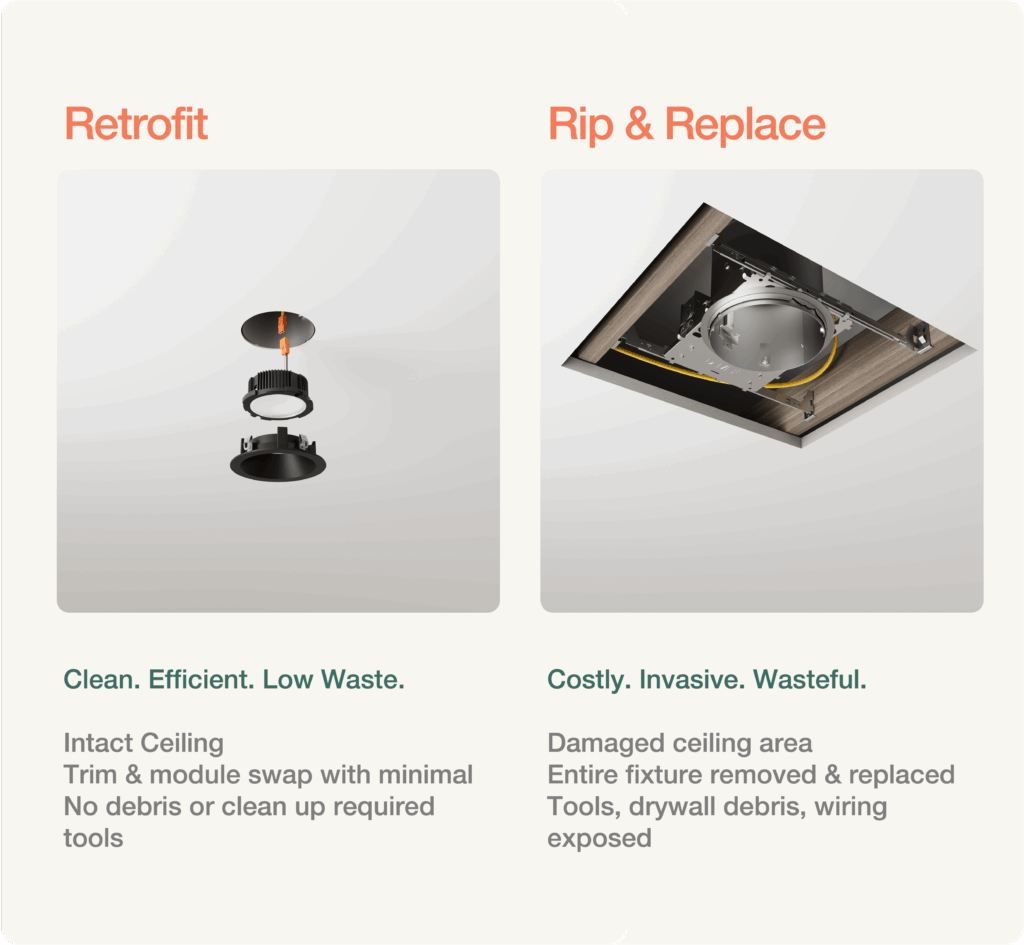
Modularity is a practical and impactful way to enhance sustainability in lighting design. Instead of replacing entire fixtures when changes or failures occur, modular systems allow individual components (like the LED module, optic, or trim) to be swapped out. This approach reduces waste, lowers costs, and minimizes disruptions to the finished space.


Modular systems also support design flexibility. A single light housing can accommodate multiple configurations, adapting to different outputs, finishes, or beam angles, even years after installation. By keeping more of the original infrastructure in place, modular systems facilitate maintenance, upgrades, and retrofits without compromising the architectural design.

Modularity in Action Example                                                     

Imagine a downlight in a finished ceiling, part of a wall wash layout in a residential or hospitality space. Years after installation, one of the lights fails. With a modular system, there’s no need to cut into the ceiling or rewire anything. The trim is removed cleanly, and the module is swapped from below. This approach saves money, minimizes disruption, and preserves the original design.


Serviceability = Sustainability

A sustainable lighting system should be maintainable, allowing components like the light module or driver to be accessed and replaced from below the ceiling without disruption. This approach minimizes waste, labor, and downtime, while maintaining design consistency.

Reliability & Longevity

Reliability isn’t just about warranty; it’s about trust in performance. Long-term sustainability depends on how well a product performs over time, not just its day-one efficiency. While many high-quality fixtures are rated for 50,000 hours of operational life, real-world performance varies based on usage conditions. For example, a fixture running 24/7 in a commercial space may only carry a 5-year warranty, whereas the same fixture in a part-time, temperature-controlled residential setting could last much longer.


When evaluating lighting systems, look beyond the spec sheet. Consider the quality of the driver, thermal design, and the manufacturer’s confidence in the product’s actual field life, not just its lab performance. The same scrutiny should apply to lighting system integration and controls compatibility.

Transparency Matters: What’s in the Fixture?

Lighting sustainability also depends on what the fixture is made of and how much you know about it. Materials like casting, adhesives, wiring, and coatings affect performance, longevity, and occupant health. For instance, some cast parts include lead to improve mold performance, certain paints and adhesives may off-gas under heat, and flame retardants in plastics are often not disclosed.  


Many lighting products today are assembled through outsourced, OEM channels, making it hard to trace what’s inside. Transparency impacts long-term safety, serviceability, and compliance with health and environmental standards.

Transparency Matters: What’s in the Fixture?

Lighting sustainability also depends on what the fixture is made of and how much you know about it. Materials like casting, adhesives, wiring, and coatings affect performance, longevity, and occupant health. For instance, some cast parts include lead to improve mold performance, certain paints and adhesives may off-gas under heat, and flame retardants in plastics are often not disclosed. 


Many lighting products today are assembled through outsourced, OEM channels, making it hard to trace what’s inside. Transparency impacts long-term safety, serviceability, and compliance with health and environmental standards.

Built for What’s Next: Designing Backward Compatibility

Backward compatibility ensures that today’s lighting decisions remain effective in the future. When product lines evolve or technology changes, new components should integrate seamlessly with existing installations, matching performance, beam, and output.


Without backward compatibility, even minor changes can lead to visual inconsistency or system mismatch, often necessitating broader replacements that impact budget, controls, and code compliance. Designing with this in mind allows systems to evolve without starting over, enabling easier upgrades, better long-term support, and reduced risk to design integrity over time.

Codes Are Evolving

The concepts of modularity, serviceability, and transparency are evolving from best practices to actual standards and code frameworks.


In Europe, the Ecodesign Directive will require serviceability by 2026, ensuring fixtures are accessible and repairable with standard tools. In the U.S., WELL and LEED are advocating for greater transparency, durability, and lifecycle thinking, while the IgCC is incorporating service and reuse considerations.


The trend is clear: sustainability now encompasses not just efficiency, but also the longevity, maintainability, and overall impact of fixtures.

Sustainable Systems Support People and Places

Sustainability goes beyond materials and efficiency targets; it’s about the long-term functionality and feel of a space. When lighting systems are designed for longevity, easy maintenance, and adaptability, they enhance the user experience by being consistent, seamless, and less disruptive. This is where sustainability intersects with design integrity.

Reliable systems protect visual intent, serviceable systems minimize invasive repairs, and modular systems support change without compromise.

Key Takeaways

In summary, the five concepts create the foundation for a more complete and durable view of lighting sustainability.


Five Concepts of Lighting Sustainability

  • Modularity: Supports reuse, upgrades, and flexibility
  • Serviceability: Protects both the ceiling and the design
  • Reliability & Longevity: Reduces failure, callbacks, and long-term cost
  • Transparency: Ensures safer materials and smarter sourcing
  • Backward Compatibility: Allows seamless integration over time

Together, these concepts create a system built to last. Early integration of these concepts in the design process reduces risk, supports evolving needs, and delivers greater value for clients and end users.


If you are interested in learning more, DMF offers a Reframing Sustainability CEU training course. Please email training@dmflighting.com for more information.

September 10, 2025

Wall Washing

Benefits, Techniques, and Solutions of Wall Washing

From creating evenly illuminated spaces and high levels of visual comfort, to crafting visual interest and architectural intrigue, lighting designers face many challenges when approaching a project.


Wall washing is a commonly used lighting technique in a designer’s toolkit that provides a versatile solution to many common design challenges.


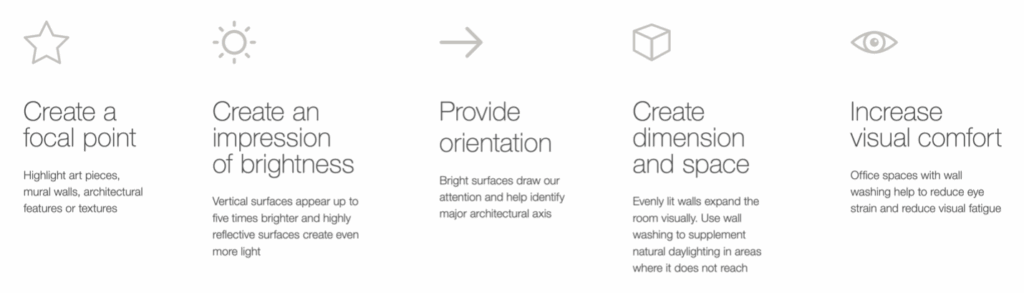
The Benefits of Wall Washing Include:


Here are Some Wall Washing Uses + Techniques.

Indirect Lighting

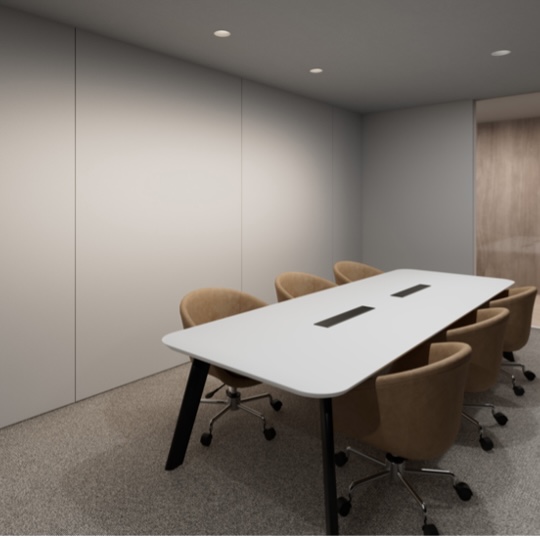
Uniformly lighting walls can add an additional layer of indirect lighting and increase the perceived brightness of a room, defining architectural space, and helping to orient the inhabitants in the room.

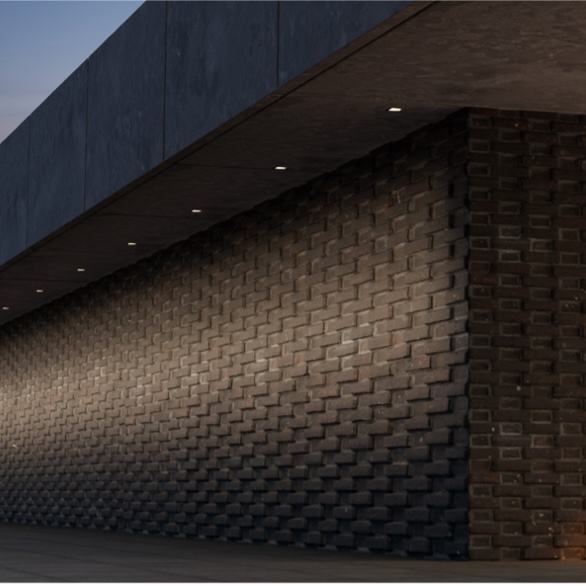
Grazing Textured Walls

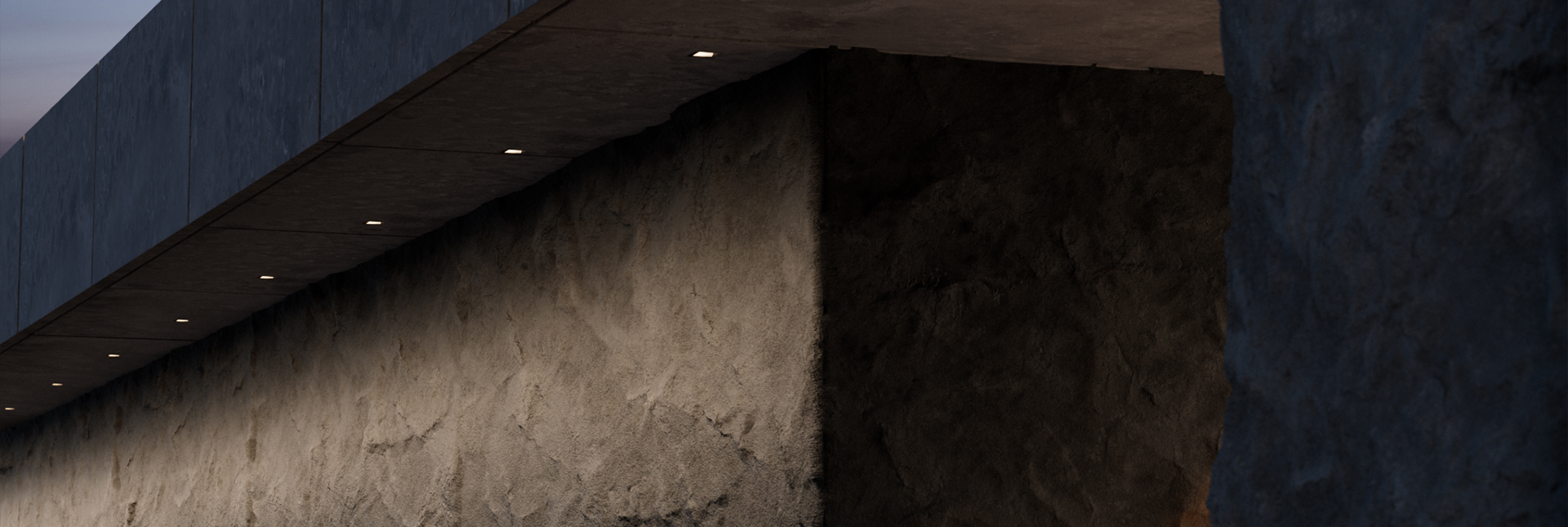
A steeper angle of wall washing can help to accentuate feature walls or walls with natural texture, such as stucco or brick.

 Featured Artwork & Wall Murals

Wall washing can provide even illumination for mural walls or walls where placement of artwork may continually change.


Corridors

Corridors can benefit immensely from wall washing. The high degree of perceived brightness that comes from illuminated vertical surfaces creates the perception of a more open space.


DMF Product Solutions


Wall Wash/Sloped Ceiling Trim


Our next generation of wall wash and sloped ceiling trims offer a versatile, modular solution, compatible across the entire range of M Series fixed downlights. High performance optics provide increased lumen output and a flatter field, allowing for up to a 1:2 or even 1:3 setback/spacing ratio, meaning you can achieve even wall washing with fewer fixtures than before.


Our optics have increased thermal performance, expanding compatibility to all lumen packages in the M Series Commercial and Residential lines. These trims are interchangeable with our full range of M Series downlights and standard trims, so your designs can remain nimble and adaptable to changes, even after housings have been roughed in.


For information on appropriate wall washing fixture spacing and placements, as well as layout examples, please refer to our Wall Wash Application Guide.

August 21, 2025

Marine-Grade Lighting

Best Practices When Choosing Lighting Fixtures for Marine and Coastal Environments

Marine and coastal environments are harsh on buildings due to airborne salt, wind, and humidity. Salt water becomes aerosolized when ocean waves break, causing premature decay in metal materials. To ensure durability and normal service life for lighting fixtures in these environments, it is recommended to specify marine-grade trims and fixtures.


Lighting fixtures in coastal regions should comply with the American Architectural Manufacturers Association’s (AAMA), AAMA 2605 standard for wear and corrosion resistance. AAMA 2605 sets some of the highest standards for protective metal coatings, which are most suitable for marine environments.


Specifically, Section 7.8.2, Salt Spray Resistance, is crucial for marine-grade finishes. Test samples are scored to expose aluminum and subjected to a 4,000-hour, 5% salt solution spray test, as defined by ASTM B 117.


When evaluating lighting fixtures, choose products with verifiable marine-grade claims based on these tests.


Where are Marine-Grade Finishes Required?

While the highest levels of salt spray are closest to shore, accelerated corrosion can occur up to five to 10 miles inland. For installations within 10 miles of the coast, marine grade, IP-rated fixtures should be used for proper protection and longevity. 


In regions with extreme weather and environmental conditions, corrosion may occur even further inland than 10 miles. The strongest example would be isthmuses, surrounded by ocean, like the southernmost parts of Florida. Since there isn’t a comprehensive source of corrosion data by geographic region, it’s best to consult local building professionals and examine levels of corrosion in older buildings to identify high-corrosion areas.

Metal Corrosion & Marine-Grade Lighting Finishes

Lighting fixtures use metals like aluminum and steel for housings, trims, and major components. Aluminum is popular for trims and bodies but faces challenges in marine environments. When exposed to air and water, raw aluminum alloys form a protective oxide layer, which is sufficient in most interior or mild climates, but salt and moisture cause galvanic corrosion. This occurs when a more negatively charged metal transfers electrons to a positively charged one via an electrolyte. Marine conditions create this electrolytic solution, making aluminum alloys with elements like copper problematic. Manufacturers must protect metal parts from galvanic corrosion to ensure fixture longevity.


For long-lasting light fixtures, marine-grade finished aluminum is an excellent choice. Two main processes achieve marine-grade finishes: epoxy-based powder coating and marine anodizing (hard anodizing). Alternatively, brass or stainless steel, which are naturally corrosion-resistant, can be used, though these are mostly used for landscape lighting.

Epoxy-Based Powder Coating

Powder coating provides a durable, corrosion-resistant finish for aluminum fixtures. This process uses electrostatically charged paint particles that are magnetically attracted to the substrate, ensuring even application. The coated substrate is then cured in an oven, creating a robust finish.


Epoxy-based powder coating offers even higher abrasion and corrosion resistance. Epoxies, made of a resin and a hardener, form a rigid, cross-linked structure when mixed, providing excellent durability and flexibility. This makes them suitable for areas with extreme thermal changes as they prevent cracks in the finish due to underlying metal expansion or contraction.


The process starts with extensive surface preparation, including mechanical cleaning and chemical treatments for optimal adhesion. An epoxy primer is applied, followed by a super-durable polyester powder coat finish. Once cured, this results in a UV-resistant, corrosion-resistant, and flexible finish that withstands extreme and corrosive conditions.

Anodized Aluminum

Anodizing submerges metal in an acid-electrolyte solution and applies an electrical current through the substrate, creating a controlled oxide later that is relatively durable and corrosion-resistant. Standard anodizing forms a 12-micron thick layer, suitable for indoor or non-marine exterior applications, but can wear quickly and is susceptible to scratching and corrosion.


Hard anodizing creates a thicker 25-micron layer using a stronger acid bath and higher electric current density, resulting in greater abrasion resistance and durability. It’s suitable for marine-grade applications and industrial uses requiring high wear resistance.


However, both processes involve harsh chemicals, higher costs, skilled labor, and variability in color consistency. Anodized aluminum may also be susceptible to UV damage and color fading, and its metallic appearance may not be ideal for architectural-grade lighting trims.

Non-Aluminum Marine-Grade Fixtures

Some manufacturers use metals other than aluminum for marine-grade durability, with brass being the most common. Brass, an alloy of copper and zinc, forms a protective patina when oxidized, preventing corrosion but changing the fixture’s appearance over time. Raw brass initially has a high shine and yellowish color, but in marine environments, it typically develops a light green patina. This change may be desirable for some installations but bothersome for others due to its unpredictability.

IP65+ Rated Marine-Grade Fixtures

Marine-grade lighting fixtures should be IP rated to protect internal components from humidity, moisture, and salt. They should achieve at least an IP65 rating, meaning they are fully dust-tight and protected against water jets. For more details, refer to DMF’s IP Ratings Technical Bulletin.

DMF’s Marine-Grade Products

DMF Lighting has select products that can be configured with marine-grade trims or finishes, all of which comply with AAMA 2605-05, Section 7.8.2 and achieve a minimum rating of IP65.

  • M Series IP/Marine Grade Trim
    • M Series recessed downlighting family features a wide range of specification options. The newest IP/Marine Grade trim offers superior durability for corrosive, marine environments. Available for the round downlight in both black and white colors, the marine-grade finish utilizes a super durable epoxy-based power coat finish and additionally achieves an IP66 and IK10 rating with its fully sealed and impact resistant front lens. Look for the “IP” part code under the trim selection for the standard round downlight.
  • X & M Series Marine Grade Cylinders
    • X & M Series Cylinders offer a massive array of options for exterior lighting applications, from pendant, surface mount and wall mount cylinders. Utilizing the same light engine modules from their counterpart downlight families, these marine-grade cylinders are finished in the same manner as the Marine Grade/IP trim and achieve an IP65 rating, appropriate for use in fully exposed, uncovered exterior applications. For full information on DMF Lighting’s Marine Grade cylinders, see the X Series & M Series Cylinders Marine Grade specification sheets.

For more information, please review the Marine-Grade Technical Bulletin.

June 19, 2025

Wildlife-Friendly Lighting

A Guide to Responsible Outdoor Lighting Practices

Artificial light at night (ALAN) refers to the use of electric light sources in outdoor spaces. As cities and infrastructure grow, ALAN is used for various applications, from lighting roadways and parking lots for safety to illuminating architecture. While safety is crucial, ALAN has created problems for wildlife that have lived under natural light at night (moonlight and starlight).


ALAN disrupts sleep cycles, displaces wildlife from their habitats, disrupts migration patterns and breeding rituals, and alters hormone production. To combat these effects, wildlife-friendly lighting standards advocate for specific fixtures, design principles, and lighting control methods to minimize disruption to wildlife and their natural environment.


Wildlife Lighting Standards Recommendations

There are several organizations that establish and promote wildlife-friendly lighting standards and one of the most prominent is the International DarkSky Association (IDA), an independent organization offering certification and educational resources. 

The Florida Fish and Wildlife Conservation Commission (FWC) and the U.S. Fish and Wildlife Service (USFWS) are key government agencies that provide guidelines and resources for wildlife lighting. They are the most referenced for sea turtle-friendly lighting and bird-friendly lighting, and they have developed the Wildlife Lighting Certification Program to ensure lighting practices are safe for wildlife.

International DarkSky Association

The Florida Fish and Wildlife Conservation Commission (FWC) and the U.S. Fish and Wildlife Service (USFWS) are key government agencies that provide guidelines and resources for wildlife lighting. They are the most referenced for sea turtle-friendly lighting and bird-friendly lighting, and they have developed the Wildlife Lighting Certification Program to ensure lighting practices are safe for wildlife.

Aside from the five principles, IDA has a few other core functions, including the DarkSky certification program and DarkSky Approved program, as well as education and outreach. The IDA also works as a resource to aid in crafting ordinances and legislation for municipalities to help combat the growing problem of light pollution. 

IDA’s Five Lighting Principles for Responsible Outdoor Lighting 

A guide to assist lighting professionals when designing exterior lighting, these simple principles are intuitive and relatively easy to implement and can have an enormous impact when applied correctly to reduce light pollution and maintain dark skies and healthy habitats for wildlife. 


Many guidelines, like “Low Level” and “Targeted,” are subjective. Testing and mockups in the field can help determine what is “Low Level” in the context of the project site. For example, a 4-watt luminaire may be appropriately bright in a city park but too bright in a rural residence.

DarkSky Approved Program

The DarkSky Approved program provides third-party approval for products, lighting designs and projects, ensuring that they meet necessary requirements that abide by Five Lighting Principles for Responsible Outdoor Lighting.

When searching for outdoor luminaires, the DarkSky Approved seal can help guide the fixture selection for projects that need to meet any DarkSky requirements. DarkSky approved fixtures can be found with the DarkSky Approved Seal on manufacturers cut sheets or through the DarkSky Database. Full program requirements can also be found in the DarkSky Approved Luminaires Guidelines. 

Turtle-Safe Lighting 

The Florida Fish and Wildlife Conservation Commission (FWC) manages fish and wildlife resources for their safety and the good of the community. One large part of the FWC’s programs is establishing turtle-safe lighting practices. 


Turtle nesting seasons typically run from May through October in Florida. As hatchlings leave their eggs, they must make the trip back to the ocean across the beach where they were laid. Their natural means of navigation is following the naturally blue moonlight, which is brightest on the water horizon. Traditional ALAN can disturb this process, so turtle safe lighting ordinances have been implemented to protect this journey and save turtle lives. The most important aspect of turtle safe lighting is the use of no blue wavelength light (shorter than 560nm). 


The FWC’s Wildlife Lighting Certification Program helps identify lighting fixtures which meet requirements for turtle-safe lighting. Additionally, the DarkSky Approved program also has their own specific DarkSky Sea Turtle Sensitive Approved program, which has nearly identical standards.

Bird-Friendly Lighting Standards

Bird populations worldwide are highly susceptible to the negative impacts of artificial light at night (ALAN). Eighty percent of North American birds migrate overnight, relying on magnetoreception to detect Earth’s magnetic poles. Studies show that high levels of blue spectrum light can impair this sense, disorienting birds and causing them to fly in non-migratory directions.  


In urban areas, blue spectrum light traps birds in “bubbles” of artificial light, leading to collisions, exhaustion, and mass-mortality events, especially on foggy or low cloud ceiling nights when birds fly lower than normal. 


The standards and strategies set by DarkSky and the FWC sea turtle program are similar to bird-friendly lighting recommendations. Turning off unnecessary lighting is the most effective solution, especially during spring (April-May) and fall (August-October) migration seasons and on cloudy or foggy nights. Additionally, if birds become trapped in bright light, turning lights off for 15 to 20 minutes can help them escape. Automatic timers can create breaks if monitoring is not feasible. To reduce light pollution from interiors, close blinds, shades, or curtains at night, or use window tinting. 

Bird-Friendly Lighting Ordinances

Bird-friendly lighting ordinances are often grouped with bird-friendly building ordinances. Architects and designers can use construction materials, glazing, and lighting to create safer environments for birds.  


In the U.S., these ordinances are mostly managed by local municipalities. Notably, Maui County recently enacted stringent requirements for bird and wildlife-safe lighting, including outdoor fixtures emitting no more than 2% of light from the blue spectrum (400nm-500nm), no uplight, and full fixture shielding. For more information on other ordinances, refer to The Yale Bird-Friendly Building Initiative’s national database. 

DMF’s Wildlife-Friendly Lighting Solutions

DMF offers a variety of fixtures that are both DarkSky approved and turtle-sensitive for recessed downlighting and cylinder applications. Approved fixtures are limited to certain configurations. 

  • DarkSky Approved 
    • Luminaires cannot include decorative trims and must be 3000K CCT or lower. 
    • M Series Residential (4-inch aperture) and X Series recessed downlights both offer configurations. 
    • M Series and X Series Cylinders have configurations. Cylinders must be downlight (direct only), without any uplight. 
    • Look for the DarkSky Approved seal on DMF specification sheets for approved fixtures.
  • Dark Sky Approved Turtle Sensitive 
    • DMF turtle-friendly lighting fixtures come in 300 lumen output, specialty CRI and Turtle & Wildlife Friendly (TF) spectrum.
    • M Series Residential and X Series Recessed downlights are both available in turtle sensitive configurations.
    • M Series and X Series Cylinders are also available in TF configurations, in downlight configurations only.  

Note that DMF Turtle and Wildlife Friendly fixtures are not currently listed as FWC Certified but are designed within the required specifications and are certified DarkSky Approved Sea Turtle Sensitive.


To review the Wildlife Lighting Technical Bulletin, which includes references, click here

April 22, 2024

DMF’s Commitment to Sustainability


Shining a light on sustainability

DMF is dedicated to saving our earth through eco-friendly practices, including energy-efficient design, recycled materials usage, waste reduction strategies, and a post-warranty refurbishment program.

Designed to the Most Rigorous Standards

Energy Efficiency – Based in California, all our products are LED and designed around the most stringent local mandates and energy codes, like Title 24 ensuring optimum energy efficiency.


Declare Listed, Red List Compliant Since 2020 – DMF was one of the first downlighting manufacturers to become Declare Listed and today all product SKUs proudly carry the Declare Label.


Sustainably Designed – We continue to be at the forefront of sustainable design.  Universal, junction box-based housings are designed free of electronics ensuring a future-proof solution.

Manufactured for Optimum Performance

Non-Waste Sheet Metal – By design, all of our sheet metal punch outs and excess scrap metal are utilized for smaller components minimizing waste and cost.


Alternative Material Sourcing – Our H Series housings are manufactured in the United States out of PET plastic making them not only recyclable but incredibly lightweight, providing for more efficient transport.


20% Aluminum Reuse Policy – 20% of the diecast aluminum parts used in our light fixtures are recycled to provide a sustainable footprint while at the same time ensuring we are not sacrificing the integrity of the material or performance.

Filling Orders, not Landfills

Recyclable Packaging – All DMF packaging is made of recyclable cardboard and additionally, any used packaging we receive is shredded and repurposed as filling for future packages.


Bulk Packaging – Available upon request to help you minimize job site waste.

End of Life & Long-Term Maintenance Commitment

90% Recyclable Components – All metal, steel & plastic components in our product are recyclable, additionally DMF will recycle your retired electronics free of charge if you send them back to our factory.


Post Warranty Refurbishment Program – Housings from our product can be reused to update spaces sustainably with little labor impact.  You can be confident there will be new products that will support your upgrades for years to come. DMF is committing to circular product solutions, ensuring you have a solution for your fixture when it reaches the end of its life.  For any product sold from 2024 and on, DMF’s refurbishment program will rework or offer a backwards compatible product 5 years after warranty to give you the most sustainable solution.

February 29, 2024


DMF and Lutron Partner to Offer Athena Wireless Node Integrations

DMF is proud to announce the integration of the Lutron Athena Wireless Node across many of our M Series product offerings and participation in the 2024 Lutron OEM Advantage Program. 

The new  Lutron Athena Wireless Node is an ultra-small, wireless, integral fixture controller.  Packed with technology and endlessly versatile, this tiny device can handle communications via DALI-2 with DALI Type 8, 0-10V, Clear Connect Type X, and simplifies the set-up process with bluetooth.

Please review the product specification sheets for more information:


Available Now:

M Series Commercial (750-3500 lm Non-IC Rated Solutions)

M Series Commercial Round Downlight

M Series Commercial Round Adjustable

M Series Commercial Square Downlight

M Series Commercial Square Adjustable


Coming Soon:

M Series Cylinders (750-3000 lm Solutions)

M Series Cylinder Pendant Mount

M Series Residential (750-1500 lm IC Rated solutions)

M Series Residential Round Downlight

M Series Residential Round Adjustable

M Series Residential Square Downlight

M Series Residential Square Adjustable

M Series Multiples (750-3000 lm solutions)

M Series Multiples


Contact our team to discover the advantages of these integrations!

Learn more about Lutron Athena Node

April 25, 2023

DMF Lighting is excited to have the H Series named in the Honorable Mentions of Green Builder’s 2023 Sustainable Products of the Year. The annual list recognizes prominent, enviro-friendly products while honoring companies that encourage sustainability and go above and beyond in manufacturing items through innovative technology.

The H Series brings downlighting with stellar efficiency and a sustainable design to the whole home. The downlight goes beyond standard efficacy requirements and is both California Title 24 JA8 compliant and ENERGY STAR qualified. Manufactured in the US, the housings are recyclable and free of non-sustainable, harmful toxins.

DMF Lighting is committed to better living, pushing us to design ever-more energy efficient lights and informing the materials we use to build our products.

Learn more about the H Series.


– – – – – – – –

Stay up to date with everything that’s happening at DMF:  LinkedInInstagramFacebook, or Twitter