October 29, 2018

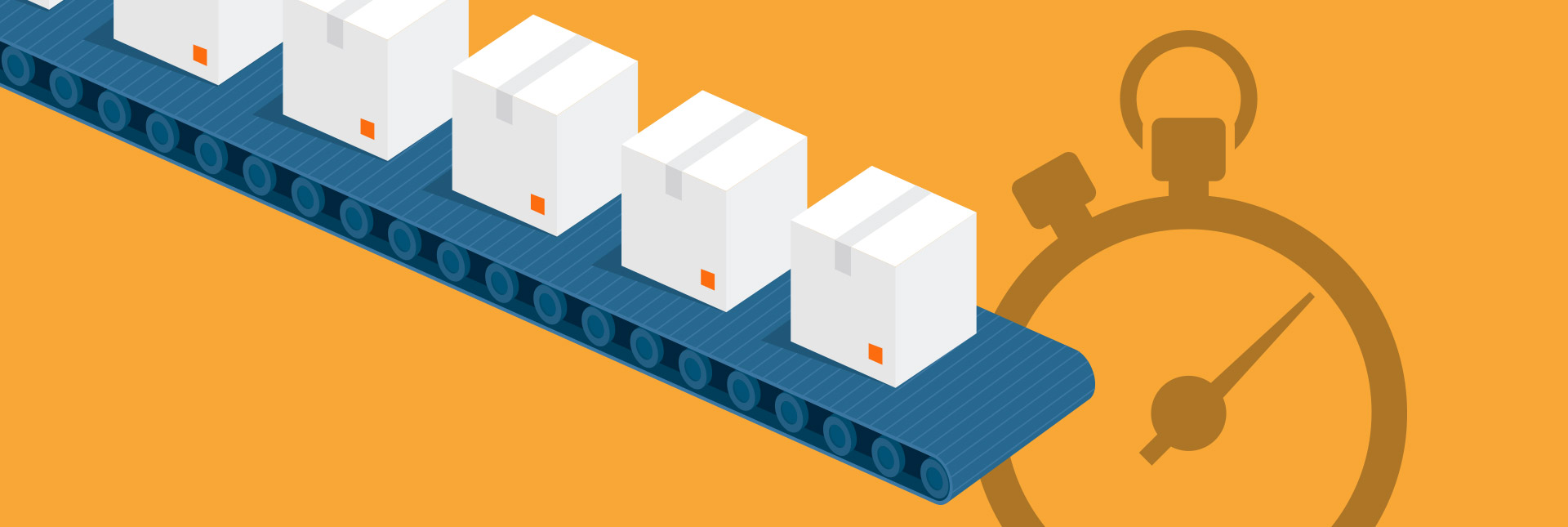
We’re proud of our award winning products. But those awards don’t mean much if our customers can’t get their DMF Lighting products when they need them. Distributors and specifiers depend on the availability, speed and delivery accuracy of our products. That’s why we maintain a strategically positioned Southern California warehouse that operates quickly and efficiently. If we receive your order before noon, it goes out that day.
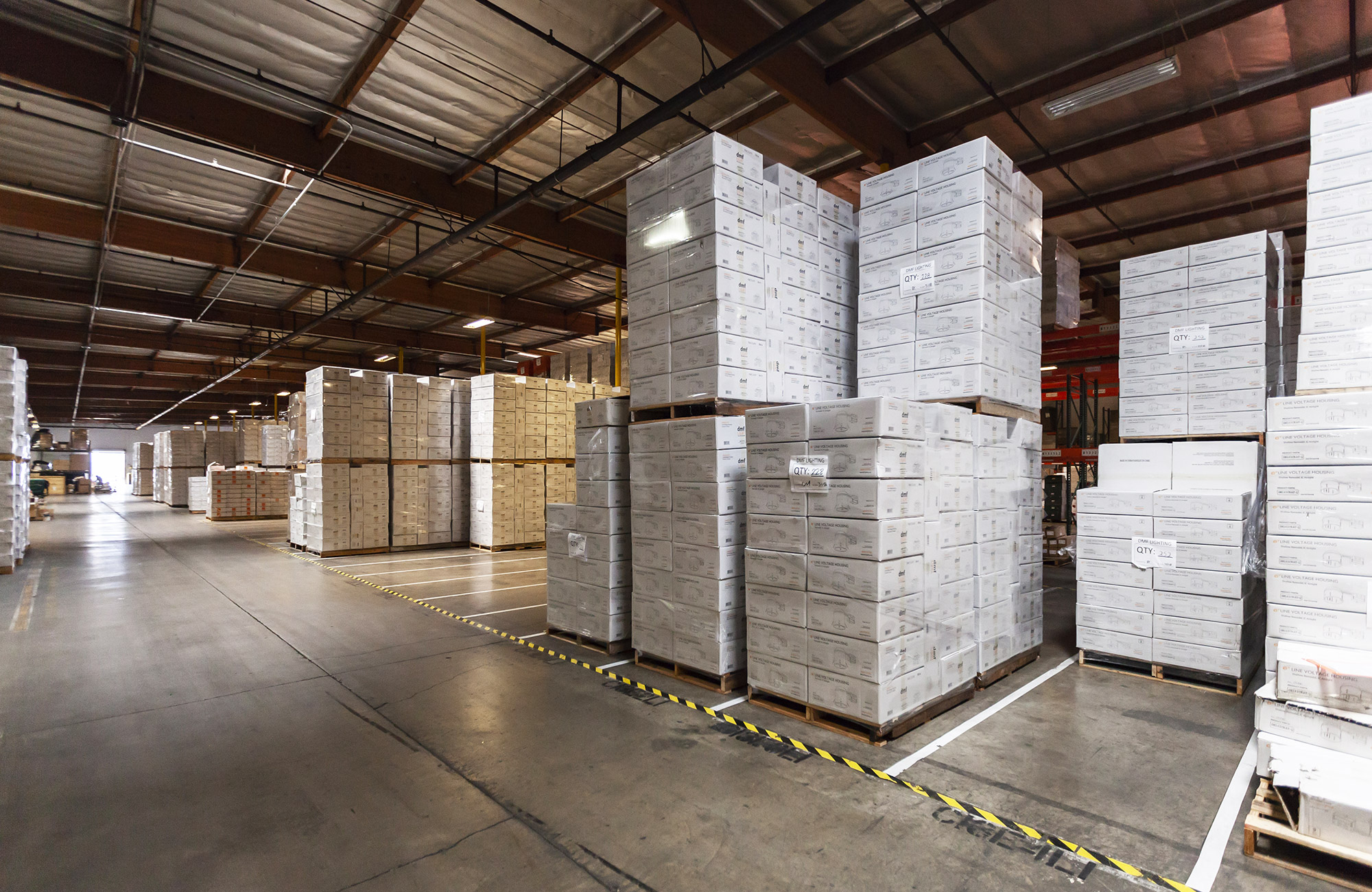
Warehouse efficiency & inventory optimization

Our warehouse receives and ships thousands of products everyday. In order to handle this, we consider every operational aspect to ensure shipments go out quickly and accurately. We’ve analyzed the entire order fulfillment process to ensure optimum warehouse efficiency. Our warehouse managers track the movement of goods to appropriately control inventory flow. DMF products are stocked locally and ready to ship.

In addition, our warehouse staff is trained to understand the products. Instead of simply scanning an item out, our employees check the item part code and double check the specs. Understanding the products adds a human element and another layer of verification.
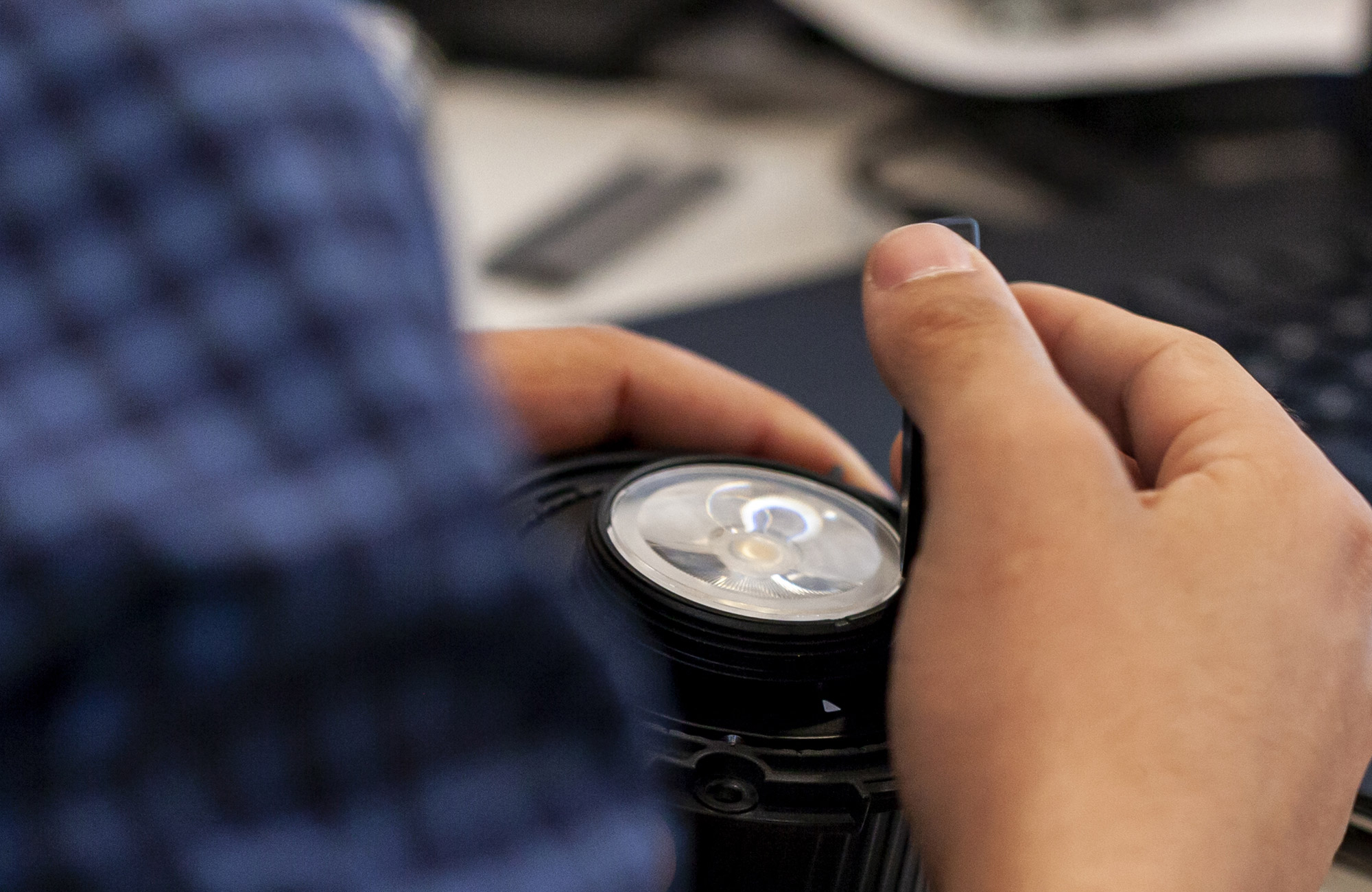
“Understanding the products adds a human element and another layer of verification”


When you need it, how you need it

Customers need the right products delivered on time, but that’s not the entire story. DMF is committed to high-touch customer service. That means doing everything we can to accommodate our customers unique shipping needs. Special carriers, specific palette dimensions, exact shipment dates. We do it all. When necessary, we even have production work on Saturdays to quickly turn around large orders received on short notices. We value our distributors and trade customers and do whatever it takes to keep their trust.
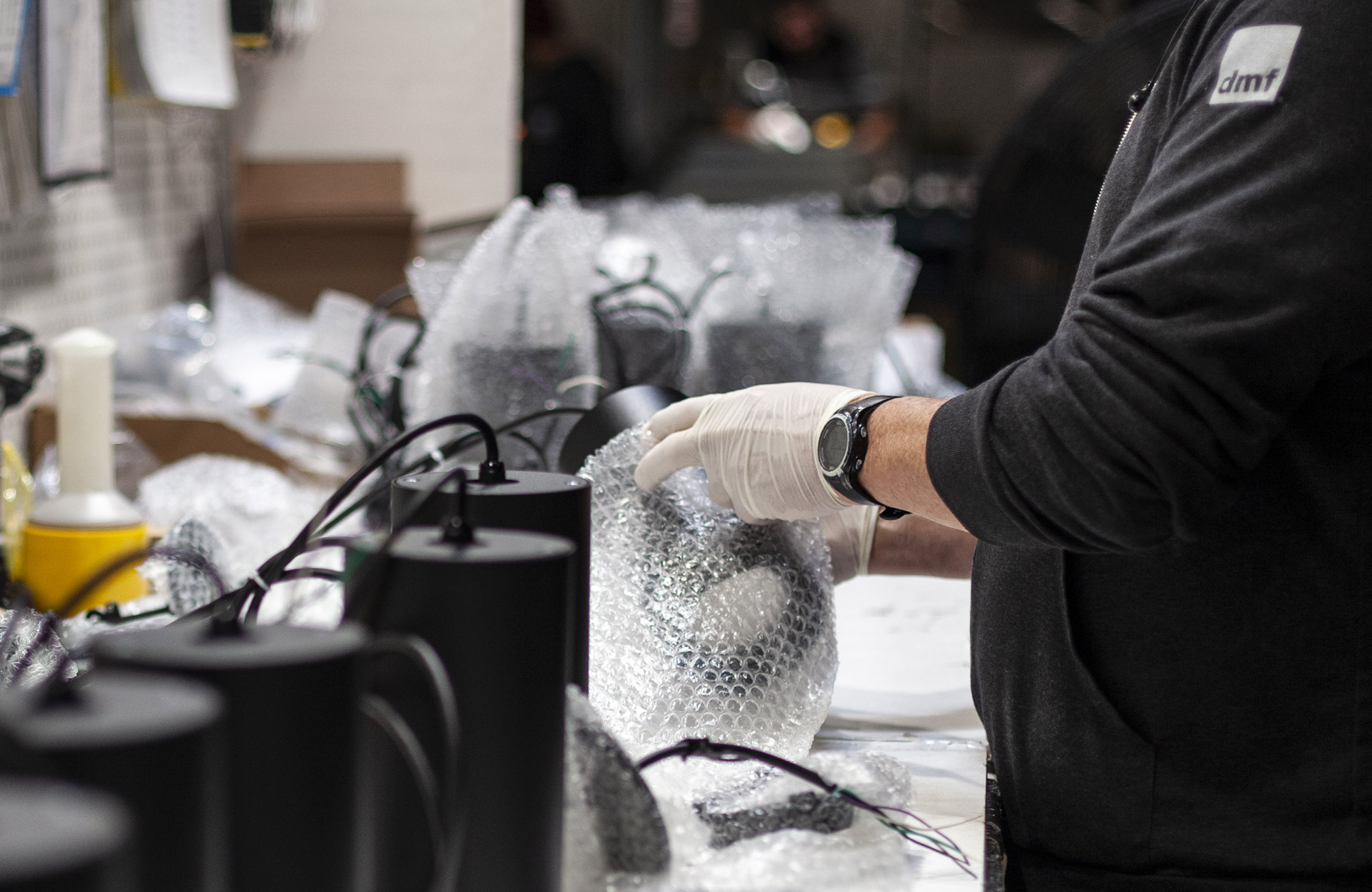
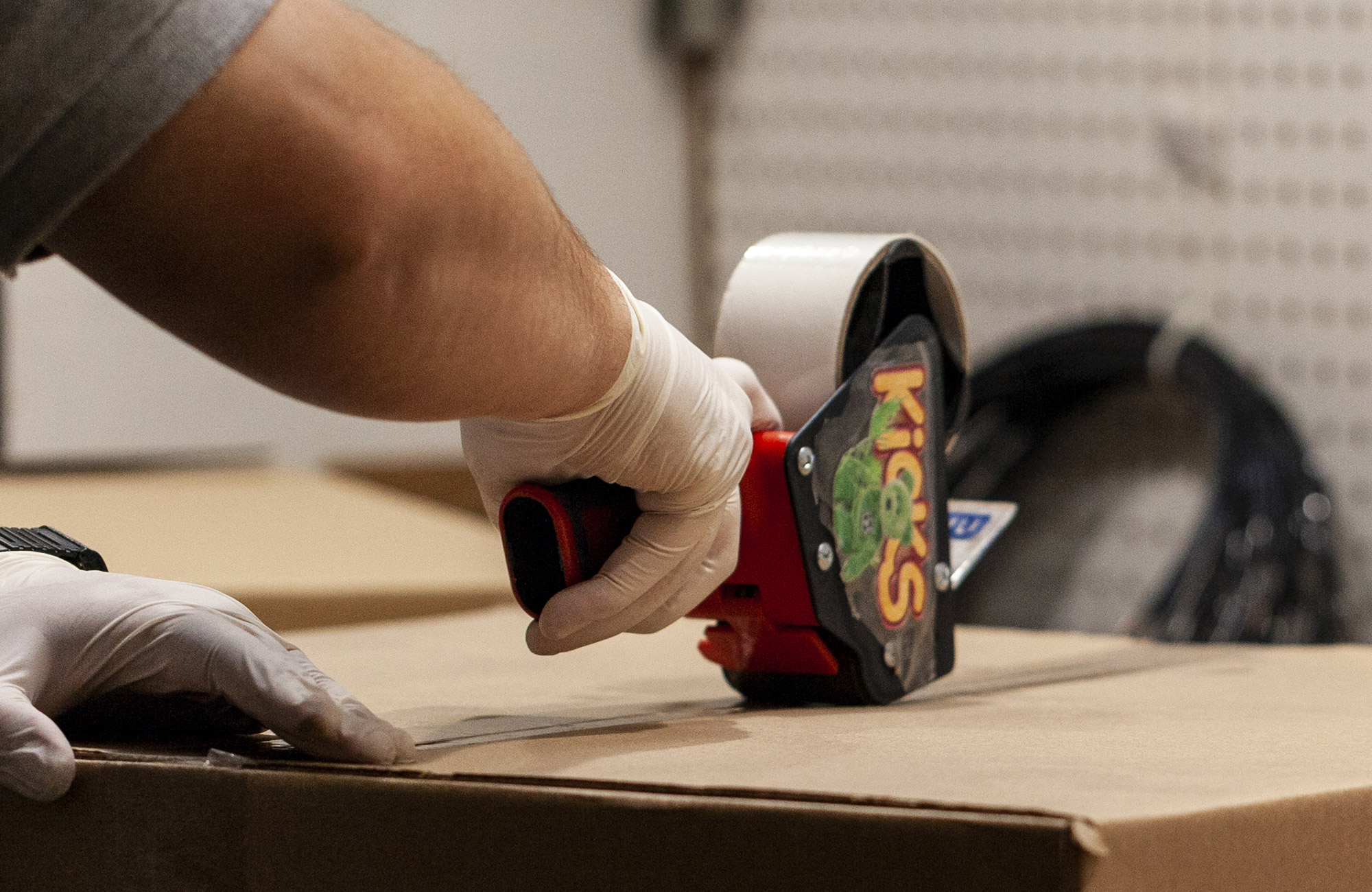
We know how to deliver

At DMF, we know how to deliver. And how to deliver fast. Not only do we provide some of the fastest shipping available in the industry, we back it up with responsive customer service. Our unique inventory control and nimble logistics leverages our domestic warehousing and nationwide distributors.

DMF keeps your projects moving full speed ahead.

_ _ _ _ _

To learn more about our fast and efficient shipping, please contact the DMF Lighting Marketing Team.
July 31, 2018

As has been widely reported, the Office of the United States Trade Representative recently announced that certain goods imported into the U.S. from China would face a 25% Section 301 tariff. While it is common for companies in our industry to use these tariffs as a justification to raise prices, DMF is committed to delivering the same excellent products and excellent value that you have come to expect.

Our intention is to keep our prices at the same levels despite the Section 301 tariffs. We understand how important it is for our customers to move forward without interrupting ongoing projects or disrupting future plans. Because we manufacture the majority of our products outside of China, DMF’s products will be largely unaffected by these tariffs and our supply chain will remain uninterrupted.  

By making this promise to you, we seek to give you the confidence to continue working with our company. DMF’s greatest asset is the trust our customers place in us, and we hope to continue our successful relationships far into the future.

Download Press Release

July 2, 2018

How Reliable is an LED luminaire?

LED based light fixtures have seen a meteoric rise in market acceptance over the last ten years and have demonstrated incredible energy savings. However, the initial euphoria around life expectancy has gradually declined and defaulted to the magic 50,000 hours or five-year warranty. Some manufacturers offer a ten-year warranty, but buyer beware, read the fine print! At the end of the day, what do the numbers really mean? Where do they come from and do they offer a realistic measure of reliability?

To answer the above questions requires knowledge on four major factors:

  • The components that comprise an LED light fixture
  • What the weak links really are
  • Reliability of system and components estimates
  • The effect of the environment on the fixture

LED Module Components

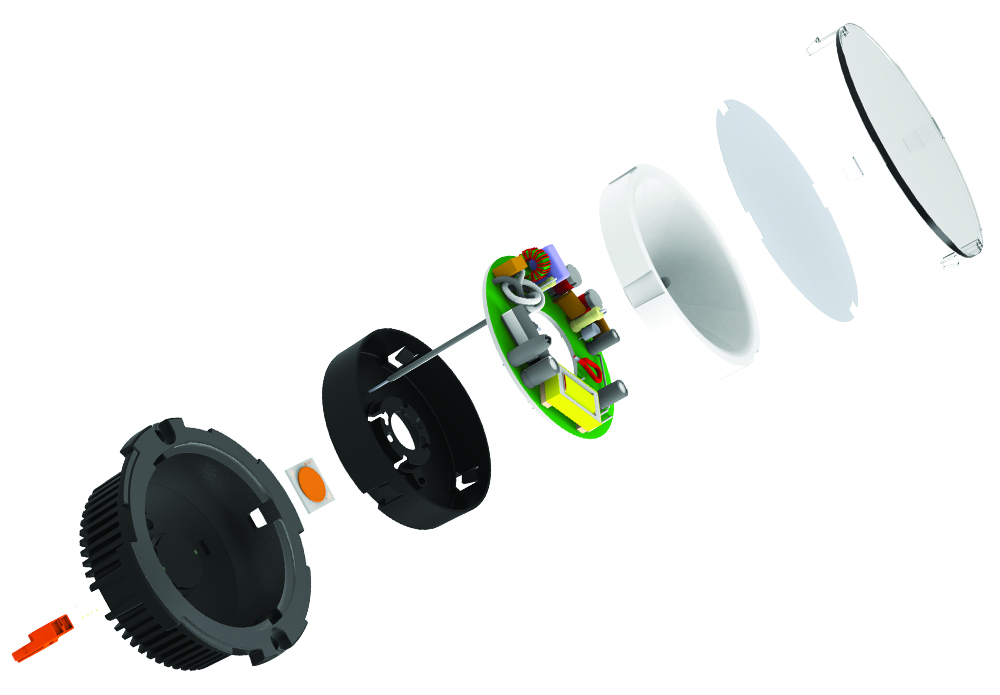
Exploded view of the DRD2 LED module illustrates the key components of an LED module. The LED, power supply, reflector, lens and heatsink.

Heat is the key factor that affects the long-term reliability of the system. In simple terms, the higher the temperature in the system the more susceptible it is to failure.

Most LED fixture manufacturers use LM-80 data supplied by LED manufactures to justify their TM-21 L70 extrapolated 50,000-hour longevity claim. However, the LED is usually not the weakest component in the system. Instead, the weakest components usually reside in the power supply and are typically electrolytic capacitors and mosfets. Longevity estimates of these components are based on operating temperature, ripple current and operational life data provided by the manufacturer. A well-designed LED system manages operating temperature and provides overtemperature control to ensure electronic components do not overly stress.

For more information on LED luminaire lifetime testing and reporting, please refer to LED Luminaire Lifetime: Recommendations for Testing and Reporting. Needless to say, this is a complex subject with many design, manufacturing and environmental variables.

What Environmental Factors Affect Lifetime?

The key environmental factors that affect the real working lifetimes of any LED luminaire are temperature, time and operational abuse. High indoor ceilings, elevated outdoor temperatures and large shifts in ambient temperatures can place significant stress on the LED system. In addition, the amount of time the LED fixture is on can vary significantly. LED downlights in bedrooms used only at night stress the light fixture much less than 24/7 commercial or corridor applications. Another reason for LED failure is overvoltage and surge, particularly with 277V systems.

The luminaire designer can mitigate the effects of environmental variables with appropriate thermal management and sufficient power supply input protection. However, the end user must still comply with environmental operating parameter requirements for successful long-term operation. Placing a typical downlight into a sauna or shower application can cause problems if the light fixture cannot handle the humidity.

LM-84 to the rescue!

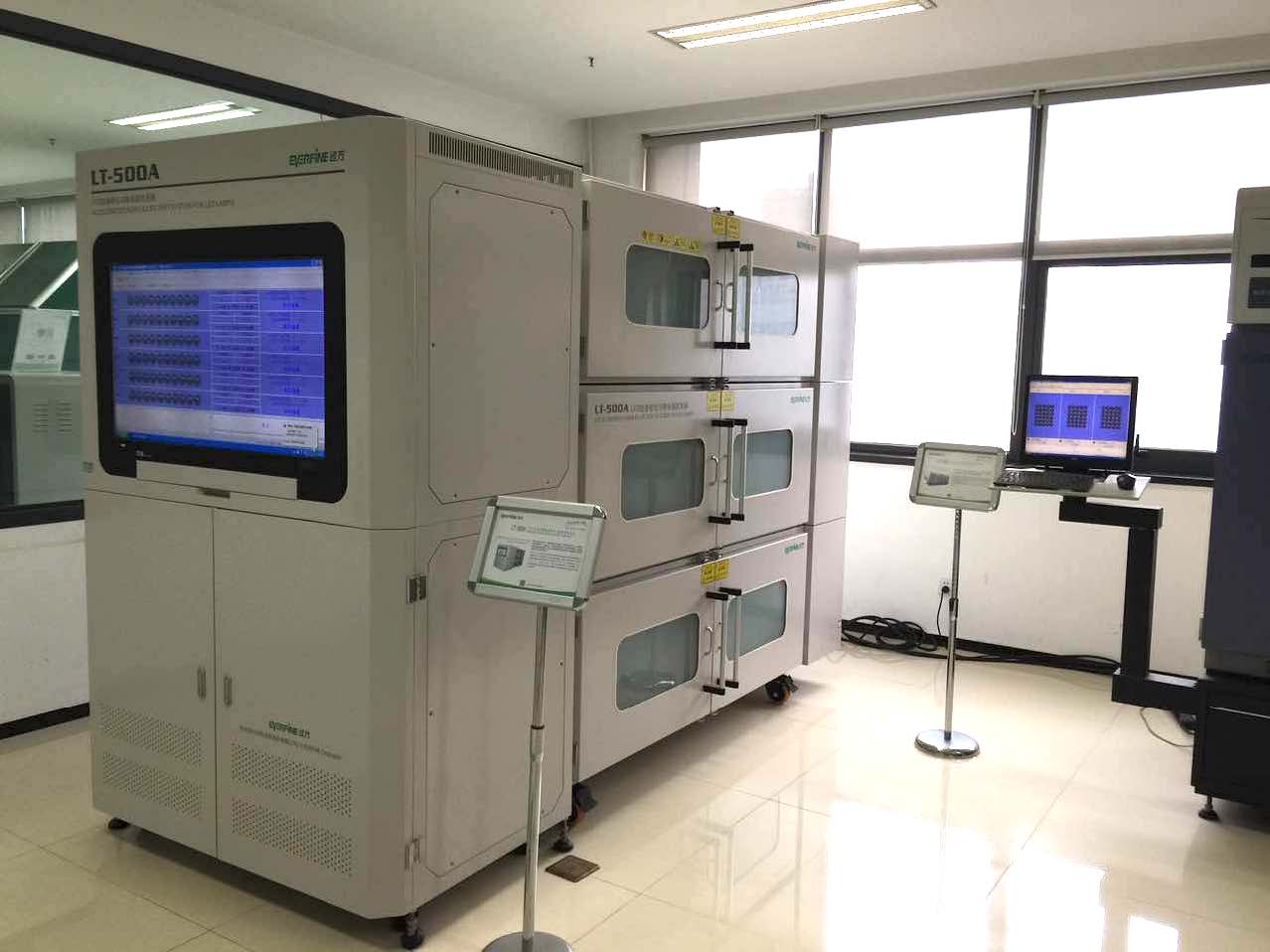
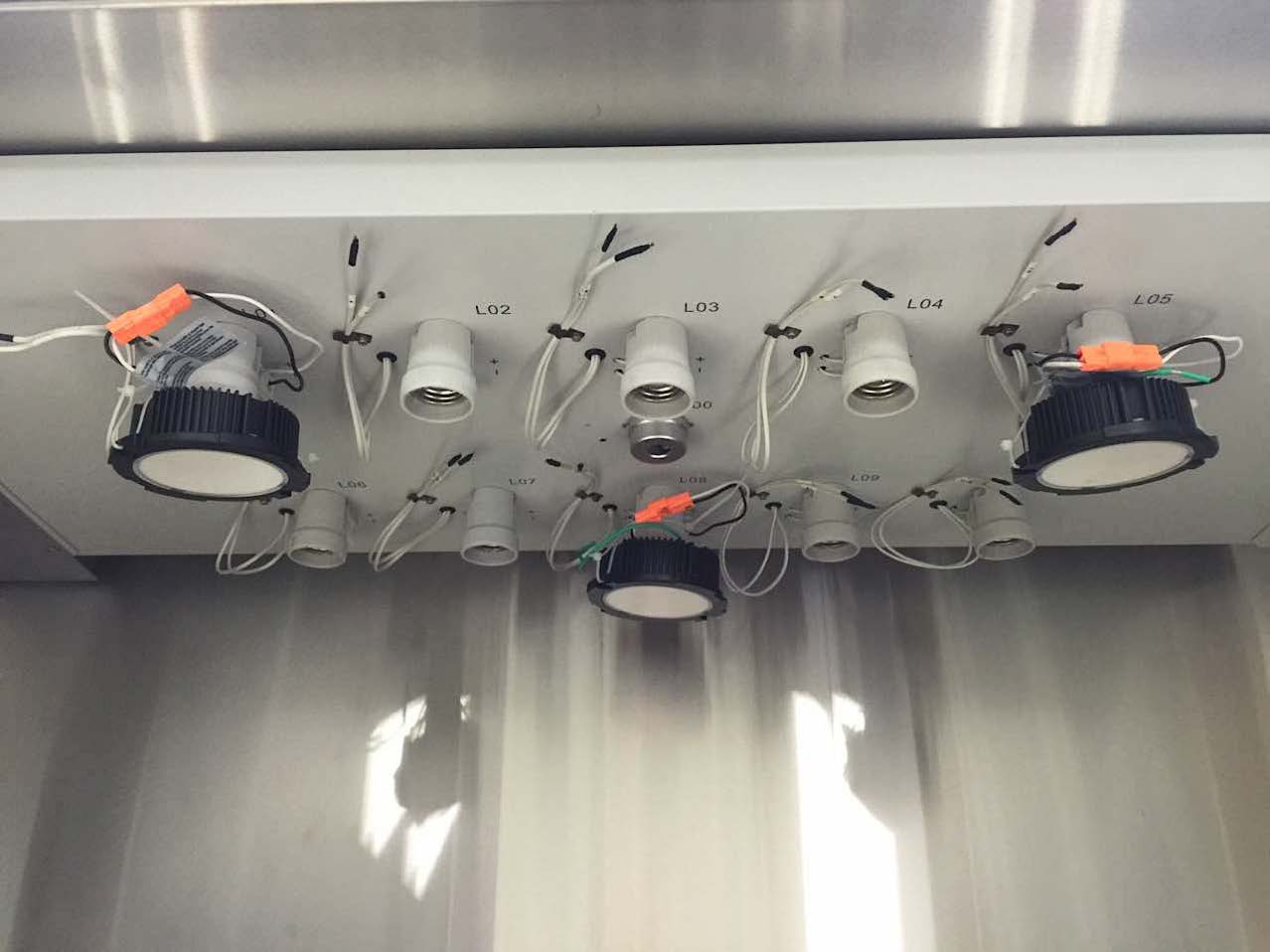
DMF uses the LM-84-14 test protocol to generate data to estimate the product lifetime of its DRD2 LED modules. The test has been running for over 9,000 hours, with modules operating at 120V and 277V in a 45°C (113°F) ambient environment. Each module is tested every thousand hours for lumen output, chromaticity X/Y color shift and input power.


Temperature-controlled test chamber equipment.


DRD2 modules under test.

The Results


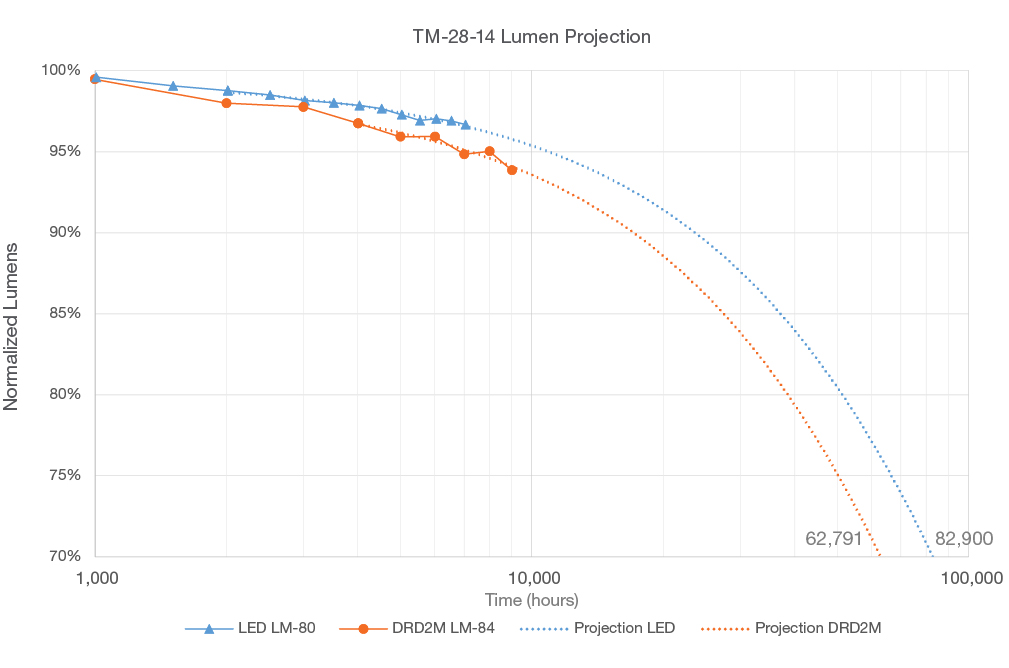
Normalized lumen output of test fixtures plotted on a logarithmic time scale, along with the exponentially extrapolated curve to create the projections.

The LED data is also included from the LED manufacturers published LM-80 file. Notice how LED extrapolation indicates better lumen maintenance over time than the modules. This illustrates that using only LED LM-80 based information extrapolations can provide an optimistic prediction of longevity.

Using the 9000-hour test data, the Luminous Flux Maintenance Life L70(9k) based on IES TM-28-14 is L70(9k) > 62,791 hours (at Ta = 45°C).

The key result is the L70(9k) calculated lifetime of 62,791 hours. In other words, the extrapolated test results indicate that the DRD2 modules will maintain at least 70% of their initial lumens for over sixty thousand hours. In addition, the power requirements of the modules reduced by over two watts since DMF initiated these tests. That further mitigates the effects of heat within the system and improves reliability. DMF also anticipates reduced power requirements to achieve given lumen outputs will continue as LED efficiency continues to improve. Even further, better results are expected when the modules operate in real-world situations where the ambient temperature is likely to be less than 45°C (113°F).

What Does it All Mean?

In conclusion, DMF is leading the way among LED fixture providers using tests such as LM-84 to validate our longevity and reliability claims. DMF has proven that the 50,000-hour reported lifetime for the DRD2 LED module is valid with the LM-84 test data and the TM-28 data extrapolation. In contrast, few LED fixture manufacturers have published the results of LM-84 tests on their light fixtures. This makes it impossible for consumers to objectively assess longevity claims. DMF will continue to use the LM-84 as well as explore additional test methods to validate the DRD2 and other LED light fixtures.

Learn more about the DRD2 Recessed LED Downlight.

Technical Bulletin: LED System Reliability

June 21, 2018

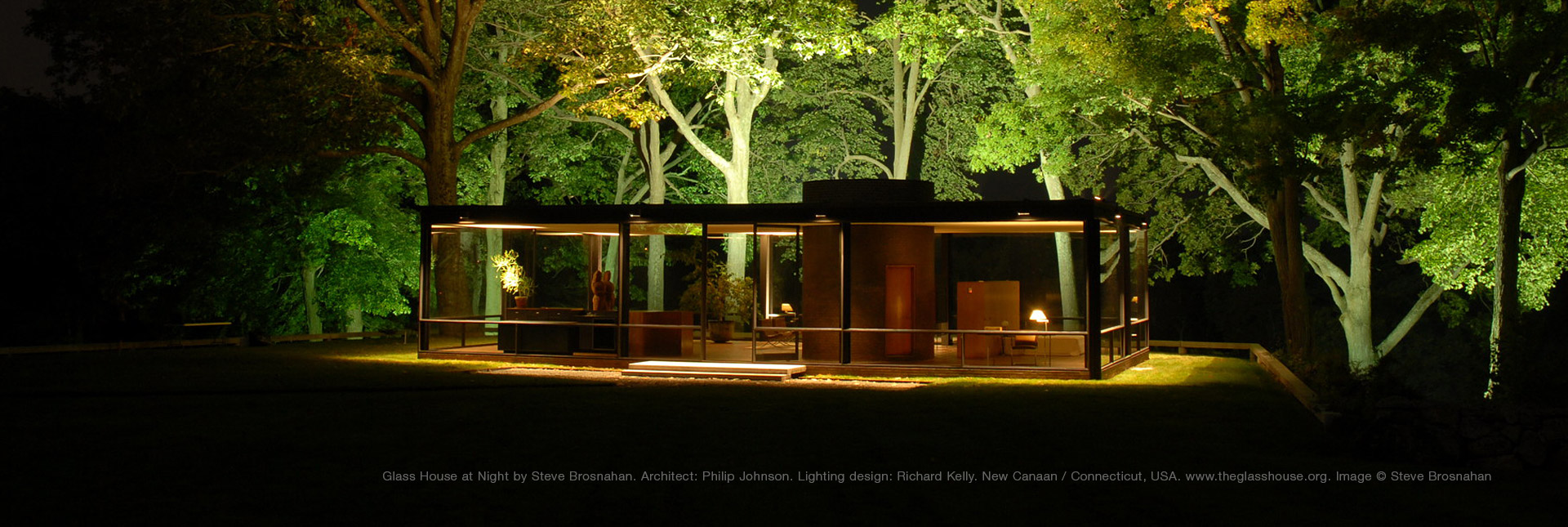
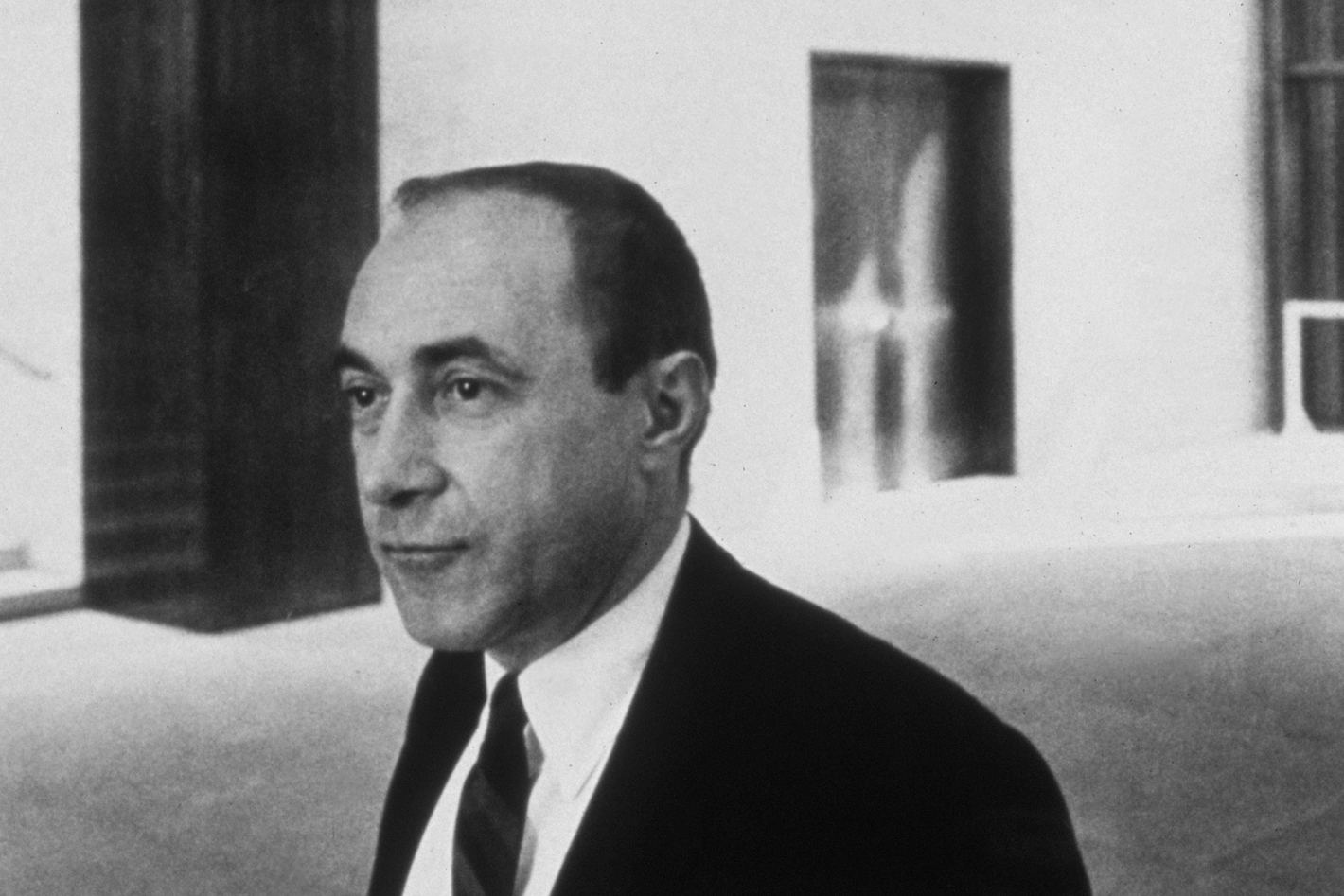
One of the pioneers of architectural lighting, Richard Kelly changed the way the industry viewed light. To Kelly, it wasn’t about the fixtures but rather the created lighting effects. In his 1952 lecture, Lighting as an Integral Part of Architecture, he recognized three types of lighting effects as the core of lighting design: focal glow, ambient luminescence, and play of brilliants. He combined these effects to shape spaces and evoke a range of emotions.
 

Collaborating with renowned architects such as Mies van der Rohe, Louis Kahn, and Phillip Johnson, Kelly illuminated some of twentieth century’s most iconic buildings including the Seagram Building and Kimbell Art Museum.

“Lighting is both an art and a science.”

Shaping spaces with DMF

 
At DMF, our engineers use these principles as inspiration when designing products. But we take things a step further. Not only are we a leader in developing lighting products, we also support them with services not offered by other manufacturers.

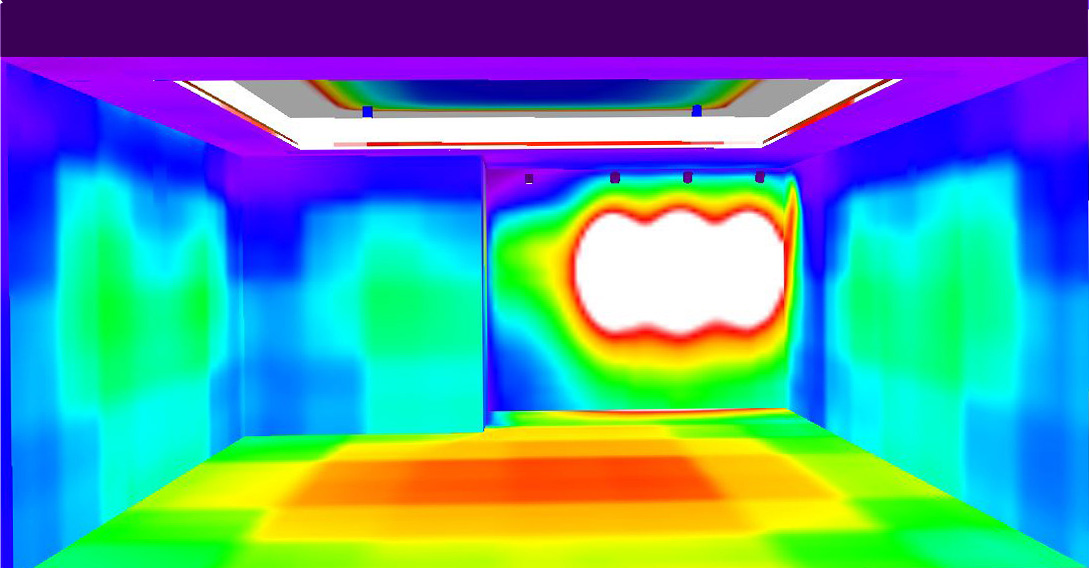
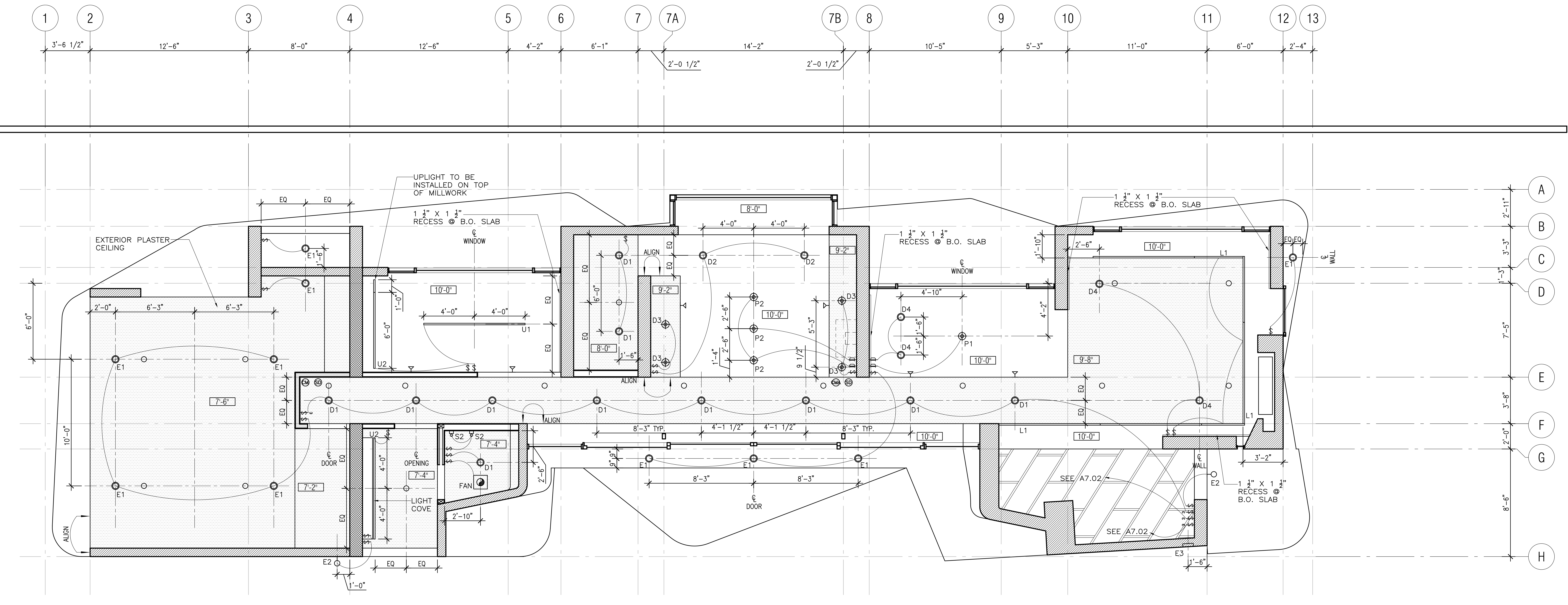
We provide a lighting layouts service where our in house Applications Team creates fixture schedules for custom projects. It starts with one-on-one consultations with builders and architects to understand the needs of the project. Then, we use advanced 3D software to mock up spaces. We place fixtures based on IES photometric standards and determine a recommended lighting layout. We also offer emergency lighting photometric calculations to ensure rooms and corridors abide by NFPA regulations.

Contact our Marketing Team to learn more about how we can help you illuminate your project.

June 1, 2018

Emergency Lighting Requirements


The National Fire Protection Association (NFPA®) standard NFPA 101®, Life Safety Code 2018, chapter 7 – Means of Egress, section 9 – Emergency Lighting requires emergency lighting to provide the following system performance:

7.9.2.1 – The emergency lighting system must provide a minimum of 1.5 hours (90 minutes) of illumination if the normal lighting fails.

7.9.2.1.1 – The emergency lighting system must be arranged to provide initial illumination of at least 1 ft-candle average and a 0.1 ft-candle minimum at any point measured along the path of egress at floor level.

7.9.2.1.2 – The illumination levels can decline to a minimum of 0.6 ft-candle average and 0.06 ft-candle at any one point, at the end of emergency lighting time of 1.5 hours.

7.9.2.1.3 – The maximum-to-minimum illumination should not be greater than 40 to prevent excessively bright and dark spots.

7.9.2.3 – The emergency lighting system must be arranged to provide illumination automatically in the event of any interruption of normal lighting.

Typical Emergency Light Fixture

 
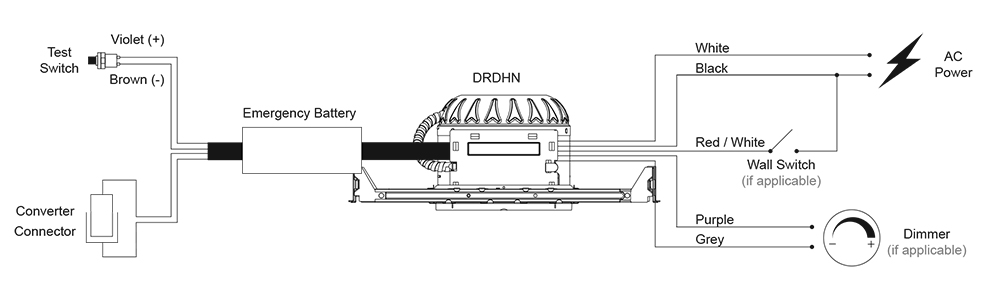
DMF Lighting offers EM (emergency) lighting options with most of its light fixture housing types. These emergency light fixtures can be dimmed with TRIAC/ELV, 0-10Vdc or more sophisticated digital signals. However, the dimmer cannot control light output during emergency operation. DMF uses a UL924 qualified emergency LED driver with battery backup, which detects the loss of normal power then switches control to battery power in emergency mode. See diagram below.

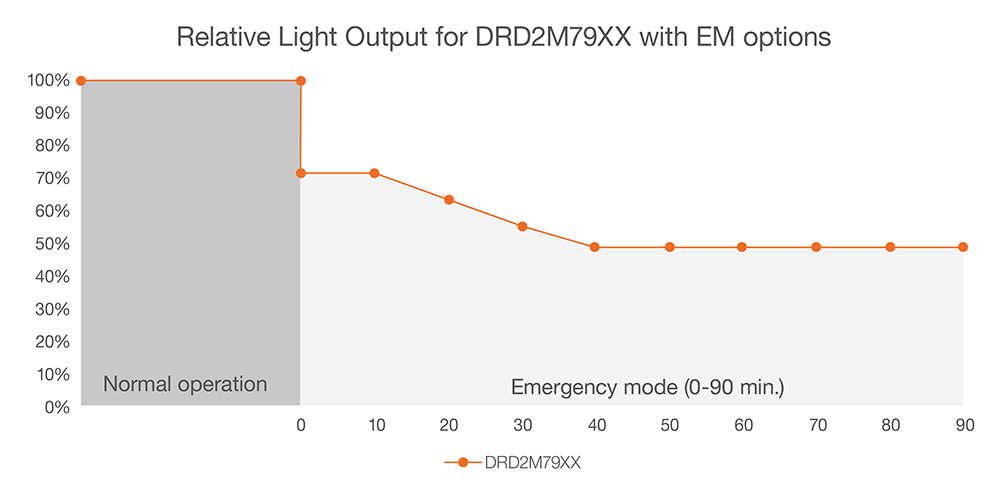
Typical DRD2M Performance under Emergency Conditions

 
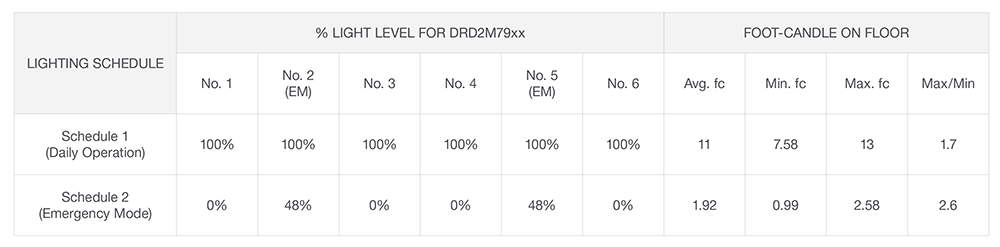
In house test results illustrate the typical profile of light output during emergency battery operation relative to normal power conditions. This information is important to know when calculating lighting layouts for paths of egress. Lighting designers can then adjust the light levels appropriately for emergency mode. See table below for details.
 

Typical Lighting Layout for a Path of Egress

 
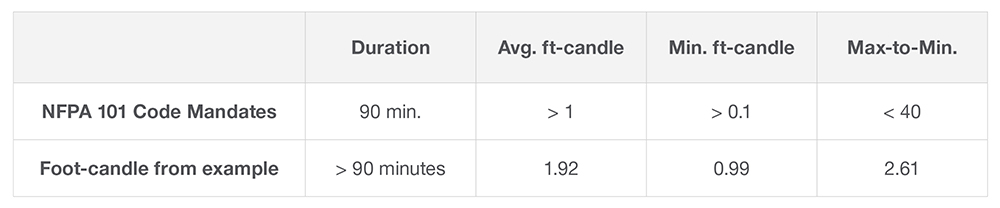
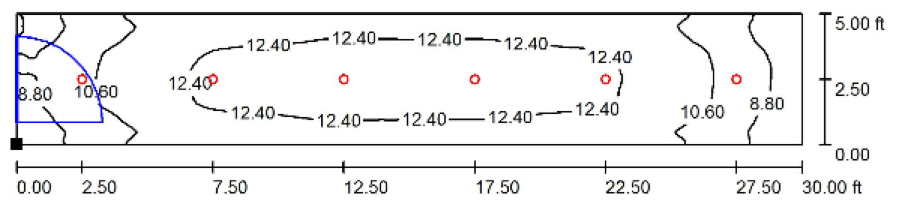
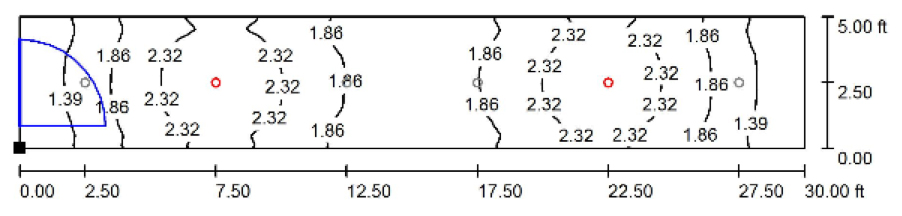
The example below shows typical data for a 30’ long by 5’ wide corridor with 9’ high ceilings. It also maintains typical reflectance values (0.8 ceiling, 0.5 walls, 0.2 floor). The light output of the EM fixtures was de-rated per the previous table for the DRD2M79xx light engine. In normal operation, the light fixtures spaced on 5’ centers. Two fixtures spaced 15’ apart have EM capability. The results meet the NFPA 101 requirements as shown below.


Foot-candle distribution for Schedule 1 (normal power conditions) with DRD2M79xx


Foot-candle distribution for Schedule 2 (EM power conditions) with DRD2M79xx

Technical Bulletin: Emergency Lighting Requirements

August 1, 2017

Note: This Bulletin was originally published on 08/01/24 and has been updated to reflect the new product offerings.

Why is an impact-rated fixture important?

In many applications today, a well-illuminated and secure environment is required. Examples of such environments are common areas, passageways and entry/exit areas in multi-family structures. Using light fixtures that have a proven measure of impact resistance can help maintain the environment despite what nefarious elements may try to do.

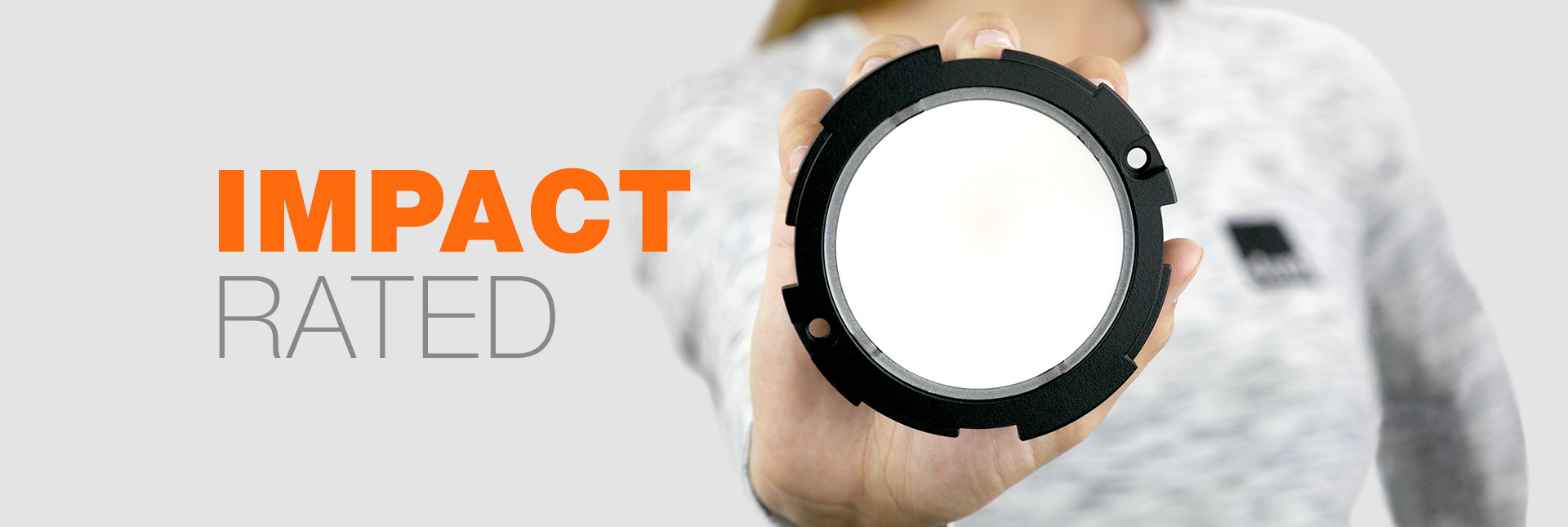
DMF Lighting provides recessed fixtures, such as the F4NC / DRD2M / DRD2TRJS family, with a low profile trim and robust polycarbonate lens, that offer a level of protection, suitable for use in common entry/exit passageway applications where impact resistance is required.


What is IK10?

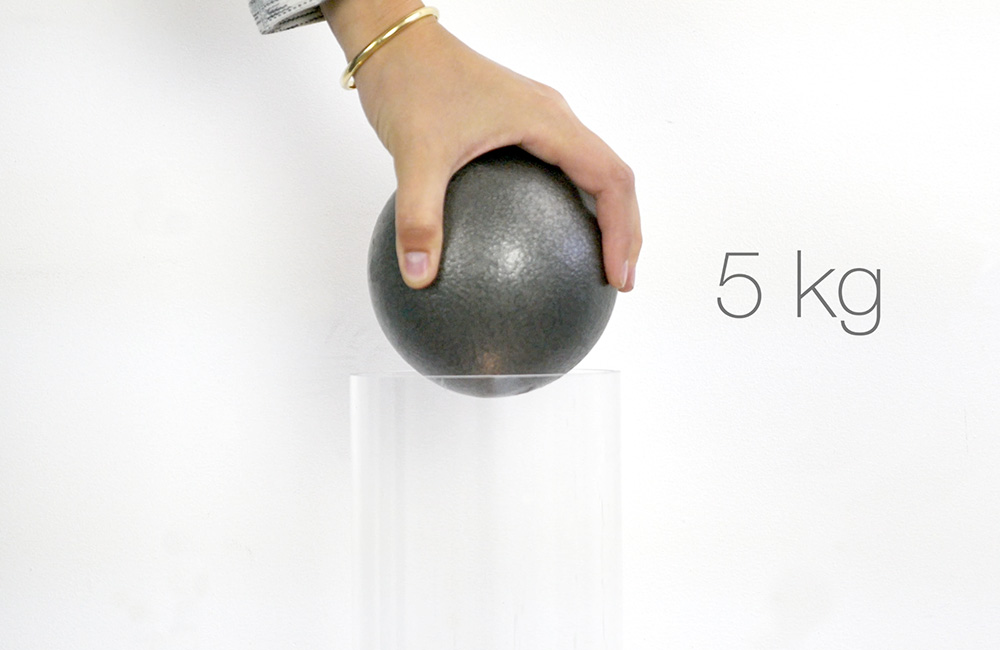
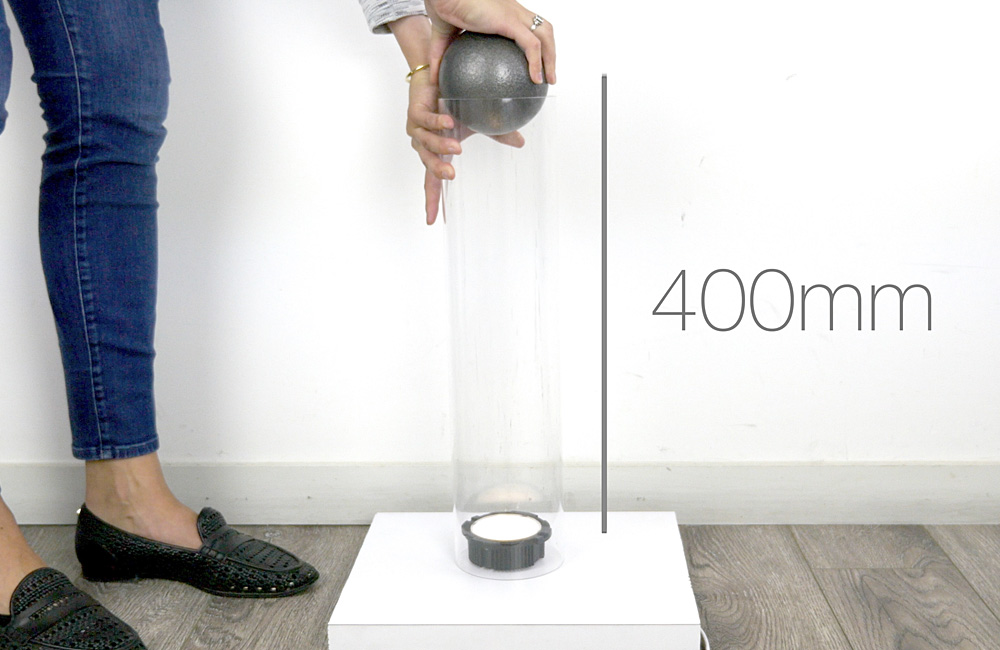
The IK rating system, developed by the International Electrotechnical Commission (IEC) in 2002, defines the degree of protection offered by electrical equipment enclosures against external mechanical impacts. The level of protection is defined by two numbers, for example, IK10. The ratings range from 00 (not protected) to 10 (protected to 20 joules of impact energy). The standard defines how an enclosure containing electrical equipment should be tested to achieve a given rating. For example, the IK10 rating requires a 5 Kg mass with a radius of 50 mm to be dropped onto the enclosure five times from a distance of 400 mm. After the test, the enclosure should exhibit no observed defects.


What rating does the DRD2M have?

The DRD2M LED module family is protected by a substantial polycarbonate lens and has been tested and found to comply to the highest level offered, IK10. The IK10 rating gives assurance that the DRD2M will withstand all but the most serious attempts to disable it.

“The DRD2M will withstand all but the most serious attempts to disable it.”

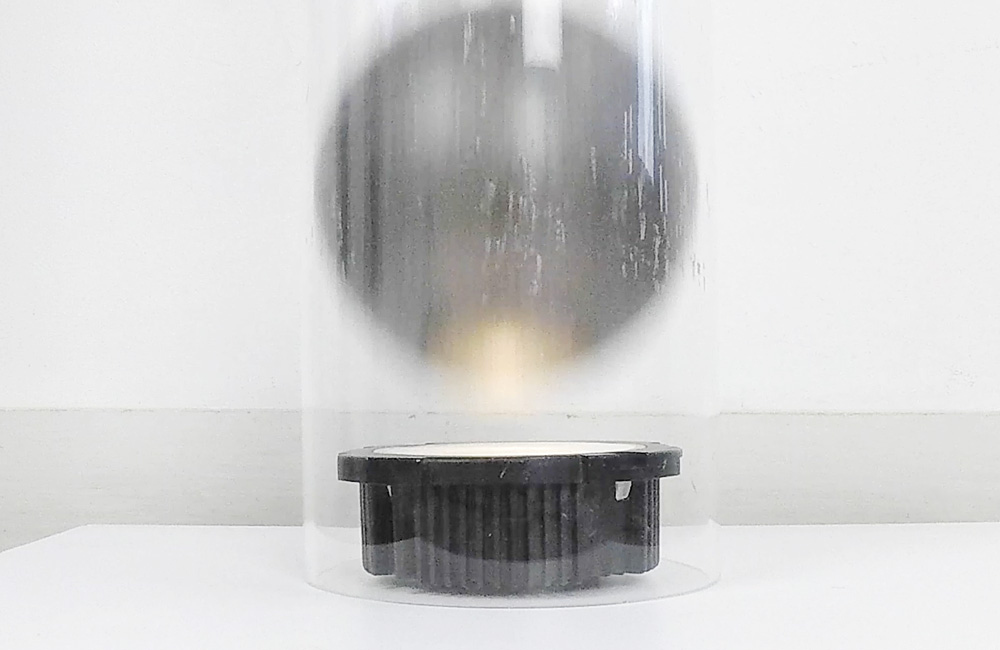
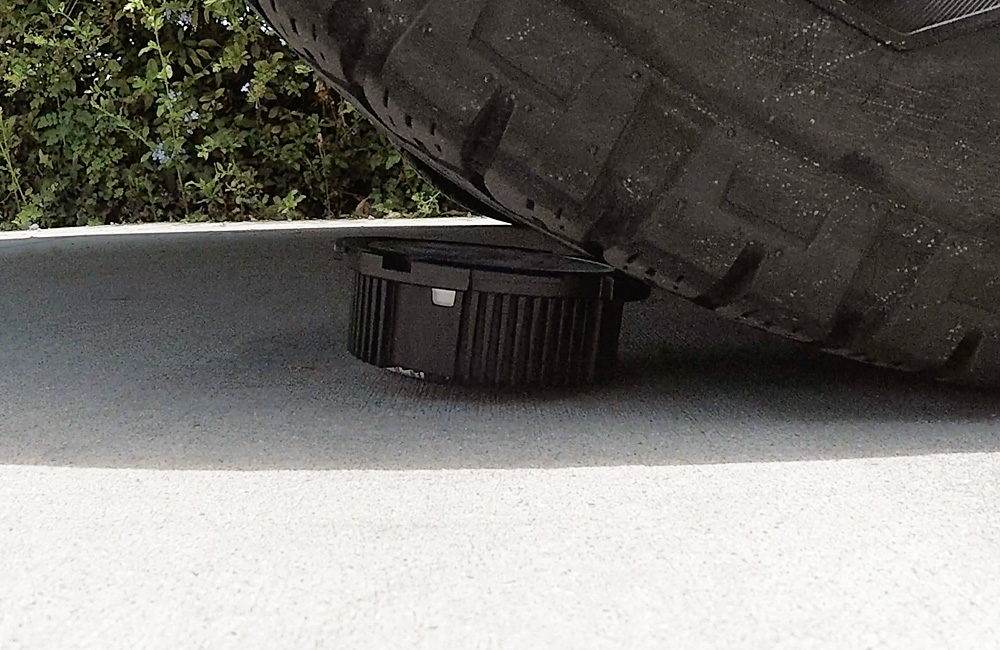
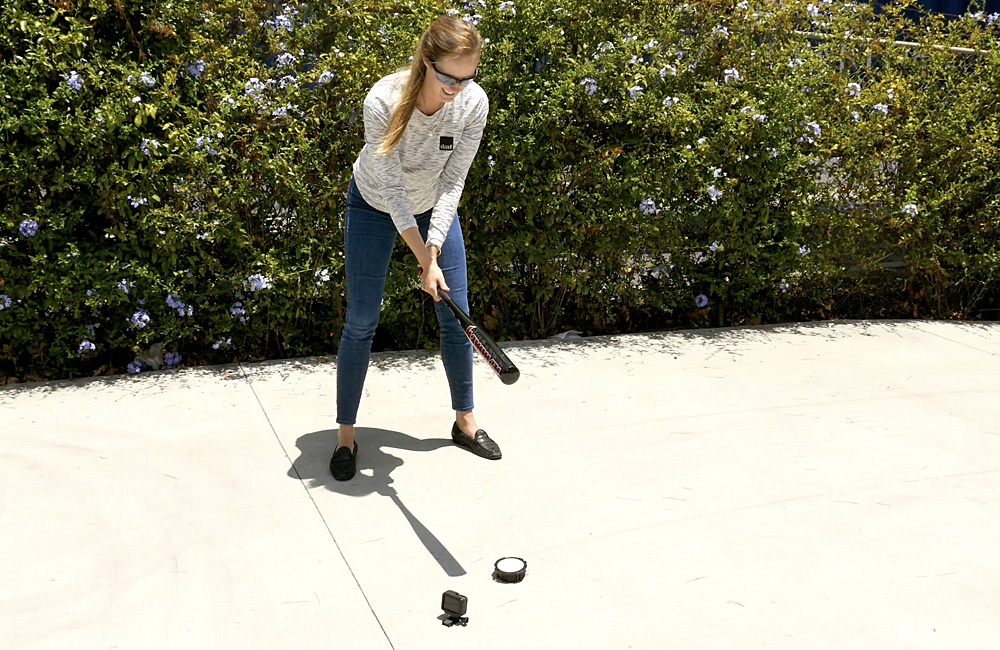
The combination of the low profile junction box trim DRD2TRJS and IK10-rated DRD2M LED module recessed mounted into a ceiling makes it almost impossible to land a knockout blow to disable it from below. A series of pictures and a video illustrating DMF’s own impact test is shown below.

Technical Bulletin: Impact-Rated Recessed Fixtures

May 25, 2017

UL 1598 Standard for Safety – Luminaires defines three moisture protection types for luminaires, Dry, Damp or Wet.

Type Definition
Dry A location not normally subject to dampness, but may include a location subject to temporary dampness, as in the case of a building under construction, provided ventilation is adequate to prevent an accumulation of moisture.
Damp An exterior or interior location that is normally or periodically subject to condensation of moisture in, on, or adjacent to, electrical equipment, and includes partially protected locations.
Wet A location in which water or other liquid can drip, splash, or flow on or against electrical equipment.


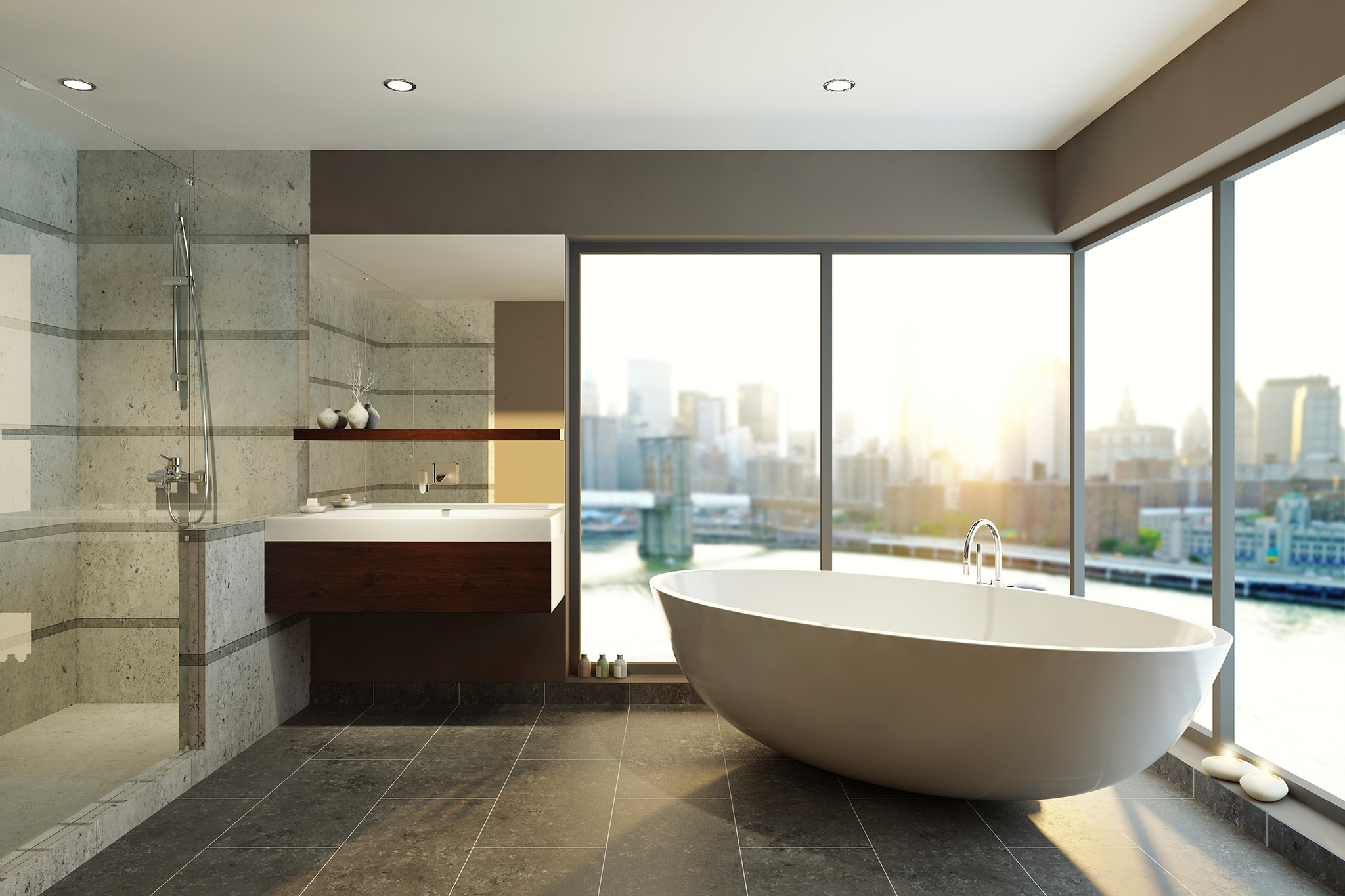
Interior luminaires are often listed as dry or damp and most exterior luminaires are listed as wet. However, there are national and local requirements for interior luminaires to be wet location listed in areas such as bathrooms and above showers.

DMF Lighting offers several luminaires, such as the DRDH/DRD2M/DRD2T, that are UL 1598 Standard for Safety – Luminaires tested and marked “Suitable for Wet Location”. The DRD2M module must be installed with a DRD2T trim with our signature Twist & Lock feature to qualify for the wet location designation.

Up to the Test

The UL 1598 Standard specifies three wet location tests that can be applied to a luminaire depending on its usage and mounting location: rain, sprinkler or immersion. A given luminaire can be subject to one or more tests to determine if it can be classified as wet location. All the tests attempt to simulate what the luminaire is likely to undergo in the environment it is intended to be used.

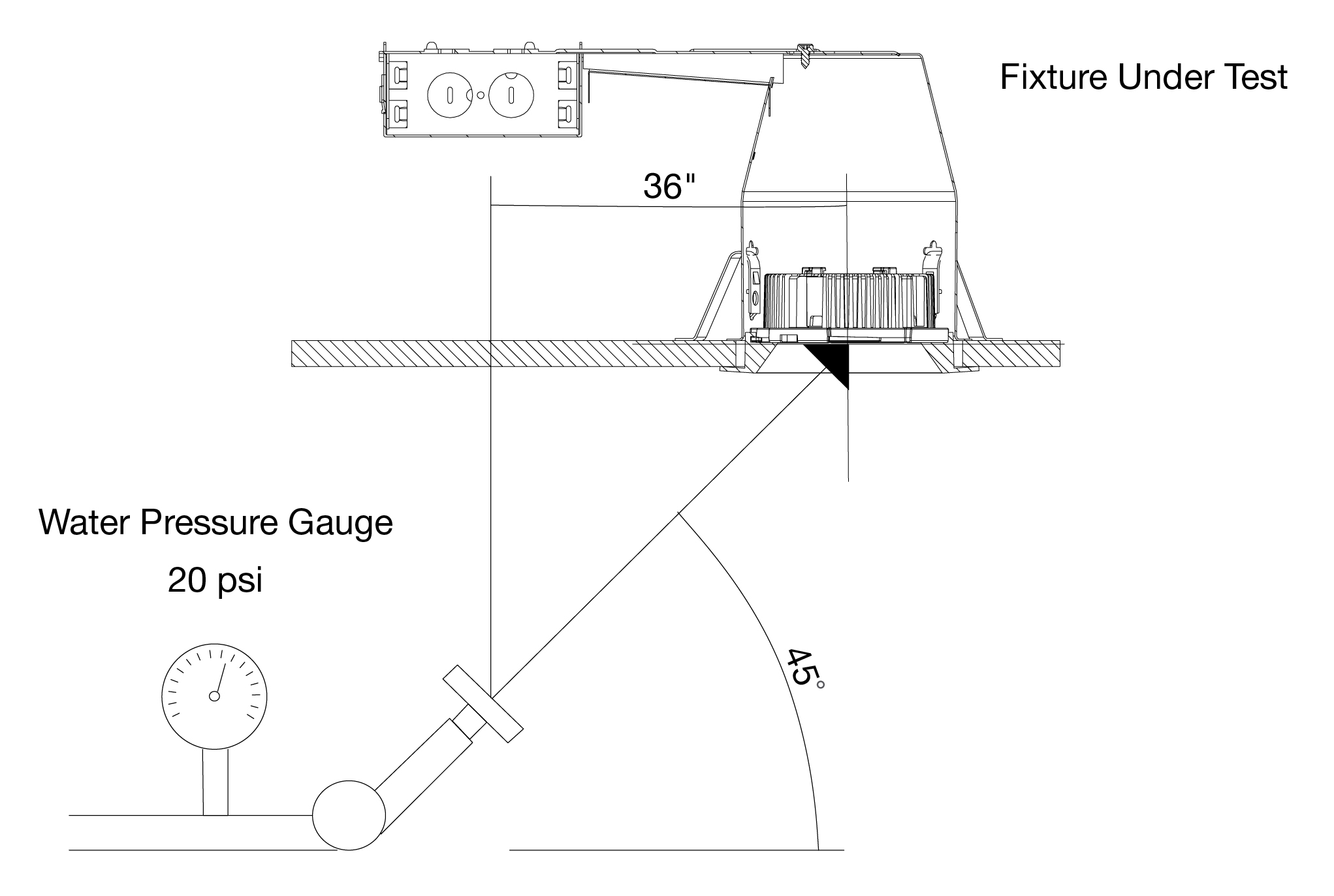
The DRDH/DRD2M/DRD2T luminaire is a recessed downlight used in ceilings that are protected from external moisture. This means that the application prevents moisture penetrating from above. To this end, the DRDH/DRD2M/DRD2T luminaire was tested using the sprinkler test. The test is arduous and is conducted with the controlled spray head pointing at the luminaire while set to 20 psi3.


The test is performed over four hours and is sequenced as follows:

  • First hour – luminaire is turned on and water jet is off
  • Next half hour – luminaire is turned off and water jet is on
  • Next two hours – luminaire is turned on and water jet is on
  • Last half hour – luminaire is off and water jet is on

After the test is complete, the luminaire is subjected to a dielectric voltage withstand test and fully inspected to make sure that no water intrusion occurred that could cause a hazard or the luminaire to malfunction.

Technical Bulletin: Wet Location Luminaires