October 6, 2021

Efficiency is at the Core

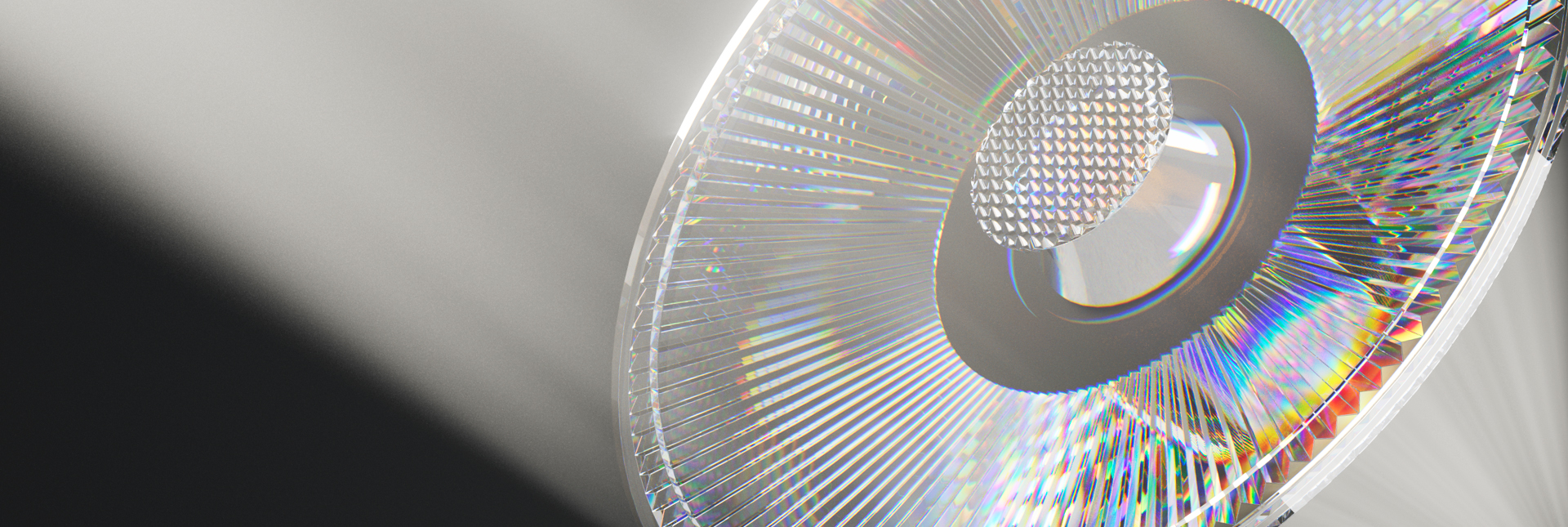
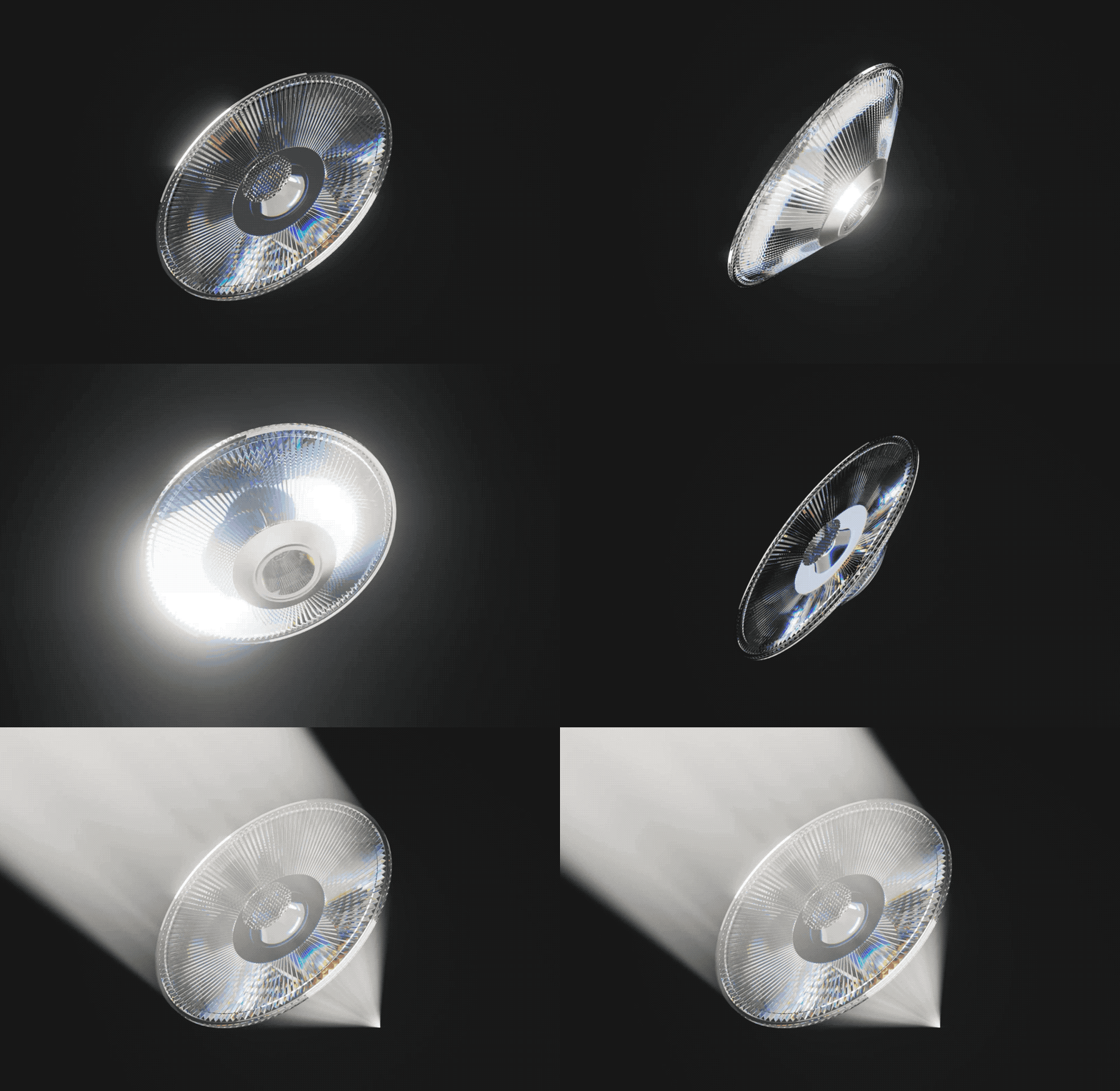
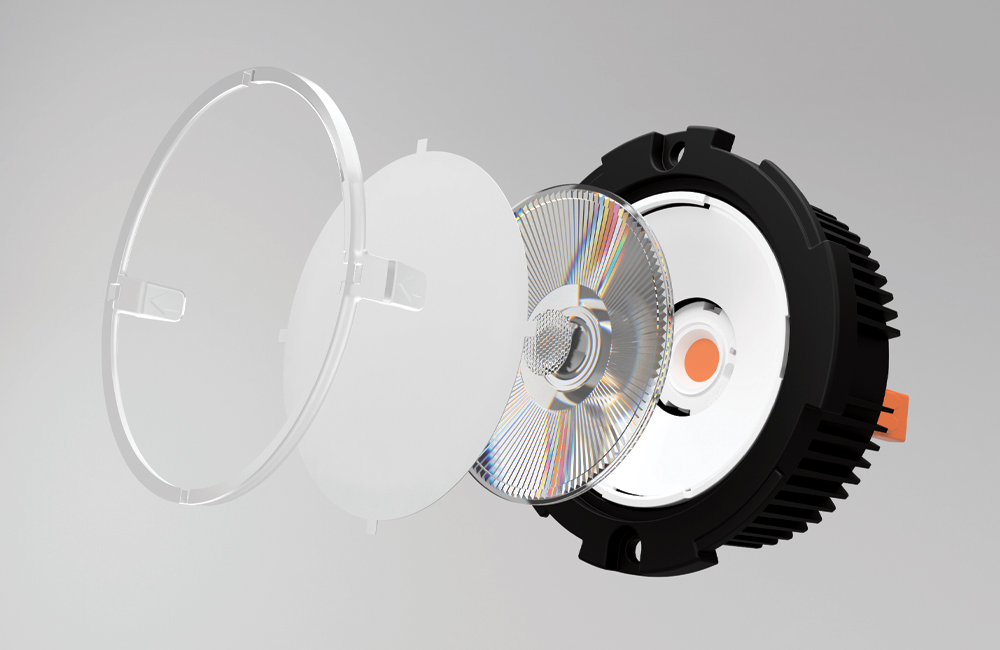
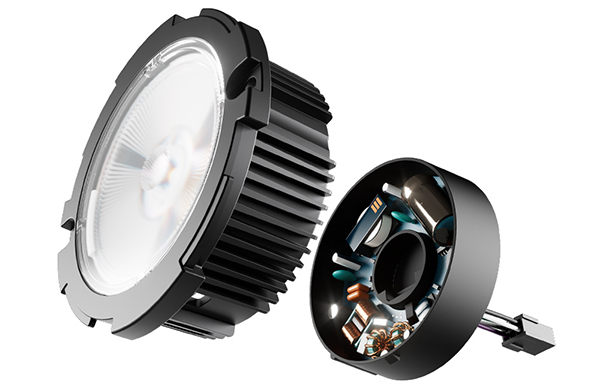
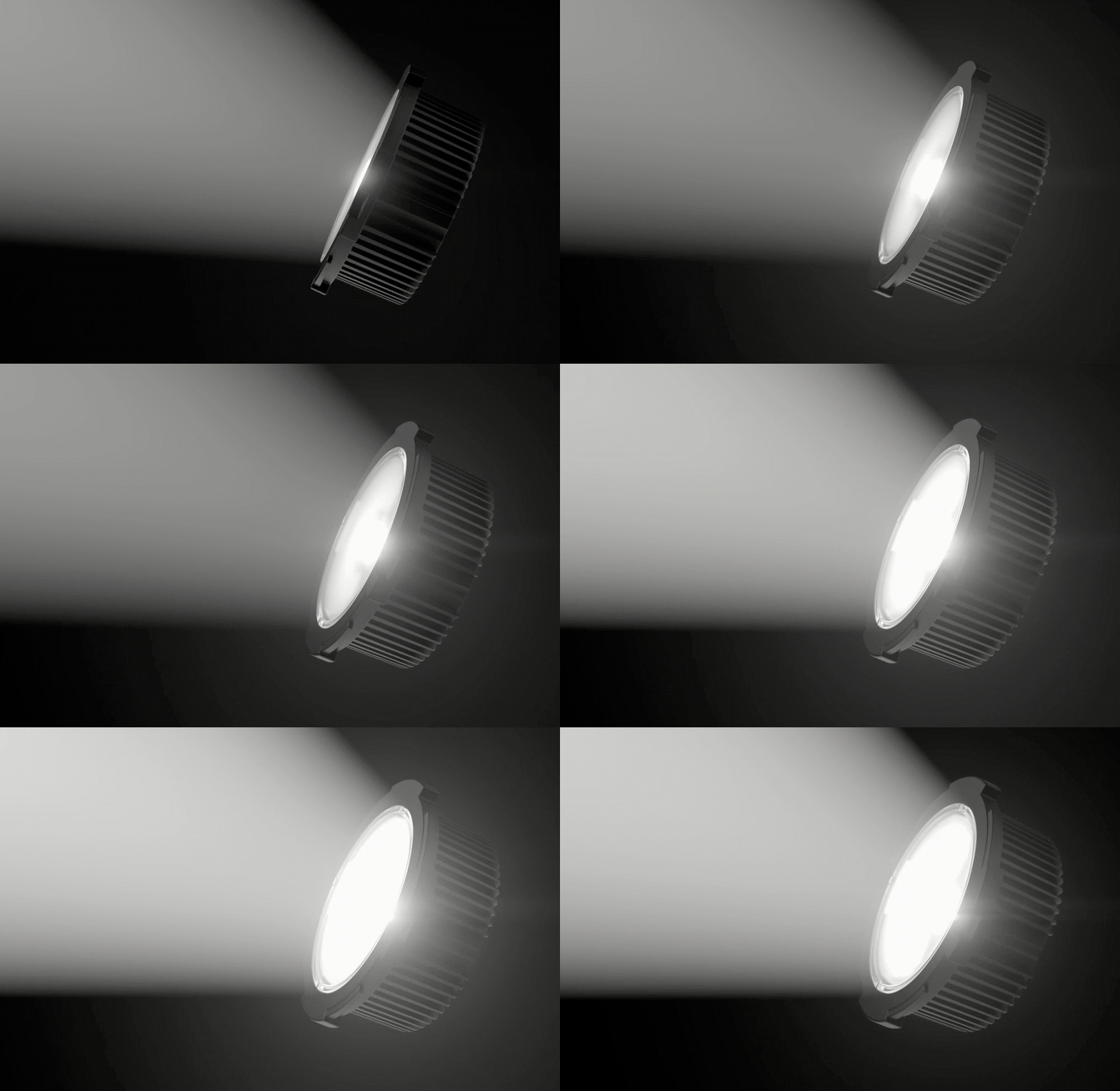
DMF’s patented Folded TIR Optics are a brilliant lens solution developed by our in-house engineering team designed to increase light efficiency while also reducing glare.

TIR Explained

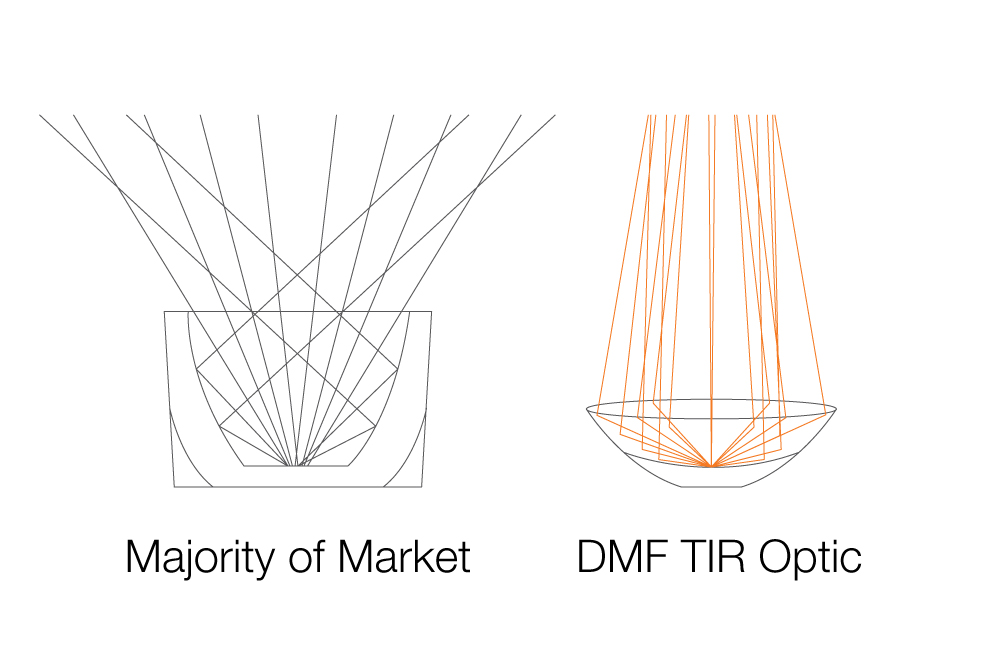
TIR stands for Total Internal Reflection. Put simply, when an LED light is placed on a TIR lens, the light photons are then captured and directed towards the desired location. Currently, a TIR lens is the most efficient method of reflecting light. However, due to the intrinsic design of the technology, a TIR lens has previously needed to be a deep optic, taking up valuable plenum space.

Folded TIR Optics 

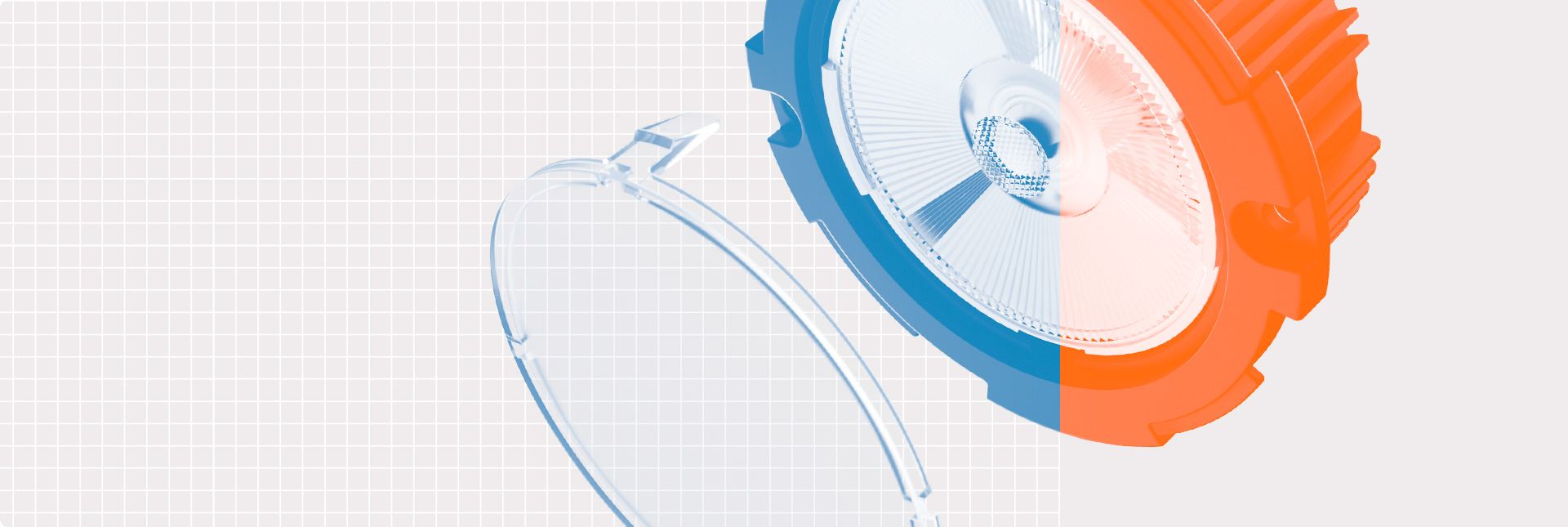
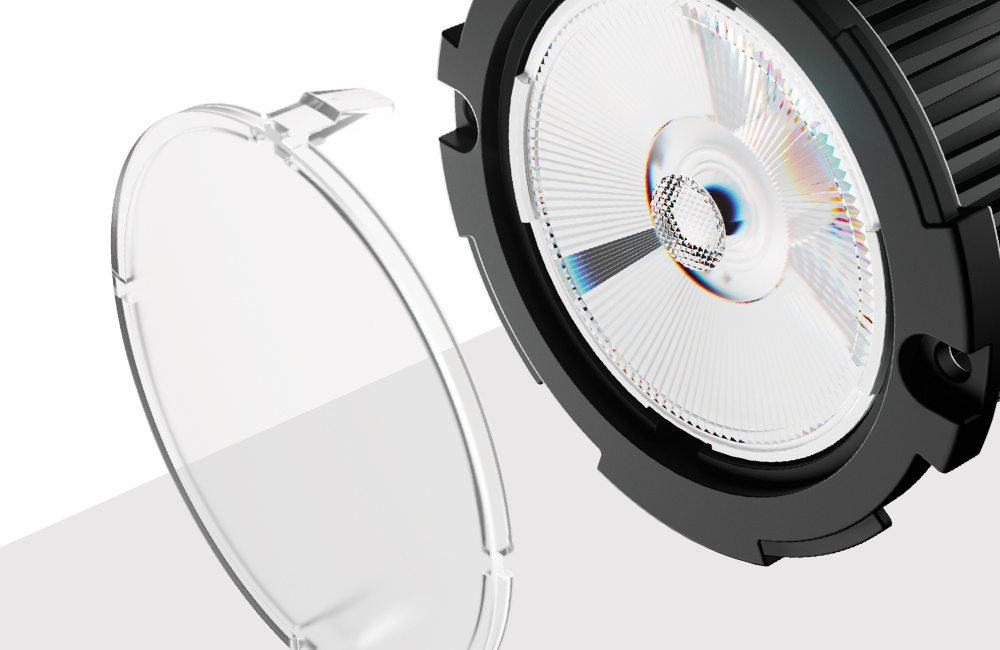
DMF has revolutionized this design by introducing a new folded TIR optic lens that when coupled with a specialized anti-glare structure at the center, lighting efficiency is increased while simultaneously reducing glare and still maintaining an even light distribution.

While conventional TIR optics only feature a single internal reflection, our patented solution has been geometrically optimized to yield a concentrated and focused light beam. While that sounds complicated, the simple fact is that this allows the height of the optic to be minimized to save space in the module and most importantly of all, precious plenum space.

Exclusively Through DMF

DMF’s Folded TIR Optic technology is featured exclusively in the next generation DRD2, DCD3, and DCD4 modules. Thanks in part to technological advances like this, these high-performance solutions simplify design, installation, and maintenance.


– – – – – – – –

Stay up to date with everything that’s happening at DMF:  LinkedInInstagramFacebook, or Twitter

September 20, 2021

Technology Designer Magazine explores the world where technology meets design. Written by and for the design-build community, the magazine features unique team profiles and in-depth project case studies.

They recently featured Lynne Stambouly, Senior Lighting Design and CEO of Illuminated Design, in an in-depth piece about her career, struggles and achievements.


First appeared in the Summer issue of Technology Designer Magazine and is reprinted with permission

TECHNOLOGY PROFILE


Lighting and Learning


We recently had an in-depth conversation with Lynne Stambouly, whose lighting career has spanned over 35 years.


BY GEORGE MCCLURE

SINCE THE EARLY 1980s, LYNNE STAMBOULY has worked for lighting manufacturers, trained other lighting professionals around the country, owned her own lighting showroom and designed for some of the largest interior design firms in the United States. She is currently Senior Lighting Designer and CEO of Illuminated Design in Naples, Florida.

In addition, Lynne is past President of the Interior Design Society in Naples (IDS) and has been affiliated with the American Society of Interior Designers (ASID) for over 15 years. Currently she holds the position of Chairman for the Collier Building Industry Association (CBIA) Sand Dollar Award Committee, and is a founding member of the Advisory Counsel for the Interior Design School at Southwest Florida College.

“Now we have some unbelievable technology with flexible LED that we lay down on a substrate and we are able to actually put the stone right on top of it.” Lynne Stambouly ILLUMINATED DESIGN


GEORGE: How did you get your start in the lighting industry?

LYNNE: I actually went to electrical school in the late eighties. The first guys I worked for, their dad started Union Number One in St. Louis, Missouri. So, for the first two years that I worked for them I went to electrical trade school. That experience to this day suits me well. If I’m on a job site with an electrician or an inspector, it helps to understand the craft from the ground up.

GEORGE: You can talk their language and anticipate potential issues when you’re designing a system.

LYNNE: Yes. Especially when it comes to retrofitting. We have to know what’s happening behind the infrastructure to add to it or make changes. You can’t just say, “Okay, I want a light here.” Because if I say, “It can be done,” and then the electrician comes in and it can’t be done, then what kind of expert am I?

GEORGE: So you went to trade school and then when did you move over to the lighting design side?

LYNNE: After being an electrical rep I went to work for a lighting rep firm. I covered Iowa, Nebraska, Central Missouri and Southern Illinois. I did 60-70,000 miles a year on the road calling on lighting showrooms, electrical distributors, architects, builders and designers. Before deciding to come back home to Florida, I took a job with Kichler Lighting. I was their national trainer for the landscape lighting division for several years.

I then had my own lighting showroom in Southwest Florida until about 2008, during the recession. We were one of the ones that unfortunately didn’t make it. Next was creating the specialty lighting division for a high profile, local lighting showroom. It was right around the time that incandescent was shifting over to LED, and my business partner Curtis Searles, an LED expert, and I were there for about 10 years together. One day about two years ago we decided it was time to branch out, and we launched our own company, Illuminated Design, that today has grown to a multi-million dollar lighting design firm, employing a team of 10.
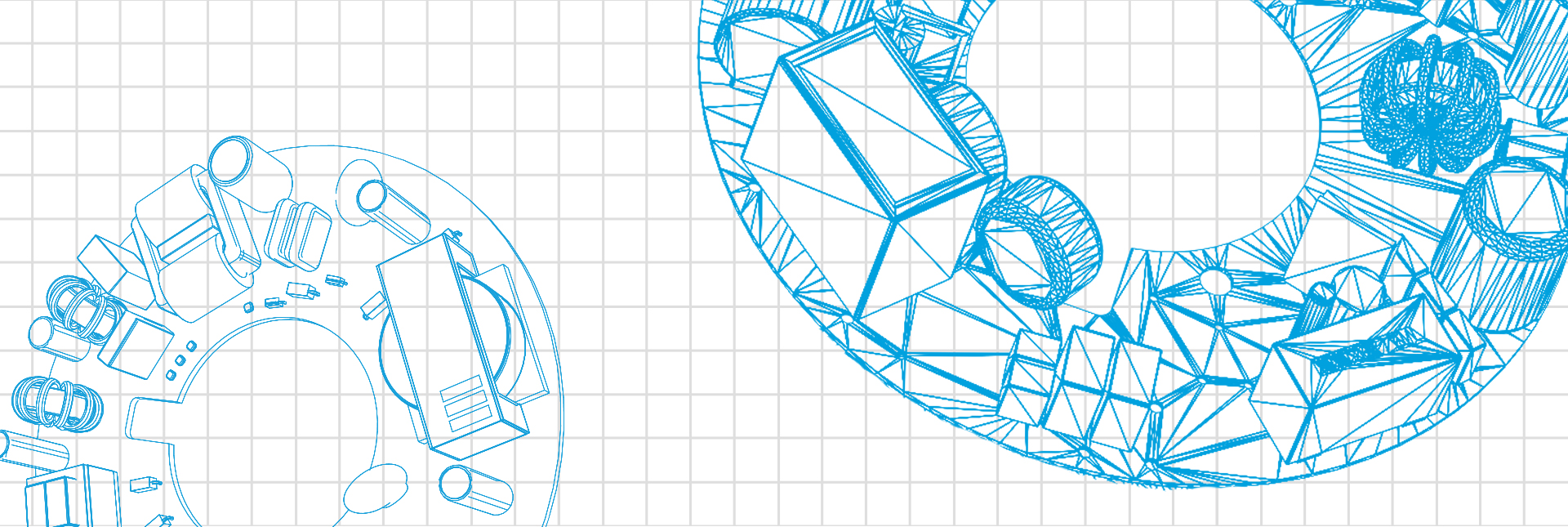
The technology of lighting is much more complex now than it used to be. We have a driver being made from one manufacturer, chip technology being made from another manufacturer and the fixture itself being assembled from yet another source. Then you have the controls that must be integrated and the dimming that must be perfected.

GEORGE: How has the LED technology changed lighting and the way lighting designers approach their projects?

LYNNE: In some very positive ways. Probably the most positive is that things have gotten much smaller with the innovation of LED tape light with really good diffusion. We can do some amazing indirect lighting applications. As a lighting designer, it’s important to create depth in order to create interest. And so the onset of the technology being interfaceable with good dimming control has really given us the opportunity to do some tremendous things.

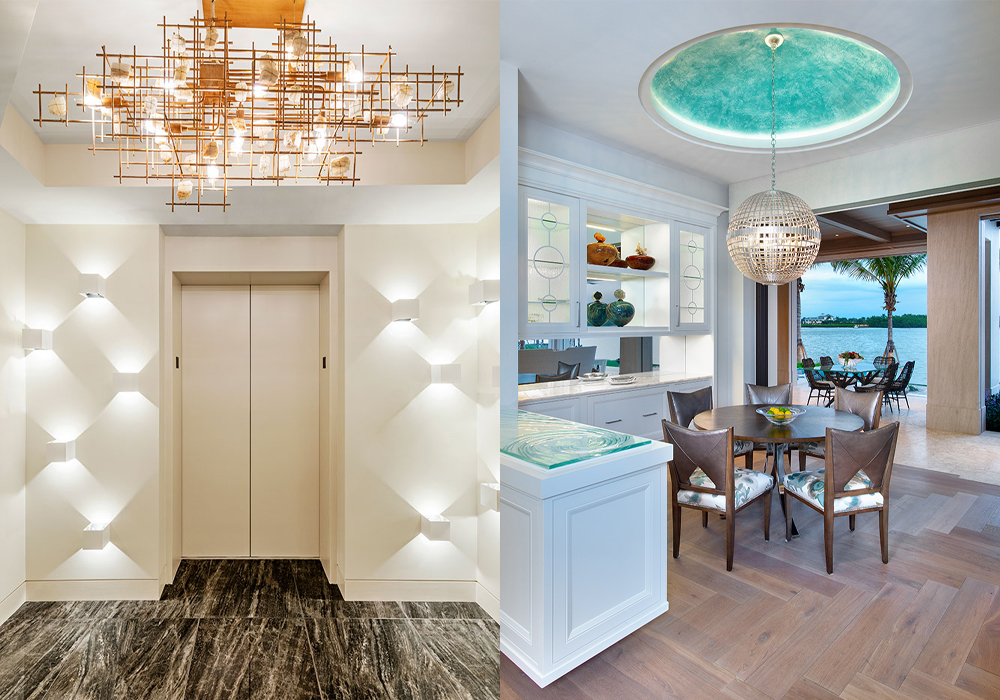
For instance, we do a lot of backlighting of stone. In the old days, we would build a false back and put fluorescent tubes, tin foil and silver paint to light the stone. Now we have some unbelievable technology with flexible LED that we lay down on a substrate and we are able to actually put the stone right on top of it. We are winning design awards doing that on master bedroom floors, stairwells, countertops, backsplashes, tabletops and bars. That has been something we would never have been able to do without LED.

GEORGE: That leads us to the question of how early in a new home build or remodel should a professional lighting designer be brought in?

LYNNE: As soon as possible. One of the biggest challenges being faced by homeowners today is that there is so much bad LED technology out there. If the product is not specified at the drawing phase, the budget is completely unrealistic. So if a homeowner gets a plan that just has round dots on it, representing recessed cans, then what they’re going to get is probably something from a home store that’s purchased in bulk with a very inexpensive price tag.

But there needs to be a proper budget and design for controls and specialty lighting, which is your in-cabinet or over-cabinet lighting, cove lighting, art lighting — all of those things that make the house really pop. Without them it’s like a layer cake with no frosting — and only one layer. It’s so important for a lighting professional to get in there early so that we can specify the correct product for the correct location and lifestyle of the homeowner. When Illuminated Design is brought in early we create a more realistic budget for the luxury outcome the client undoubtedly wanted. This allows the client and all the design professionals on the project to have realistic expectations, so no one is disappointed and angered at the end of the day.

GEORGE: In terms of lighting control, do you have any particular ones that you like better, or are you kind of agnostic about it?

LYNNE: Lutron on the whole plays very, very well with most of the technology that is coming into the market and gives us the most options when it comes to trying to make all components work seamlessly.

In regard to recessed cans, some of the frustration we have is with manufacturers that have what I call ‘chip on board,’ meaning that it is adhered to the housing itself, which is very difficult to change in the field. That’s why we’re big fans of DMF Lighting. Their modular system is fabulous, where we can put in one recessed can. Then all the trims and modules can be modified in the field if we need to. They also have great color renderings of 95+. It’s a really flexible and affordable product line.

GEORGE: Sometimes even in really nice homes I’ve noticed recessed lighting that seems kind of cool, but then you realize it’s often just lights coming down in places where it doesn’t really make any sense.

LYNNE: As a light lady, it is my legacy to make sure that every light I have specified has a purpose. So we call it the ‘define and defend’ method. Where is the light placement? What is it doing? Why is it existing? How does it work with the other lighting in the space? If there’s a ceiling that’s eight feet versus a ceiling that’s 24 feet, but they’re in the same living space, I want to make sure that I’m selecting a product with consistent color rendering throughout the house. Inconsistency of lighting color in a project is something I see absolutely everywhere. It’s been difficult to control, but it’s much better now. The best advice I can give is to hire a lighting professional early. You can alleviate so much frustration when the lighting is finally all turned on and the project is finished, by making sure upfront that all the chip technology is coming from the same batches, and that they’ve been tested with one another to make sure that they feel right no matter what color rendition you desired.

GEORGE: So, again, bringing the lighting designer in early pays for itself in terms of not having to change things later on. And I know the narrative in terms of lighting control in general is that, yes, this is an expense, but when you can time your lights, when you can create scenes, when you can do all that, you can save money on electricity, etc.

LYNNE: I think that when it comes to lighting and color rendering, it’s probably the most frustrating thing for people because they know the room is wrong, but they don’t know why. And they don’t know how to fix it. What we have found is that our decorative lighting manufacturers will call a color 3,000 Kelvin, but it’s really cool white. And then I can go to another manufacturer who called it 3,000 Kelvin and it’s really warm. So the only thing that we can control as lighting designers is to make sure that the surface is all one color and that the specialty features, your under-, in-, and over-cabinet lighting, the lighting of the art, the work spaces versus the relaxing areas, that everything has to work together from a coloring perspective.
GEORGE: I think that’s a really good point about the specs not always being consistent and that you just have to have the human eye test of what does it really look like.

LYNNE: Yes – or even how about clients that spend hundreds of thousands of dollars in interior design work only to have the floor look different or the paint color be different, or the furnishings or the fabrics look different because they’re not being lit properly?

When you start early in a project, it aligns the interior designer, the builder, the lighting designer, the electrical contractor, the integrator — it brings all of us together. That way we can wrap everybody’s arms around it at the same time and we all know what direction we’re going and what the products are going to look like. And in some cases, my interior designers bring their samples in with their clients and look at it under the light that’s going to be in the house. I mean, that is the absolute perfect scenario. That way the expectations are in check, and everybody knows what it’s going to look like at the end of the day. And no one is mad or disappointed.

GEORGE: How does lighting play into the wellness narrative?

LYNNE: Well, it’s an absolutely fascinating subject, and it’s one about which I spend a lot of time reading. The master clock in the brain coordinates the biological clock in all living things. These clocks are nature’s timing devices, regulating the cycle of circadian rhythms — our body’s natural clock. What sets our natural clock? You would think it was the passage of time, but it’s the color temperature of light! I’ve been reading about studies regarding memory clinics for Alzheimer’s patients. When those patients are under the same color temperature fluorescent lighting all day and night, many suffer from sundowner syndrome.

There are studies being done that if you can change the color to mimic the sun, especially exposure to low level bluish light we experience in the early morning, that resets the biological clock. Equally, higher color temperature light causes our brains to release cortisol which acts to increase alertness and stress, and to control our impulses. Throughout the day, the light gets brighter, but the color temperature steadily decreases to a warmer, less intense light before sunset. This warmer light causes the brain to release melatonin to relax us and prepare our body for sleep. There are some amazing findings about how it is really making a difference in the sundowner syndrome.

There are lighting products that are available residentially that change the color temperature based on the longitude and latitude of the home. Our findings are that it is often cost prohibitive to create this environment on a residential level. We are hopeful that this technology will evolve, so that we can design with it. I look forward to that day, as it really is our future in health and wellness.

GEORGE: What are the hot trends in lighting and control right now?

LYNNE: The lumen packages are increasing while the apertures are decreasing in size. Today, six-inch recess product is almost non-existent — it’s changed to four-inch, three-inch, two-inch and one-inch product.

I’m also seeing the ability to dim down to one percent, and that is really a wonderful thing. The driver has been the biggest component in regard to trying to dim down the light and with LED it is so different than incandescent. We grew up with bright, less bright, less bright, dim, dim, dim, off. Right? Now with LED, you’ve got bright, less bright, less bright, off. So what’s happened over the last few years is that the driver and controls manufacturers have gotten together and are working so that they can dim those down to one percent without specialty drivers. And if you want to specify a specialty driver, they have what’s called “dim to black” or “dim to dark.” And that will mimic incandescence.

So to me, the big trends are higher lumen packages, smaller apertures and housings and the ability to dim down to that one percent.

GEORGE: If you can look into your crystal ball, what do you see coming in the future?

LYNNE: Well, I think that we’re at that cusp of really truly understanding chip technology. Look at color rendering index, for example. Color rendering index (CRI) was created on a pastel lighting level for fluorescent. It was never intended for LED. They’re going to have a whole new way to measure color rendering (TM-30) because they are adding primary colors — more red to the mix — it’s making the color of art, furniture, fabrics, flooring and really the entire interior color more vibrant and true. Great color rendering is amazing for all aspects of interior design.

Another cool product is OLED. I saw a demo where they actually added it to glass, and they just put a little bit of voltage to it and the window becomes the illuminator in the room. So when you have LED that can be liquified, you can add it to just about anything and create a luminary.


View original article at Technology Designer.

————————–

Connect on LinkedInInstagramFacebook, or Twitter to stay up to date with everything that’s happening at DMF Lighting.

September 1, 2021

A celebration of beautiful lighting projects, the very first DMF Design Awards featured dozens of entries showcasing some of the best DMF Lighting applications from across the country.

Projects competed in five different categories, with one Grand Prize Winner selected from the Category Winners. Our esteemed judges reviewed the entries based on four criteria (Lighting Application, Lighting Creativity, Photography and Project Summary) and their composite score was used to determine the winner.

The winners of the 2021 DMF Design Awards:


GRAND PRIZE WINNER

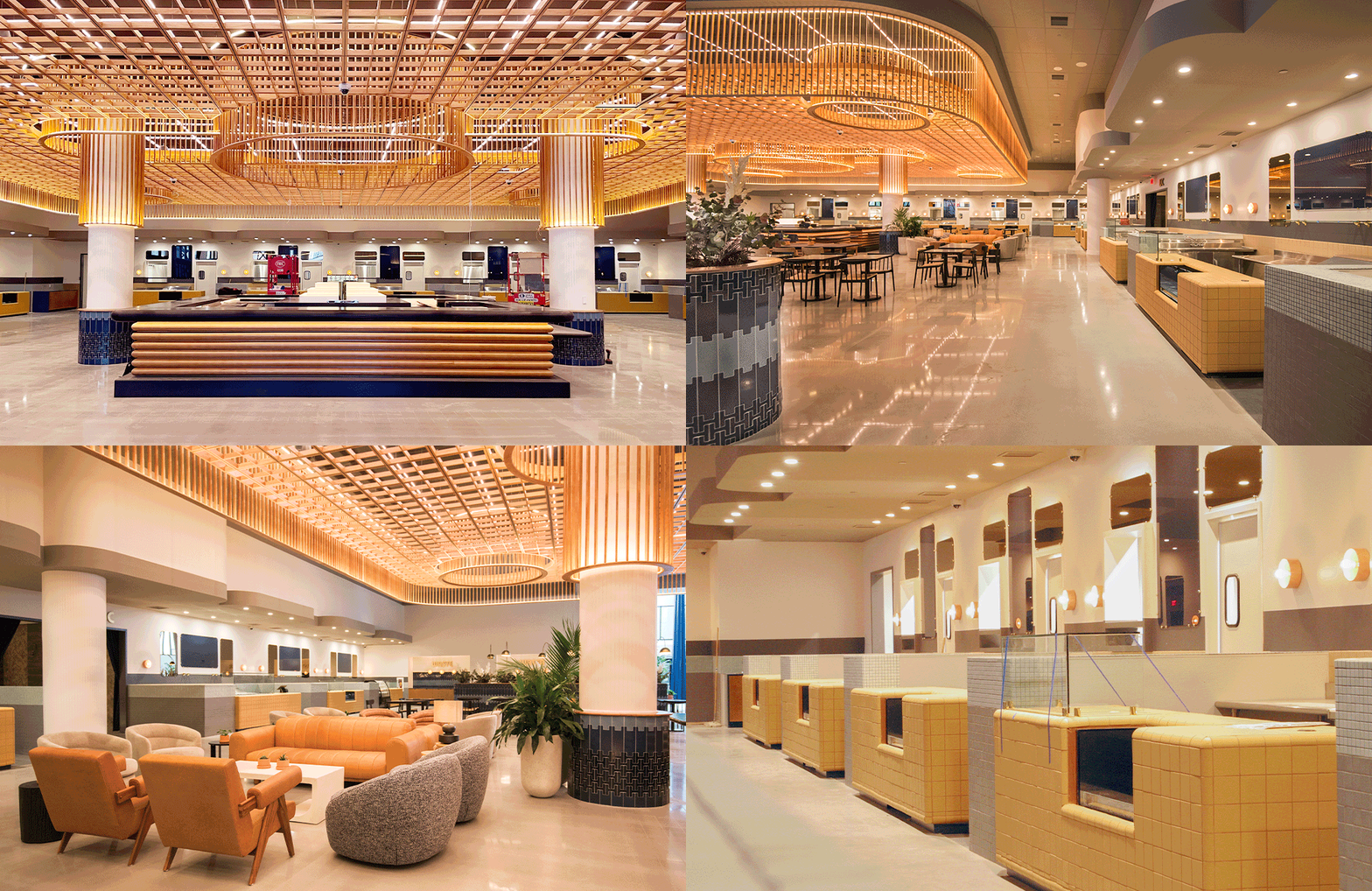
Best Commercial Lighting Application

Submission: Rachel Levy Designs
Project: Politan Row
Location: Atlanta, GA

Product(s): DCD3 Higher-Lumen Fixed Downlight, DRD2 Fixed Downlight with Warm Dim, OneFrame

Congratulations Rachel Levy designs!

The 2021 DMF Design Award Grand Prize goes to the Levy design team for their work on Politan Row, a chef-driven food hall built specifically for Midtown Atlanta. The project features a variety of open air spaces and is energized from day to night, providing unique lighting challenges. Judges were impressed with the creative use of layered lighting and Warm Dim to address these needs.

“DMF’s Warm Dim is wonderful for an environment that needs to be bright and slightly cooler during the daytime, yet, needs to easily transform into a warmer, romantic space space in evenings. Additionally, I love their clean lines, even fields, ease in which to install, and competitive price point!”

– Rachel Levy
Lighting Designer


CATEGORY WINNERS

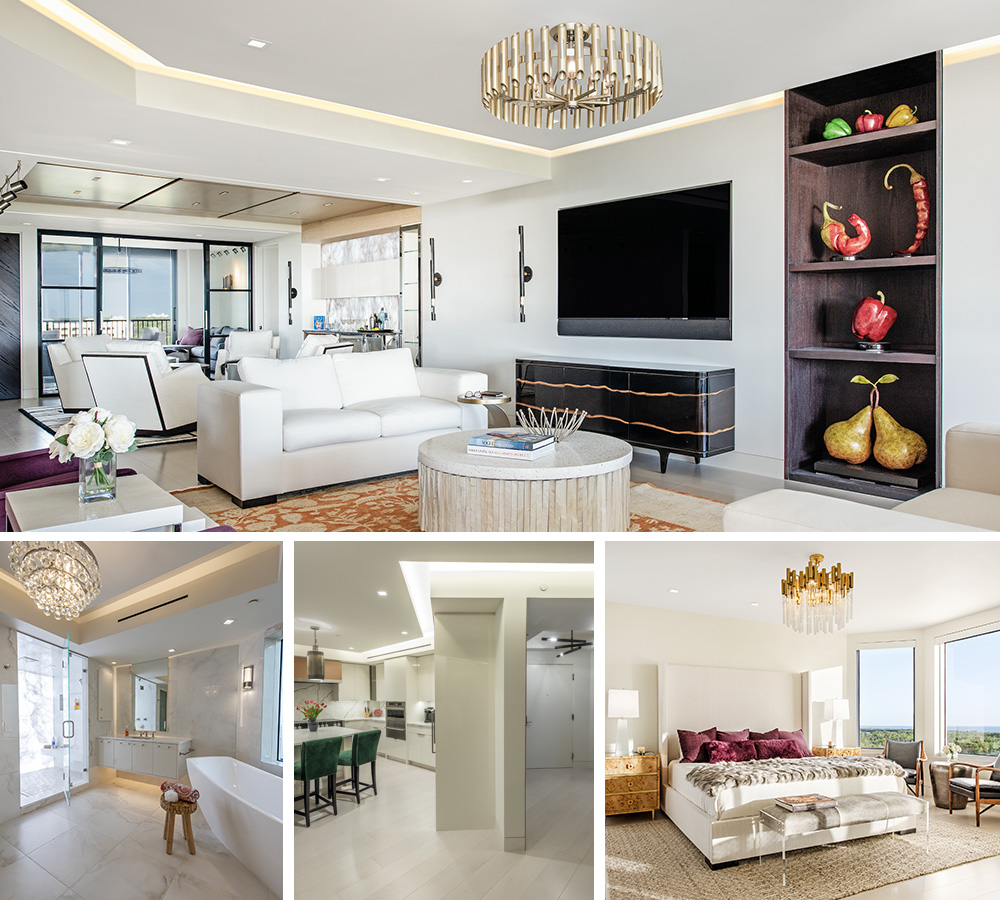
Best Residential Lighting Application

Submission: Illuminated Design
Project: Pelican Bay Residence

Location: Naples, FL
Product(s): DRD2 Fixed Downlight, OneFrame Concrete


Best Accent and/or Task Lighting Application

Submission: Colina West
Project:
 Simi Estiatorio

Location: Austin, TX
Product(s): DRD2 Fixed Downlight, DRD4 Adjustable Downlight, DCCX Cylinder


Best DCC Cylinder Application

Submission: Service Tech
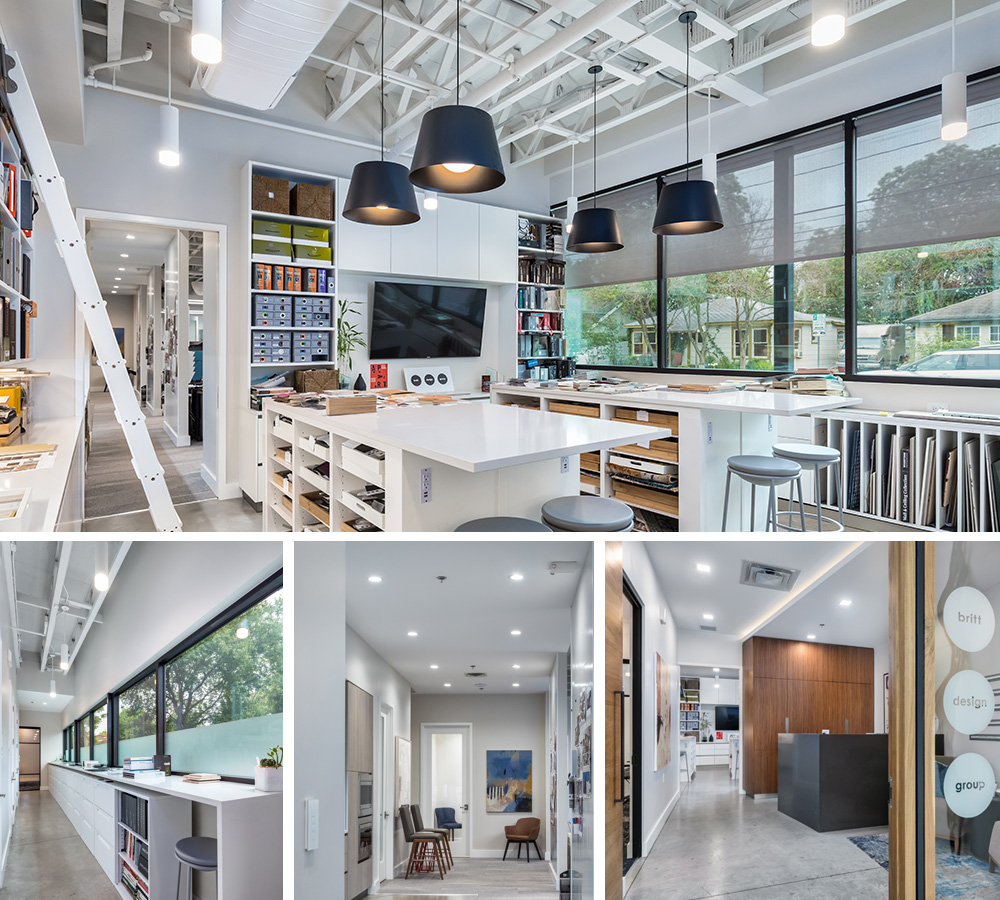
Project: Britt Design Group

Location: Austin, TX
Product(s): DCC2 Cylinder, DCC4 Adjustable Cylinder


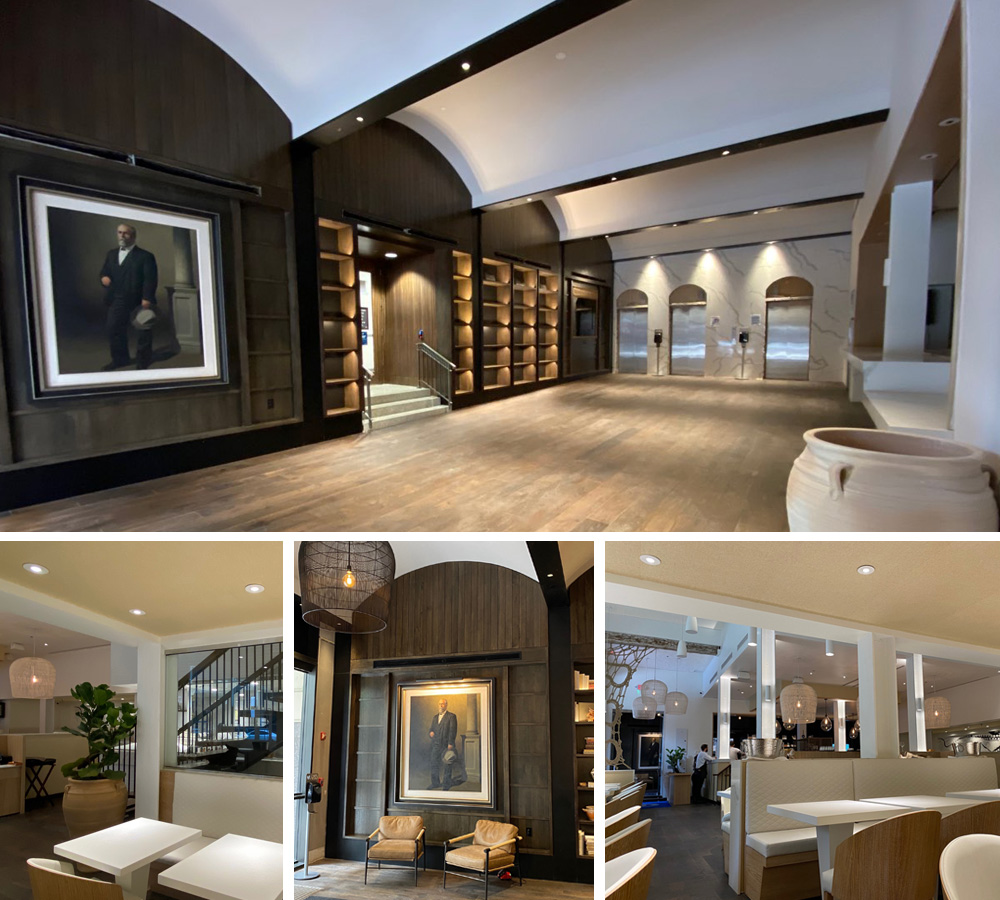
Best Multiple DMF Products Application

Submission: Premium Digital Control & Automation
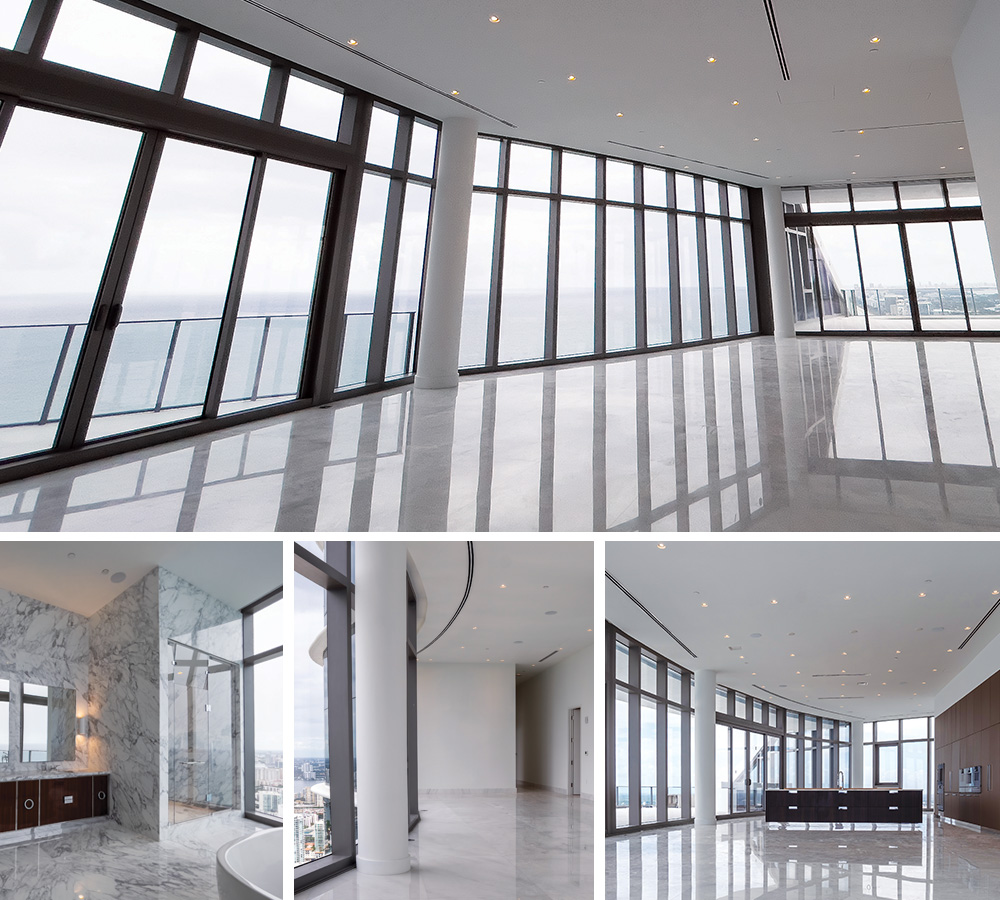
Project: Ritz-Carlton Residences
Location: Sunny Isles Beach, FL
Product(s): DRD4 Adjustable Downlight with Warm Dim, DCC4 Adjustable Cylinder, DRD5S Surface Mount


CONGRATULATIONS
to all the winners!


Thank you to all those who participated. Stay tuned as we’ll be sharing more from these incredible projects very soon.

– – – – – – – –

Stay up to date with everything that’s happening at DMF:  LinkedInInstagramFacebook, or Twitter

August 11, 2021

At DMF, we pride ourselves on engineering and improving every aspect of the fixture. From lighting performance to ease of maintenance and everything in between, this philosophy permeates every aspect of our design.

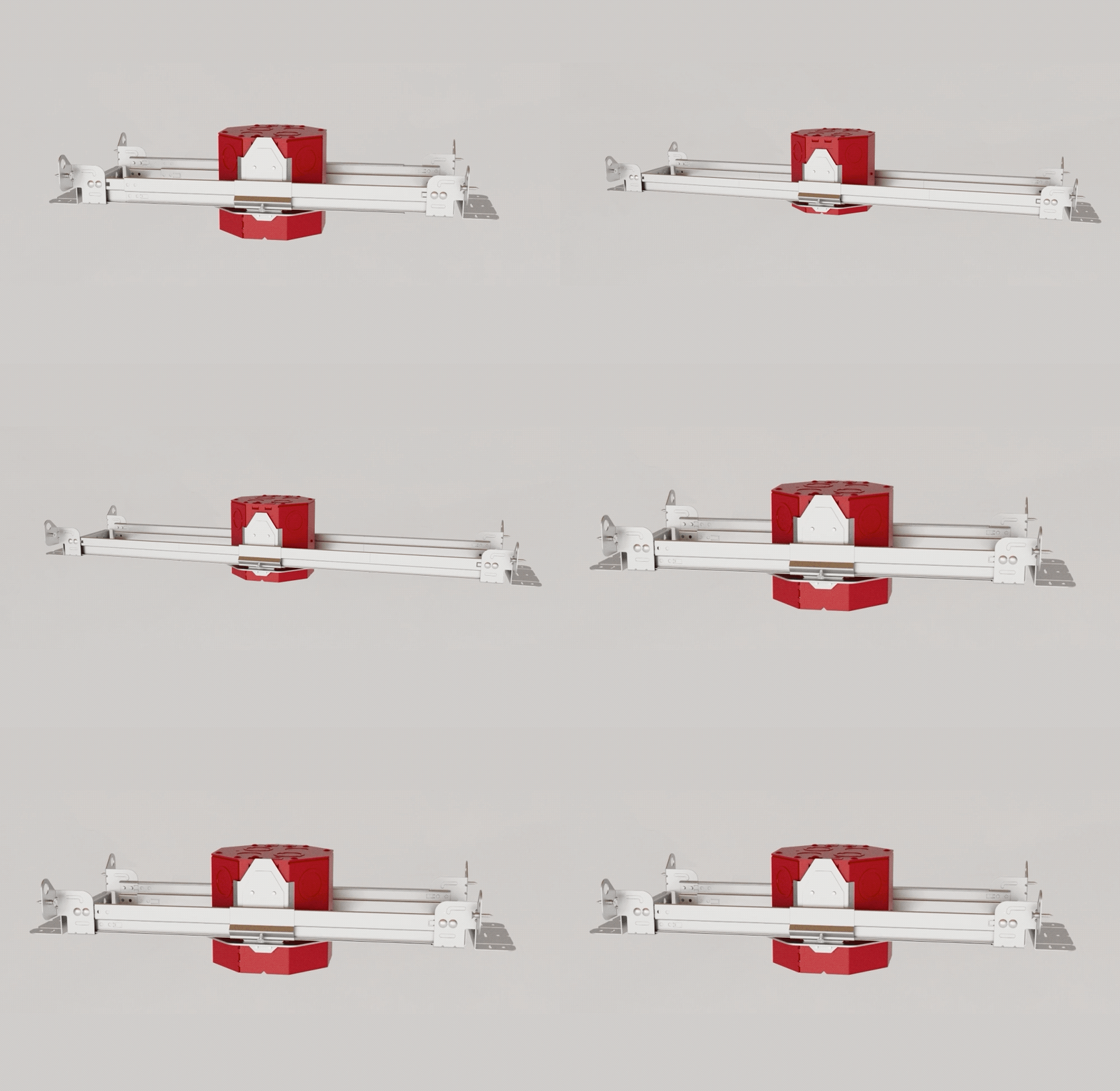
Our latest innovation is a completely re-designed bar hanger system. An often neglected aspect of lighting fixtures, bar hangers have remained largely unchained — but we spoke with the top electrical engineers in the country to discuss common issues they experience when installing housings. We took this information and re-thought every aspect of the bar hangers.

The result, an all-new bar hanger system that’s sturdier, simpler to install and more compatible than ever.

Eliminate Sag

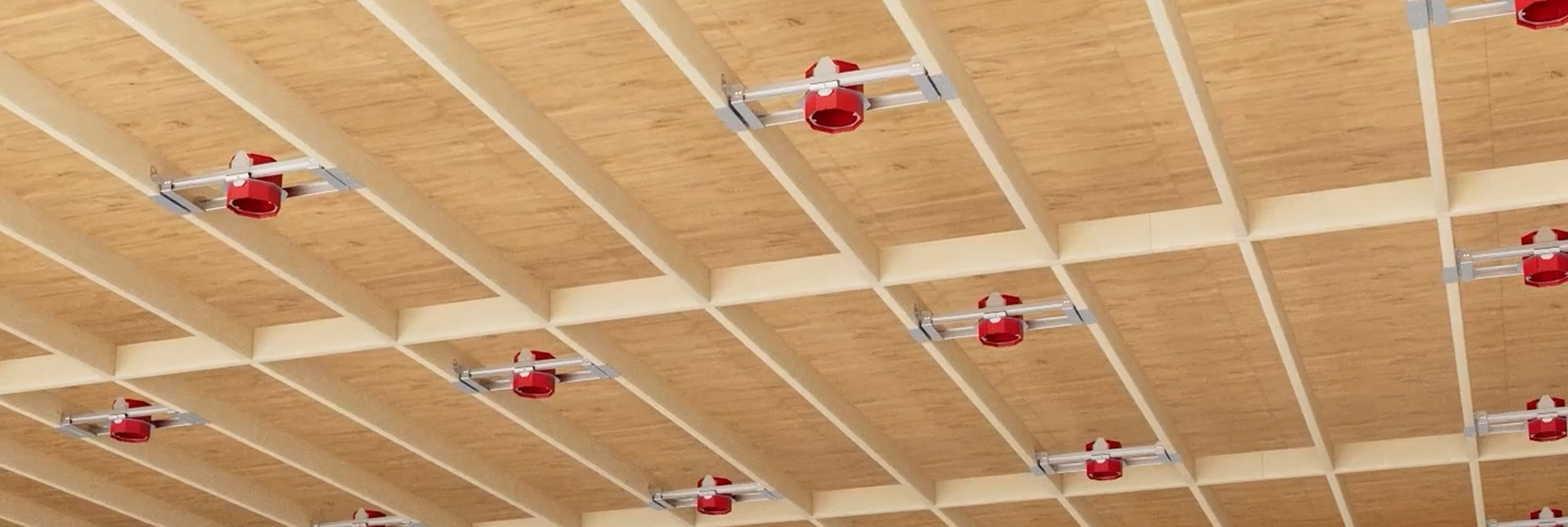
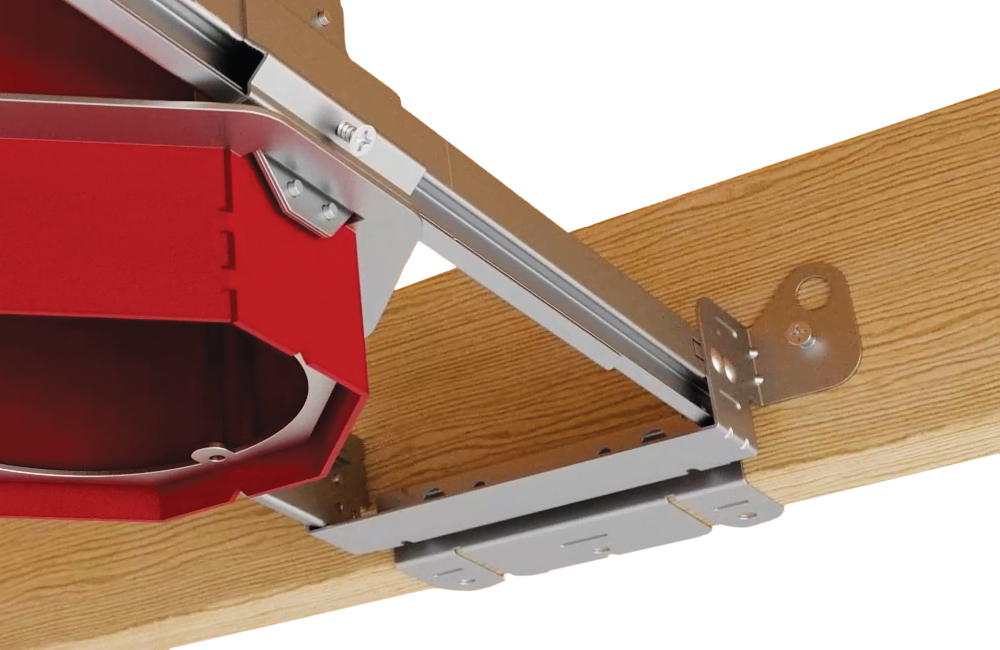
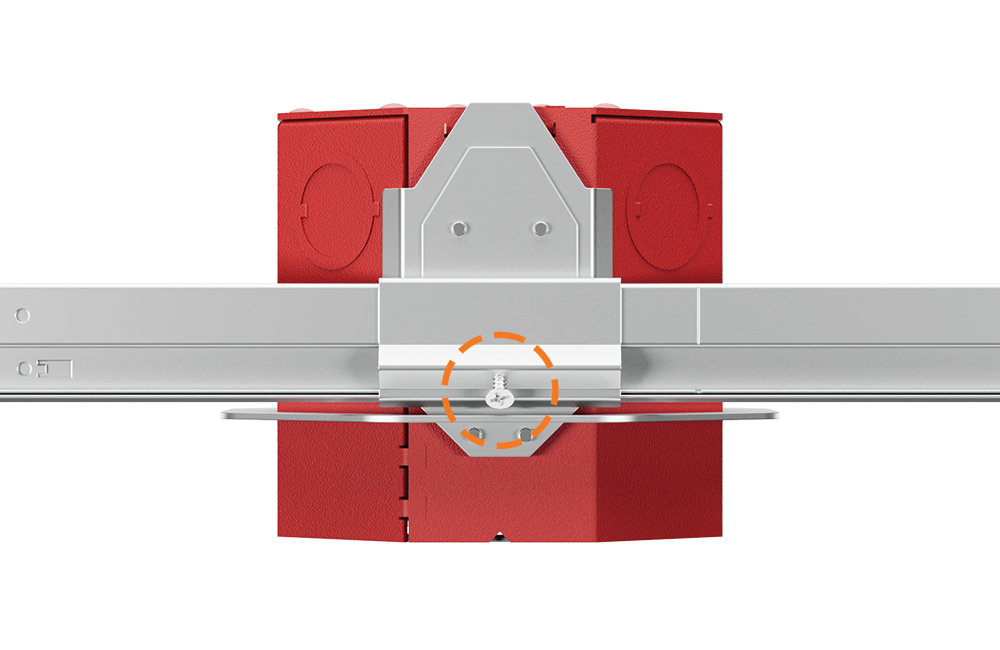
The first thing you’ll notice about the new bar hangers is that it eliminates the traditional four independent connecting ends. Instead, we engineered a cross brace that connects the ends of the two bars, essentially turning them into one rigid unit. The bar hanger system is so strong it can even provide structural stability with just one side mounted in with a single screw.

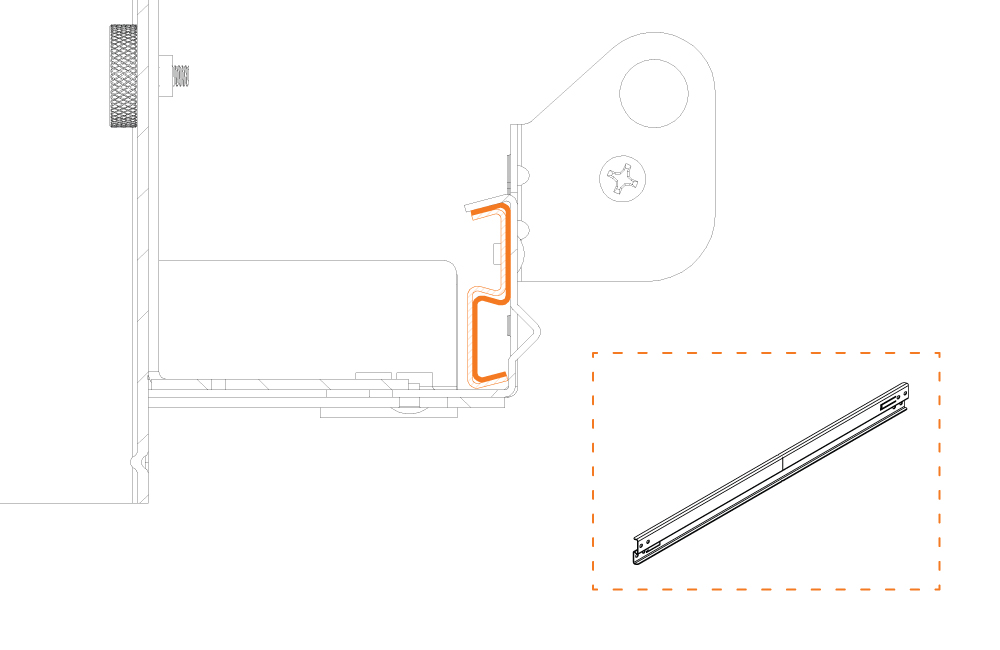
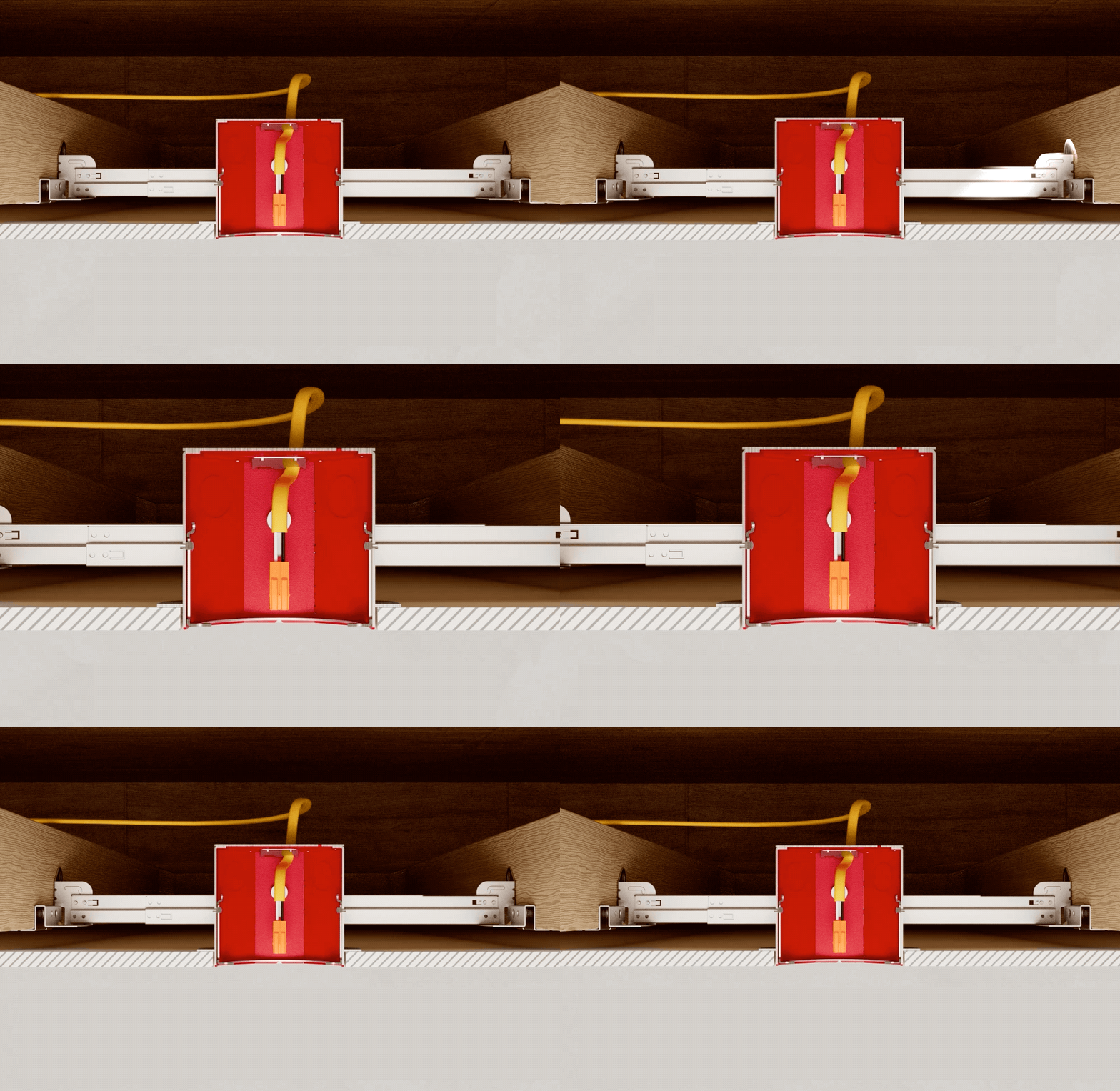
Stability is increased further by a completely re-designed railing, which utilizes an innovative S-shaped interlocking system that increases the surface area of where the sliding rails meet. This increased strength results in bar hangers that lock tighter and won’t shift, preventing against trim sag even when fully extended to 24″.

The new bar hanger system can withstand weights of 200 pounds

And combining the new bar hangers with our signature adjustable housing depth and secure Twist and Lock Technology, flush trim installations become easier and light has nowhere to escape.

Work smarter

The new bar hanger system features a host of unique updates that make installation faster and easier. Here is everything, big and small, that makes them easier to mount.

  • Reinforced bar hangers can hold the entire housing in place after just one mounting point so the contractor no longer has to hold the housing while mounting four separate ends
  • Fewer mounting points — the entire bar hanger system can install with as few as two screws or nails

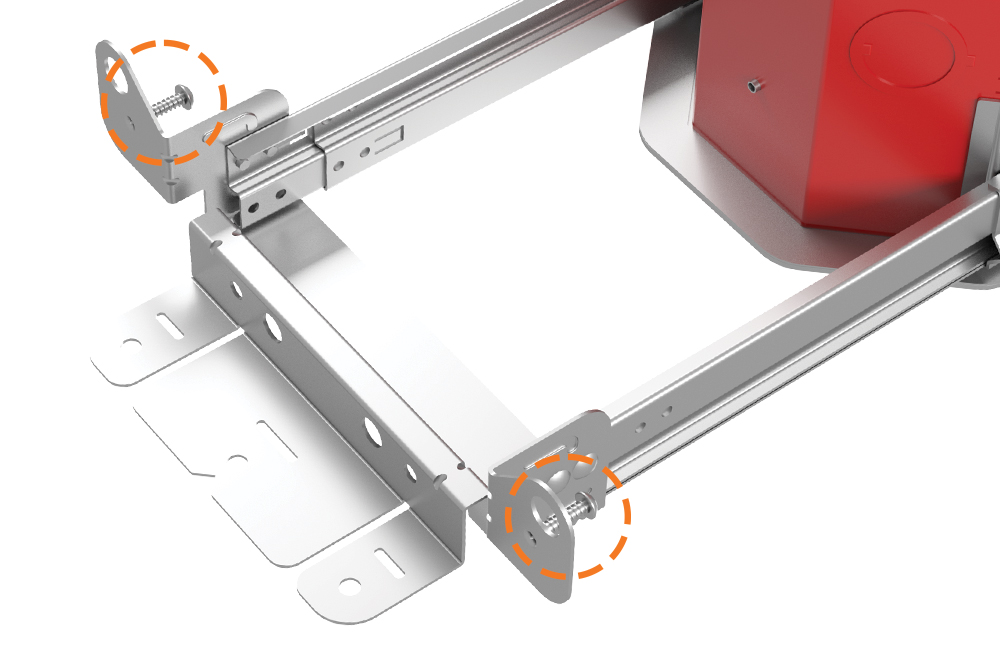
  • Pre-installed screws replace the previously included nails for quicker installs

  • Angled Locking Screw allows for easy tightening from below the housing

Installs Anywhere

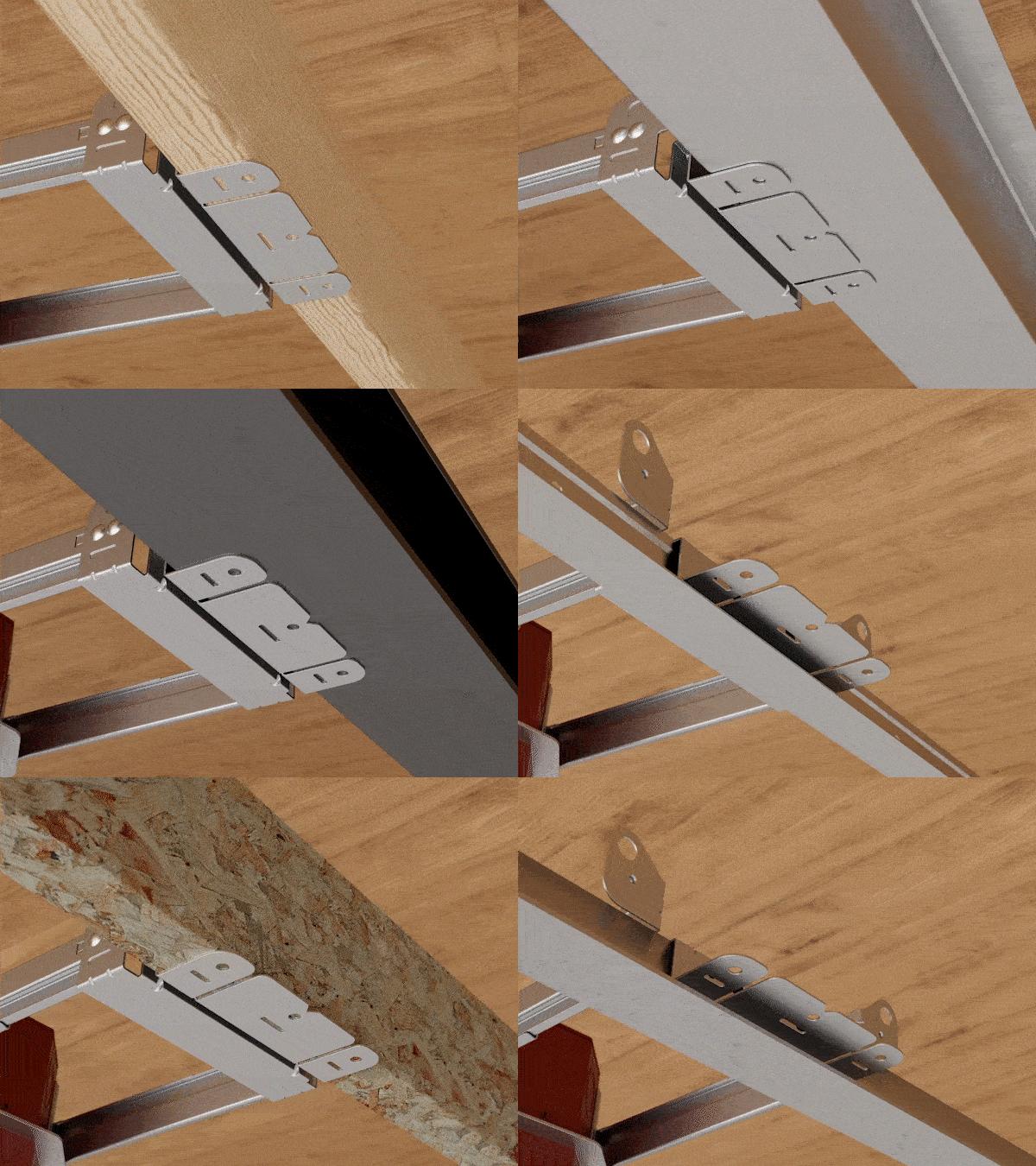
Not only are the bar hangers more stable and easier to install, they’re also compatible with more applications. The cross brace features a re-designed ledge and nine different mounting points for installation in any of the following:

  • Hat channel
  • T-bar
  • C-channel
  • Laminated Wood
  • Quick-Span
  • I-Beam
  • Standard Joist
  • Concrete Pour Application


Always Evolving

Re-thinking every detail of  the bar hangers may sound excessive. And some of the updates may sound minor, but it’s this attention to detail that drives DMF Lighting to continue to innovate — even in areas you may never have considered.

The new bar hangers are available now for the DRD Series with all non-classic DMF housings, including the OneFrame and SquareFrame.

– – – – – – – –

Stay up to date with everything that’s happening at DMF:  LinkedInInstagramFacebook, or Twitter

June 24, 2021

To ensure the next generation DRD Series stands up to the challenges of even the most extreme environments, we put it to the test. The modules endured hundreds of surge spikes and continuously ran in ambient environments of excessive temperatures. This high level of stress tests ensures maximum reliability.


Passing with Flying Colors

A combination of third party and in-house labs conducted the testing. No matter where it was done, the results were the same. The DRD Series passed with no hiccups or lumen degradation — exceeding the LM-84 standard.

  • Elevated ambient operation at 80°C (176°F) for over 700 hours
  • Thermal cycled between -10°C to 80°C (14°F to 176°F)
  • Extended operation at high levels of humidity
  • Power cycled over 10,000 times at voltage extremes 100VAC and 300VAC
  • Lightning strike immunity per IEC 61000-4-5 Class 3


Bulletproof Design and Reliability

How did DMF achieve such reliable results? By controlling nearly every aspect of the module. Our in-house team of engineers designed the components to ensure flawless integration and optimal performance.

Learn more about the DRD Series.

– – – – – – – –

Connect on LinkedInInstagramFacebook, or Twitter to stay up to date with everything that’s happening at DMF Lighting.

June 16, 2021

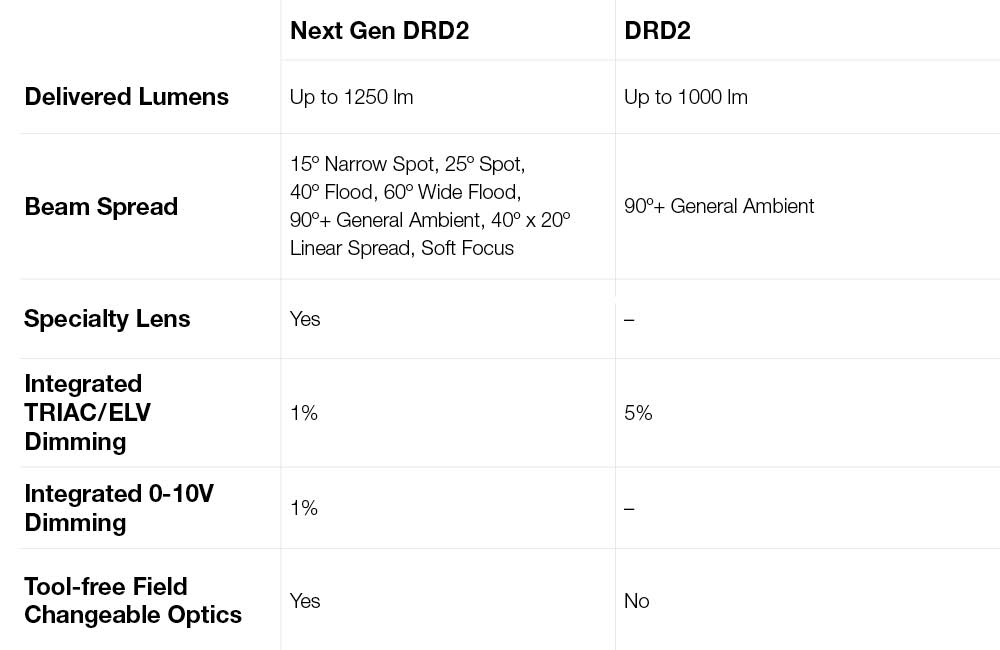
Here’s a breakdown of all the major updates and enhancements for the next generation DRD2 Fixed Downlight.

The O1 Driver: Integrated 0-10V Dimming

Engineered in-house specifically for the next generation DRD Series, our O1 Driver provides the DRD downlights with smooth, flicker-free 0-10V dimming, fully integrated into the LED module. Combined with our T2 triac/ELV driver, our new drivers make design, installation, and maintenance simpler than ever.


Precise Control, Ultimate Flexibility

The next generation DRD Series is engineered for ultimate flexibility. Select from a host of new optics ranging from 15 to 90+ degrees to ensure the ideal light distribution for any space. These tool-free, field-changeable optics easily handle any design changes, even post-installation.


Brilliant performance

The DRD2 increases its illumination without sacrificing stellar efficiency or color rendering performance. The new 1250 lm option allows the DRD Series to conquer even more lighting specs, including higher ceilings and detailed work areas.

Learn more about the DRD Series.

– – – – – – – –

Connect on LinkedInInstagramFacebook, or Twitter to stay up to date with everything that’s happening at DMF Lighting.


June 14, 2021

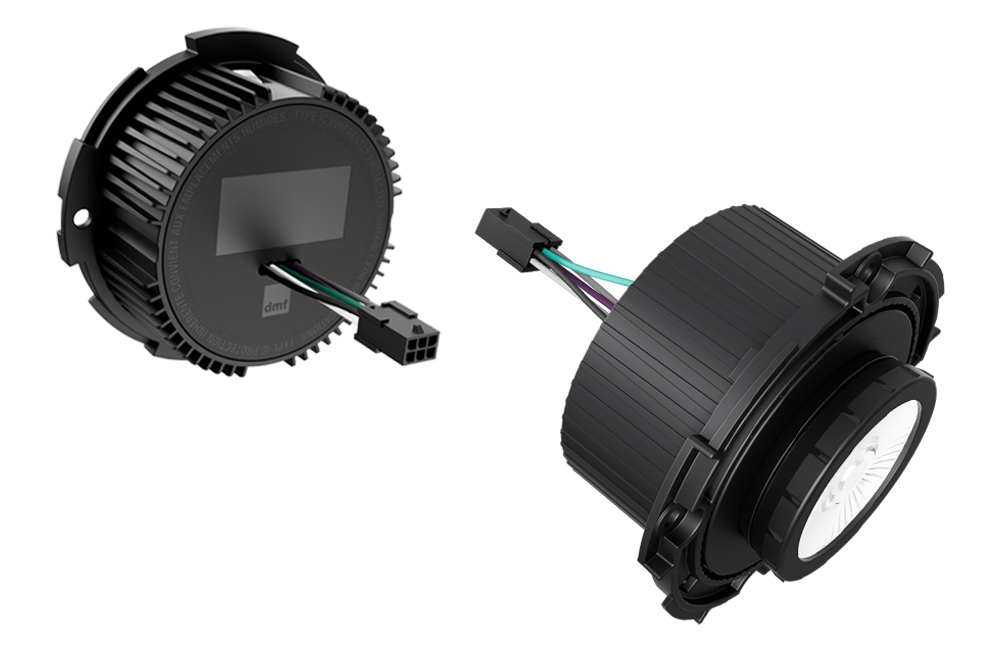
Engineered in-house specifically for the next generation DRD Series, our O1 Driver provides the DRD downlights with smooth, flicker-free 0-10V dimming, fully integrated into the LED module. This high-performance solution in a compact form factor simplifies design, installation, and maintenance.


Things Change

Projects change and evolve at every stage. Traditionally, the light fixture’s 0-10V driver sits on a shelf on the housing. With other manufacturers, once housings are installed, lumen package and dimming protocol are locked in. Ripping open the ceiling and completely replacing the fixture may be required to make design changes.

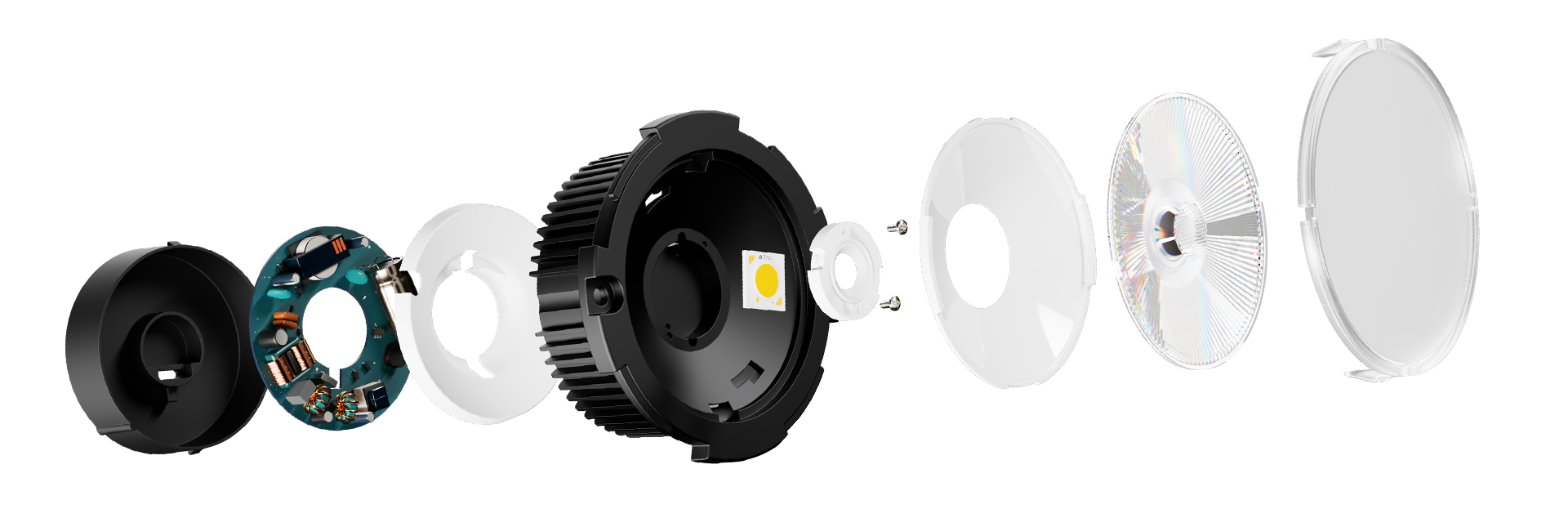
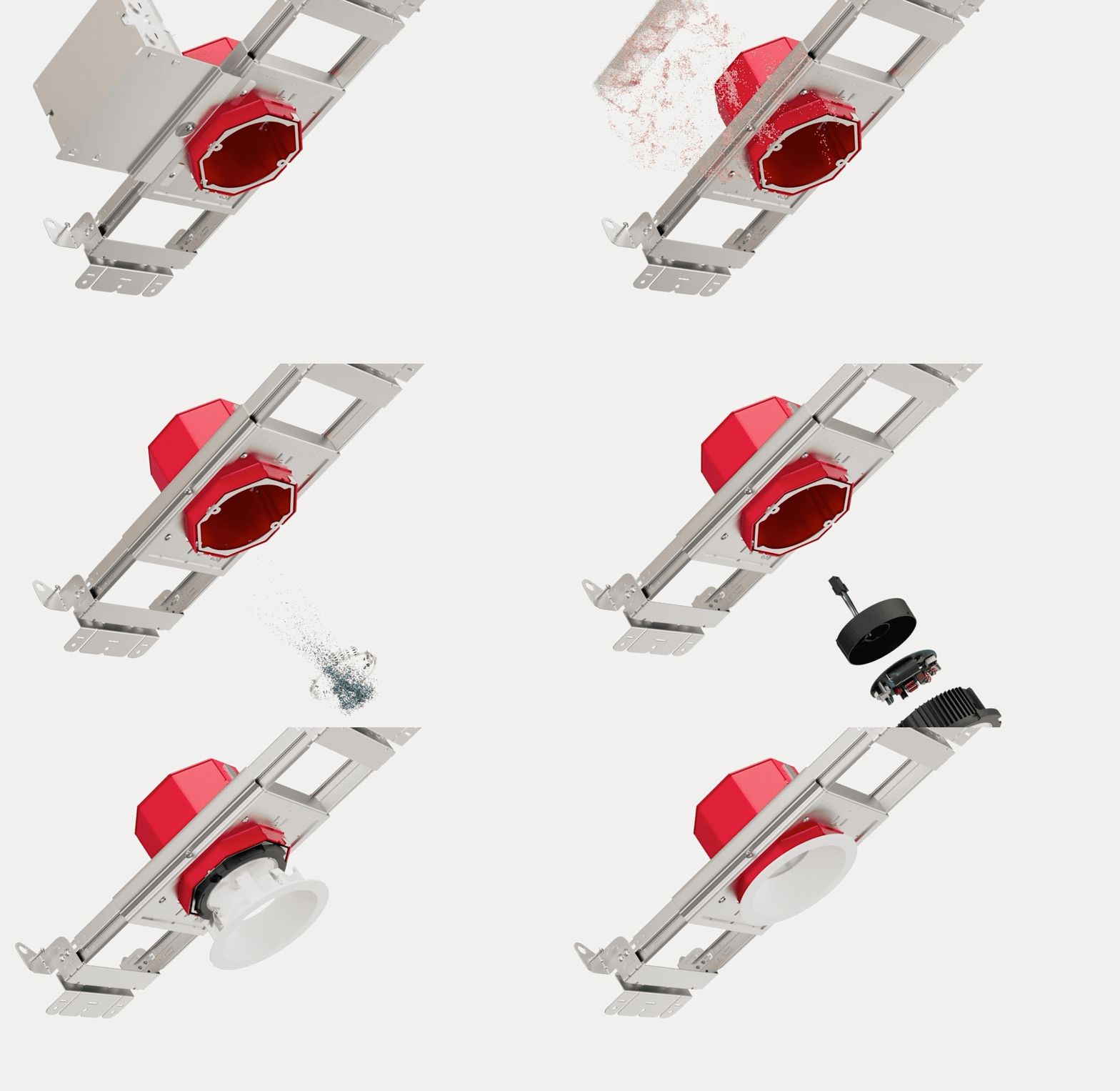
Our DRD modules, with either the integrated O1 0-10V or T2 triac/ELV driver, make change orders a breeze. Because the driver lives inside the module’s heat sink, and is not remotely mounted, all changes can be done from below the ceiling plane. Install either our round OneFrame or SquareFrame housing at rough-in, and determine your dimming protocol, lumen package and beam angles later.


Mis-Orders Happen

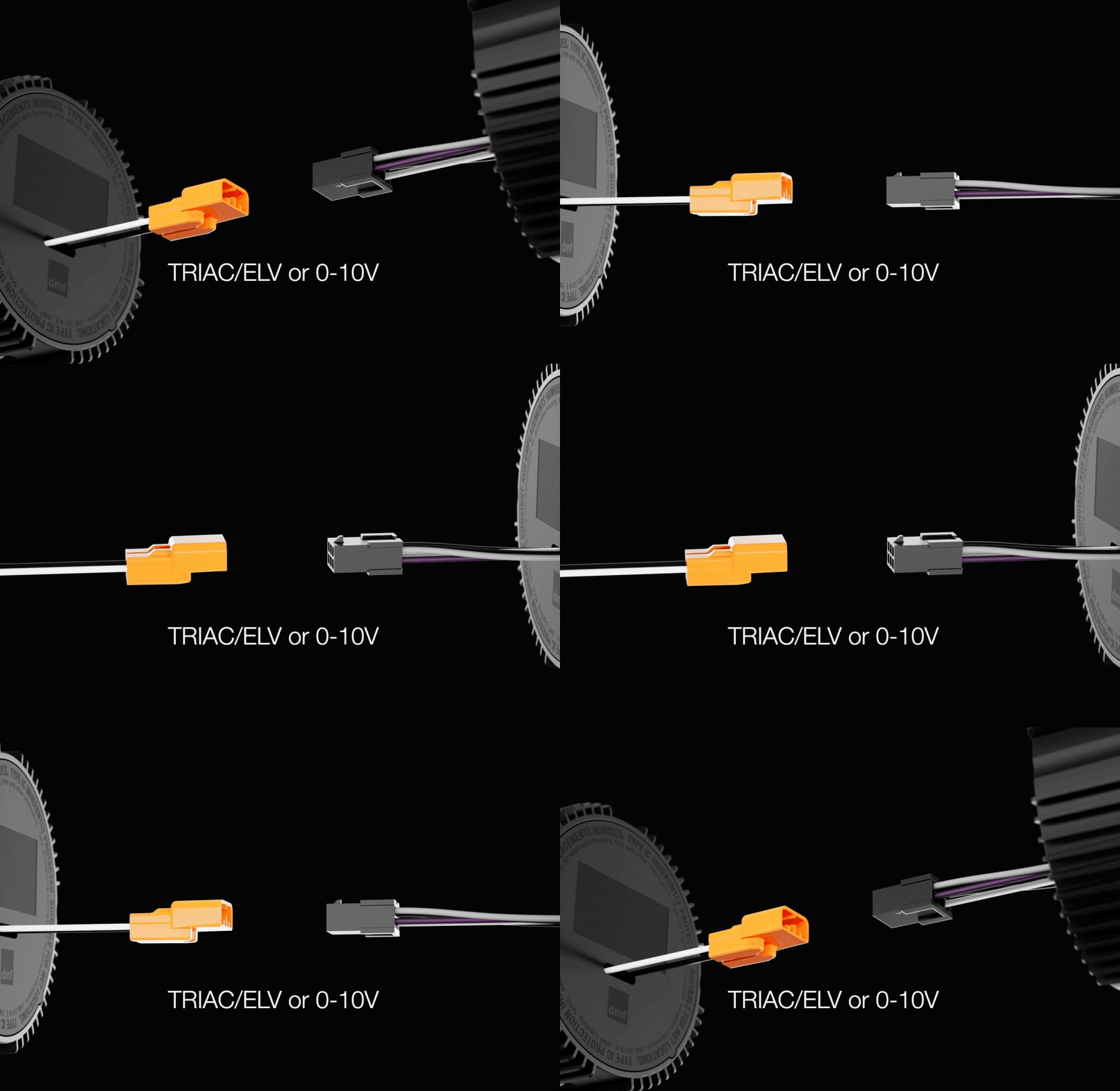
Perhaps TRIAC/ELV was ordered when a 0-10V solution was truly needed. Because the driver is fully integrated into the module, the dimming type and lumen package are not determined by the housing. Swapping between triac/ELV and 0-10V is as simple as changing a light bulb. With quick connects used in both dimming types, this solution truly is plug and play.

Once installed, any maintenance to the driver or the fixture is done from below the ceiling plane. No need to rip open the ceiling, fish for the driver, replace the complete fixture, patch or paint. If the fixture needs to be replaced, simply twist and unlock the trim, unscrew two Philips Head screws, unplug the module and make the swap.

The DRD Series covers 98% of downlight use cases in one product family with either the O1 0-10V  or T2 triac/ELV driver, fixed or adjustable module, tool-free field-changeable beam angles from 15° to 90°+ and 750, 1000 or 1250 lumen options.

No matter the project stage, the modularity of the next generation DRD Series and DMF designed integrated drivers simplifies specification, installation and maintenance.

The O1 and T2 Drivers are available in our next generation DRD2 Fixed and DRD4 Adjustable Downlights.

Learn more about the DRD Series.

– – – – – – – –

Connect on LinkedInInstagramFacebook, or Twitter to stay up to date with everything that’s happening at DMF Lighting.


June 7, 2021

We’ve stayed up for hours, so you don’t have to

The next generation DRD Series is engineered for ultimate flexibility. Write fixture schedules with ease using a single housing. This versatile solution can keep up with the fast-paced and ever-changing nature of your projects.

A single family can support 98% of downlighting use cases.

  • Fixed, adjustable, or wall wash downlighting
  • 750 to 1250 lumen output
  • Field-changeable beam angles from 15 to 90+ degrees
  • Integrated 1% dimming with TRIAC/ELV or 0-10V
  • A range of color temperatures including Warm Dim

Learn more about the DRD Series

– – – – – – – –

Connect on LinkedInInstagramFacebook, or Twitter to stay up to date with everything that’s happening at DMF Lighting.

April 13, 2021

Today’s dimming and lighting controls are more complex since the invention of LEDs and interconnected lighting systems. But as the future for LED lighting grows stronger, complexities like compatibility between lamps, drivers and controls should be assessed.

This article will cover the evolution and benefits of LED lighting with dimming and controls, and how SMART IoT systems are now a driving force behind consumers adopting the technology.

Dimming Control for LEDs

Essentially, dimming is controlling the power in a circuit. Most LED circuit dimming is done via reverse-phase dimming. Far gentler on drivers, this means the voltage is ridden gently through the circuit and then shut off. Reverse dimming was discovered after common forward-phase dimming, aka TRIAC dimming – chopping off the forward “positive” part of the sine-wave and back part of the “negative” end. The idea was to improve the longevity of circuitry, particularly of drivers.


TRIAC vs ELV vs 0-10v

TRIAC (or forward-phase) dimming was traditionally used to dim older incandescent or halogen bulbs on 120v AC. But since poor compatibility caused negative effects on LED efficacy and lifespan, other methods for controlling current using drivers are used.

Electronic Low Voltage (ELV) dimming, unlike TRIAC, uses reverse-phase dimming – also used to control LED lighting. Aside from smoother dimming, it reduces energy consumption, prevents unnecessary power surges, and puts less strain on drivers. ELV uses a transformer (or driver) to control a 120vAC power supply to 12vAC or 24vAC.

0-10v is typically used in commercial environments. Originally used to dim fluorescent lights, it uses a dedicated DC voltage between zero and ten volts. The design is such that 0v is the lowest dimming level and at 10v the light source should be at 100% of its output.


Controlling the quality of light

The ability to change light intensity and color without distraction, in itself is a major advantage. A system that controls color and brightness can improve productivity and a sense of wellbeing – which in turn, helps improve energy and concentration. 

In a residential or hospitality setting, the benefits of lighting controls may appear more obvious – users are likely to sense a natural feeling of relaxation and ambiance.  Other commercial environments like in retail, can make use of dimming to highlight certain product lines. This would be an area where both light intensity and color temperature work synergistically to create the best possible effect.

It’s this flexibility that offers most of the advantages of controlling a light source. Because as our needs change, light should be responsive and flexible enough to meet them – it’s how light profoundly transforms the look and feel of a space.


Good Dimming vs Bad 

Dimming your LEDs opens a whole new experience to the look and feel of a space. So what makes good dimming? When you have the flexibility to seamlessly dim down to as low as 1% (particularly with 0-10v dimmers) that’s pretty exciting. The comfort from controlling the way your surroundings look and feel is immensely satisfying.

In the natural world, as light intensity reduces, the color becomes warmer. And good dimming pairs with control-compatibility and high CRI lighting. This becomes critical to maintain a feel of natural light in a space throughout the entire dimming cycle as brightness and color change. Using LEDs such as high-spec downlighting not only provides greater driver compatibility for greater control but improves the quality of light and longevity.

However, despite the best intentions bad dimming is still an issue. Often incompatibility between lights and controls causes issues with flicking, flashing or complete failure.

So it’s important that drivers and controls match the spec of luminaires – particularly with retrofit installations. Since inexpensive LEDs have become so widely available, they become attractive to people and business owners who wish to upgrade. However, compatibility is often seen as a costly issue for both residential and commercial properties.

The point is, it’s worth investing in lighting that works across a multitude of high-grade dimming systems. This creates an environment where you have maximum control, reliability while providing an inviting space for people.

Creating Comfortable Spaces

Today, building occupants and lighting system architects are drawn to the benefits of controlling a light source for a variety of reasons. For example, with LED lighting in the home or workplace, you can now control both the brightness of a light source and the correlated color temperature (CCT). In fact, studies show an improvement in the wellbeing, safety, and productivity of employees (1).

When we’re exposed to natural light – or the equivalent, it literally enhances the quality of our lives – since we feel alert during the day and rest better at night. This is what technologies like Warm Dim address since it gives users the flexibility to create a vibrant and comfortable space. Should we add in some specific content around DMF Warm Dim technology here?


Compatibility & Systems Integration

EcoSystem technology is a control method for LEDs that provides addressing of individual fixtures and status feedback from the LED drivers. This makes it easy to digitally assign occupancy sensors, daylight sensors, time clocks, manual controls and other controls to one or many fixtures without complicated wiring. This opens up an entire suite of energy-saving, system-monitoring and system-control schemes where the design, setup and rezoning are all done within software, making the electrical and control design simple.

An increasing number of homeowners now wish to integrate their homes with advanced lighting controls. After all, controlling the light in our environment has a huge impact on making better, more practical use of spaces. For example, a family dinner vs watching a movie – you want to control the lighting to reflect the mood.

Midday/Dusk/Twilight……..

However, SMART lighting goes beyond these “mood” benefits. For example, the way it improves efficiency for unoccupied rooms or provides optimal brightness or color for a task using high-CRI lighting. And with more of our built environment taking advantage of WiFi-enabled controls, IoT technologies – and adaptive lighting – integration and controls have become a primary consideration for designers and contractors.

Business owners are also exploring the benefits of SMART-controlled lighting. Attention is placed on how it can not only improve the “feel” of a work environment through a progression of natural lighting but how it offers improved safety (highly-focused lighting) and energy savings too (e.g. reducing wastage in unoccupied spaces or unnecessarily over-lit rooms).


System Integration and DMF

The compatibility of LED dimming controls is a major factor for OEMs. For highly flexible lighting, it’s essential that drivers and dimming controls are future-ready and adaptable to existing fit-outs.

From advanced commercial systems to simple wall-box dimmers, DMF downlighting is ready for your control needs. High performance TRIAC/ELV, 0-10 and Lutron® Ecosystem are built-in, and DMX, DALI, and PoE are always available. Each product is rigorously evaluated against leading lighting control solutions at our in-house dimming lab to ensure compatibility with today’s control systems. We then publish the results with our product Specification Sheets and Dimming Guides. The result is a seamless, worry-free dimming experience.


Please see product Specification Sheets and Dimming Guides for more information.

Contact our team to discover the advantages of our flexible dimmable-lighting technology.


– – – – – – – –

Connect on LinkedInInstagramFacebook, Twitter or Vimeo to stay up to date with everything that’s happening at DMF Lighting.

April 13, 2021

We are proud to partner with ProSource to be featured at the brand-new, state-of-the-art Lighting Technology and Learning Center. Located in the Dallas Market Center, the space provides an opportunity for retail and design-build customers to learn about lighting applications and advancements in an immersive setting.

DMF’s latest innovations, including the award-winning DID Series lighting modules, OneFrame and SquareFrame recessed lighting systems, the DCC LED Cylinder, and DRD5 LED downlights, are the perfect pairing for the new Learning Center.

“DMF Lighting impressed us right out of the gate with their unique OneFrame system, and we are thrilled that they are a part of the LTLC Experience Center,” said David Warfel, Chief Evangelist, Light Can Help You.

“We love the modularity and clean engineering of their products and chose their trimless fixtures because of their easy installation. We have been huge fans of the DRD4 adjustable LED module in our design practice and are even more excited about the integrator-only upgrade, the DID4.”

The Learning Center was inaugurated with a ribbon-cutting ceremony on March 23, 2021, at the start of the popular Lightovation trade show. Dave Workman, president and CEO of ProSource, presided at the opening festivities.

Eventually, the Learning Center will be available for hands-on, live Level 2 curriculum of the ProSource Lighting Technology Certification program, which was launched earlier this year through ProSource University.

DID Series

The all-new, award-winning DID Series improves on every major metric by which quality lighting is judged and delivers unmatched performance and adaptability. The DID Series was designed specifically to enhance the appearance and installation of home integration projects and is exclusively available through custom integration dealers. 

DCC Cylinder

By combining a suite of customizable features with our highest performing LED modules yet, the DCC provides brilliant illumination and beautiful design versatile enough for whatever your project needs. The DCC centers around a modular LED lighting system, so it’s easy to specify, install and maintain.

DRD5S

The DRD5S redefines what’s possible for a surface mount downlight. Packed with technical breakthroughs, the ultra-thin DRD5S matches the elegance of a high-end recessed downlight. In addition, it’s more versatile because it can fit more applications, even those with limited plenum space. 

About ProSource

ProSource is a cooperative, member-governed, not-for-profit buying group representing more than 550 specialty retailers and custom integrators. With annual sales of more than $6 billion, ProSource is the largest specialty and consumer-electronics merchandising group in the United States, which allows it to negotiate stronger programs with manufacturers, help independent dealers stay relevant to consumers, and keep the specialty A/V channel competitive. Learn more about ProSource.


– – – – – – – –

Connect on LinkedInInstagramFacebook, or Twitter to stay up to date with everything that’s happening at DMF Lighting.