Category: Technical
Efficiency is at the Core
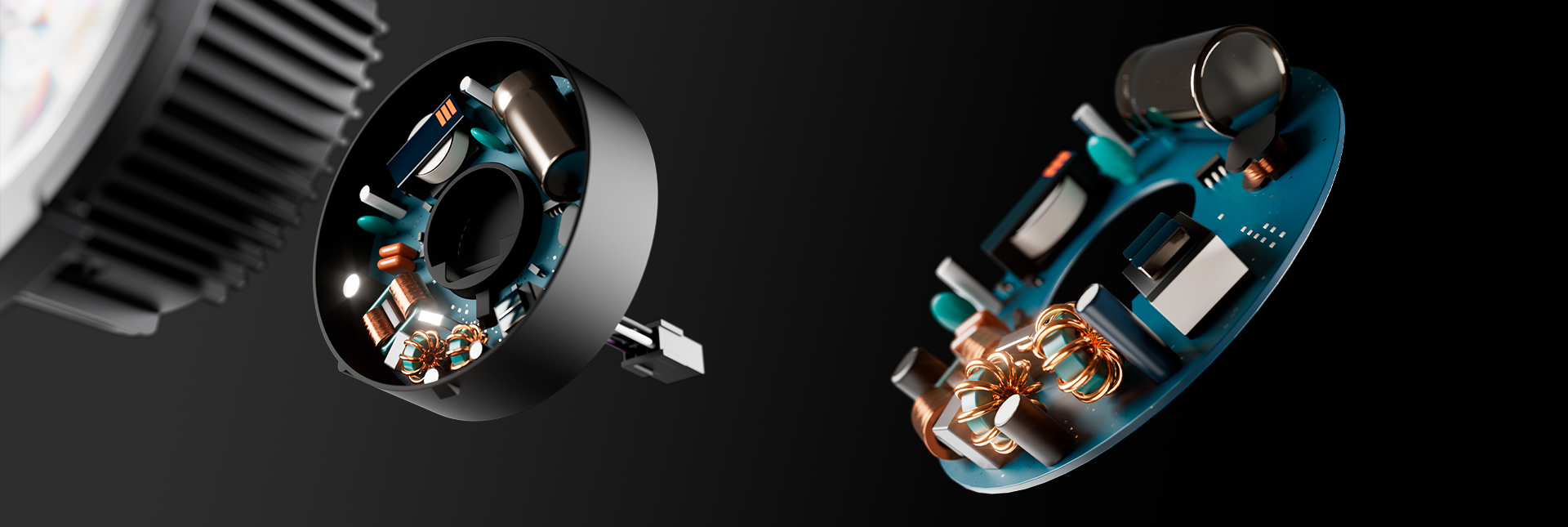
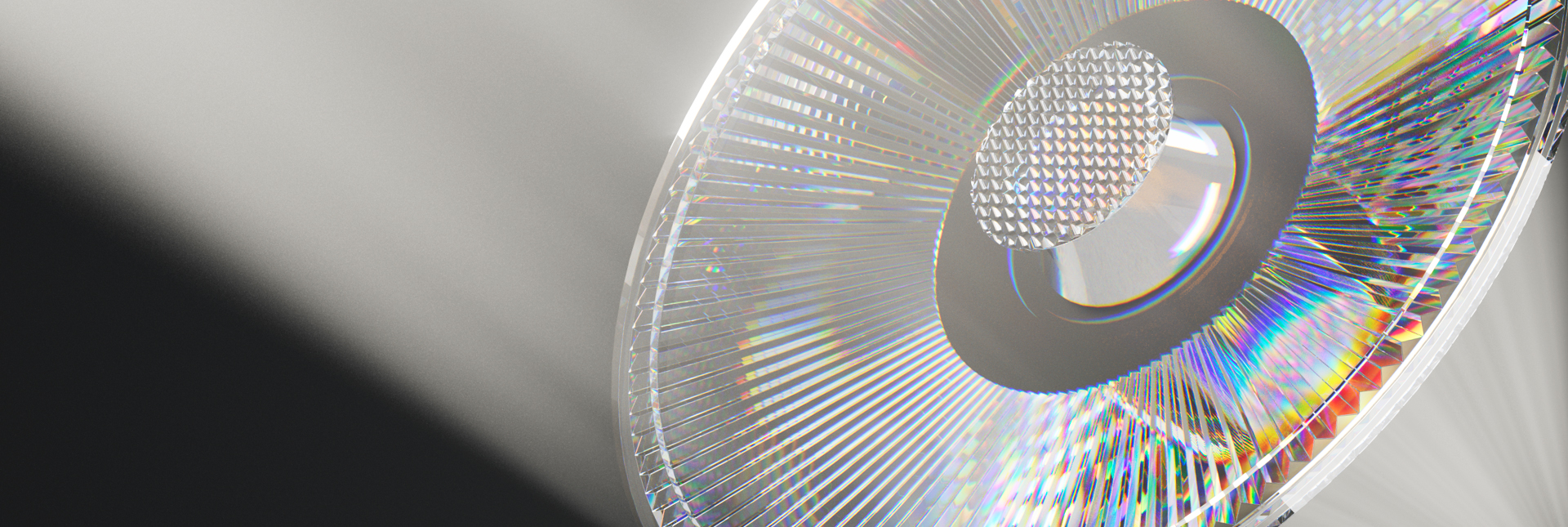
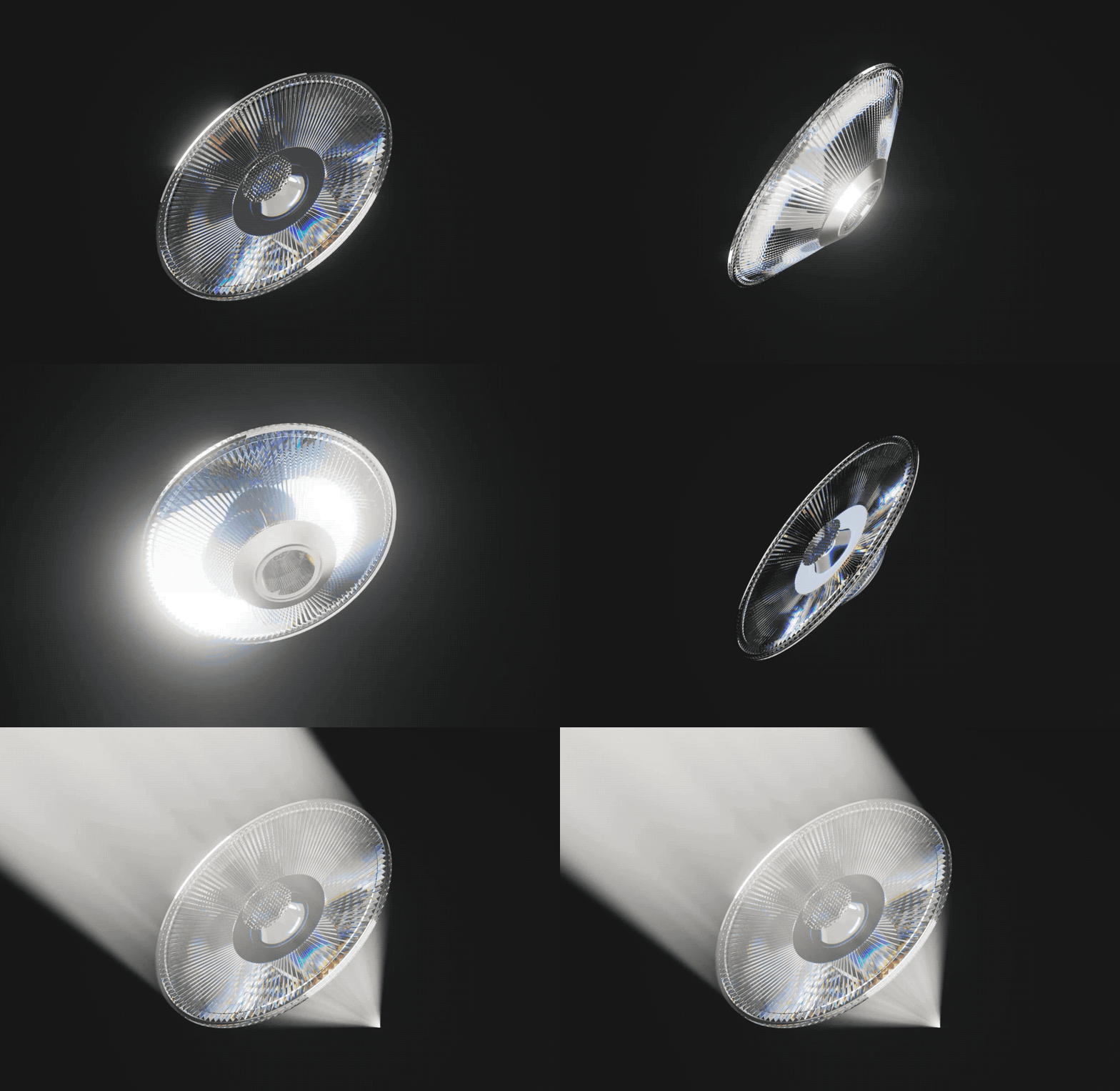
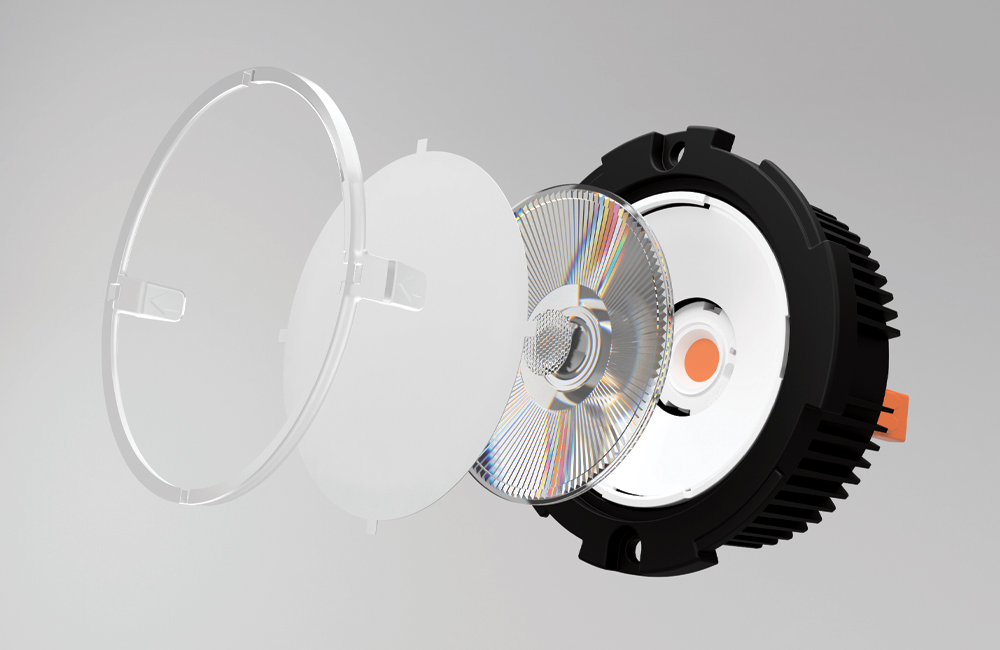
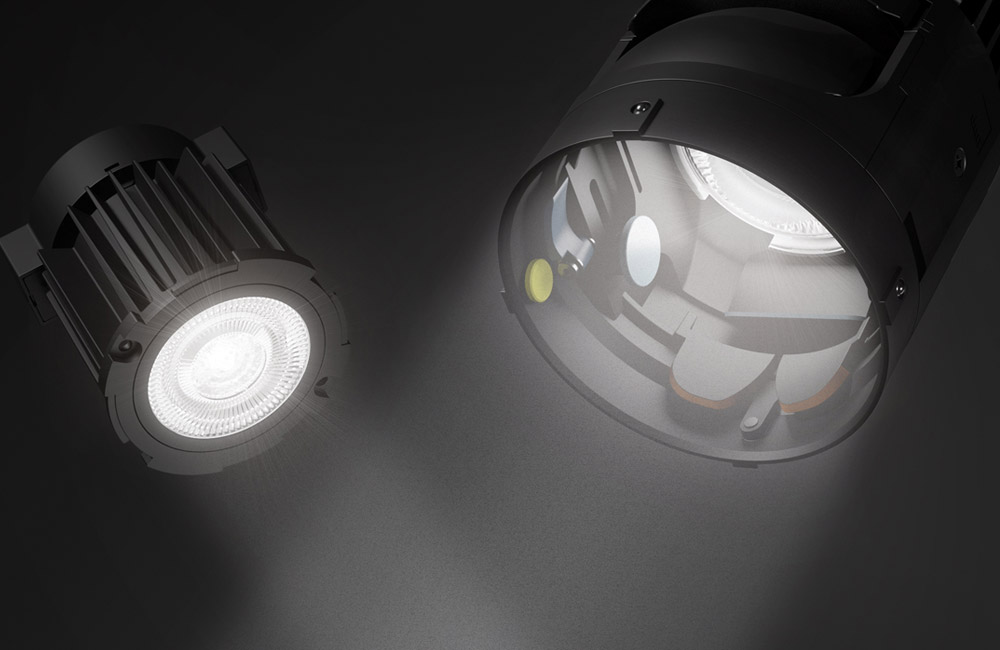
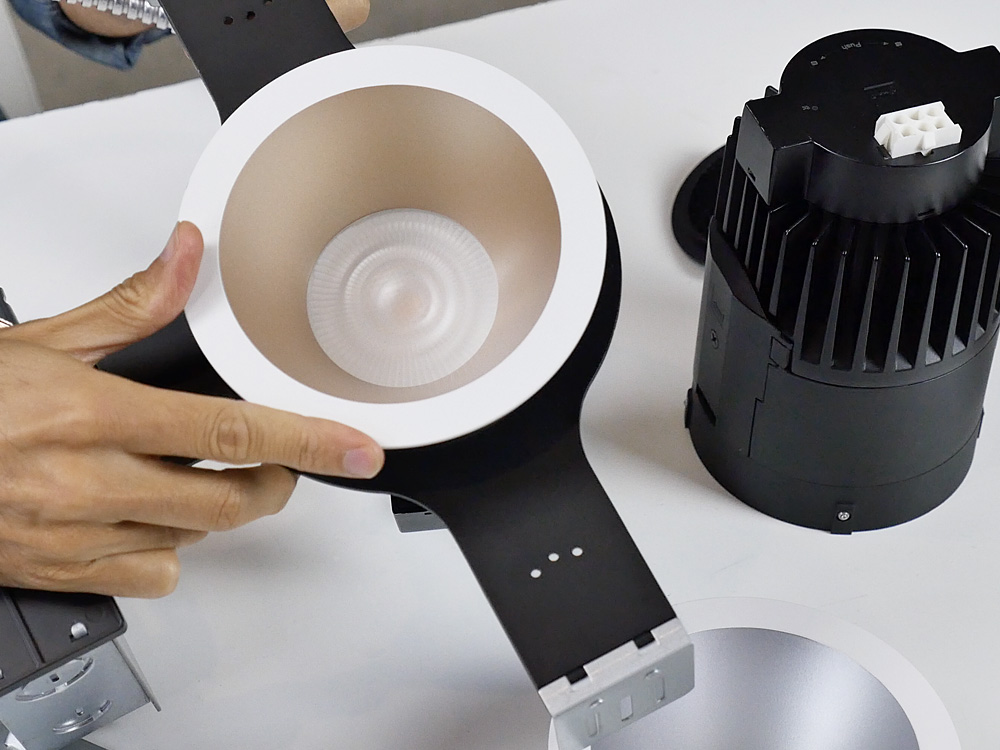
DMF’s patented Folded TIR Optics are a brilliant lens solution developed by our in-house engineering team designed to increase light efficiency while also reducing glare.

TIR Explained
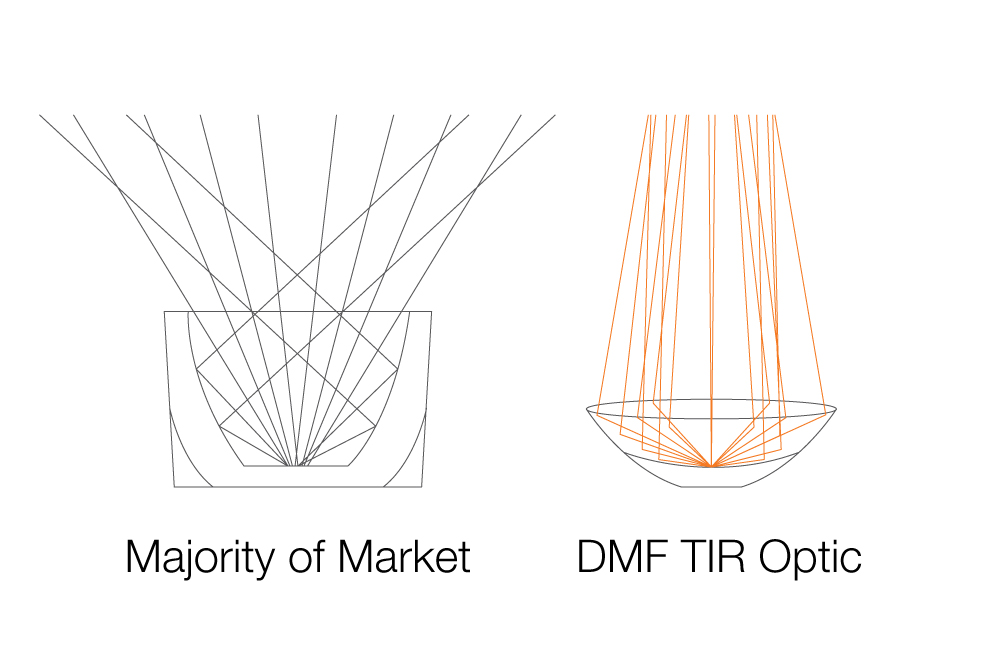
TIR stands for Total Internal Reflection. Put simply, when an LED light is placed on a TIR lens, the light photons are then captured and directed towards the desired location. Currently, a TIR lens is the most efficient method of reflecting light. However, due to the intrinsic design of the technology, a TIR lens has previously needed to be a deep optic, taking up valuable plenum space.

Folded TIR Optics
DMF has revolutionized this design by introducing a new folded TIR optic lens that when coupled with a specialized anti-glare structure at the center, lighting efficiency is increased while simultaneously reducing glare and still maintaining an even light distribution.
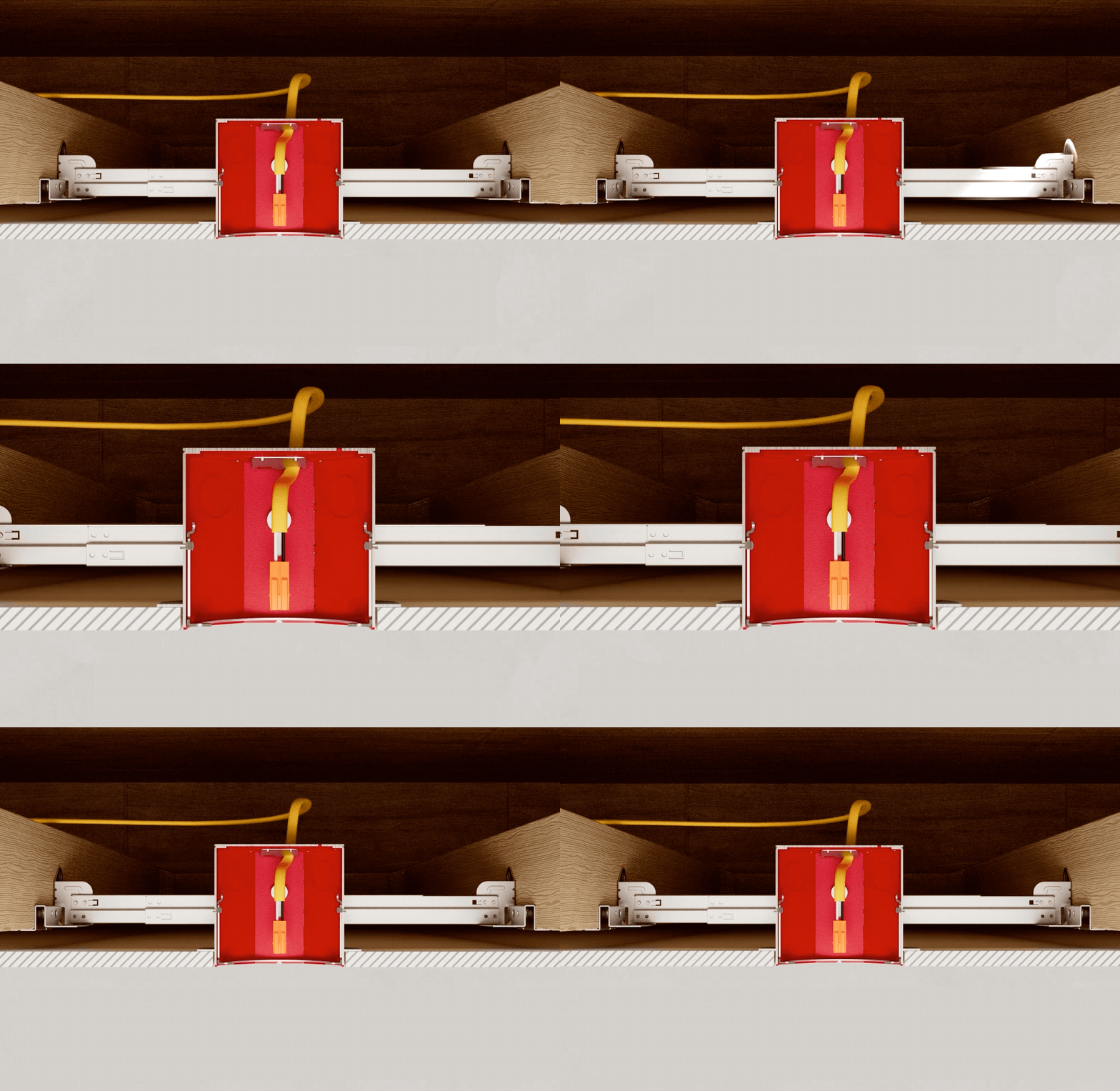
While conventional TIR optics only feature a single internal reflection, our patented solution has been geometrically optimized to yield a concentrated and focused light beam. While that sounds complicated, the simple fact is that this allows the height of the optic to be minimized to save space in the module and most importantly of all, precious plenum space.

Exclusively Through DMF
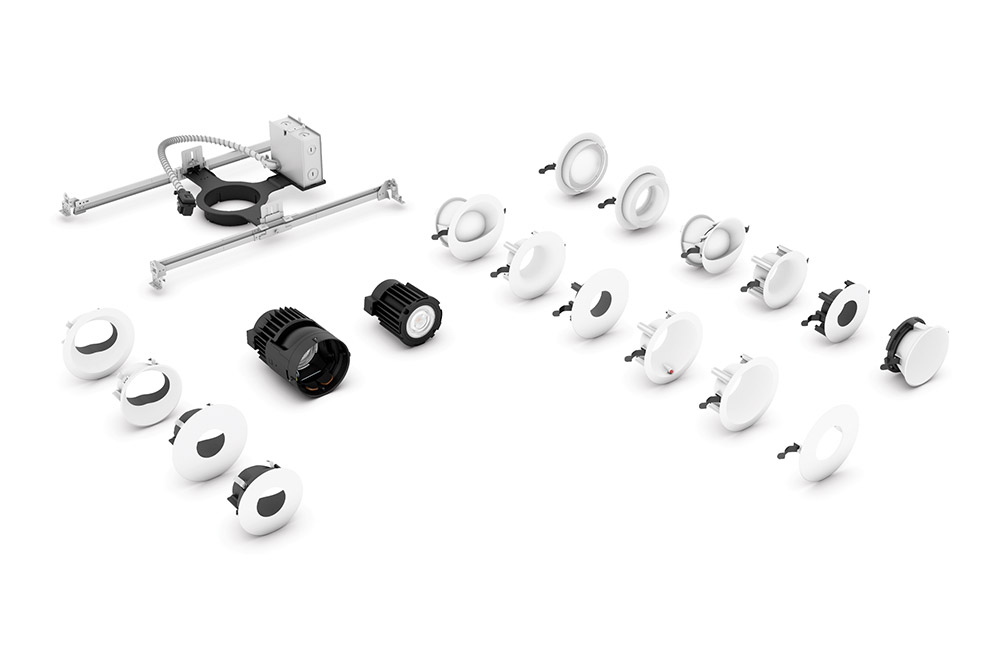
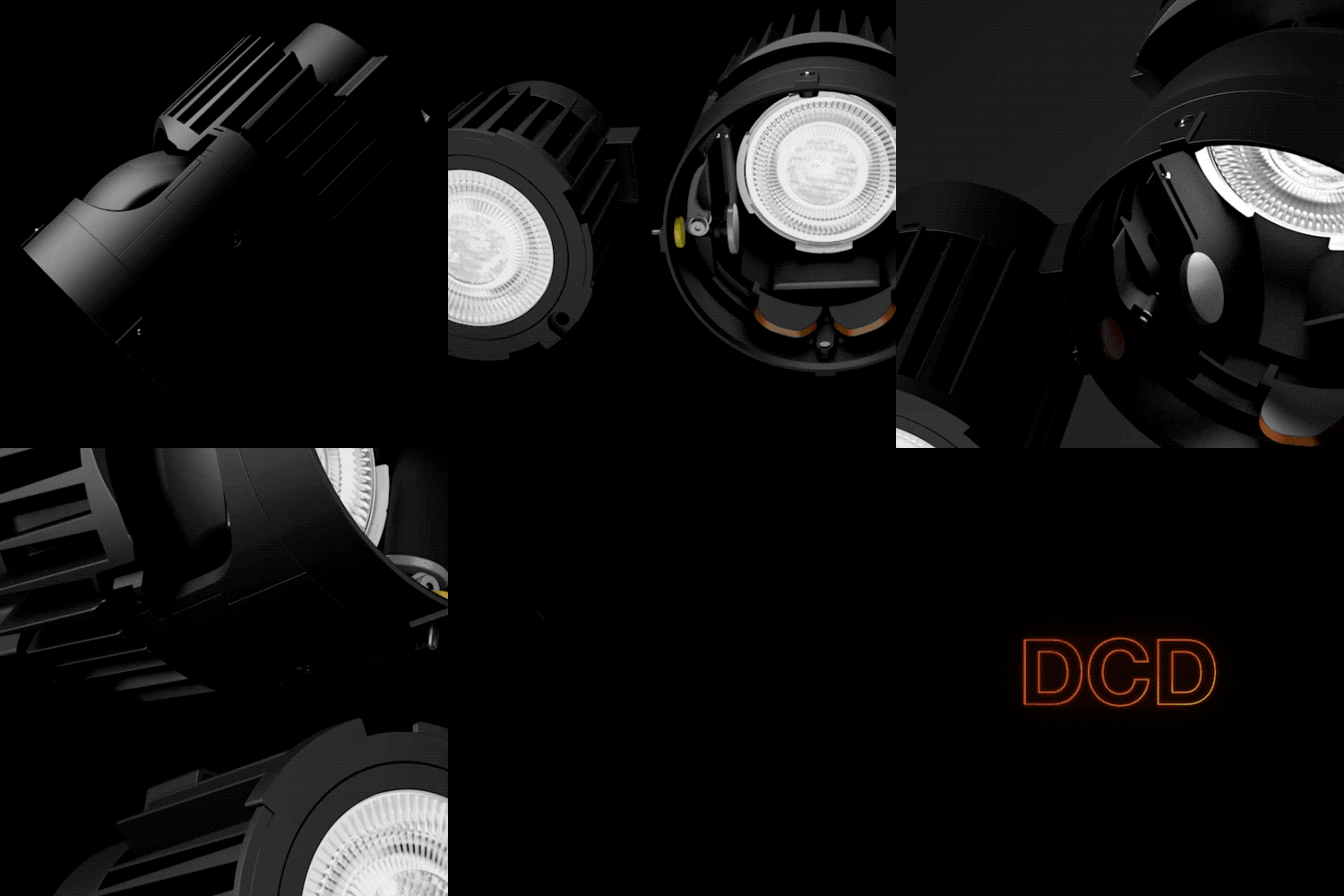
DMF’s Folded TIR Optic technology is featured exclusively in the next generation DRD2, DCD3, and DCD4 modules. Thanks in part to technological advances like this, these high-performance solutions simplify design, installation, and maintenance.
– – – – – – – –
Stay up to date with everything that’s happening at DMF: LinkedIn, Instagram, Facebook, or Twitter
Technology Designer Magazine explores the world where technology meets design. Written by and for the design-build community, the magazine features unique team profiles and in-depth project case studies.
They recently featured Lynne Stambouly, Senior Lighting Design and CEO of Illuminated Design, in an in-depth piece about her career, struggles and achievements.
First appeared in the Summer issue of Technology Designer Magazine and is reprinted with permission
TECHNOLOGY PROFILE
Lighting and Learning
We recently had an in-depth conversation with Lynne Stambouly, whose lighting career has spanned over 35 years.
BY GEORGE MCCLURE
SINCE THE EARLY 1980s, LYNNE STAMBOULY has worked for lighting manufacturers, trained other lighting professionals around the country, owned her own lighting showroom and designed for some of the largest interior design firms in the United States. She is currently Senior Lighting Designer and CEO of Illuminated Design in Naples, Florida.
In addition, Lynne is past President of the Interior Design Society in Naples (IDS) and has been affiliated with the American Society of Interior Designers (ASID) for over 15 years. Currently she holds the position of Chairman for the Collier Building Industry Association (CBIA) Sand Dollar Award Committee, and is a founding member of the Advisory Counsel for the Interior Design School at Southwest Florida College.
“Now we have some unbelievable technology with flexible LED that we lay down on a substrate and we are able to actually put the stone right on top of it.” – Lynne Stambouly ILLUMINATED DESIGN

GEORGE: How did you get your start in the lighting industry?
LYNNE: I actually went to electrical school in the late eighties. The first guys I worked for, their dad started Union Number One in St. Louis, Missouri. So, for the first two years that I worked for them I went to electrical trade school. That experience to this day suits me well. If I’m on a job site with an electrician or an inspector, it helps to understand the craft from the ground up.
GEORGE: You can talk their language and anticipate potential issues when you’re designing a system.
LYNNE: Yes. Especially when it comes to retrofitting. We have to know what’s happening behind the infrastructure to add to it or make changes. You can’t just say, “Okay, I want a light here.” Because if I say, “It can be done,” and then the electrician comes in and it can’t be done, then what kind of expert am I?

GEORGE: So you went to trade school and then when did you move over to the lighting design side?
LYNNE: After being an electrical rep I went to work for a lighting rep firm. I covered Iowa, Nebraska, Central Missouri and Southern Illinois. I did 60-70,000 miles a year on the road calling on lighting showrooms, electrical distributors, architects, builders and designers. Before deciding to come back home to Florida, I took a job with Kichler Lighting. I was their national trainer for the landscape lighting division for several years.
I then had my own lighting showroom in Southwest Florida until about 2008, during the recession. We were one of the ones that unfortunately didn’t make it. Next was creating the specialty lighting division for a high profile, local lighting showroom. It was right around the time that incandescent was shifting over to LED, and my business partner Curtis Searles, an LED expert, and I were there for about 10 years together. One day about two years ago we decided it was time to branch out, and we launched our own company, Illuminated Design, that today has grown to a multi-million dollar lighting design firm, employing a team of 10.
The technology of lighting is much more complex now than it used to be. We have a driver being made from one manufacturer, chip technology being made from another manufacturer and the fixture itself being assembled from yet another source. Then you have the controls that must be integrated and the dimming that must be perfected.

GEORGE: How has the LED technology changed lighting and the way lighting designers approach their projects?
LYNNE: In some very positive ways. Probably the most positive is that things have gotten much smaller with the innovation of LED tape light with really good diffusion. We can do some amazing indirect lighting applications. As a lighting designer, it’s important to create depth in order to create interest. And so the onset of the technology being interfaceable with good dimming control has really given us the opportunity to do some tremendous things.
For instance, we do a lot of backlighting of stone. In the old days, we would build a false back and put fluorescent tubes, tin foil and silver paint to light the stone. Now we have some unbelievable technology with flexible LED that we lay down on a substrate and we are able to actually put the stone right on top of it. We are winning design awards doing that on master bedroom floors, stairwells, countertops, backsplashes, tabletops and bars. That has been something we would never have been able to do without LED.
GEORGE: That leads us to the question of how early in a new home build or remodel should a professional lighting designer be brought in?
LYNNE: As soon as possible. One of the biggest challenges being faced by homeowners today is that there is so much bad LED technology out there. If the product is not specified at the drawing phase, the budget is completely unrealistic. So if a homeowner gets a plan that just has round dots on it, representing recessed cans, then what they’re going to get is probably something from a home store that’s purchased in bulk with a very inexpensive price tag.
But there needs to be a proper budget and design for controls and specialty lighting, which is your in-cabinet or over-cabinet lighting, cove lighting, art lighting — all of those things that make the house really pop. Without them it’s like a layer cake with no frosting — and only one layer. It’s so important for a lighting professional to get in there early so that we can specify the correct product for the correct location and lifestyle of the homeowner. When Illuminated Design is brought in early we create a more realistic budget for the luxury outcome the client undoubtedly wanted. This allows the client and all the design professionals on the project to have realistic expectations, so no one is disappointed and angered at the end of the day.
GEORGE: In terms of lighting control, do you have any particular ones that you like better, or are you kind of agnostic about it?
LYNNE: Lutron on the whole plays very, very well with most of the technology that is coming into the market and gives us the most options when it comes to trying to make all components work seamlessly.
In regard to recessed cans, some of the frustration we have is with manufacturers that have what I call ‘chip on board,’ meaning that it is adhered to the housing itself, which is very difficult to change in the field. That’s why we’re big fans of DMF Lighting. Their modular system is fabulous, where we can put in one recessed can. Then all the trims and modules can be modified in the field if we need to. They also have great color renderings of 95+. It’s a really flexible and affordable product line.

GEORGE: Sometimes even in really nice homes I’ve noticed recessed lighting that seems kind of cool, but then you realize it’s often just lights coming down in places where it doesn’t really make any sense.
LYNNE: As a light lady, it is my legacy to make sure that every light I have specified has a purpose. So we call it the ‘define and defend’ method. Where is the light placement? What is it doing? Why is it existing? How does it work with the other lighting in the space? If there’s a ceiling that’s eight feet versus a ceiling that’s 24 feet, but they’re in the same living space, I want to make sure that I’m selecting a product with consistent color rendering throughout the house. Inconsistency of lighting color in a project is something I see absolutely everywhere. It’s been difficult to control, but it’s much better now. The best advice I can give is to hire a lighting professional early. You can alleviate so much frustration when the lighting is finally all turned on and the project is finished, by making sure upfront that all the chip technology is coming from the same batches, and that they’ve been tested with one another to make sure that they feel right no matter what color rendition you desired.
GEORGE: So, again, bringing the lighting designer in early pays for itself in terms of not having to change things later on. And I know the narrative in terms of lighting control in general is that, yes, this is an expense, but when you can time your lights, when you can create scenes, when you can do all that, you can save money on electricity, etc.
LYNNE: I think that when it comes to lighting and color rendering, it’s probably the most frustrating thing for people because they know the room is wrong, but they don’t know why. And they don’t know how to fix it. What we have found is that our decorative lighting manufacturers will call a color 3,000 Kelvin, but it’s really cool white. And then I can go to another manufacturer who called it 3,000 Kelvin and it’s really warm. So the only thing that we can control as lighting designers is to make sure that the surface is all one color and that the specialty features, your under-, in-, and over-cabinet lighting, the lighting of the art, the work spaces versus the relaxing areas, that everything has to work together from a coloring perspective.

GEORGE: I think that’s a really good point about the specs not always being consistent and that you just have to have the human eye test of what does it really look like.
LYNNE: Yes – or even how about clients that spend hundreds of thousands of dollars in interior design work only to have the floor look different or the paint color be different, or the furnishings or the fabrics look different because they’re not being lit properly?
When you start early in a project, it aligns the interior designer, the builder, the lighting designer, the electrical contractor, the integrator — it brings all of us together. That way we can wrap everybody’s arms around it at the same time and we all know what direction we’re going and what the products are going to look like. And in some cases, my interior designers bring their samples in with their clients and look at it under the light that’s going to be in the house. I mean, that is the absolute perfect scenario. That way the expectations are in check, and everybody knows what it’s going to look like at the end of the day. And no one is mad or disappointed.
GEORGE: How does lighting play into the wellness narrative?
LYNNE: Well, it’s an absolutely fascinating subject, and it’s one about which I spend a lot of time reading. The master clock in the brain coordinates the biological clock in all living things. These clocks are nature’s timing devices, regulating the cycle of circadian rhythms — our body’s natural clock. What sets our natural clock? You would think it was the passage of time, but it’s the color temperature of light! I’ve been reading about studies regarding memory clinics for Alzheimer’s patients. When those patients are under the same color temperature fluorescent lighting all day and night, many suffer from sundowner syndrome.
There are studies being done that if you can change the color to mimic the sun, especially exposure to low level bluish light we experience in the early morning, that resets the biological clock. Equally, higher color temperature light causes our brains to release cortisol which acts to increase alertness and stress, and to control our impulses. Throughout the day, the light gets brighter, but the color temperature steadily decreases to a warmer, less intense light before sunset. This warmer light causes the brain to release melatonin to relax us and prepare our body for sleep. There are some amazing findings about how it is really making a difference in the sundowner syndrome.
There are lighting products that are available residentially that change the color temperature based on the longitude and latitude of the home. Our findings are that it is often cost prohibitive to create this environment on a residential level. We are hopeful that this technology will evolve, so that we can design with it. I look forward to that day, as it really is our future in health and wellness.

GEORGE: What are the hot trends in lighting and control right now?
LYNNE: The lumen packages are increasing while the apertures are decreasing in size. Today, six-inch recess product is almost non-existent — it’s changed to four-inch, three-inch, two-inch and one-inch product.
I’m also seeing the ability to dim down to one percent, and that is really a wonderful thing. The driver has been the biggest component in regard to trying to dim down the light and with LED it is so different than incandescent. We grew up with bright, less bright, less bright, dim, dim, dim, off. Right? Now with LED, you’ve got bright, less bright, less bright, off. So what’s happened over the last few years is that the driver and controls manufacturers have gotten together and are working so that they can dim those down to one percent without specialty drivers. And if you want to specify a specialty driver, they have what’s called “dim to black” or “dim to dark.” And that will mimic incandescence.
So to me, the big trends are higher lumen packages, smaller apertures and housings and the ability to dim down to that one percent.

GEORGE: If you can look into your crystal ball, what do you see coming in the future?
LYNNE: Well, I think that we’re at that cusp of really truly understanding chip technology. Look at color rendering index, for example. Color rendering index (CRI) was created on a pastel lighting level for fluorescent. It was never intended for LED. They’re going to have a whole new way to measure color rendering (TM-30) because they are adding primary colors — more red to the mix — it’s making the color of art, furniture, fabrics, flooring and really the entire interior color more vibrant and true. Great color rendering is amazing for all aspects of interior design.
Another cool product is OLED. I saw a demo where they actually added it to glass, and they just put a little bit of voltage to it and the window becomes the illuminator in the room. So when you have LED that can be liquified, you can add it to just about anything and create a luminary. □
View original article at Technology Designer.
————————–
Connect on LinkedIn, Instagram, Facebook, or Twitter to stay up to date with everything that’s happening at DMF Lighting.
At DMF, we pride ourselves on engineering and improving every aspect of the fixture. From lighting performance to ease of maintenance and everything in between, this philosophy permeates every aspect of our design.

Our latest innovation is a completely re-designed bar hanger system. An often neglected aspect of lighting fixtures, bar hangers have remained largely unchained — but we spoke with the top electrical engineers in the country to discuss common issues they experience when installing housings. We took this information and re-thought every aspect of the bar hangers.
The result, an all-new bar hanger system that’s sturdier, simpler to install and more compatible than ever.
Eliminate Sag
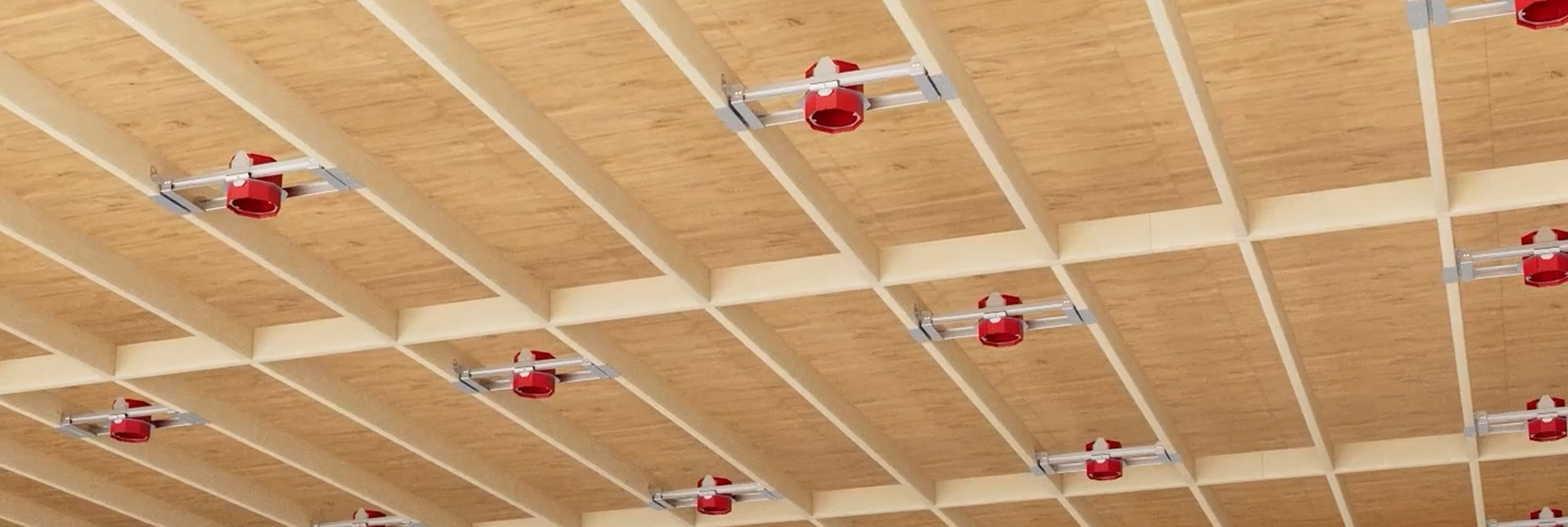
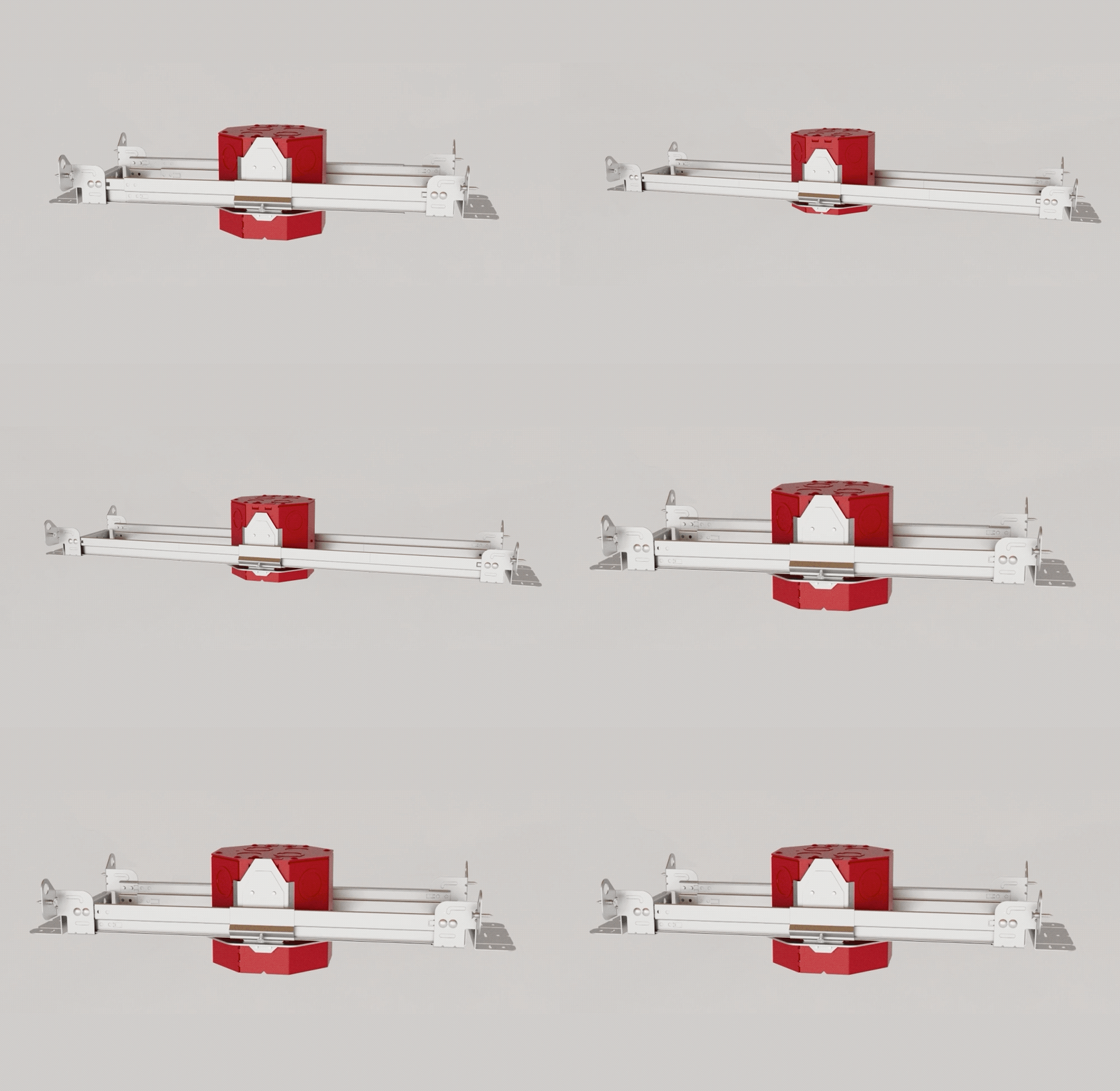
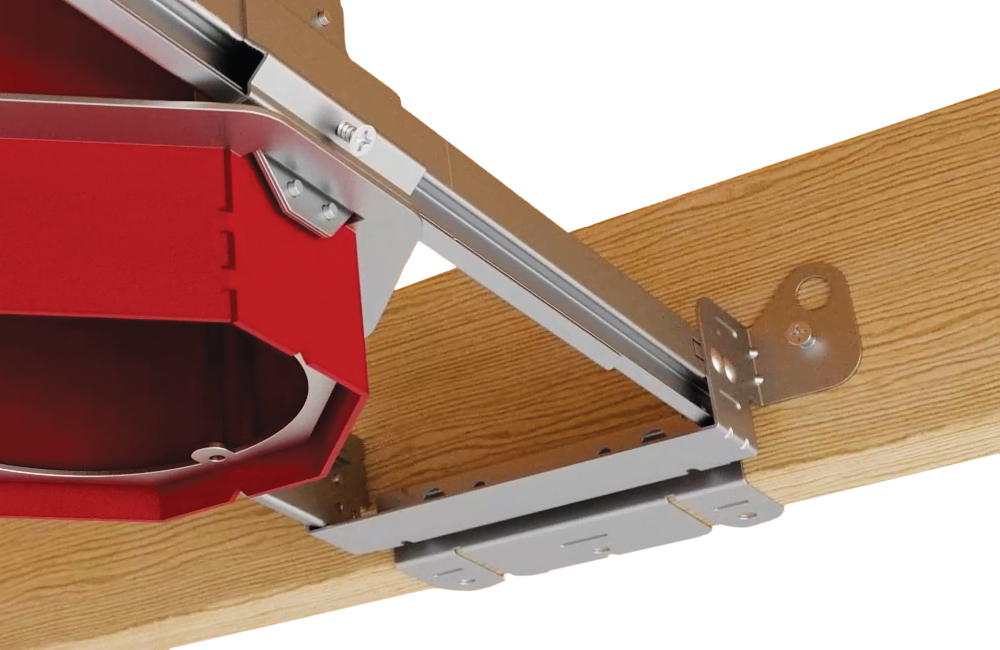
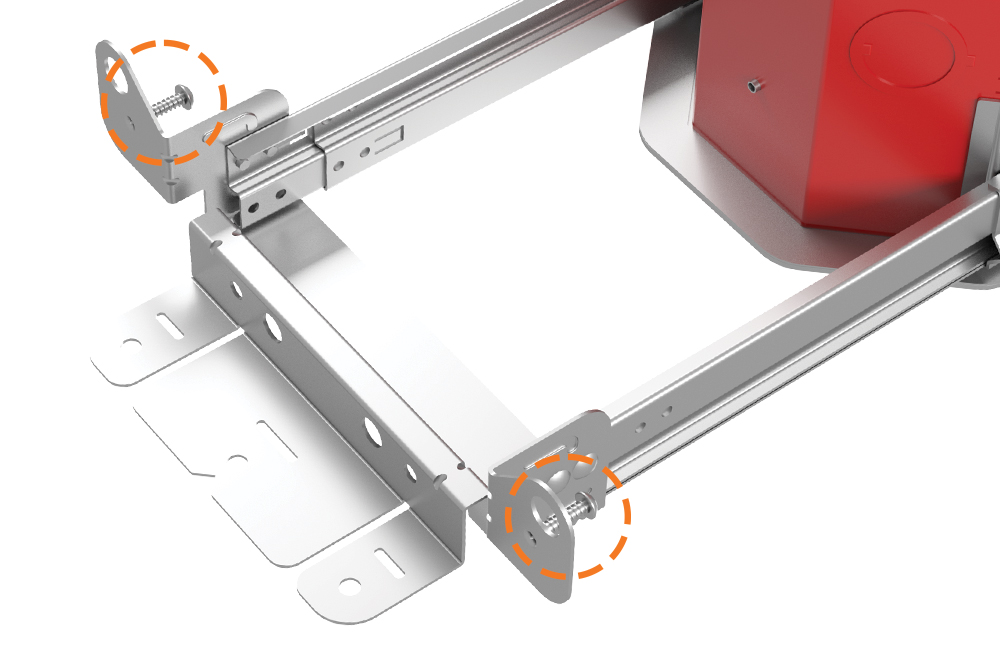
The first thing you’ll notice about the new bar hangers is that it eliminates the traditional four independent connecting ends. Instead, we engineered a cross brace that connects the ends of the two bars, essentially turning them into one rigid unit. The bar hanger system is so strong it can even provide structural stability with just one side mounted in with a single screw.

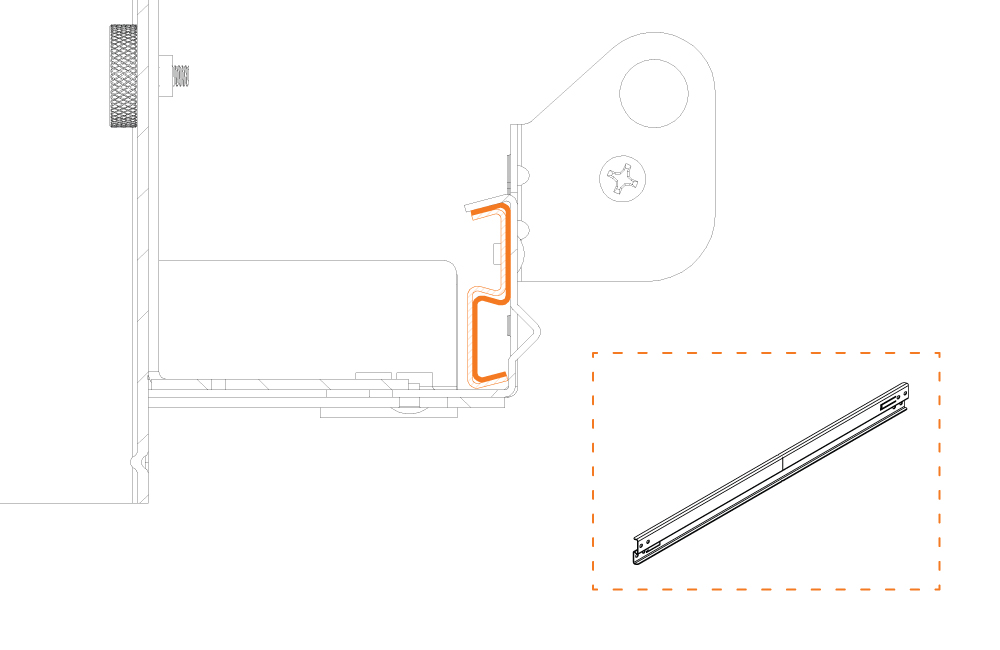
Stability is increased further by a completely re-designed railing, which utilizes an innovative S-shaped interlocking system that increases the surface area of where the sliding rails meet. This increased strength results in bar hangers that lock tighter and won’t shift, preventing against trim sag even when fully extended to 24″.
The new bar hanger system can withstand weights of 200 pounds
And combining the new bar hangers with our signature adjustable housing depth and secure Twist and Lock Technology, flush trim installations become easier and light has nowhere to escape.
Work smarter
The new bar hanger system features a host of unique updates that make installation faster and easier. Here is everything, big and small, that makes them easier to mount.

- Reinforced bar hangers can hold the entire housing in place after just one mounting point so the contractor no longer has to hold the housing while mounting four separate ends
- Fewer mounting points — the entire bar hanger system can install with as few as two screws or nails

- Pre-installed screws replace the previously included nails for quicker installs

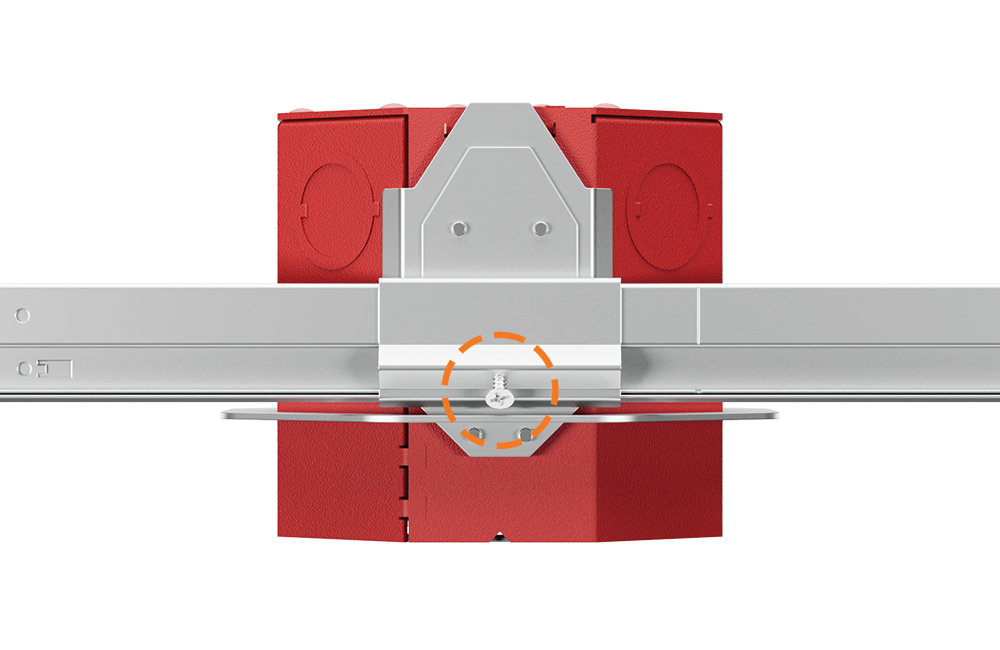
- Angled Locking Screw allows for easy tightening from below the housing
Installs Anywhere
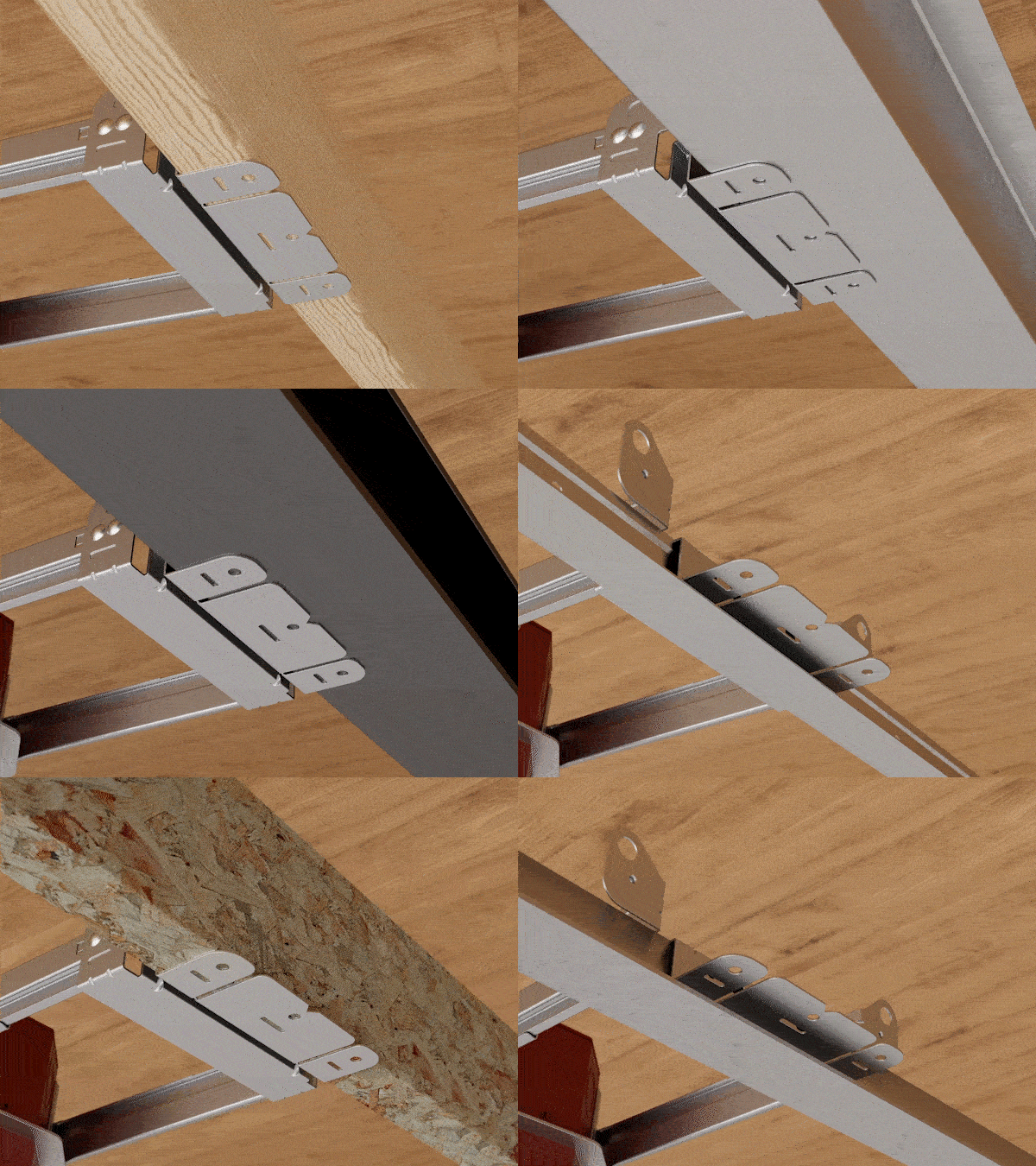
Not only are the bar hangers more stable and easier to install, they’re also compatible with more applications. The cross brace features a re-designed ledge and nine different mounting points for installation in any of the following:

- Hat channel
- T-bar
- C-channel
- Laminated Wood
- Quick-Span
- I-Beam
- Standard Joist
- Concrete Pour Application
Always Evolving
Re-thinking every detail of the bar hangers may sound excessive. And some of the updates may sound minor, but it’s this attention to detail that drives DMF Lighting to continue to innovate — even in areas you may never have considered.

The new bar hangers are available now for the DRD Series with all non-classic DMF housings, including the OneFrame and SquareFrame.
– – – – – – – –
Stay up to date with everything that’s happening at DMF: LinkedIn, Instagram, Facebook, or Twitter
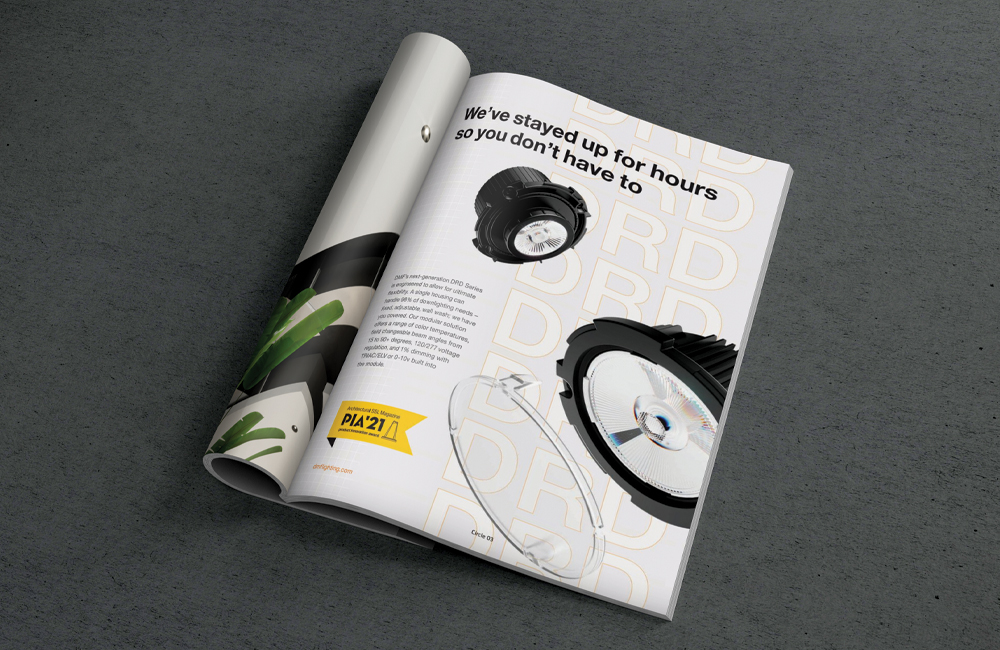
We’ve stayed up for hours, so you don’t have to
The next generation DRD Series is engineered for ultimate flexibility. Write fixture schedules with ease using a single housing. This versatile solution can keep up with the fast-paced and ever-changing nature of your projects.
A single family can support 98% of downlighting use cases.
- Fixed, adjustable, or wall wash downlighting
- 750 to 1250 lumen output
- Field-changeable beam angles from 15 to 90+ degrees
- Integrated 1% dimming with TRIAC/ELV or 0-10V
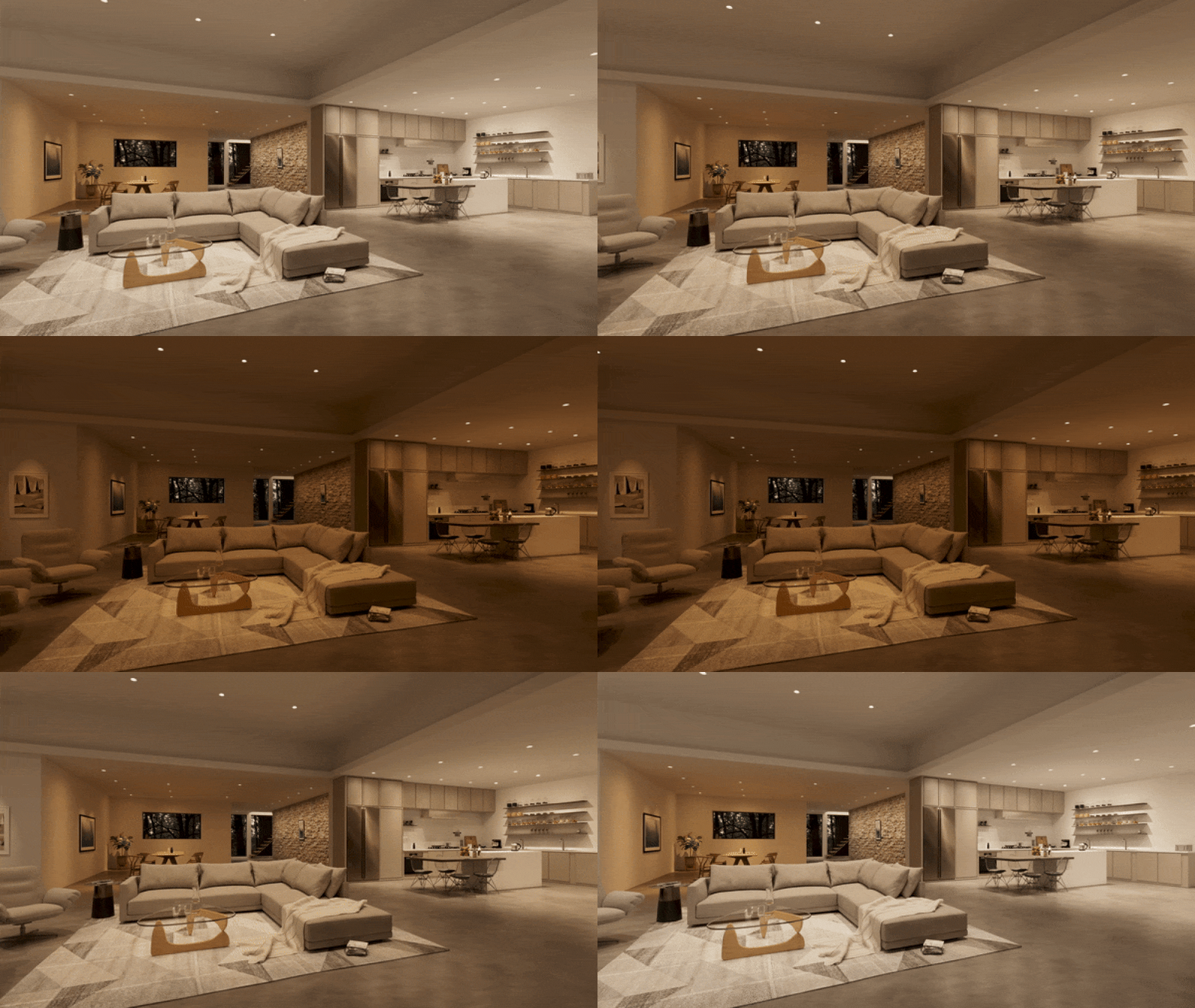
- A range of color temperatures including Warm Dim
Learn more about the DRD Series
– – – – – – – –
Connect on LinkedIn, Instagram, Facebook, or Twitter to stay up to date with everything that’s happening at DMF Lighting.
2020 PIA Award Winner
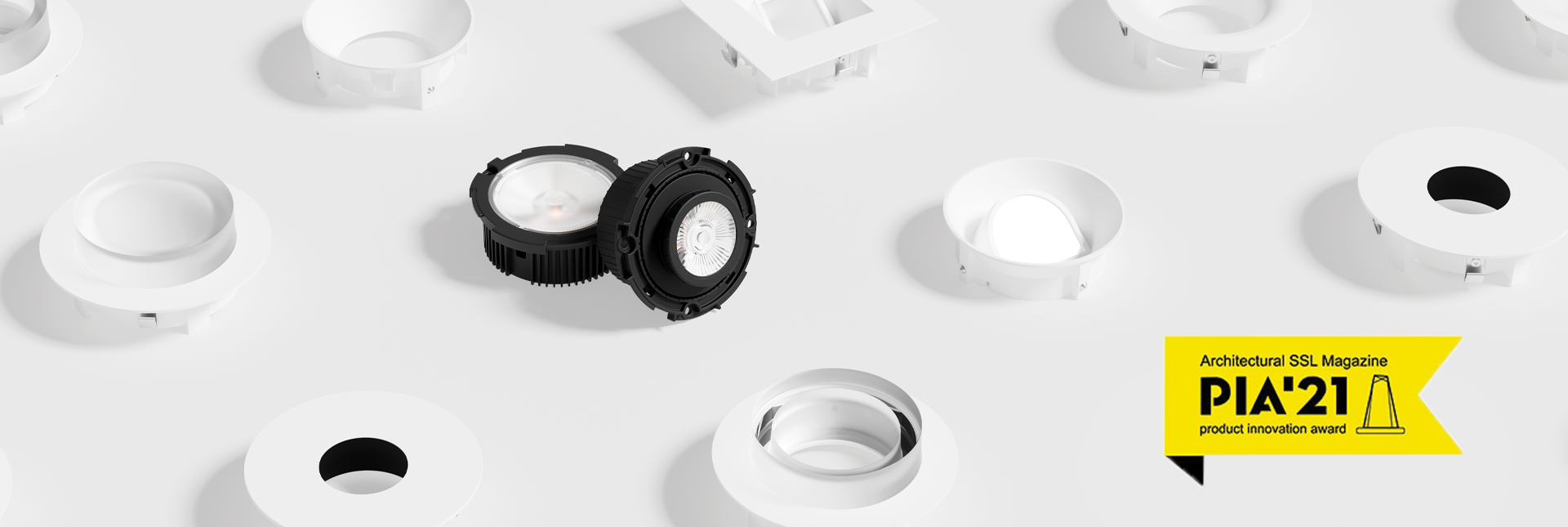
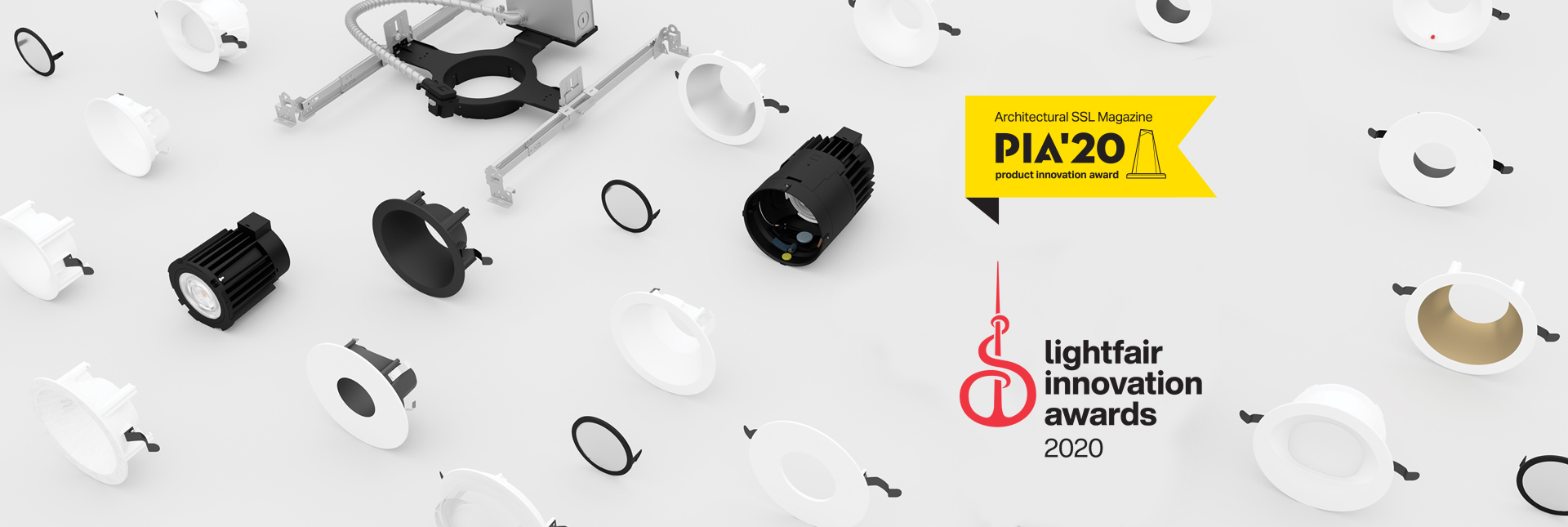
The DCD Series follows up its 2020 LFI Innovation Award with another prestigious accolade, a 2020 Product Innovation Award.
Now in their tenth year, the PIA celebrates the latest advancements and achievements in lighting. Presented by Architectural SSL, the judging panel recognized the DCD Series in the Downlight category, praising how it simplifies the installation process with its breadth of modular features.

JUDGES’ COMMENT:
“Finally! A downlight for all applications. A designer’s dream come true. Love the ‘one-stop shopping’ mentality for creating this design sensitive fixture. I really appreciate the flexibility, (spot lights, wide angles, etc.) within the same housing. From the design aesthetics point of view, it allows for consistent and uniform grid of downlights while they can have different functions. And options for changing the type of heads without removing the entire fixture is definitely an added bonus and adds flexibility if the space changes.”

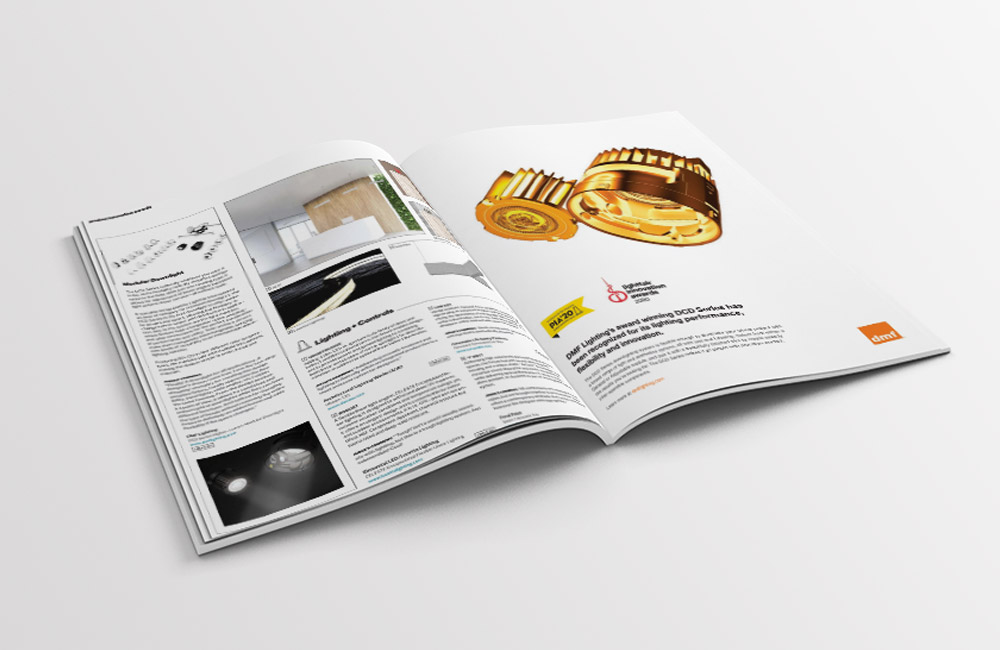
Modular Downlight
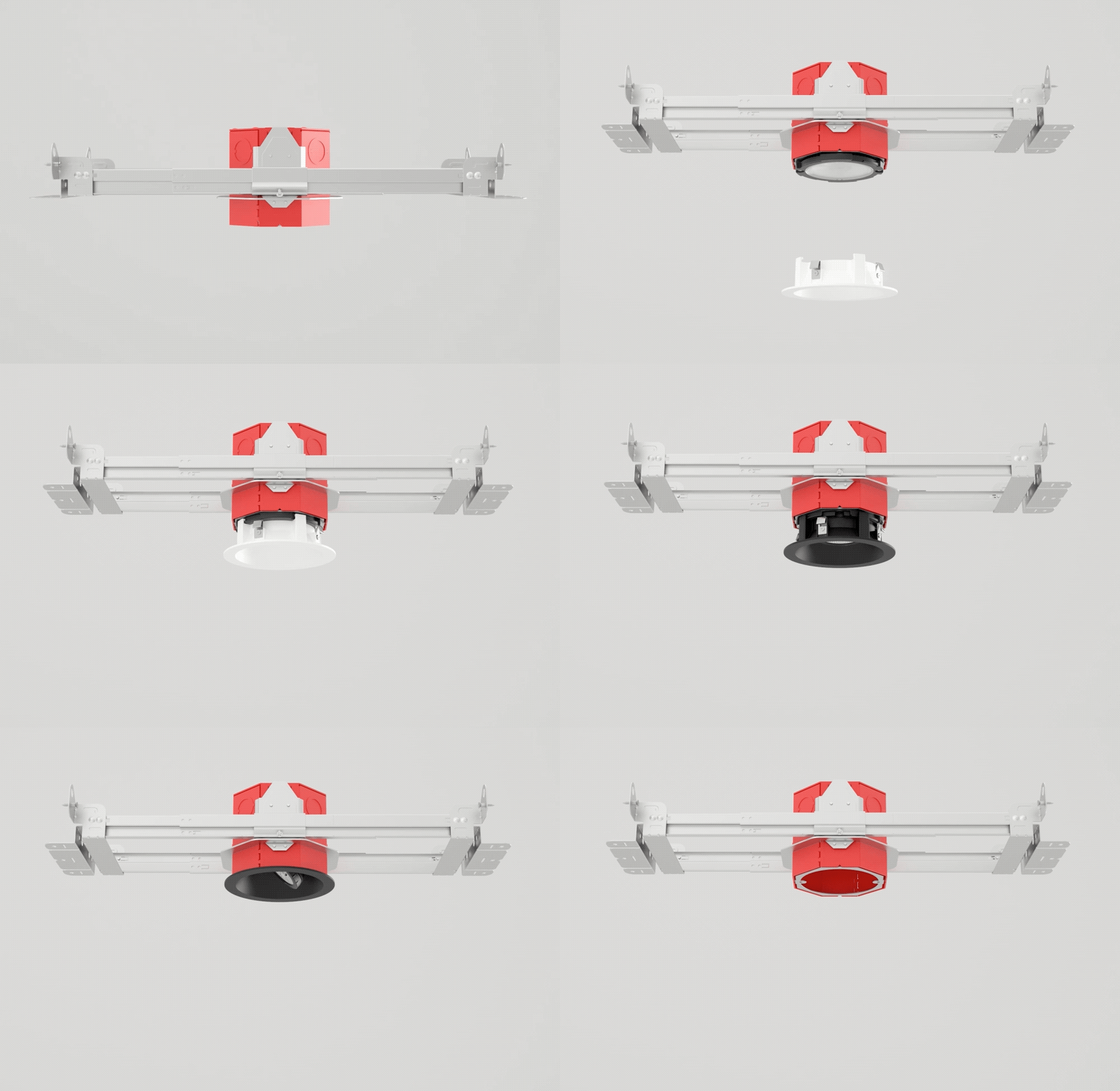
The DCD Series downlighting system is flexible enough to illuminate your whole project with a broad range of light and aesthetics options, all with just one housing. Select from either a General or Adjustable module, and pair it with a beautifully finished trim to create exactly the results you’re looking for. The DCD Series makes it all simple with precision-crafted, inter-operable components.
The DCD Series is literally whatever you want it to be, as its flexibility radically simplifies configuration in the field. With just one housing type, it allows for adjustment of beam angles; increased light output; driver service—all without tools.

Learn more about the award winning DCD Series Higher Lumen Downlight.
Architectural SSL Magazine, November – December 2020
– – – – – – – –
Connect on LinkedIn, Instagram, Facebook, or Twitter to stay up to date with everything that’s happening at DMF Lighting.
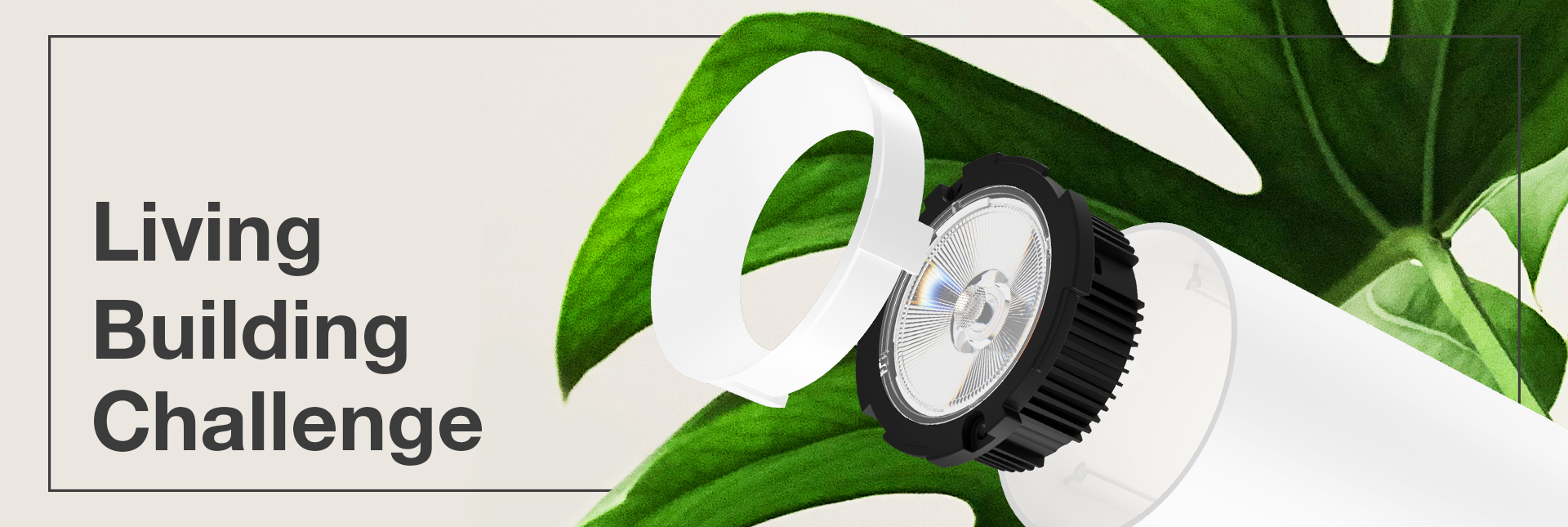
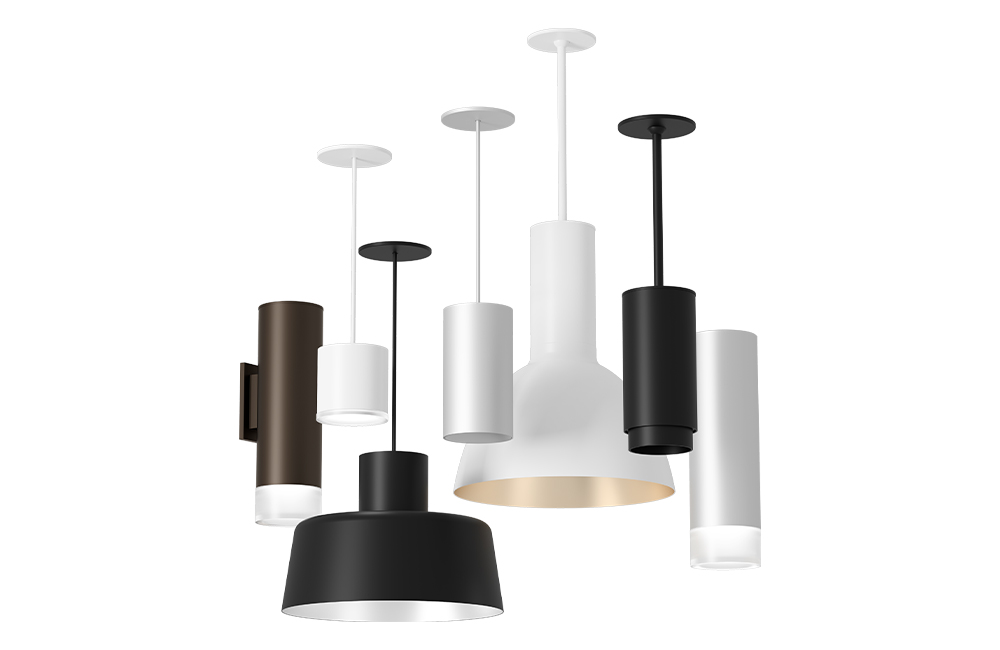
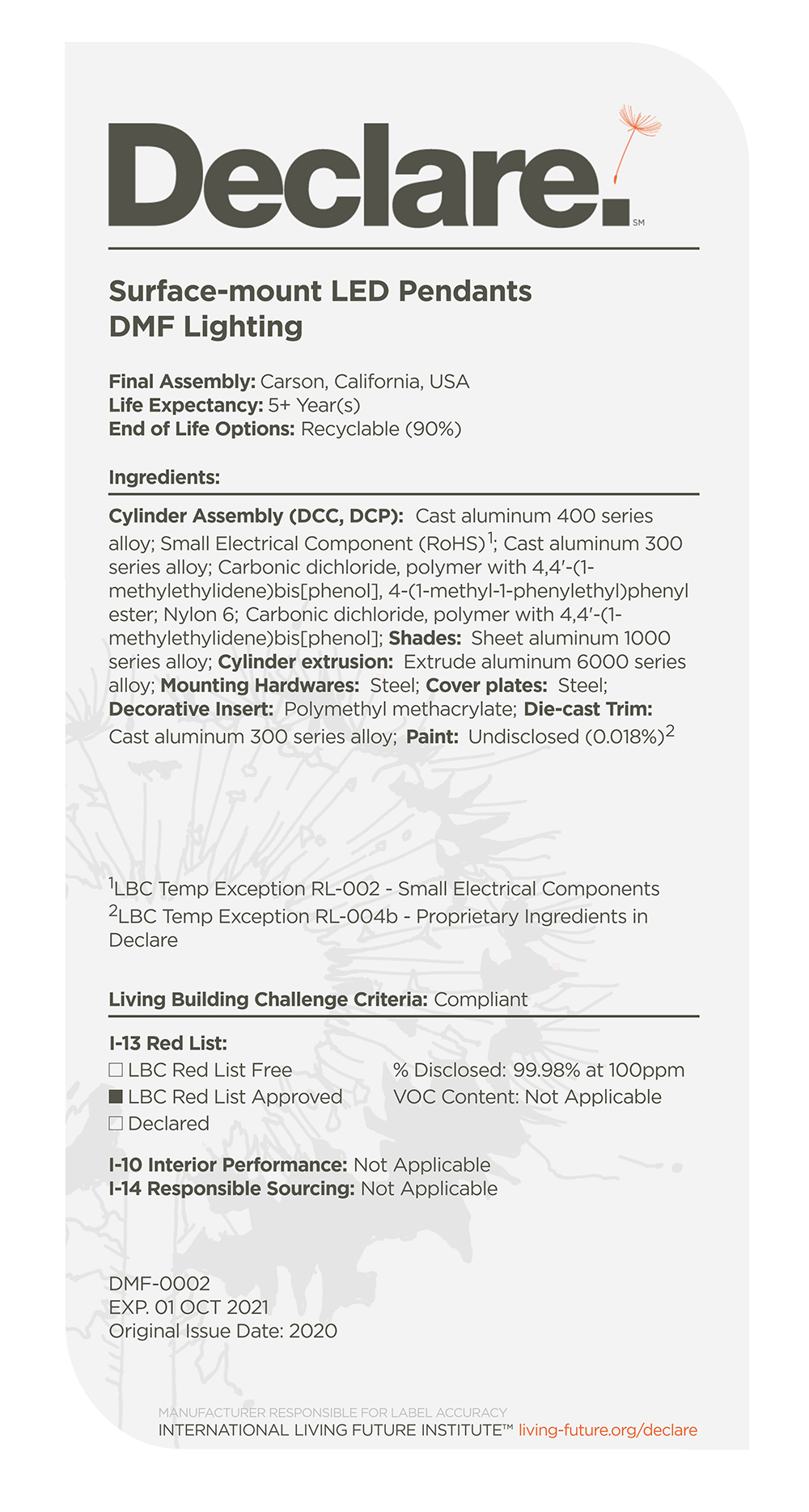
The Living Building Challenge is an international sustainable building certification program. Earlier this year, our recessed LED downlight system achieved Living Building Challenge compliancy. Now, we’re proud to announce we’ve expanded our compliant product offering to include the DCC Cylinders as well. With its aluminum-alloy unibody design and RoHS approved electrical components, our surface mounts are up to 90% recyclable and free of non-sustainable, harmful toxins.
Living Building Challenge
Similar to LEED, Green Globes, and other standards recognized by local, state, and international governments, the Living Building Challenge is the world’s most rigorous proven performance standard for buildings. People from around the world use its regenerative design framework to create spaces that give more than they take.
Living Buildings are:
- Regenerative buildings that connect occupants to light, air, food, nature, and community.
- Self-sufficient and remain within the resource limits of their site.
- Create a positive impact on the human and natural systems that interact with them.
DMF’s continued commitment to better living
Efficiency and sustainability are at the core of DMF, pushing us to design ever-more energy efficient lights and informing the materials we use to build our products. Projects using DMF’s downlight system or surface mount pendants are on the pathway to reaching the top classification of Living Certified.

For more information on DMF’s sustainable products, including associated building credits, read our post on Living Building Challenge compliancy.

– – – – – – – –
Connect on LinkedIn, Instagram, Facebook, or Twitter to stay up to date with everything that’s happening at DMF Lighting.
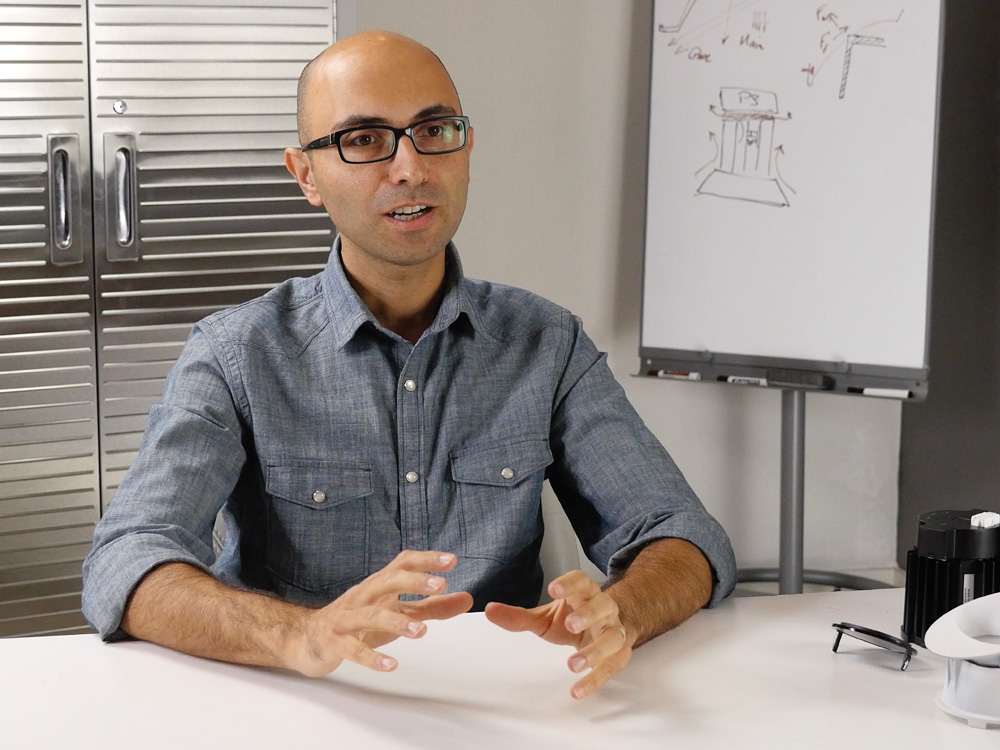
Recognized for its robust lighting capabilities within a modular system, the DCD Series was named the 2020 Lightfair Innovation Award Category Winner for Recessed Downlights, Wall Washers and Multiples. DMF is proud to have the DCD continue our tradition of designing award winning products and spoke with Amir to learn more about working at DMF and the innovation that went into designing the DCD Series.

Describe what you do here at DMF.
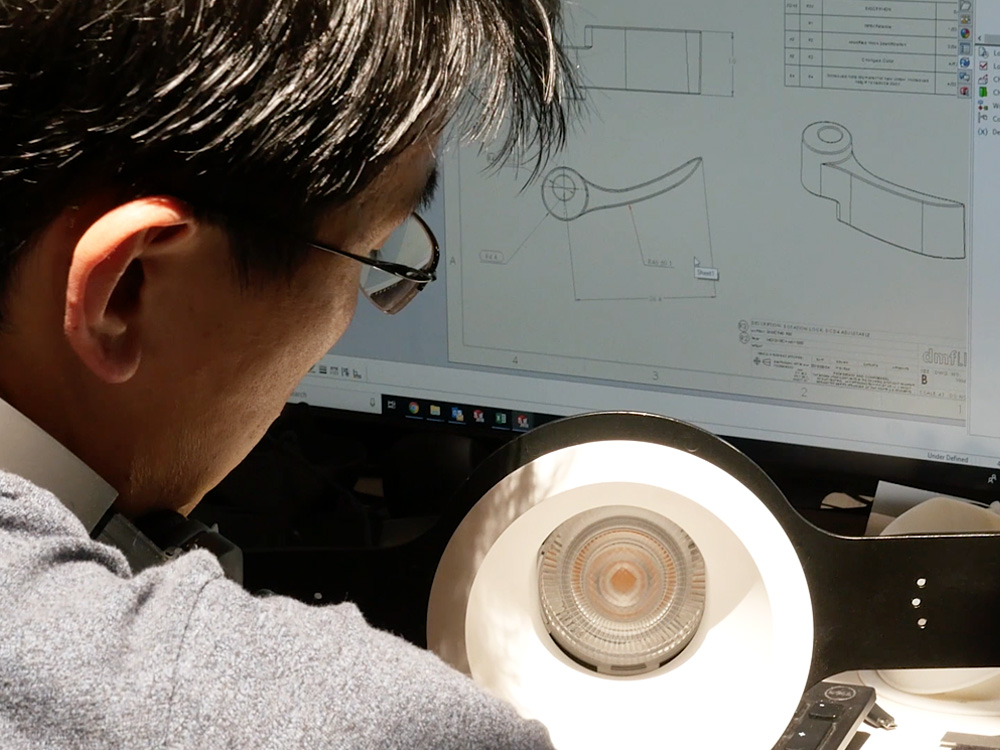
The product development process at DMF has a few different sides to it. One part is the mechanical, another side is electrical, and we have optical systems too. And at the end of the day, all these parts need to come together to become a product. My main task at DMF is really to bring this whole development process together.
So what’s your favorite part of bringing it all together?
The most joyful moment of the product development process comes toward the end. When you have the product in your hand, and you see the iterations from where you started. Once you get to the point of when you can show it to people, show how it performs and behaves in different situations and environments and ultimately, how it’s superior to other products.

What gets you excited about what you do?
During the product development process, what gets you excited on almost a daily basis is when you work on a specific challenge and you start looking at the issues you have on hand. You do these brain storming sessions and then you create prototypes. We’re creating prototypes on a daily basis. The results you can basically see, how step-by-step you’re making it better and better every day. At some point, you make the decision to show it to a broader audience and from that point on, you feel that this unknown challenge you’ve had at the beginning has been solved. That’s what really gets people excited.

Explain what DMF is trying to achieve with their new products.
The way that I see it, DMF is a company that wants to be number one in downlighting. And what that really means is that it doesn’t matter where you start, residential type of construction all the way to commercial, it could be multi-family, every different type of scenario. We want our products to be the number one option people choose. And that can be tricky because a lot of people look at lighting differently. Some people look at the price, some at quality, and some at performance. For us, we try hit all three. That’s how we want to win in the market, by becoming number one in all three aspects. From quality to how we price the product and ultimately the performance.
What makes DMF products unique in the industry?
How easy and interchangeable and modular our products are. They give different customers different tools. From the contractor to the lighting designer or even the homeowner, people work with our products differently. How easy it is to swap out different products, how easy it is to maintain our products, and how reliable and durable our products are. This is how we make our products unique, and it’s standard across the board in all our products.
Tell us about the engineering team at DMF.
We’re basically a combination of different talents from different industries with multiple different disciplines. We have people from the auto industry, from Aerospace, from the medical industry, and of course lighting. Having all these different backgrounds, experiences, and skill sets really contributes to our product innovation and is unique to DMF.

What drives product development at DMF?
We look to address needs in the market. We normally start the product development process from the perspective of the customers. So you have to do a lot of interviews, talk to people and try to determine where existing products cannot answer their needs. Where do you have issues? Performance? Installation? You have to talk to different groups too. You don’t only focus on the lighting designer and architect. You also go out and talk to the homeowners, the builders, and the contractors. We gather all the pain points from these different groups and design our products to address them.
Is that how the DCD started?
Yes, we discovered that in a commercial application, even though a lot of the planning is done in advanced, there’s always changes. And any changes that occur towards the end of the project are very costly. We set out to design a commercial product that can adapt to those changes. Changing the product had to be easy and the installation had to be forgiving.
“That’s why everything is modular,
simple, and tool-free.”
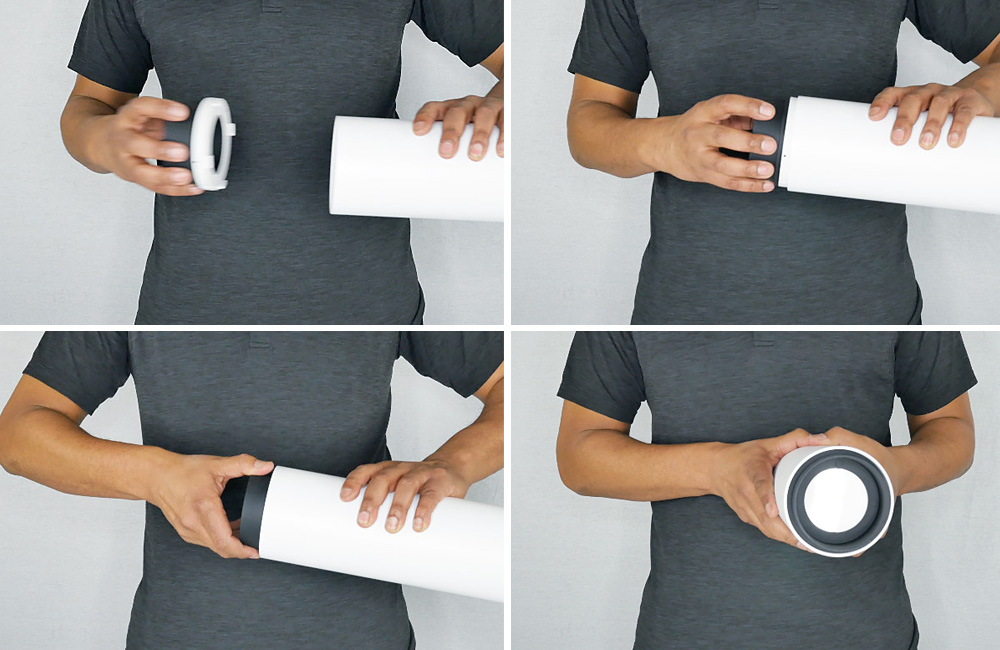
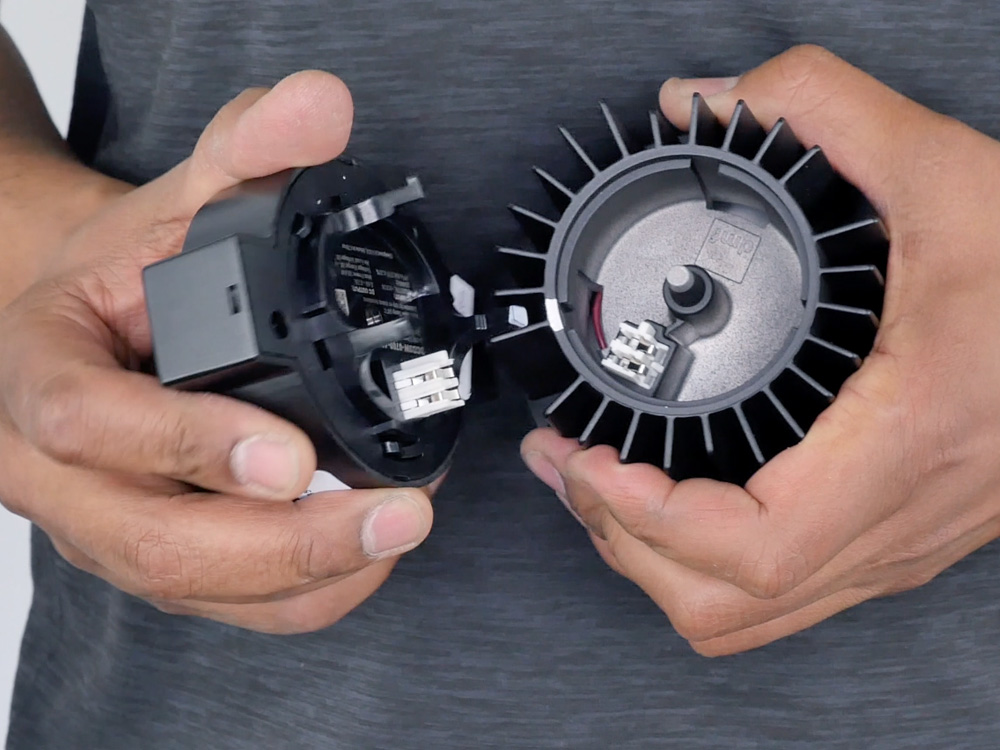
Once you put it in the ceiling, everything after that point is tool-free. You can swap out modules. Swap out optics. Swap out trims. All by hand. Nearly every piece of this product family is interchangeable.
What were the challenges in achieving that?
Designing a housing that can accommodate both a downlight and adjustable. When you look at other adjustable commercial housings on the market, they have a frame in the ceiling that’s already set for an adjustable. There are a number of structures inside the frame that are needed to hold their adjustable light, so you lose that adaptability.
But not only that, adjustables often have issue with light leakage. That’s why a lot of competitors use a “shoe box” where they put everything in a big box. But the whole system becomes very clunky hard to install. It will interfere with the ceiling insulation, joists, HVAC system.
“We wanted to make sure
everything is minimized and
compacted into a smaller space.”
Combining those requirements of a universal frame and a system that works in a small space were the biggest obstacles. That’s what led us to designing the cold-fused light shield.

Finally, what do you love most about the DCD Series?
It all comes down to performance. We wanted to make sure the DCD is spec grade. There’s a minimum cut off angle you want to hit in order to achieve a quiet ceiling, where you can’t see the light until you are under it. You usually lose a lot of light with this, so it’s important in balancing the recessed depth of the product while at the same time meeting ENERGY STAR efficiency requirements and higher-lumen performance.
We believe we did just that. We were able to basically hit every important aspect you would want from a lighting system in one product.

Learn more about the DCD Series series.
– – – – – – – –
Connect on LinkedIn, Instagram, Facebook, or Twitter to stay up to date with everything that’s happening at DMF Lighting.
2020 Innovation Award Winner
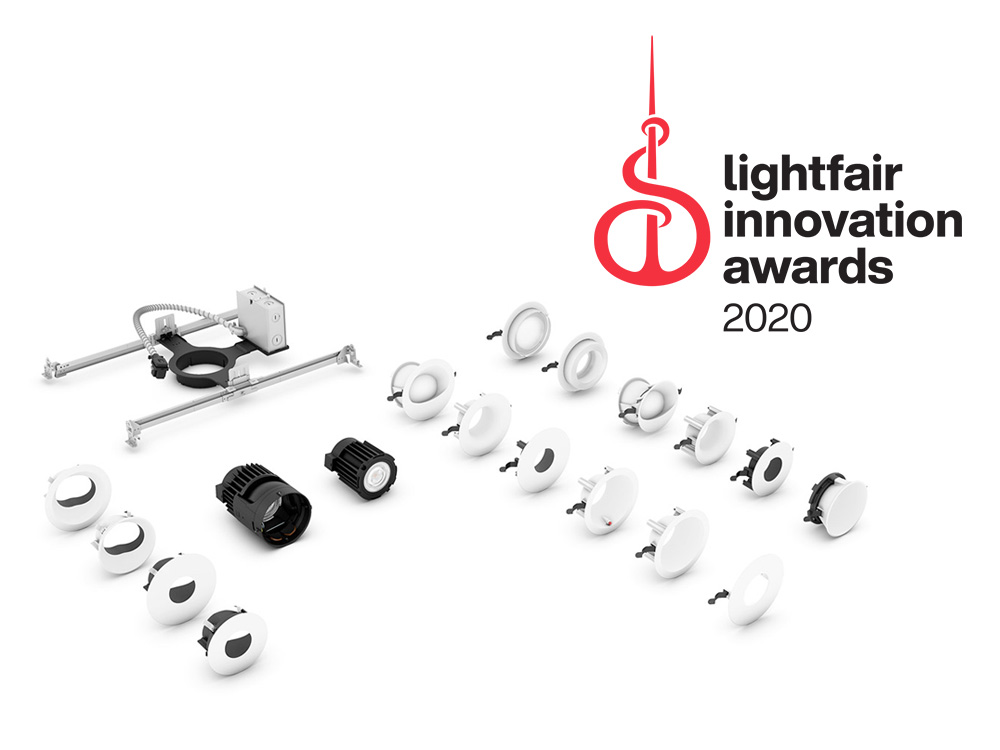
Recognized for its robust lighting capabilities within a modular system, the DCD Series was named the 2020 Category Winner: Recessed Downlights, Wall Washers and Multiples. Judges praised the DCD for the versatility it brings as an interoperable downlighting solution, radically simplifying specification and field maintenance.

DCD Series
The DCD Series is a higher-lumen, interoperable downlighting solution that radically simplifies configuration in the field. With just one housing type, you can change beam angles, increase light output, service the driver, and even switch to an adjustable. All without tools.
Learn more about the DCD Series.
Highlight the Industry’s Most Innovative Products
Now in its 31st year, the LightFair Innovation Awards celebrate the ingenuity, creativity and resourcefulness of our industry’s manufacturers and their researchers, developers, scientists, and industrial designers.
Traditionally held in conjunction with the LFI trade show, the prestigious LightFair Innovation Awards highlight the industry’s most innovative products and designs. An independent panel of judges from IES (Illuminating Engineering Society) and IALD (International Association of Lighting Designers) select the winners through a meticulous two-day judging process. Criteria includes the product’s clarity of purpose, versatility, adaptability, sustainability, ease of use, design efficiency and aspects that enhanced human wellbeing.
Learn more about the LightFair Innovation Awards.

– – – – – – – –
Connect on LinkedIn, Instagram, Facebook, or Twitter to stay up to date with everything that’s happening at DMF Lighting.
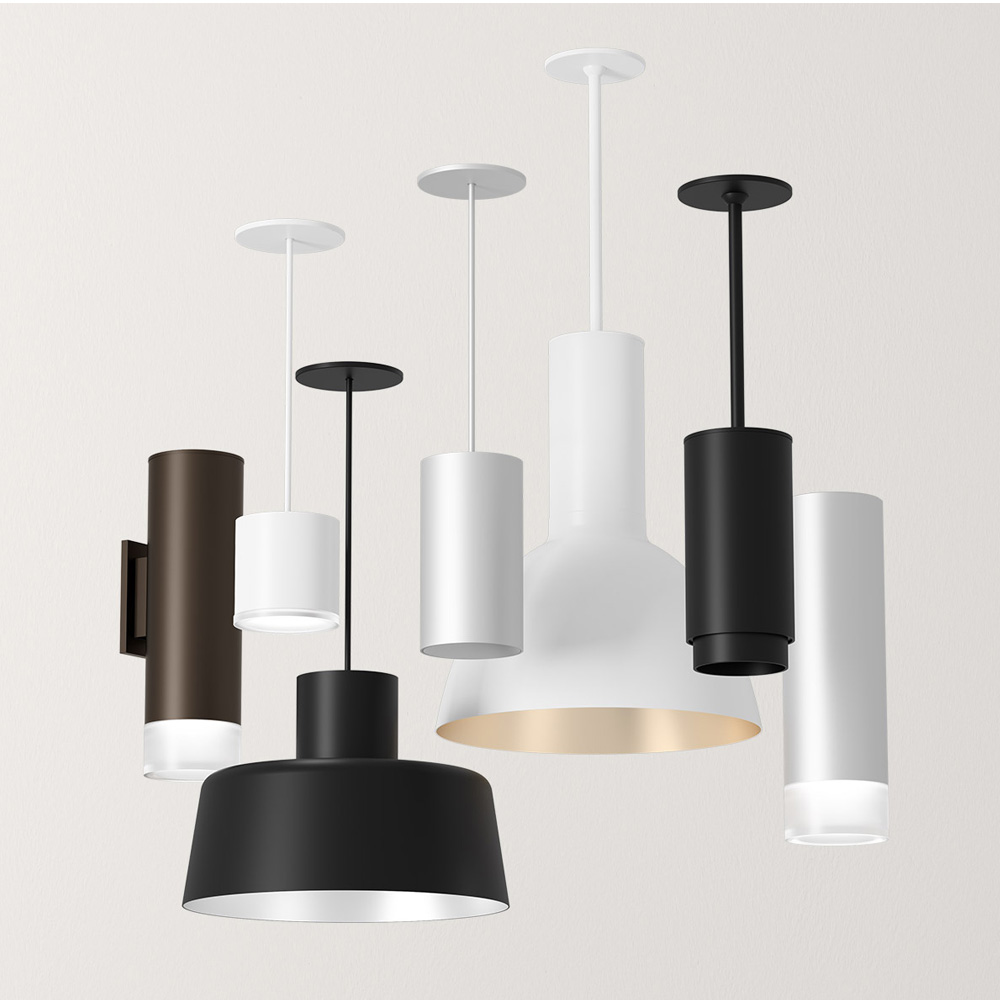
DMF is proud to introduce the next evolution in downlighting with its updated DCC series. Including an uplight feature, new shades and trims, and a range of other options, the DCC series is reconfigurable to over one million variations. It centers on a modular system, so it’s exceptionally easy to specify, install and maintain. To learn more about the product and its features, we spoke with the DMF design team.
Walk us through how the new version of the DCC got started.
The first version of the DCC didn’t have much product variation. We did have some options, but it was more functional than aesthetic. So, the project that we are now launching with the shades and the snoot and a shorter version of the trim, that was to diversify the shape and functionality of the fixture.
People wanted functional light that could also be decorative too. So, we figured we have a great platform with the DCC, and we have this twist and lock feature that really gives us the capability to add pretty much whatever we want. How can we use this feature to add more design elements to our fixtures?
That’s where we came up with adding another decorative trim, and some shades to diversify the shape of the cylinder. You can focus light down or you can add different elements to a space from the suspended fixture or surface mounted fixture. We added the snoot because that’s going to help cut down on glare, and a hyperbolic trim, which makes a really cool effect as the light drops off of the surface.
And why did you add the uplight?
We did the uplight because we wanted to be able to add indirect light from our pendant. By adding another light source, you can increase the amount of light in a room as it’s going to be reflected back down to the surface. You are going to get more light back down without any increased glare. So your downlight is still going to be, for example, maybe 600 lumens down, but then your uplight can help you get to maybe 1,000 lumens.
So you see the uplight feature as expanding the applications of the DCC?
Yes. We spoke with a lighting designer and asked where would you put a pendant with an uplight. And he said, “all over the place.” People are focused, now, on more comfortable lighting. People are tired of getting blasted by blue LEDs, and they are much more willing to invest in an indirect light they know is going to make the people in their space much more comfortable. Having efficient light fixtures and more comfortable ways of lighting a space using indirect lighting is definitely the future. So, this uplight was just seeing the demand in the marketplace. Many people offer an uplight, but you don’t see as much diversity with accessories around this type of unit.
What was the goal of the new DCC series in the market?
More options: both in a decorative way, but also in a functional way. It’s making sure that we have not just one point of differentiation, but a number of different points of differentiation that we can provide to our customer base. We wanted to be able to diversify the capabilities within the fixture. It was pretty diverse to begin with, but we wanted to continue to make the DCC as flexible as possible.
Are there specific needs that you tried to meet with this product?
Architects are really keen on what options you have. They want fixtures that are diverse, that are going to highlight the spaces that they’re creating. So, they want something that can basically make the architectural elements look good, and is affordable, is ready to ship immediately, that they can put their trust in, and it’s going to last for five-plus years.
Then, when we get contractors in, they don’t want their guys spending 25 minutes installing a light fixture. The DCC is incredibly easy to install. Maybe four or five minutes tops, and you have your light fixture installed.
People in the hospitality industry come in and their concern is if a light is out in one of the bathrooms, say, in their hotel, they used to take that room out of service. So, by them understanding that it takes five minutes to take out a faulty unit and replace it with a good unit, they don’t have to wait for somebody to ship a new fixture, they don’t have to take out any drywall or anything. They can just replace a single unit within five minutes and they’re not taking a room out of commission for the night or more. This is something that people can stock easily in their maintenance rooms. So, there’s a number of ways to look at this product from a couple different points of view.
Has working with clients in different industries and different points in the chain of use taught you anything?
We always ask what could we do better, or what can we learn from another industry? When we went to the job site of one of the contractors we work with, and we saw how the speakers were installed to the joist on the project. And we thought, we can do that on our stuff. We can learn from other people. We don’t have to do everything the way they do it in lighting. We can take design elements or functional elements from other industries and implement it into what we do to make the installation process, or even the specification process, easier.
How does the customization process work with the DCC fixture?
For a lot of things we build it all custom and to order. So, we have to know how long do we need to make the cord? Do we need to send it out for a custom color sample? Do we need a warm-dim module or do you want just a regular module? Is it an adjustable or is it a downlight? It’s basically building that product and having the customer understand what they’re buying, and then making sure that it’s conveyed to us what they’re buying so when we ship the product, we’ve shipped them what they want and everyone’s going to be happy.
We know we’ve done a good job when we get returning customers. We get success stories a lot, and that comes down to designing products well that are going to work properly at their application. We’ve done all the testing, we’ve done all the qualifications, and there’s not going to be surprises. Sometimes we even do custom jobs for people, or a custom configuration with a certain power supply that they want or certain dimming system they have in their building and they know that we have the resources to do all the necessary testing. There’s a lot of value in that—having that on-hand expertise in-house. Honestly, what people look for is somebody that they can trust and they know they’ve given this project to DMF, and we’ve never let them down.
How is the DCC different from its competitors?
The differentiation comes back to our modular story, and our workhorse of a light engine. Also just the ease of use—how easy is it to change something out if you need to. How easy it is to build the product. We have an incredible support team should something go wrong, and we have product availability. So, if you find that you forgot the lights over the bar, you can call us and we can have it out the door in five days. We have really well-built fixtures that last a long time. The quality that we put into creating the products is a big selling point and why we retain the customers that we have. That kind of goes into the electronics too.
Can you speak more about the light engine?
We build our power supplies custom to the light fixtures that we’re designing. And how long the product lasts is going to come down to how well the electronics are on the inside. How well the driver is built. We build them in-house with our own engineering team, and so this driver is built to the specs of this module.
What are the unique features of the DCC?
The flexibility. That’s what we pushed big time—super flexible, easy to use. Put it anywhere by making a minor change, and it’s still pretty easy to use, especially with the twist-and-lock system. So, its uniqueness would be mechanical but also functionality.
What accomplishment(s) are you most proud of on the DCC?
That we were able to take a very streamlined product, offer more variations that can benefit a space, but also keep our core story the same. You know, modularity, ease of use, ease of configuration. Basically, expanding on something that was already great to make it even better.
How would you describe DMF and its core philosophy?
The ethos of the company is to take something that’s existing and make it better. DMF is taking that to another level with LED: making our own fixtures for universal housings that would perform better than—or similarly, and at a lower cost price point—than the competitor’s.
What makes DMF’s products unique?
We design our products for ease. Everyone finds that the products are really easy to work with—whether it be the specifier, or whether it’s the person doing maintenance. Everything is integrated into the module. So when something has to change, all you have to do is take out the module and the whole unit can be switched out really easily. That’s really good for maintenance, but it’s also good for a lighting designer.
We also focus on design a lot when developing products. The fixture looks good when it’s off, but also when it’s on—the light output is beautiful. The electronics are going to last: it’s not going to overheat, it’s going to meet all the code requirements, and it’s going to function well. It’s going to do everything really well.
Learn more about the DCC Cylinder.
_ _ _ _ _ _
Stay up to date with everything that’s happening at DMF: LinkedIn, Instagram and Twitter, Facebook