May 20, 2020

2020 Innovation Award Winner

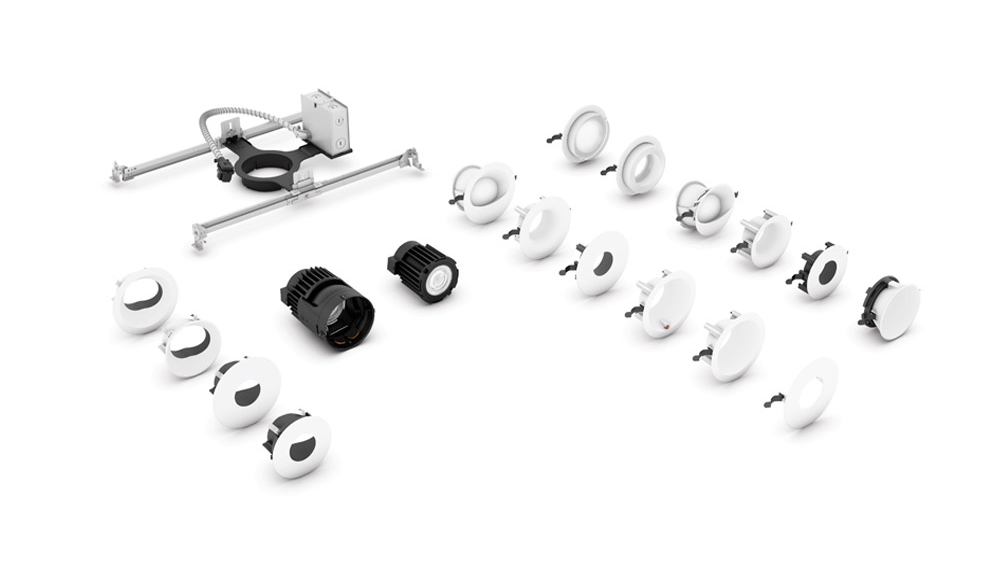
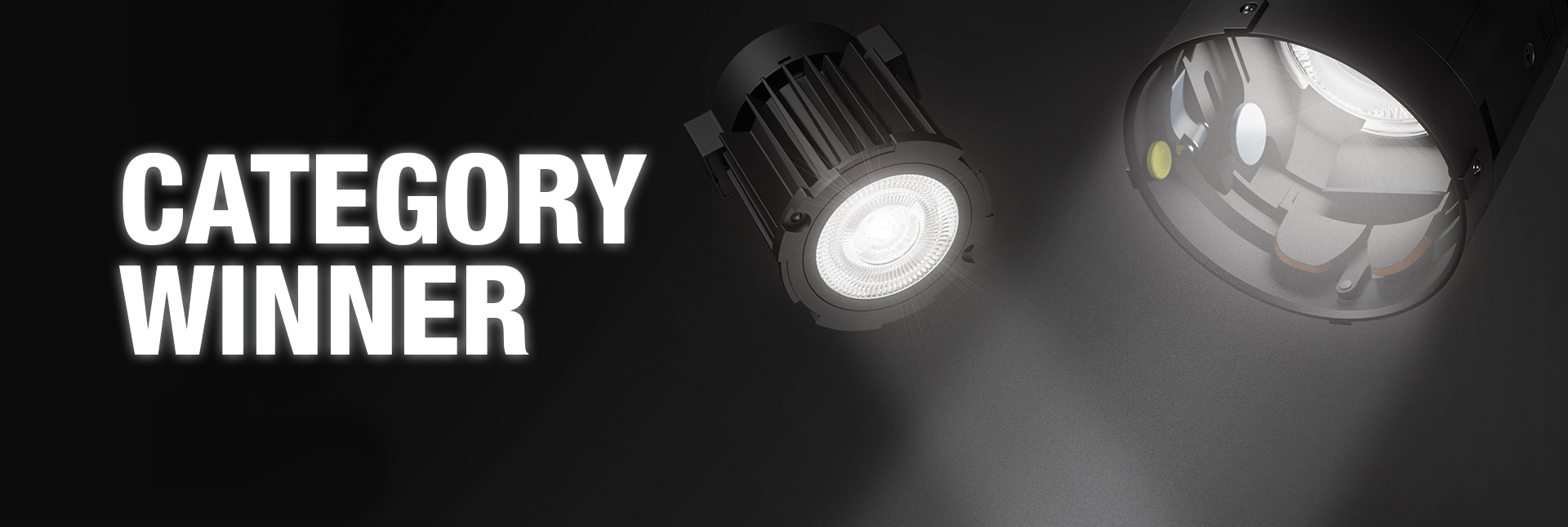
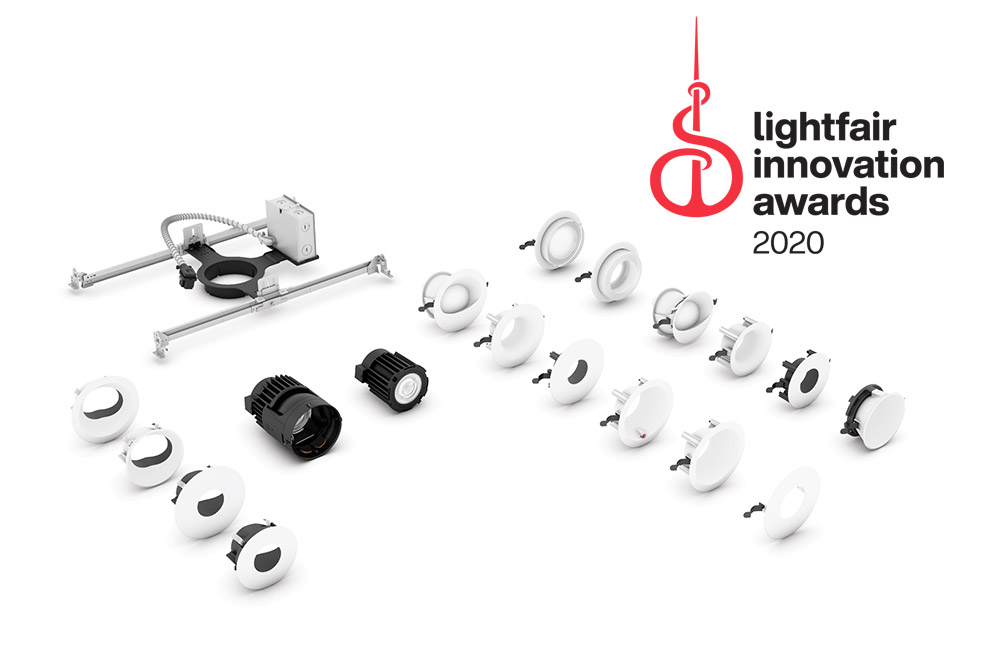
Recognized for its robust lighting capabilities within a modular system, the DCD Series was named the 2020 Category Winner: Recessed Downlights, Wall Washers and Multiples. Judges praised the DCD for the versatility it brings as an interoperable downlighting solution, radically simplifying specification and field maintenance.
DCD Series

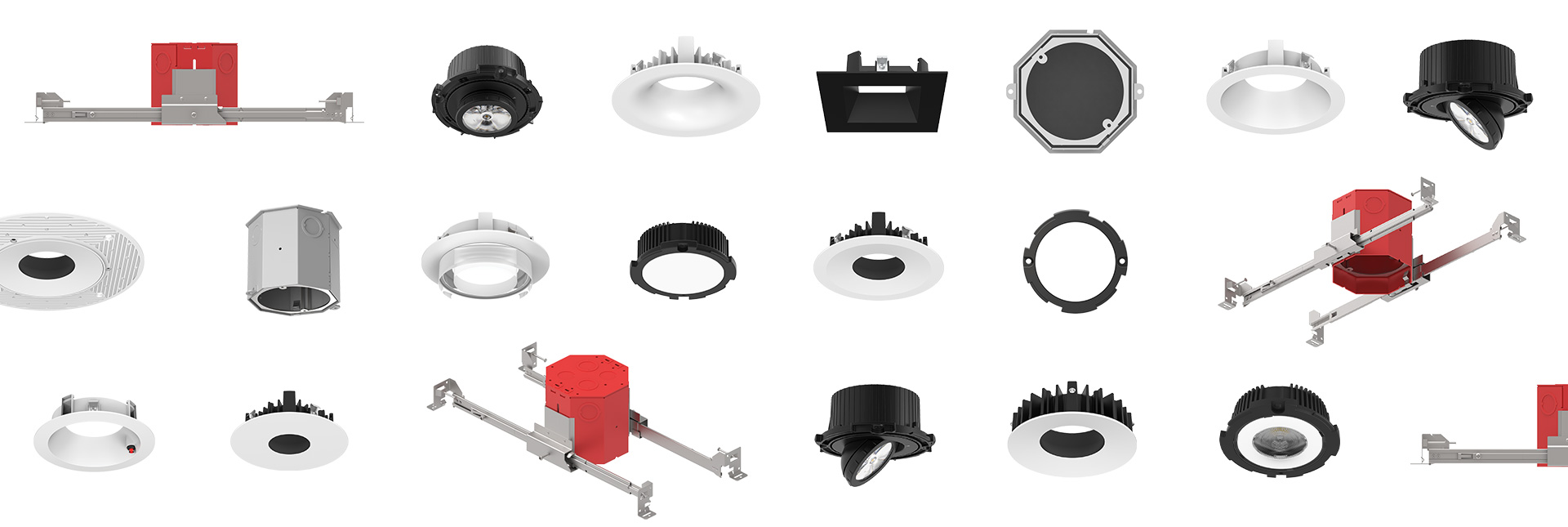
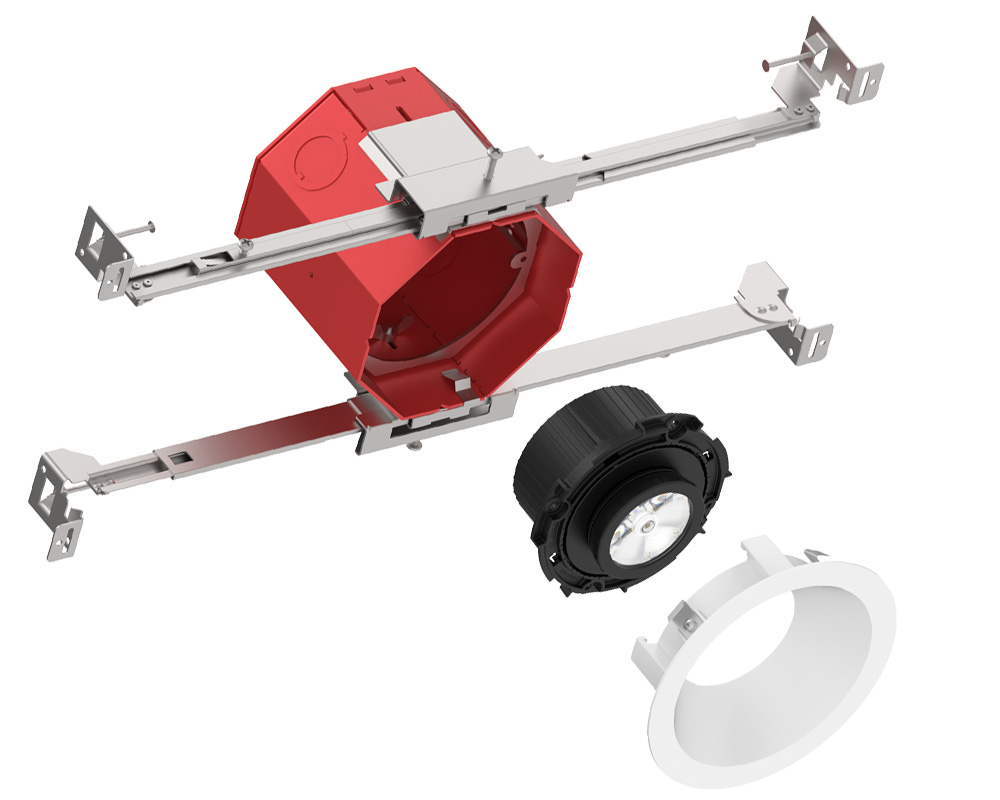
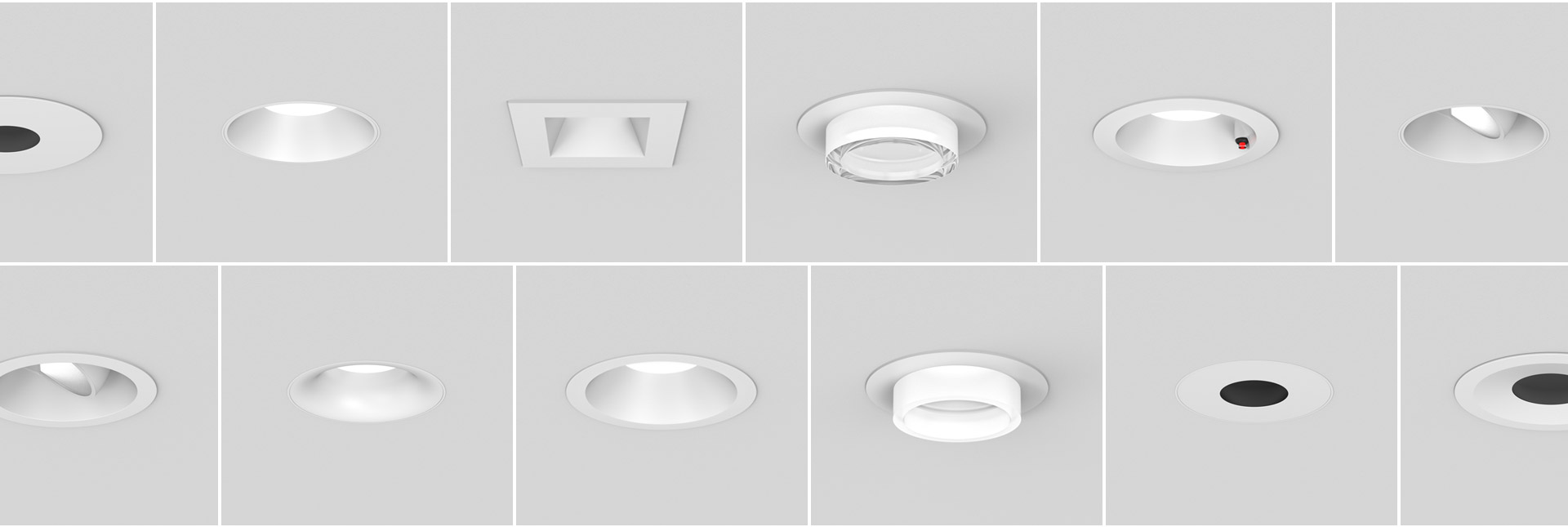
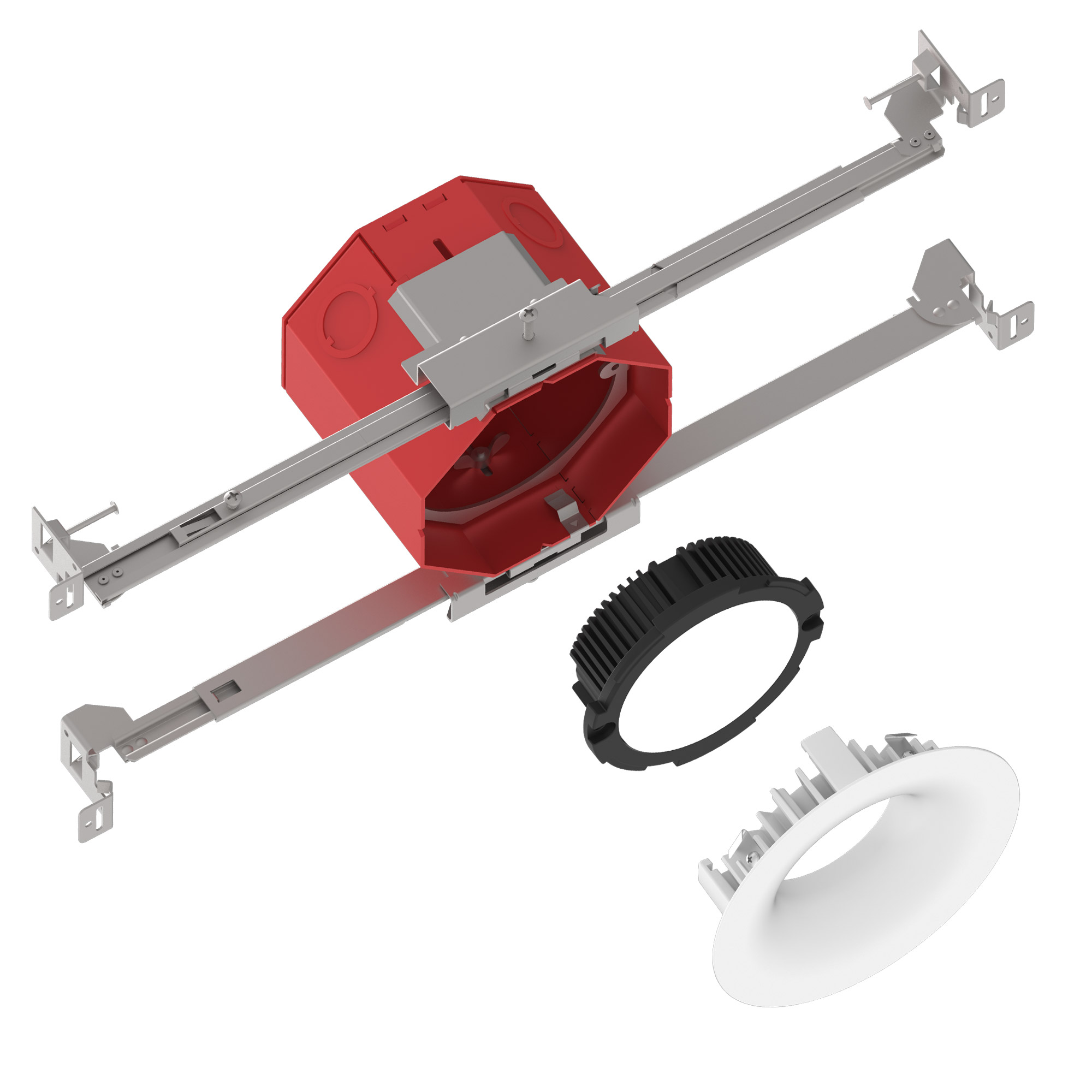
The DCD Series is a higher-lumen, interoperable downlighting solution that radically simplifies configuration in the field. With just one housing type, you can change beam angles, increase light output, service the driver, and even switch to an adjustable. All without tools.

Learn more about the DCD Series.

Highlight the Industry’s Most Innovative Products

Now in its 31st year, the LightFair Innovation Awards celebrate the ingenuity, creativity and resourcefulness of our industry’s manufacturers and their researchers, developers, scientists, and industrial designers.

Traditionally held in conjunction with the LFI trade show, the prestigious LightFair Innovation Awards highlight the industry’s most innovative products and designs. An independent panel of judges from IES (Illuminating Engineering Society) and IALD (International Association of Lighting Designers) select the winners through a meticulous two-day judging process. Criteria includes the product’s clarity of purpose, versatility, adaptability, sustainability, ease of use, design efficiency and aspects that enhanced human wellbeing.

Learn more about the LightFair Innovation Awards.

– – – – – – – –

Connect on LinkedInInstagramFacebook, or Twitter to stay up to date with everything that’s happening at DMF Lighting.
March 25, 2020

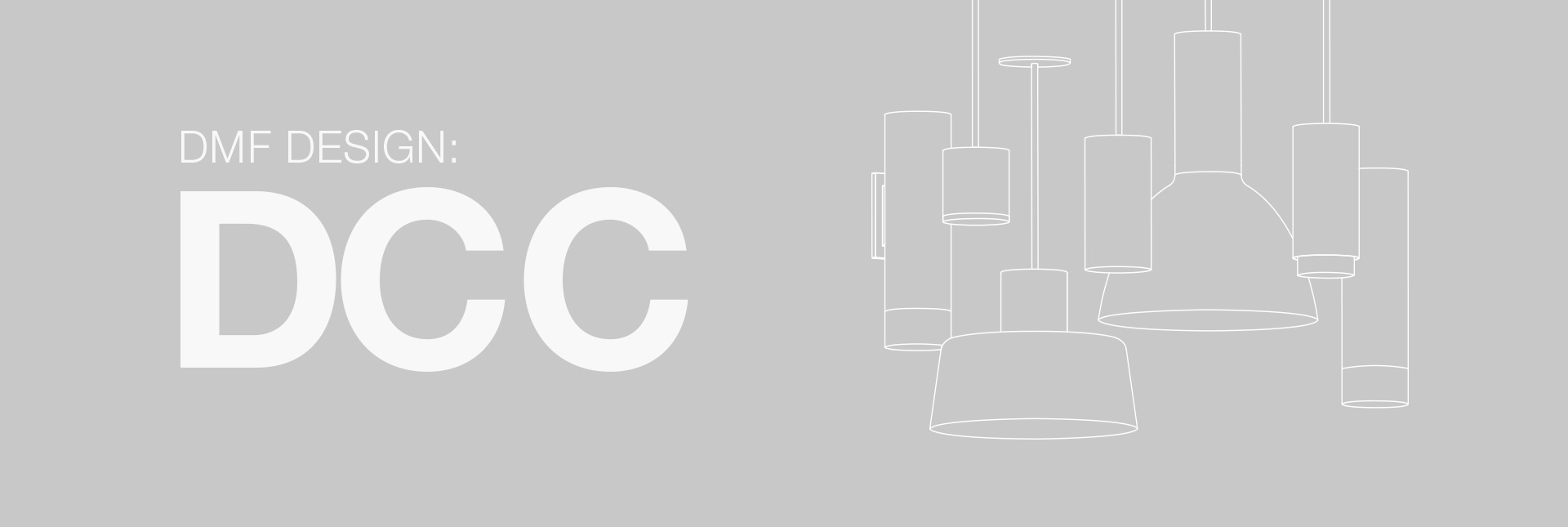
DMF is proud to introduce the next evolution in downlighting with its updated DCC series. Including an uplight feature, new shades and trims, and a range of other options, the DCC series is reconfigurable to over one million variations. It centers on a modular system, so it’s exceptionally easy to specify, install and maintain. To learn more about the product and its features, we spoke with the DMF design team.


Walk us through how the new version of the DCC got started.

The first version of the DCC didn’t have much product variation. We did have some options, but it was more functional than aesthetic. So, the project that we are now launching with the shades and the snoot and a shorter version of the trim, that was to diversify the shape and functionality of the fixture.

People wanted functional light that could also be decorative too. So, we figured we have a great platform with the DCC, and we have this twist and lock feature that really gives us the capability to add pretty much whatever we want. How can we use this feature to add more design elements to our fixtures?

That’s where we came up with adding another decorative trim, and some shades to diversify the shape of the cylinder. You can focus light down or you can add different elements to a space from the suspended fixture or surface mounted fixture. We added the snoot because that’s going to help cut down on glare, and a hyperbolic trim, which makes a really cool effect as the light drops off of the surface.


And why did you add the uplight?

We did the uplight because we wanted to be able to add indirect light from our pendant. By adding another light source, you can increase the amount of light in a room as it’s going to be reflected back down to the surface. You are going to get more light back down without any increased glare. So your downlight is still going to be, for example, maybe 600 lumens down, but then your uplight can help you get to maybe 1,000 lumens.


So you see the uplight feature as expanding the applications of the DCC?

Yes. We spoke with a lighting designer and asked where would you put a pendant with an uplight. And he said, “all over the place.” People are focused, now, on more comfortable lighting. People are tired of getting blasted by blue LEDs, and they are much more willing to invest in an indirect light they know is going to make the people in their space much more comfortable. Having efficient light fixtures and more comfortable ways of lighting a space using indirect lighting is definitely the future. So, this uplight was just seeing the demand in the marketplace. Many people offer an uplight, but you don’t see as much diversity with accessories around this type of unit.


What was the goal of the new DCC series in the market?

More options: both in a decorative way, but also in a functional way. It’s making sure that we have not just one point of differentiation, but a number of different points of differentiation that we can provide to our customer base. We wanted to be able to diversify the capabilities within the fixture. It was pretty diverse to begin with, but we wanted to continue to make the DCC as flexible as possible.


Are there specific needs that you tried to meet with this product?

Architects are really keen on what options you have. They want fixtures that are diverse, that are going to highlight the spaces that they’re creating. So, they want something that can basically make the architectural elements look good, and is affordable, is ready to ship immediately, that they can put their trust in, and it’s going to last for five-plus years.

Then, when we get contractors in, they don’t want their guys spending 25 minutes installing a light fixture. The DCC is incredibly easy to install. Maybe four or five minutes tops, and you have your light fixture installed.

People in the hospitality industry come in and their concern is if a light is out in one of the bathrooms, say, in their hotel, they used to take that room out of service. So, by them understanding that it takes five minutes to take out a faulty unit and replace it with a good unit, they don’t have to wait for somebody to ship a new fixture, they don’t have to take out any drywall or anything. They can just replace a single unit within five minutes and they’re not taking a room out of commission for the night or more. This is something that people can stock easily in their maintenance rooms. So, there’s a number of ways to look at this product from a couple different points of view.


Has working with clients in different industries and different points in the chain of use taught you anything?

We always ask what could we do better, or what can we learn from another industry? When we went to the job site of one of the contractors we work with, and we saw how the speakers were installed to the joist on the project. And we thought, we can do that on our stuff. We can learn from other people. We don’t have to do everything the way they do it in lighting. We can take design elements or functional elements from other industries and implement it into what we do to make the installation process, or even the specification process, easier.


How does the customization process work with the DCC fixture?

For a lot of things we build it all custom and to order. So, we have to know how long do we need to make the cord? Do we need to send it out for a custom color sample? Do we need a warm-dim module or do you want just a regular module? Is it an adjustable or is it a downlight? It’s basically building that product and having the customer understand what they’re buying, and then making sure that it’s conveyed to us what they’re buying so when we ship the product, we’ve shipped them what they want and everyone’s going to be happy.

We know we’ve done a good job when we get returning customers. We get success stories a lot, and that comes down to designing products well that are going to work properly at their application. We’ve done all the testing, we’ve done all the qualifications, and there’s not going to be surprises. Sometimes we even do custom jobs for people, or a custom configuration with a certain power supply that they want or certain dimming system they have in their building and they know that we have the resources to do all the necessary testing. There’s a lot of value in that—having that on-hand expertise in-house. Honestly, what people look for is somebody that they can trust and they know they’ve given this project to DMF, and we’ve never let them down.


How is the DCC different from its competitors?

The differentiation comes back to our modular story, and our workhorse of a light engine. Also just the ease of use—how easy is it to change something out if you need to. How easy it is to build the product. We have an incredible support team should something go wrong, and we have product availability. So, if you find that you forgot the lights over the bar, you can call us and we can have it out the door in five days. We have really well-built fixtures that last a long time. The quality that we put into creating the products is a big selling point and why we retain the customers that we have. That kind of goes into the electronics too.


Can you speak more about the light engine?

We build our power supplies custom to the light fixtures that we’re designing. And how long the product lasts is going to come down to how well the electronics are on the inside. How well the driver is built. We build them in-house with our own engineering team, and so this driver is built to the specs of this module.


What are the unique features of the DCC?

The flexibility. That’s what we pushed big time—super flexible, easy to use. Put it anywhere by making a minor change, and it’s still pretty easy to use, especially with the twist-and-lock system. So, its uniqueness would be mechanical but also functionality.


What accomplishment(s) are you most proud of on the DCC?

That we were able to take a very streamlined product, offer more variations that can benefit a space, but also keep our core story the same. You know, modularity, ease of use, ease of configuration. Basically, expanding on something that was already great to make it even better.


How would you describe DMF and its core philosophy?

The ethos of the company is to take something that’s existing and make it better. DMF is taking that to another level with LED: making our own fixtures for universal housings that would perform better than—or similarly, and at a lower cost price point—than the competitor’s.


What makes DMF’s products unique?

We design our products for ease. Everyone finds that the products are really easy to work with—whether it be the specifier, or whether it’s the person doing maintenance. Everything is integrated into the module. So when something has to change, all you have to do is take out the module and the whole unit can be switched out really easily. That’s really good for maintenance, but it’s also good for a lighting designer.

We also focus on design a lot when developing products. The fixture looks good when it’s off, but also when it’s on—the light output is beautiful. The electronics are going to last: it’s not going to overheat, it’s going to meet all the code requirements, and it’s going to function well. It’s going to do everything really well.

Learn more about the DCC Cylinder.


_ _ _ _ _ _

Stay up to date with everything that’s happening at DMF:  LinkedInInstagram and Twitter, Facebook

February 4, 2020

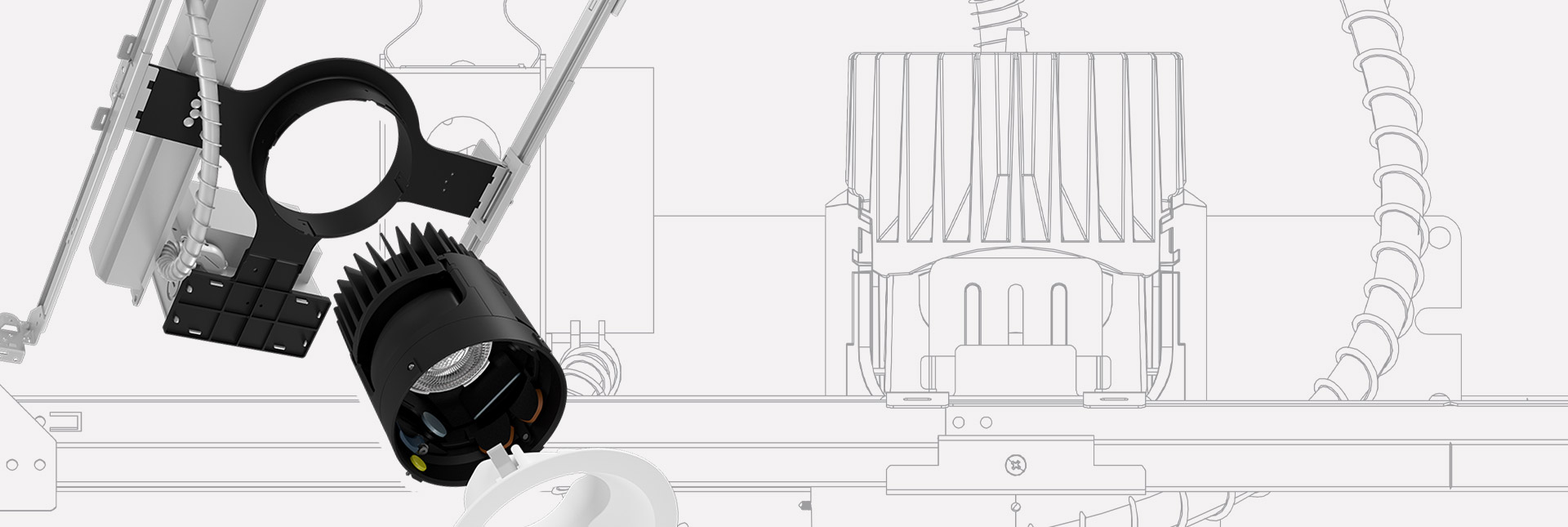
Traditional commercial housings use a big, heavy black box to control light leaks. Measuring as much as 19″ long and 7″ tall, the bulky housings severely limit spacing options for lighting layouts and designs. Heavy boxes are also more costly to ship and more cumbersome during installation.

DMF Lighting revolutionized the commercial industry by decreasing the size and weight of the housing, allowing for more lighting layout options while also making it easier to install.

Smaller is better

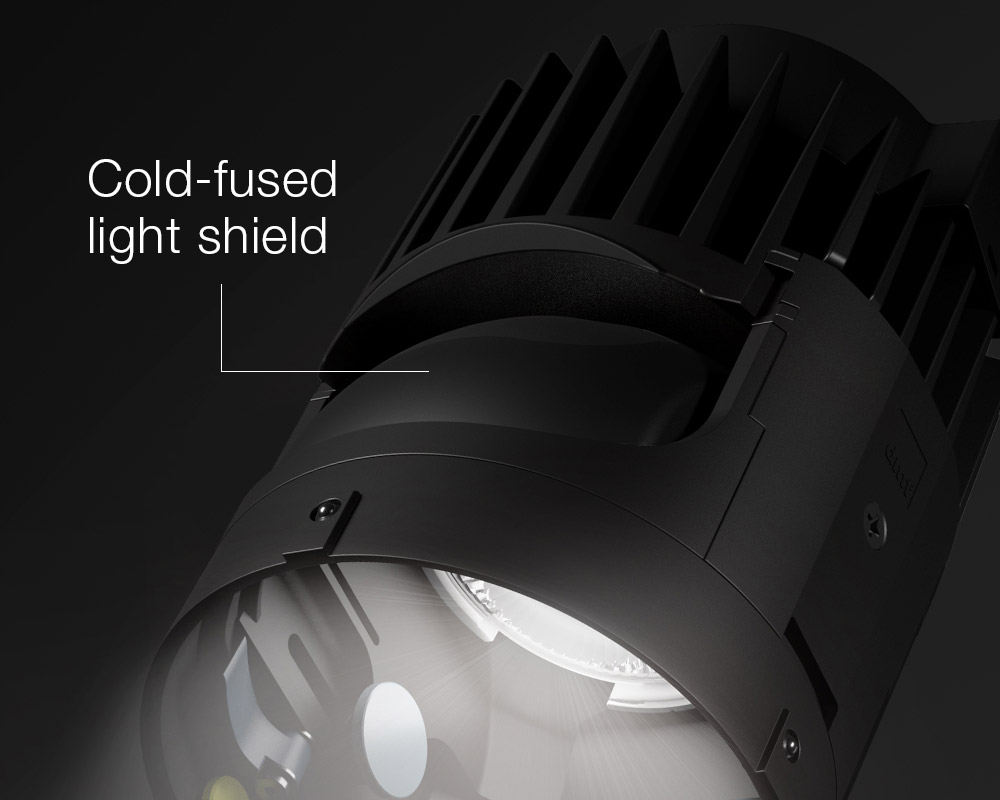
Instead of a large box over the entire housing, the Adjustable DCD4 features a module mounted light shield to eliminate light leak. Far smaller and far lighter, the cold-fused shield takes up a fraction of the volume of a traditional can. The smaller size makes it more manageable to handle during installation. The lighter weight means reduced risk of sag.

The smaller size makes installation easier and helps prevent fixture movement below the ceiling.

Sturdy as ever

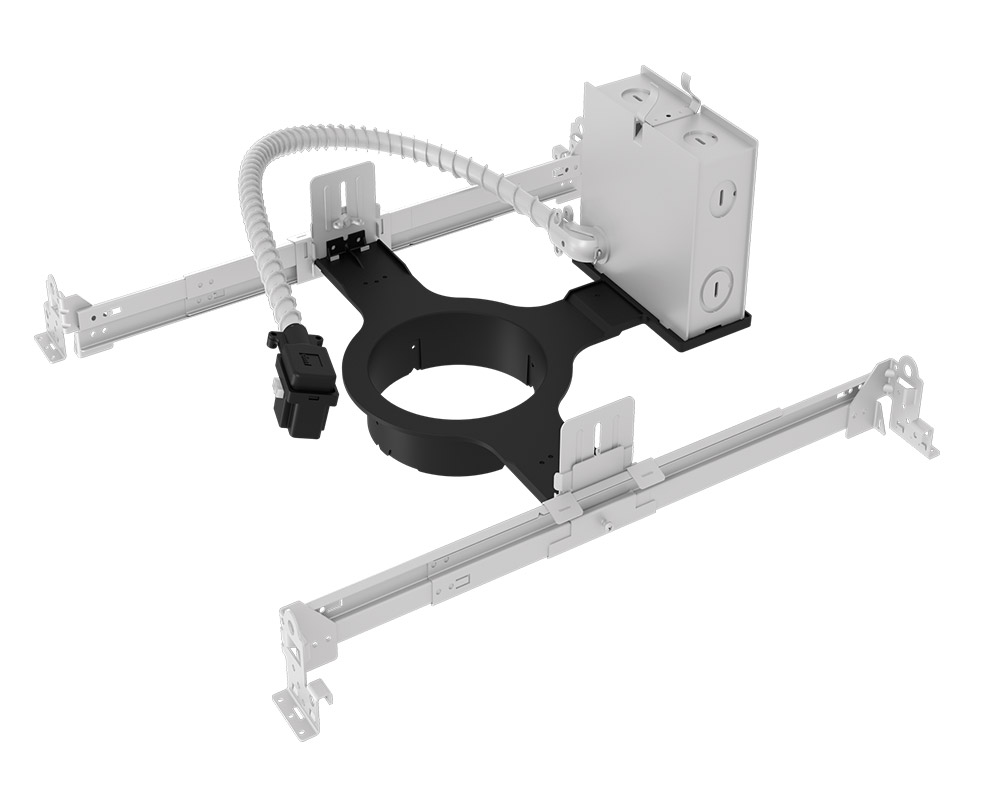
The DCD Series Housing is not only small, but strong as well. A stable housing makes sure adjustable module movements stay perfect. Specially-engineered, galvanized-steel bar hangers ensure the complete luminaire acts as a perfect single unit.

With a smaller housing that doesn’t sacrifice performance, the DCD Housings install quickly and ensure the aim stays steady.

Learn more about the DCD Series

– – – – – – – –

Connect on LinkedInInstagramFacebook, or Twitter to stay up to date with everything that’s happening at DMF Lighting.
July 10, 2019

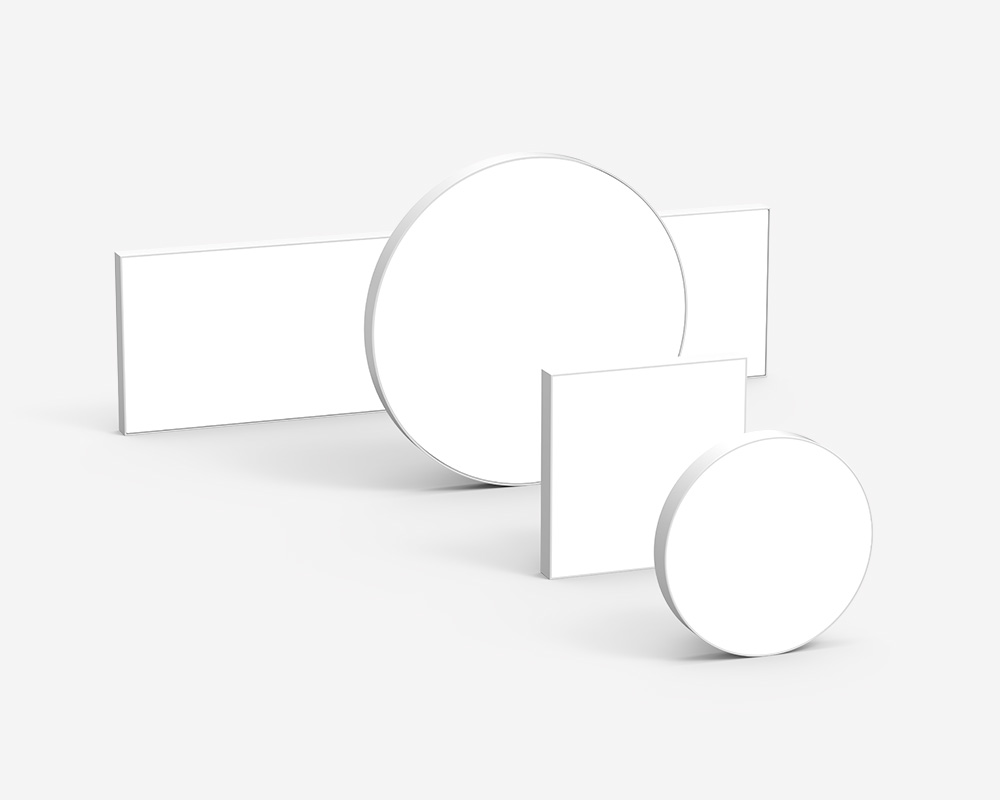
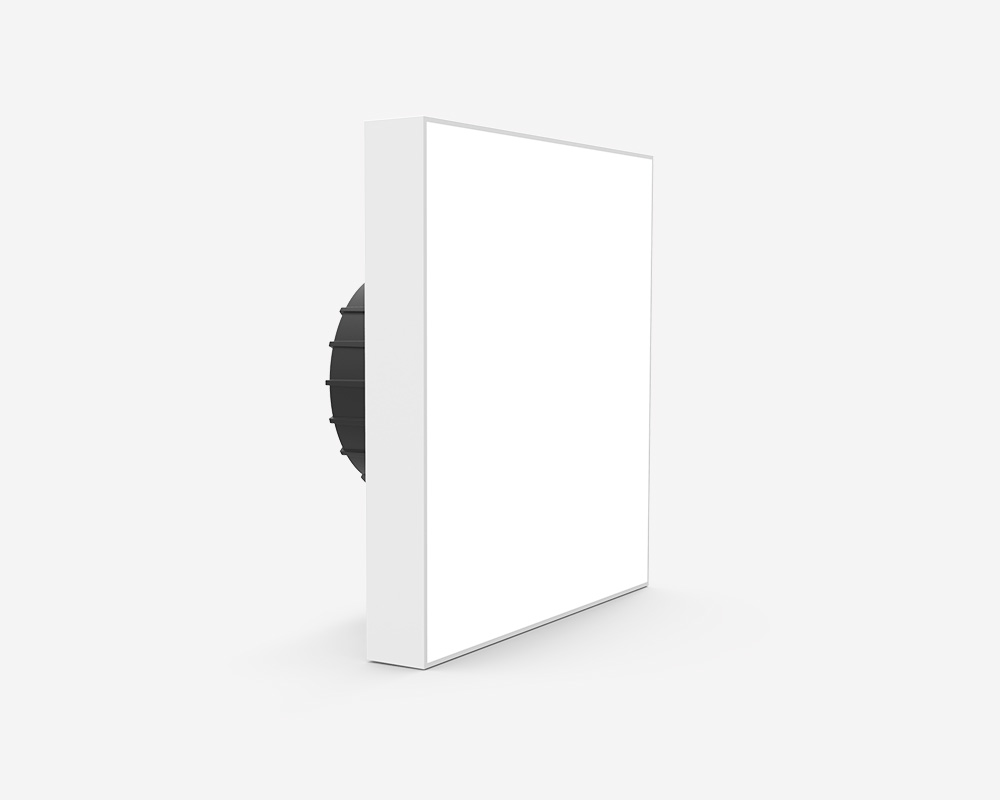
The DRD5S Surface Mount LED Series is defined by its minimal, modern design. Even with four different shapes and sizes, the downlight is instantly recognizable by its slim, nearly frame-less profile.

Thin is in

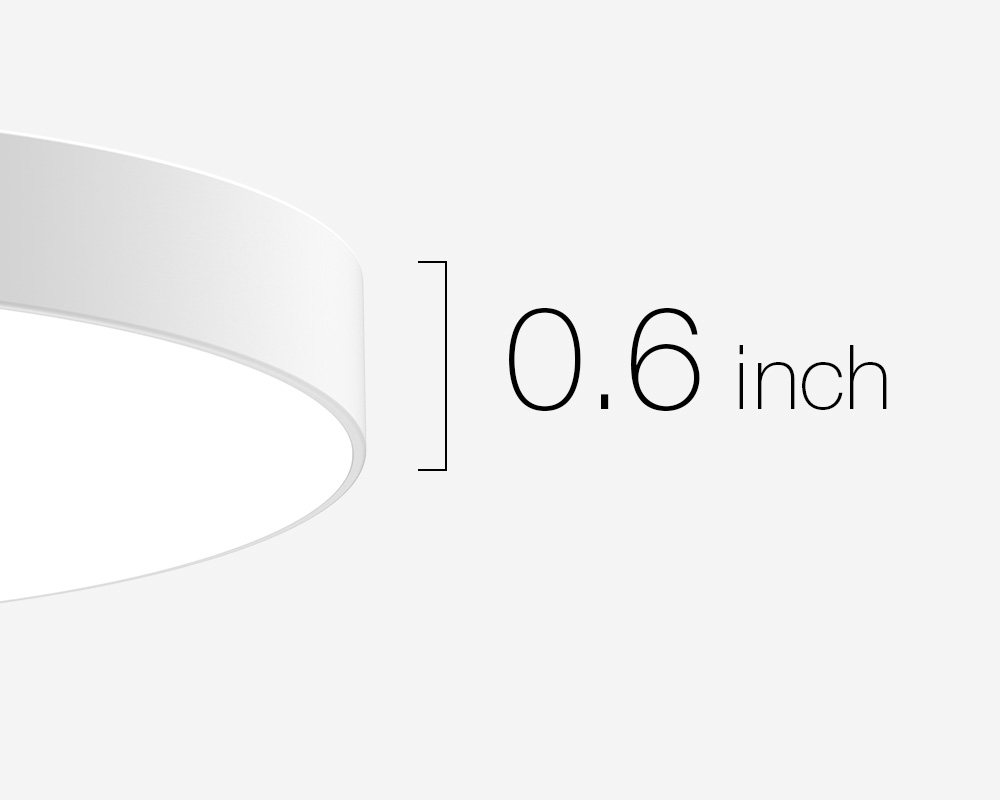
Manufacturing and design are inseparable. The DRD5S utilizes precision machined die-cast aluminum for a thin, lightweight, yet sturdy molding. We experimented with different lens materials and thicknesses to get it as close to the LED board as possible. A single millimeter closer and the LEDs would become visible. This meticulous attention to detail is what created the thinnest surface mount LED in its class at just over half an inch in depth.


“What people expect from their light is always changing. At DMF we do the research, we stay on top of technology, and we understand what people want. Then we deliver on all those goals.”

–  Vince, Mechanical Engineer 


Edge to edge

Traditionally, surface mount LEDs feature robust trims to dissipate heat from the edge-lit LED optics. But we looked to redefine what a surface mount downlight looks like. By utilizing an LED board and innovative heatsink, we’ve nearly eliminated the flange all together. The unibody construction and snap-in lens eliminates any visible hardware or seams for a sleek, unified appearance. The lens practically blends into the body so the DRD5S can disappear into the ceiling.

See the light, not the fixture

The die-cast aluminum body and thin flange make the DRD5S beautiful to behold, but the surface mount is even more striking when it’s illuminated. The LED array produces a wide flood beam angle that gives the appearance of traditional recessed lighting. When lit, the DRD5S becomes nearly indistinguishable from a high-end recessed downlight.


The DRD5S Series is an engineering design achievement. The result of innovation, drive, and ingenuity. It’s another example of how DMF continues to push the boundaries of lighting design.


Learn more about the DRD5S Series.


– – – – – – – –

Connect on LinkedInInstagramFacebook, or Twitter to stay up to date with everything that’s happening at DMF Lighting.

March 5, 2019

The OneFrame System allows you to create diverse types of lighting using a small set of elements. By swapping out our modular components, you can radically alter your light without replacing the junction box, drastically reducing costs and labor. That means the people who inhabit your space get exactly the right light, even if their needs change.

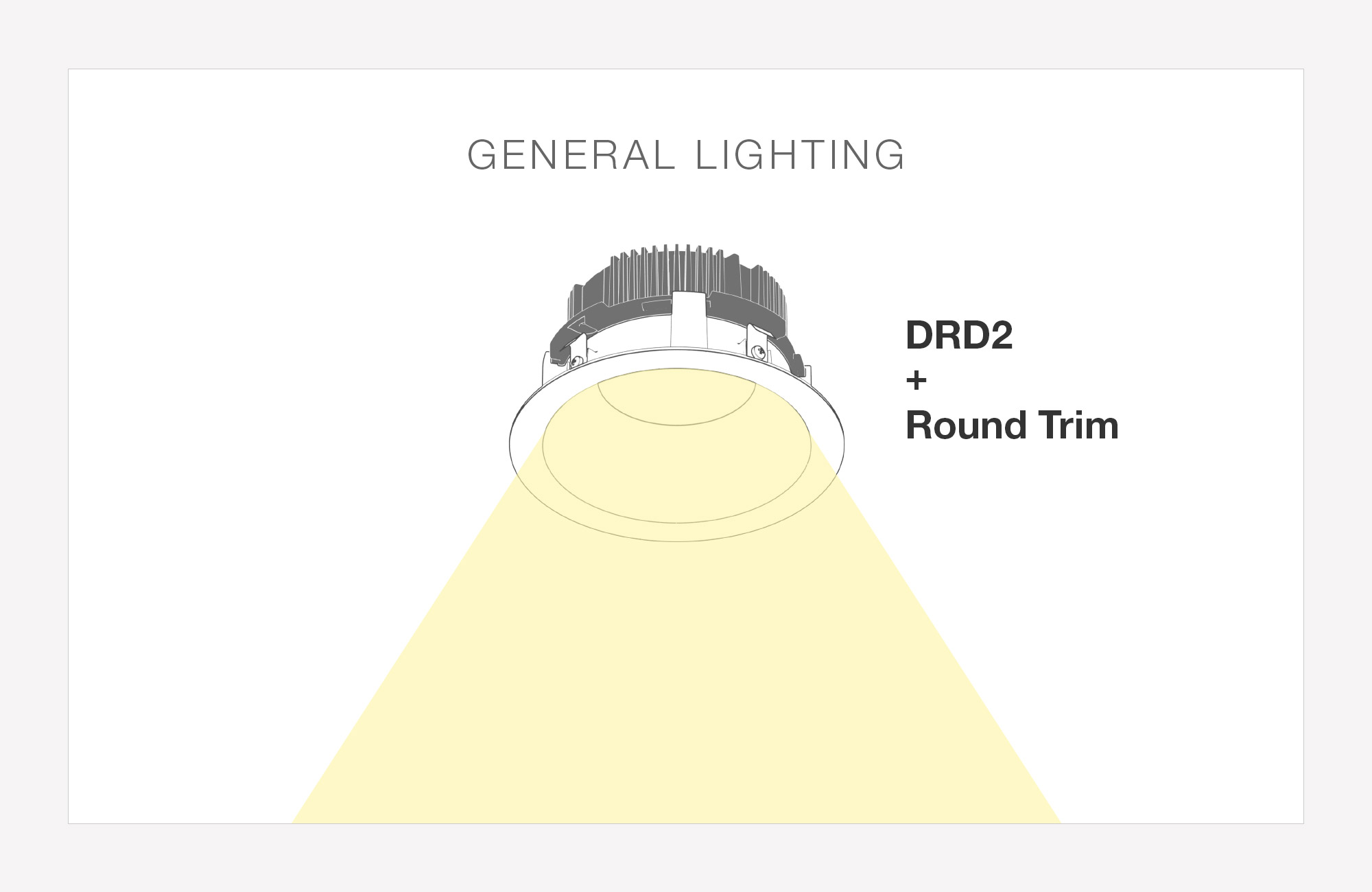
General Downlighting

Use the DRD2 to evenly illuminate the entire room with beautiful efficient light.


Wall Wash

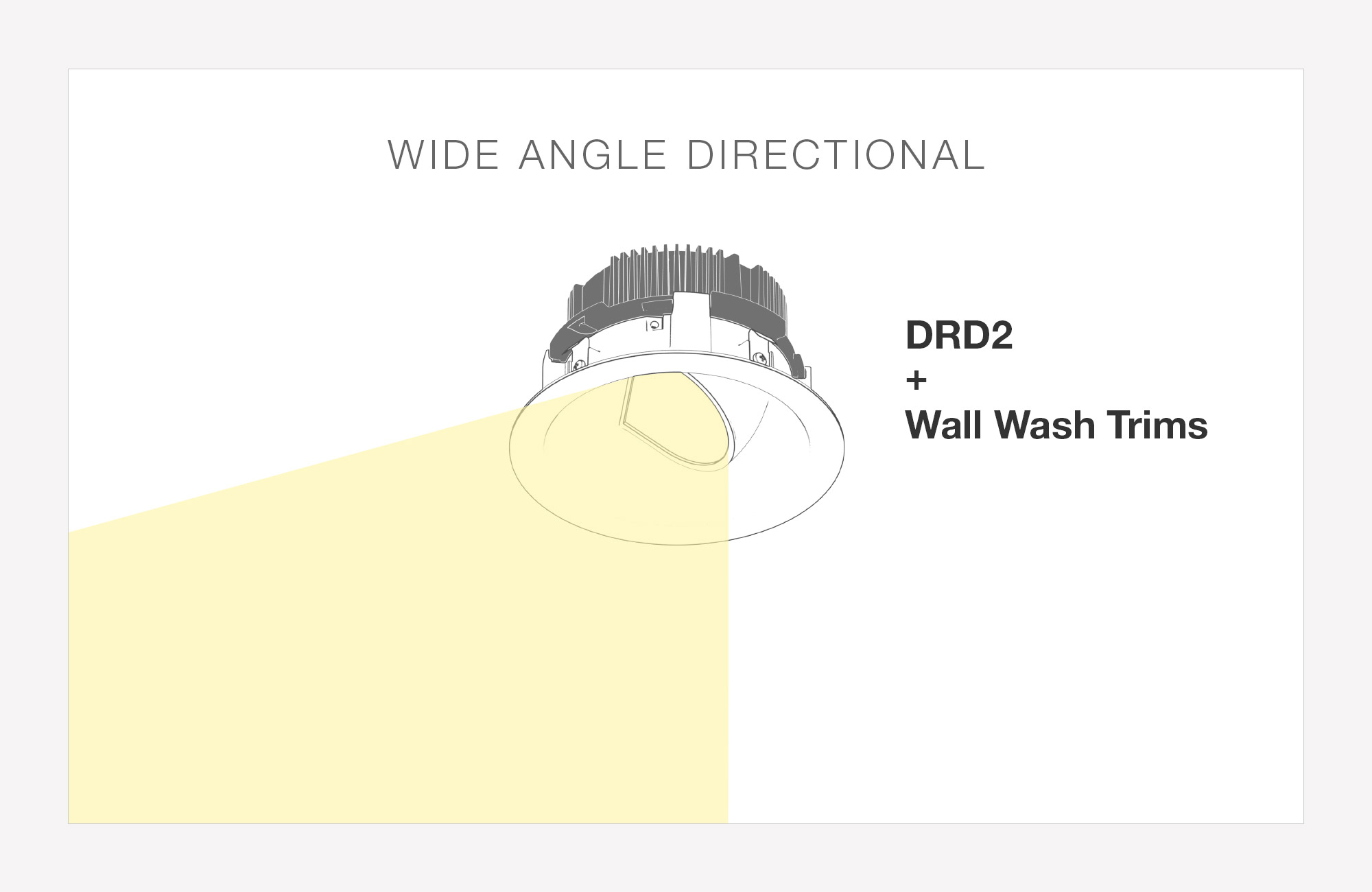
Use the DRD2 with a wall wash trim to evenly illuminate a wall surface.


Spot, Narrow Flood & Flood

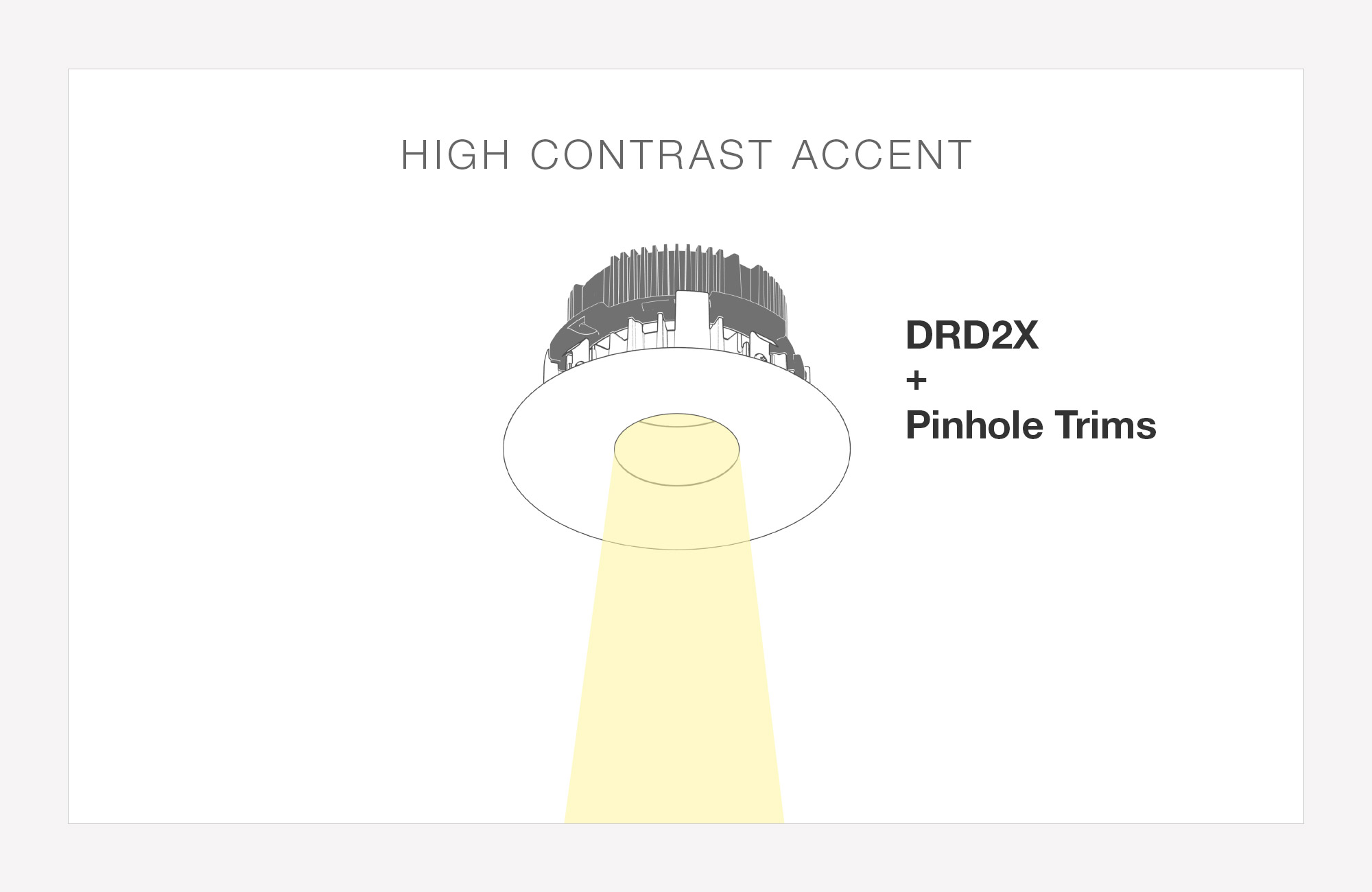
Use the DRD2X to create more powerful and dramatic beam strengths with more focused optics.


Accent Lighting

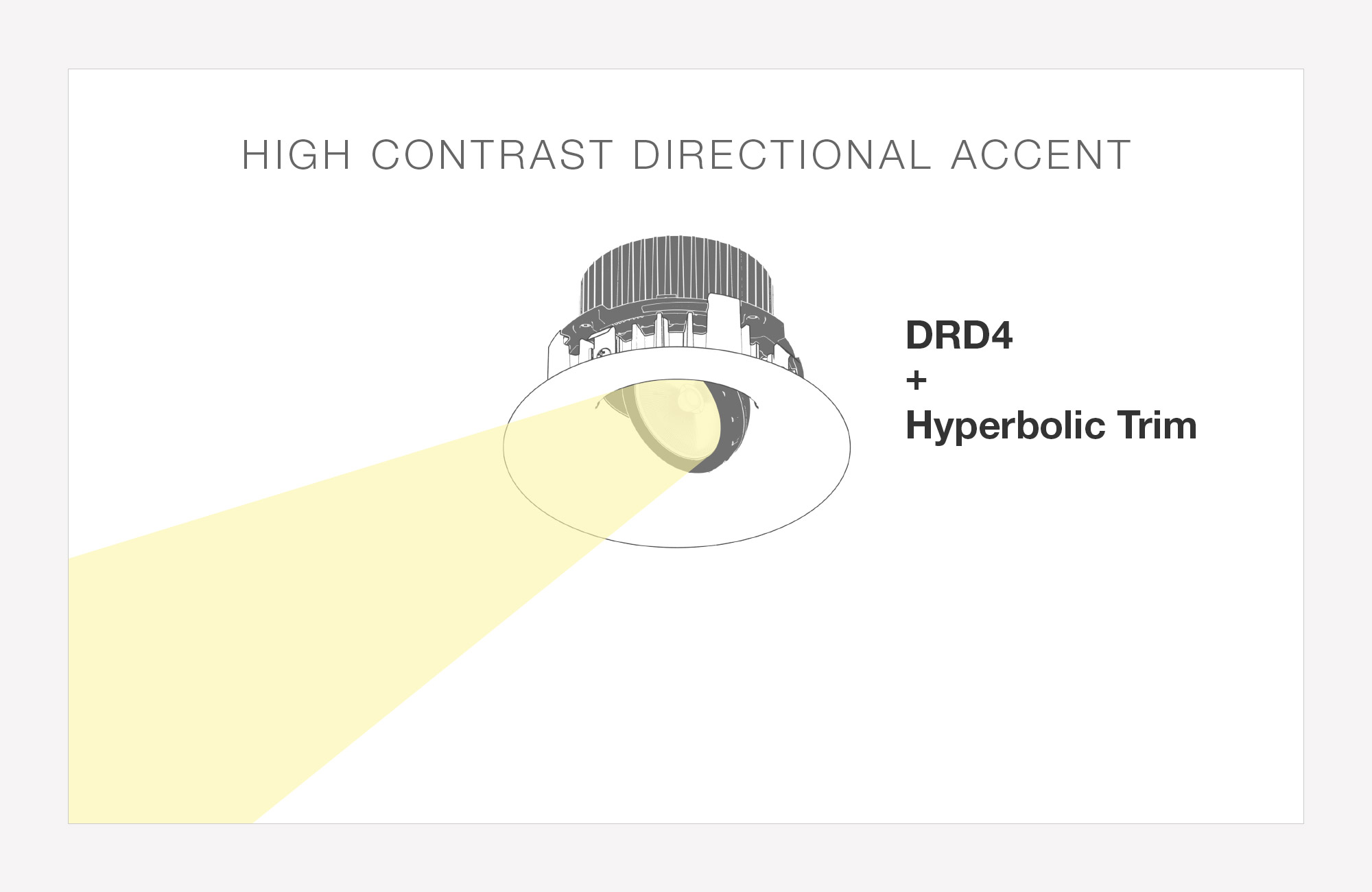
Use the adjustable DRD4 for accent or task lighting and the flexibility for angled walls, distance aiming, and more.


One housing, multiple lighting options

Now creating layered lighting that meets the needs of your residential and commercial projects is as simple as combining the OneFrame with our exceptional modules and trims.

Learn more about the OneFrame System.


_ _ _ _ _ _

Follow us on FacebookInstagram and Twitter to stay up to date with everything that’s happening at DMF Lighting.
November 27, 2018

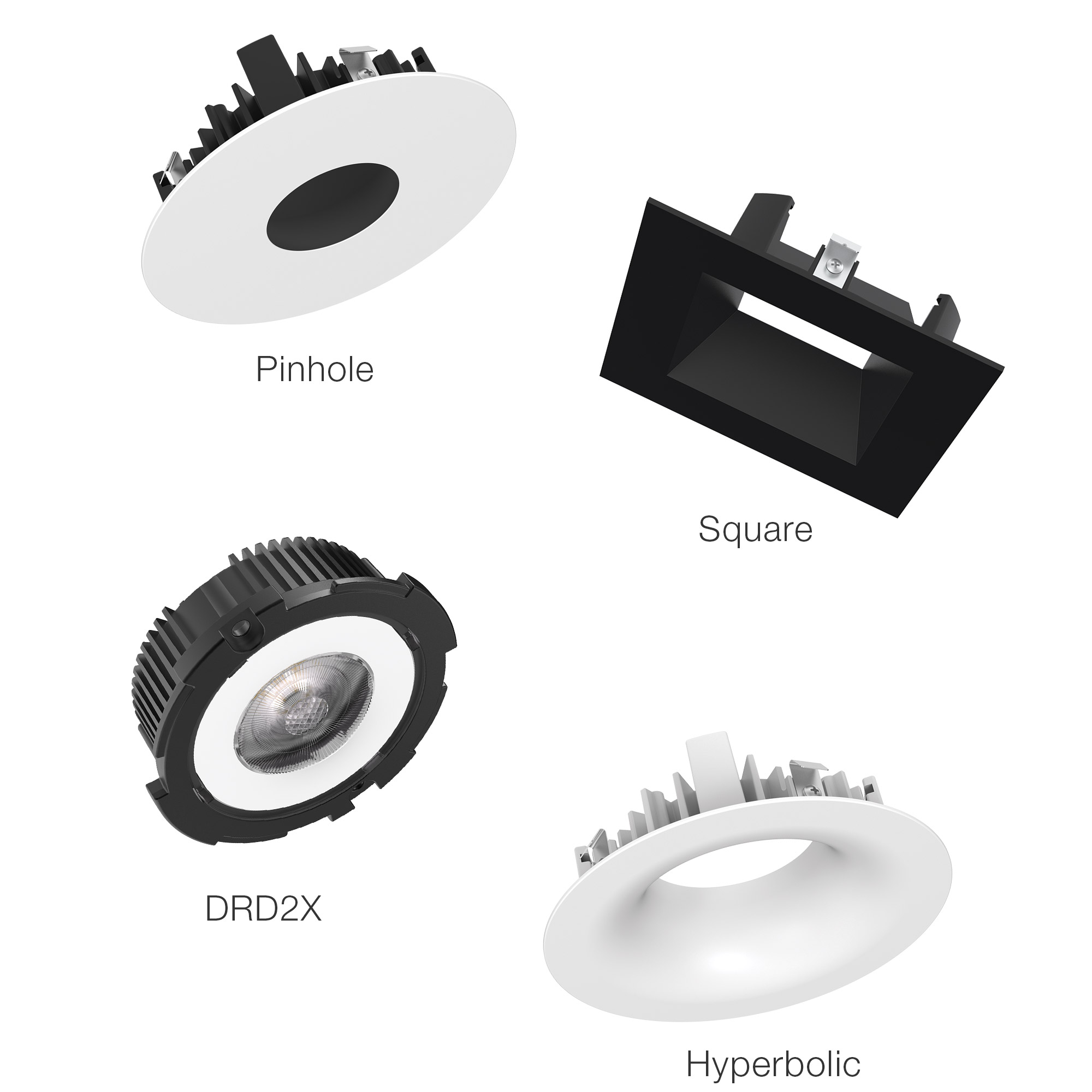
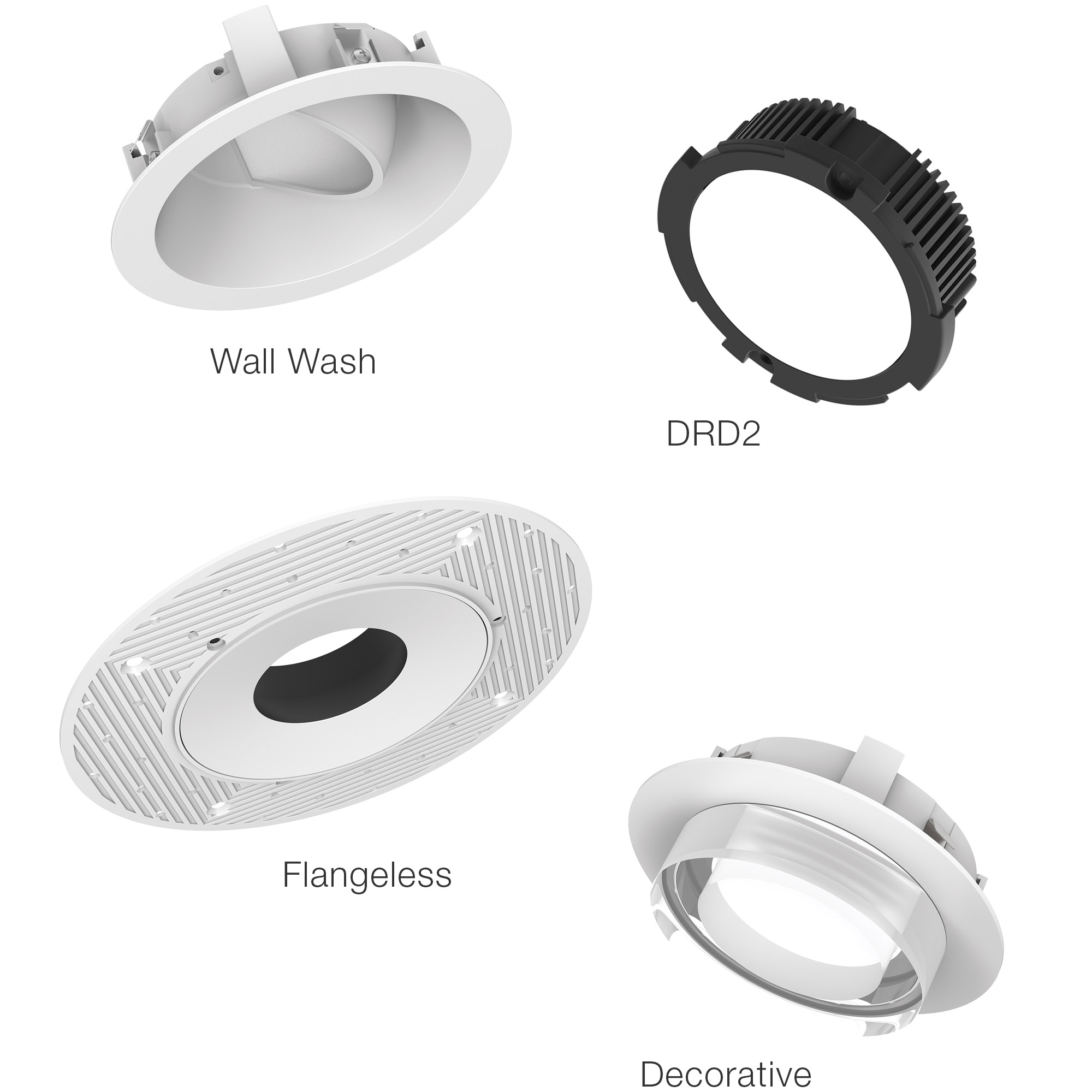
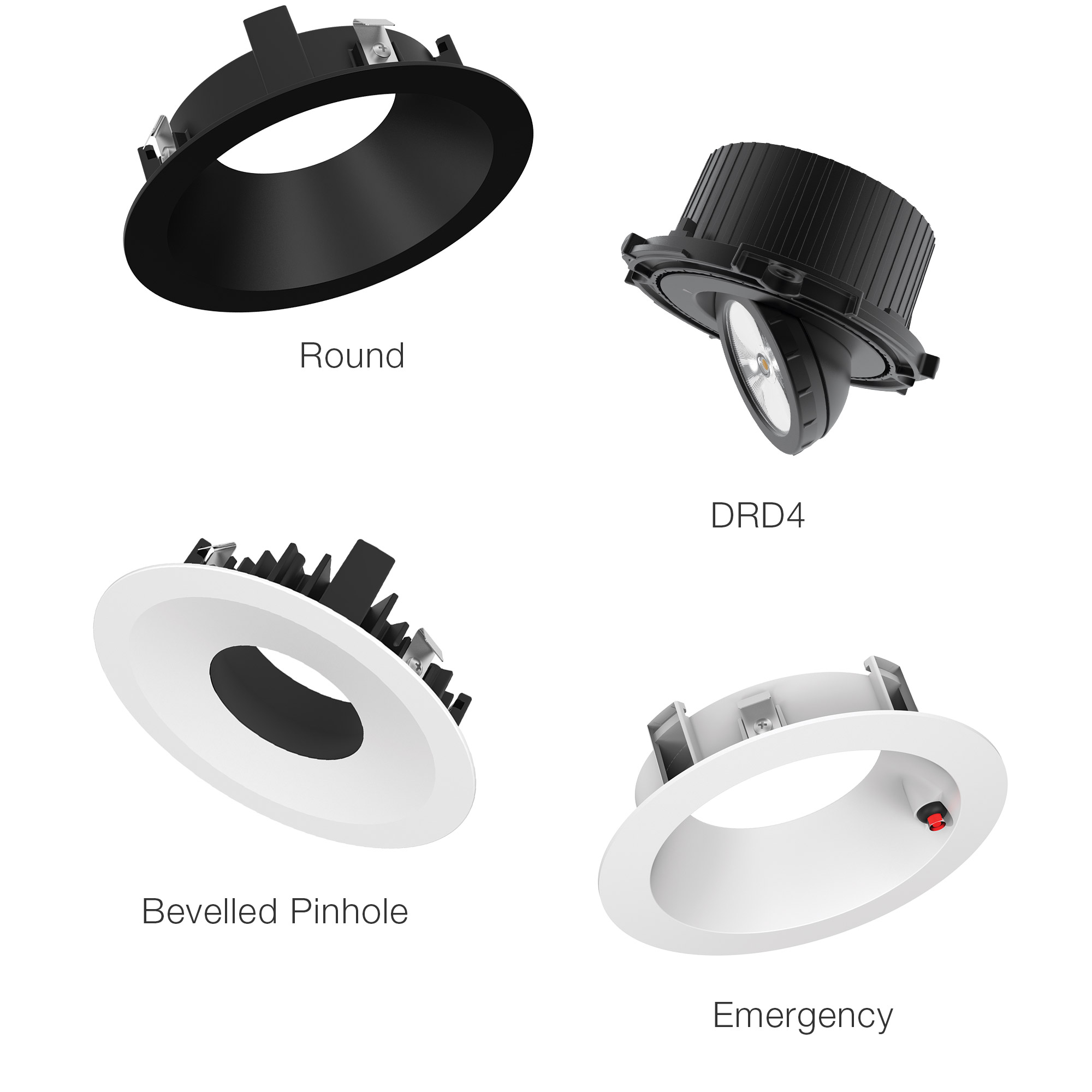
The OneFrame System’s capabilities continue to grow as our engineers expand your options with new light modules and trim designs. And because they all fit in the OneFrame housing, not only can you ensure your perfect design today, but you can also alter your design anytime in the future by updating any light or trim element.

One housing, multiple downlight options

Choose the combination of trim shapes, styles and finishes that match your environment. Whatever your project, OneFrame can adapt to integrate seamlessly or accent the broader design.

Light distribution

Fully interchangeable light modules make the OneFrame System a complete and flexible downlighting solution. Each light module provides different capabilities for general, accent, and aimable lighting needs. The OneFrame Trims further customize your options. Some trims tighten or angle light, while others can highlight or blend design and decor intent. Decorative trims offer pleasant, ambient lighting. Create the lighting choice that perfectly pairs with your design vision.

Some possible combinations:


“We design each component in-house to work better together”


Whichever trim and module combination you choose, you can be sure they are built to the highest standards. All DMF modules use premium components, including integrated drivers and 90+ CRI, 2-step SDCM LEDs. In addition, our die-cast aluminum trims are built to last and in combination with stainless steel clips, ensure a seamless fit to the ceiling with no light leak. The trim’s Twist & Lock module integration simplifies both installation and future maintenance.

Learn more about the OneFrame System and our wide assortment of OneFrame Trims.

_ _ _ _ _

To send feedback or learn more about our OneFrame Trims, please contact the DMF Lighting Marketing Team.

October 4, 2018

Choosing a white light. Simple, right? But not all whites are the same. Generally, white light from a luminaire can be classified into one of three color tones: warm, neutral or cool. But there’s a little more about light color that you need to know.

Correlated Color Temperature

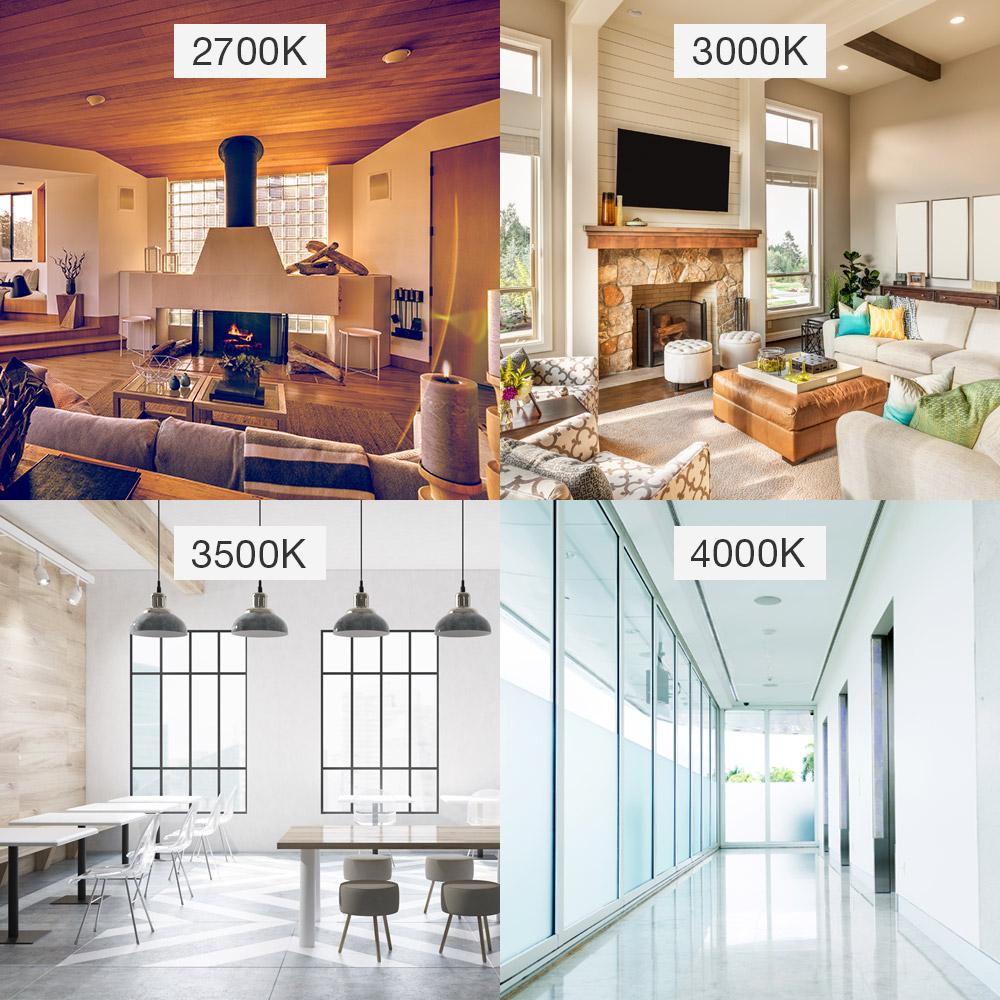
Objects change color as they are heated. They start off glowing a dull red and turn brighter as they get hotter. They progress from red to orange then white and finally blue. The temperature, measured in Kelvin (K) degrees, at which the object changes color is the basis for representation of a light’s color temperature.

A light’s correlated color temperature (CCT) is a more accurate expression of its color tones than simply warm, neutral or cool. Like the color of the glowing hot objects, the lower the temperature value, the warmer the light appears. Lights with a CCT less than 2700K appear warm and reddish while CCT levels of 5000K or more are cool and bluish. Color temperatures in between those values are generally neutral in color.

Which looks best?

While choosing a CCT is ultimately subjective, some CCT values traditionally pair better with certain applications and environments.

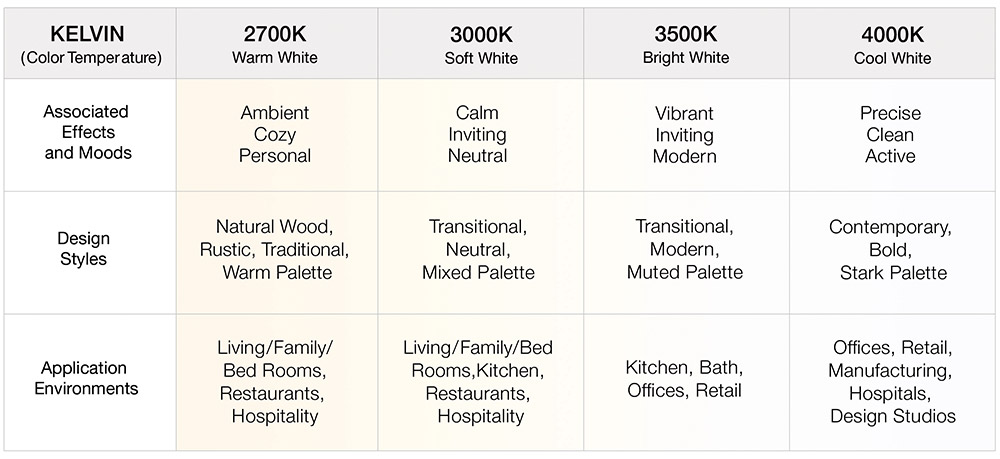
Lower CCT lights promote a relaxed and inviting ambiance, making them ideal for most living rooms and bedrooms. In addition, warm lights also pair well with classic, wooden designs. On the other hand, cool lights are often utilized in offices and hospitals as they are well suited for productivity. They also match well with modern, white aesthetics.

“Selecting the right color temperature can dramatically enhance the feeling and utility of your space.”


DMF Lighting color temperatures

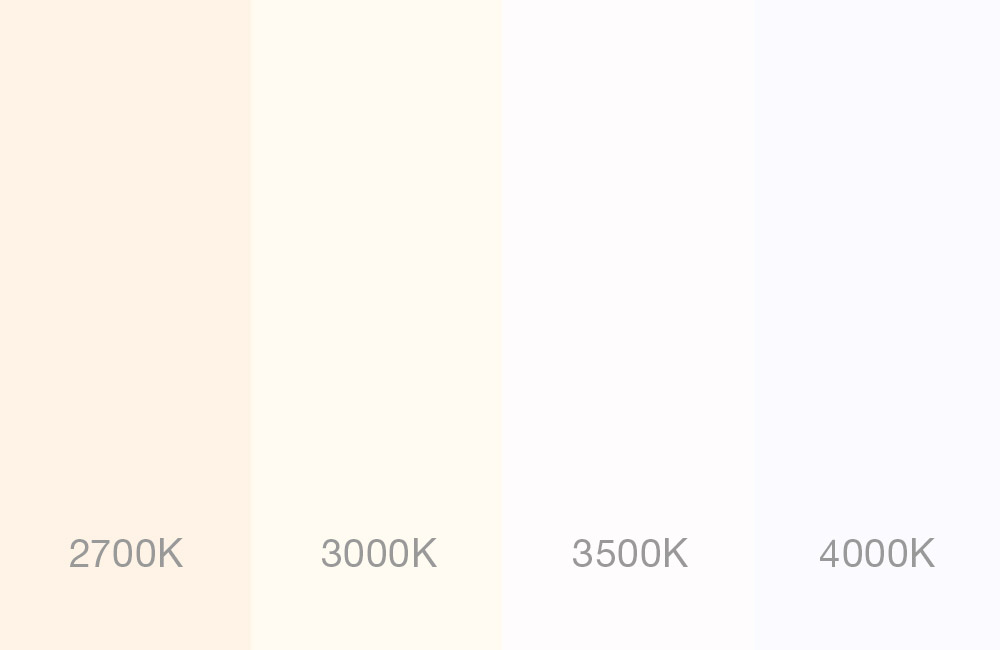
Nearly all DMF Lighting light modules are offered in four color temperatures: 2700K, 3000K, 3500K or 4000K. They appear mostly neutral, with some warm tones for the lower values, and are the four most popular color temperatures so you can feel confident in your color temperature selection.

To learn more about CCT and how it can affect your project, contact the DMF Lighting team at info@dmflighting.com.

Follow us on Facebook and Instagram to stay up to date with everything that’s happening at DMF Lighting.
 

September 17, 2018

With an intelligent design that makes it simple to install, maintain or replace, the innovative DRD2 revolutionized downlighting. It’s a design and concept others are still trying to replicate today.

The New Benchmark

When developing the DRD2, DMF engineers looked to create a compact LED downlight that could produce exceptional light at a price point unmatched in the industry. We sought to make it amazingly simple to install, maintain or replace. And that’s exactly what we accomplished.

DRD2 introduced a host of innovations to the downlighting industry. Its Twist & lock feature allowed for tool-free installations and seamless integration with multiple trim options. Combine that with an integrated driver for plug-and-play compatibility and it made installations simpler than ever. All while taking up far less space and using much less energy. It’s an LED module that’s perfectly balanced to give you everything you need.

Next level

The combination of exceptional lighting, flexible compatibility, and industry-leading value made the DRD2 our most successful product. But we didn’t stop there. Along the way, we upgraded the Cree® LED chip, further increasing its already stellar efficiency. Then, we introduced the Apex Series DRD2X, an architectural-grade version with enhanced optics for a precise, targeted beam of low glare illumination. And most recently, we leveraged our experience from engineering DRD2 to develop the adjustable DRD4 LED, which can install in our award winning OneFrame®, just like DRD2.

“At DMF, we believe in creating quality products by consistently investing in our innovation.”


Ahead of the Curve

As others try to catch up to DRD2, DMF is already hard at work developing future iterations and new related products. Our company’s products and culture both take shape in our in-house R&D lab. It’s our goal to always deliver exceptional performance and we cannot wait to unveil what’s next for DRD2.

Learn more about the DRD2

Follow us on Facebook, Instagram and Twitter to stay up to date with everything that’s happening at DMF Lighting.
 

August 28, 2018

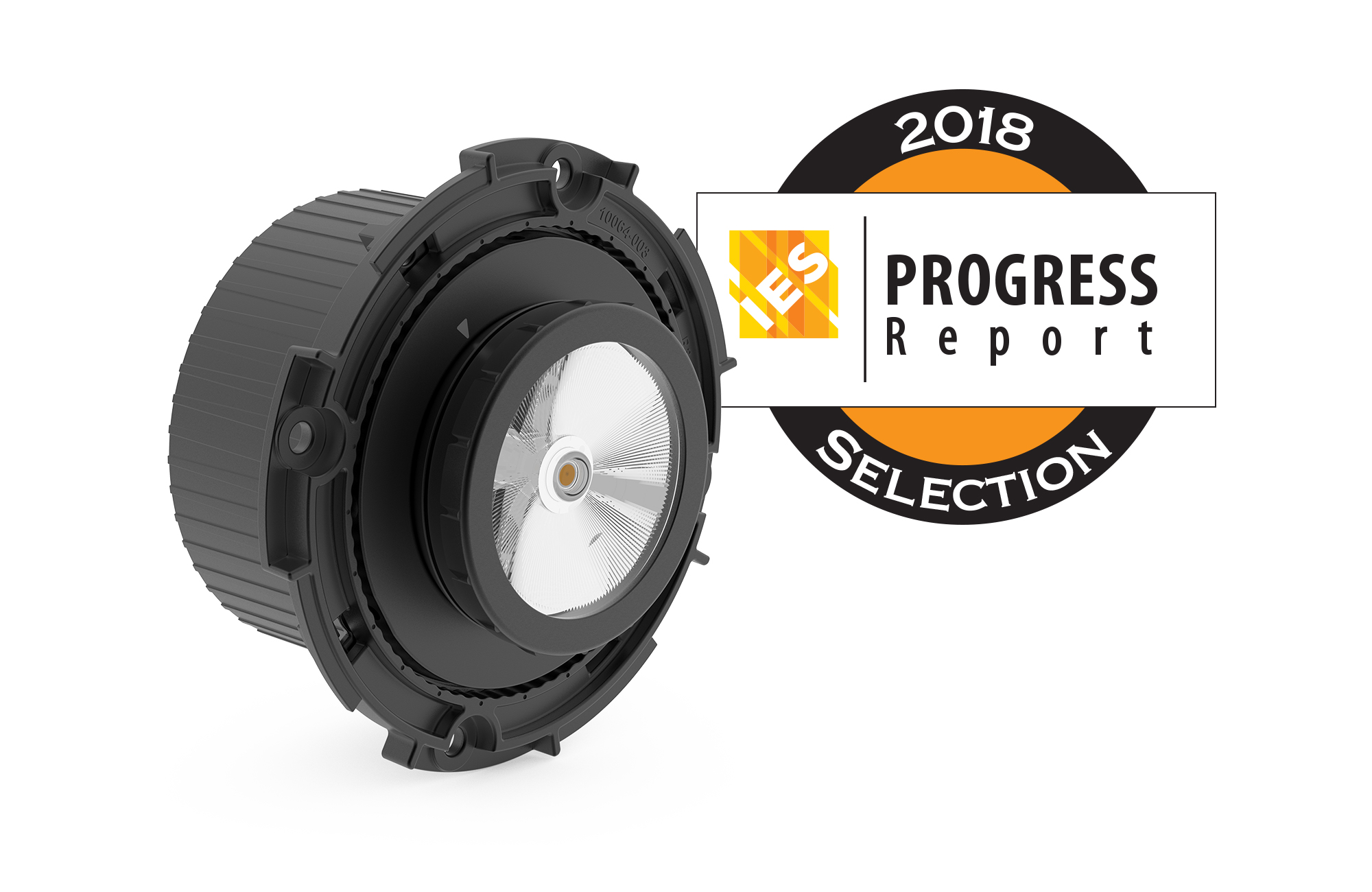
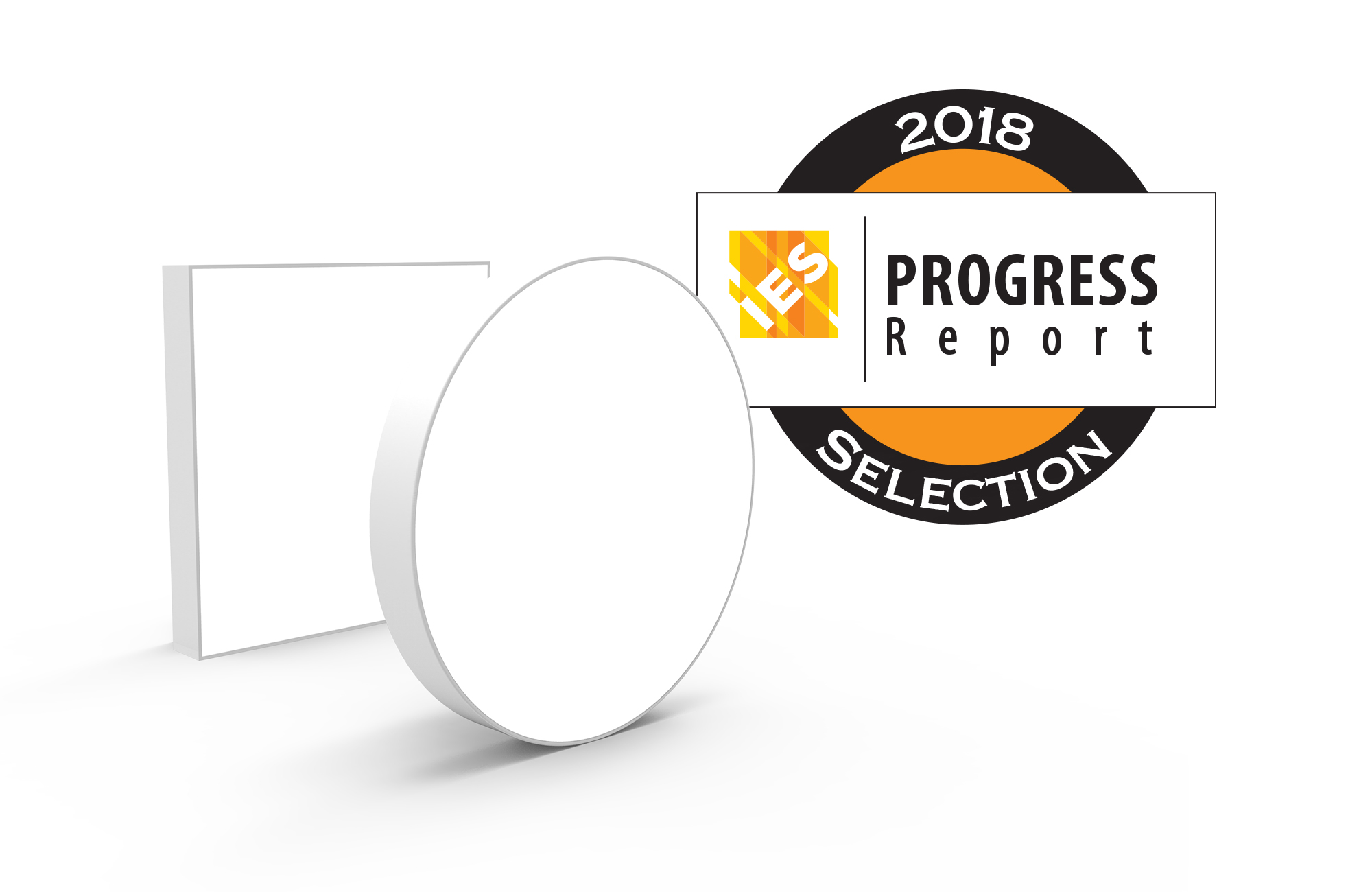
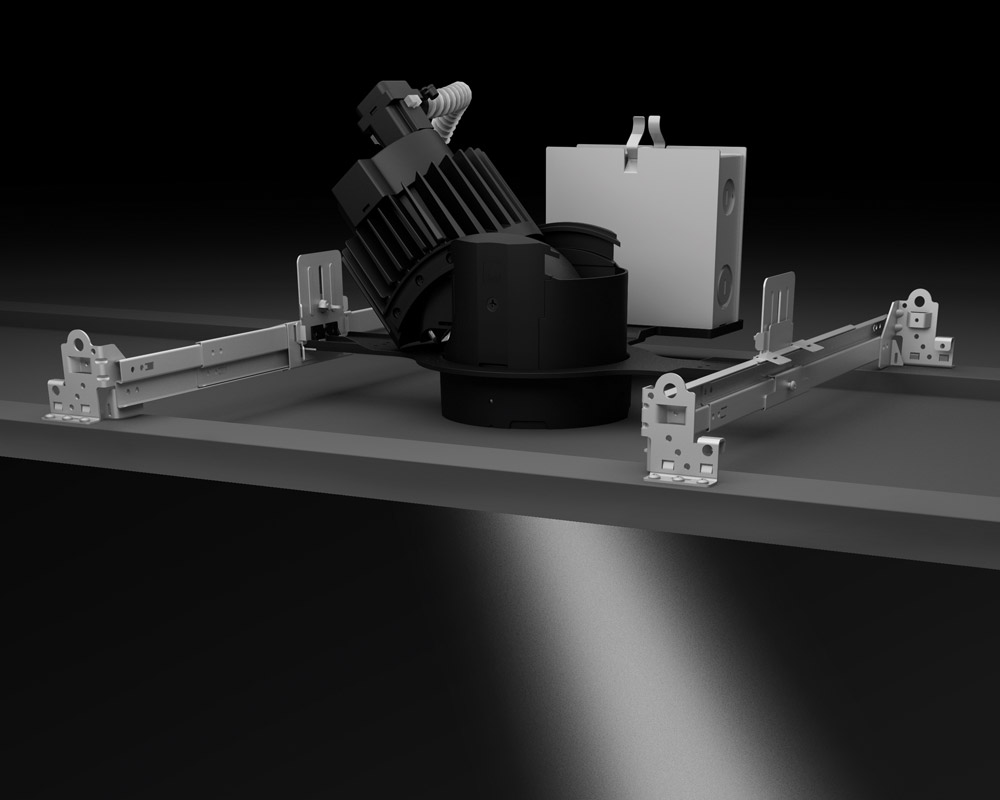
For the third year in a row, the Illuminated Engineering Society (IES) names a DMF Lighting product to the annual Progress Report. And to make this year even more exciting, DMF has two products listed! The DRD4 Adjustable LED is recognized for its precise illumination and range of adjustability while DRD5S Surface Mount LED is included for its advanced design and beautiful light quality.

IES Progress Report

IES is the technical and educational authority on illumination. For over 100 years, it has communicated information on all aspects of good lighting practice to the lighting community. Each year, it publishes the IES Progress Report to acknowledge significant new advancements in lighting products, research, publications and design tools.

DRD4 Adjustable Recessed LED Downlight

The adjustable DRD4 brings ultimate flexibility to the OneFrame System. With an integrated driver, 20º, 30º, and 40º beam options, and field changeable accessories, the DRD4 delivers tool-free aimed and lockable light beams for today’s lighting designs.

DRD5S Surface Mount LED Downlight

The DRD5S redefines what’s possible for a surface mount downlight. Packed with technical breakthroughs, the ultra-thin DRD5S matches the elegance of a high-end recessed downlight. In addition, it’s more versatile because it can fit more applications, even those with limited plenum space.

Past DMF Award Winning Products

DRD5S Surface Mount
Architectural SSL Product Innovation Award

OneFrame System
Architectural SSL Product Innovation Award

OneFrame Deep Junction Box
– LFI Technical Innovation Award
Architectural SSL Product Innovation Award
– IES Progress Report

OneFrame Deep Junction Box w/ Alt Dimming and/or EM Lighting
– IES Progress Report

August 23, 2018

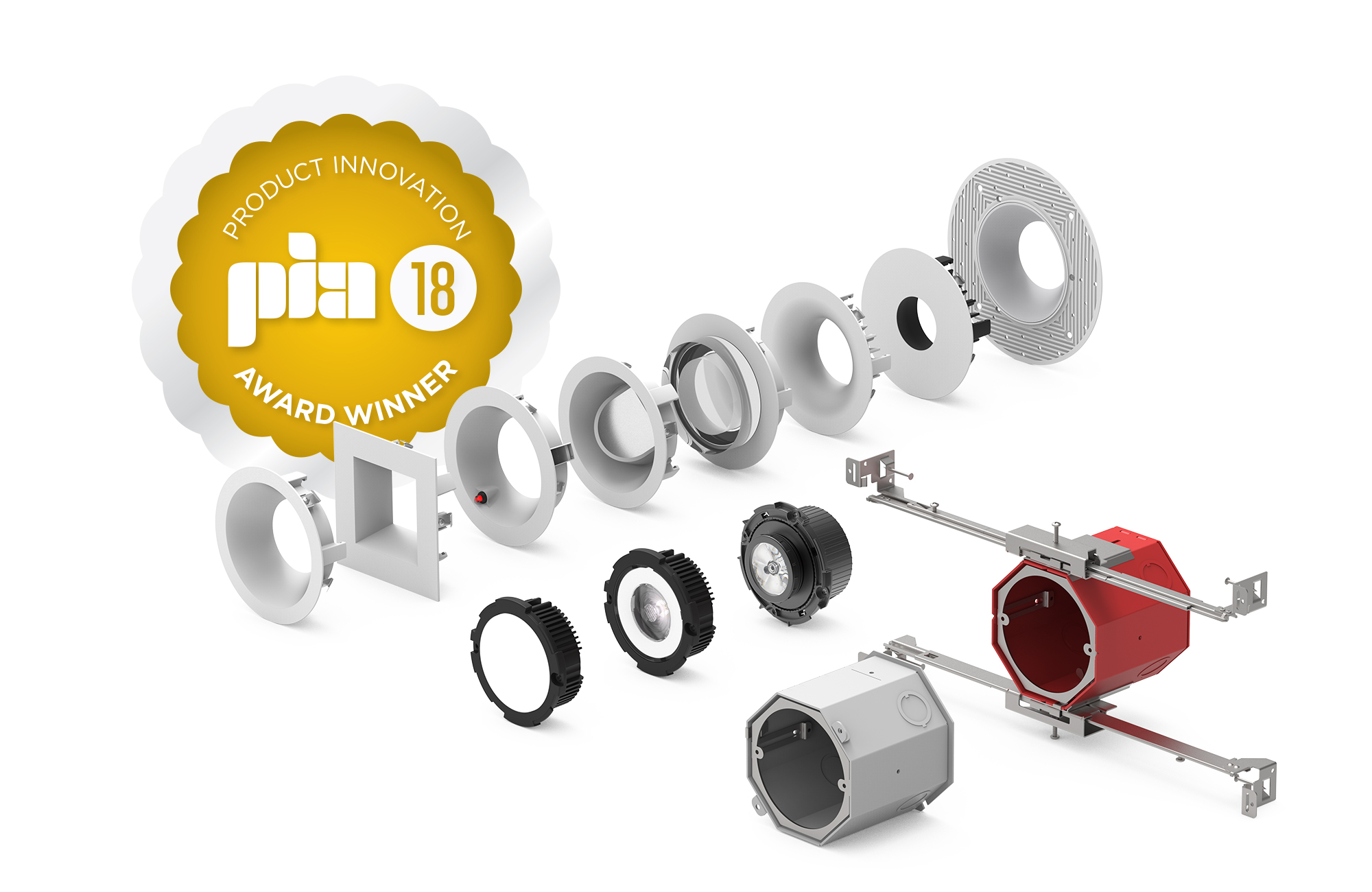
It’s officially award season and DMF is racking up the accolades! Architectural SSL magazine has named both the OneFrame® System and DRD5S winners of 2018 Product Innovation Awards (PIA) in the downlights category. Honoring the most advanced LED fixtures, the OneFrame System was recognized for its innovate modularity and host of options. As for DRD5S, the publication was impressed by its attractive design and beautiful light quality.

Product Innovation Awards

Open to manufacturers of solid-state fixtures and components worldwide, the PIA awards recognize the most innovative LED and solid-state luminaires and fixtures on the market.

The Architectural SSL Product Innovation Awards reveal the criteria and characteristics of the technology that matters. One of the barriers hindering adoption of LED products is an uncertainty about the quality of products. Ultimately, the award winners represent a peer-recognized selection of quality products that the architectural and lighting design community can feel comfortable specifying.
OneFrame System

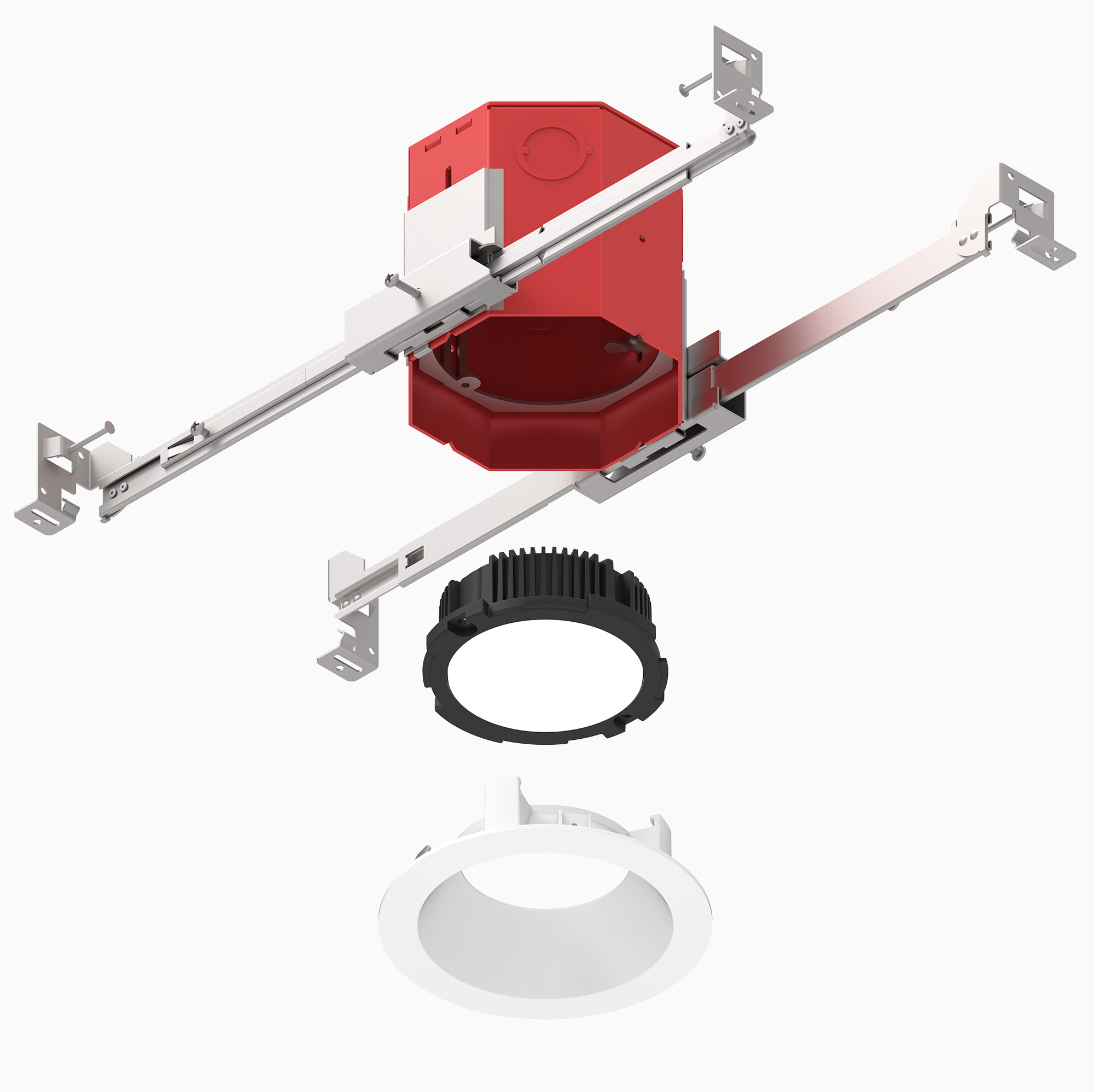
The OneFrame System represents the culmination of decades of engineering experience. We’ve made every element of this system to work seamlessly with the others. Each part is rigorously tested to ensure it’s built to last and performs up to our high standards. Most importantly, the OneFrame System creates a better experience for specifiers, building residents, and everyone in between.
DRD5S Surface Mount LED Downlight

The DRD5S redefines what’s possible for a surface mount downlight. Packed with technical breakthroughs, the ultra-thin DRD5S matches the elegance of a high-end recessed downlight. In addition, it’s more versatile because it can fit more applications, even those with limited plenum space.

Past DMF Award Winning Products

OneFrame Deep Junction Box
– LFI Technical Innovation Award
Architectural SSL Product Innovation Award
– IES Progress Report

OneFrame Deep Junction Box w/ Alt Dimming and/or EM Lighting
– IES Progress Report