June 14, 2021

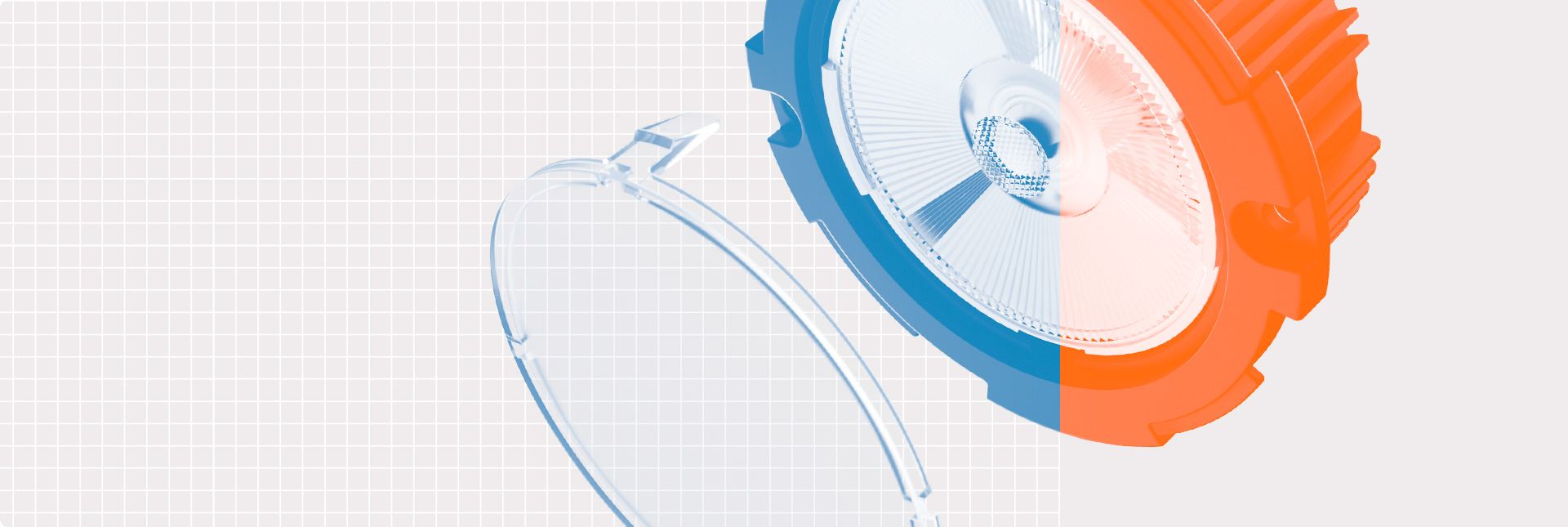
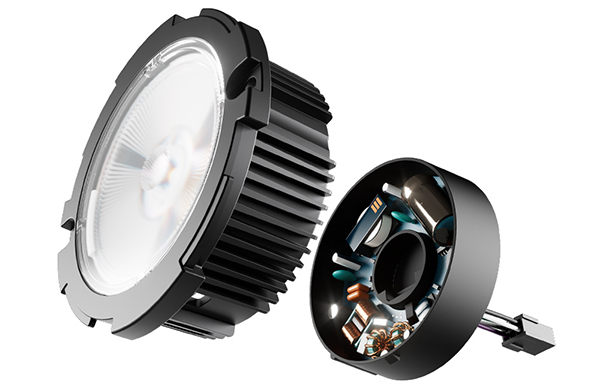
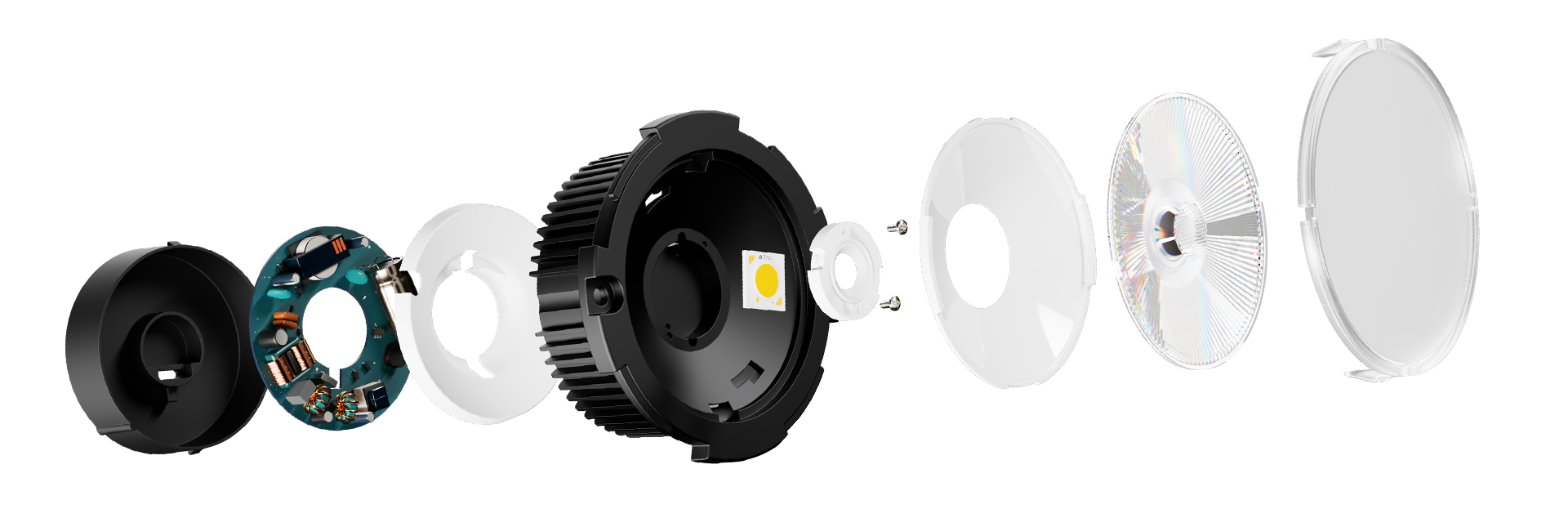
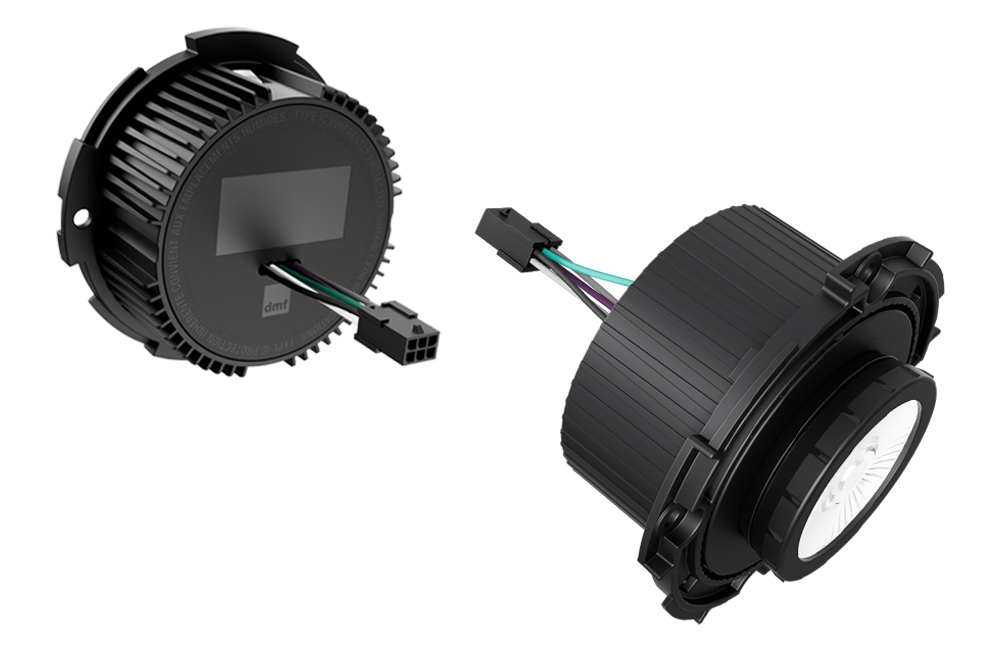
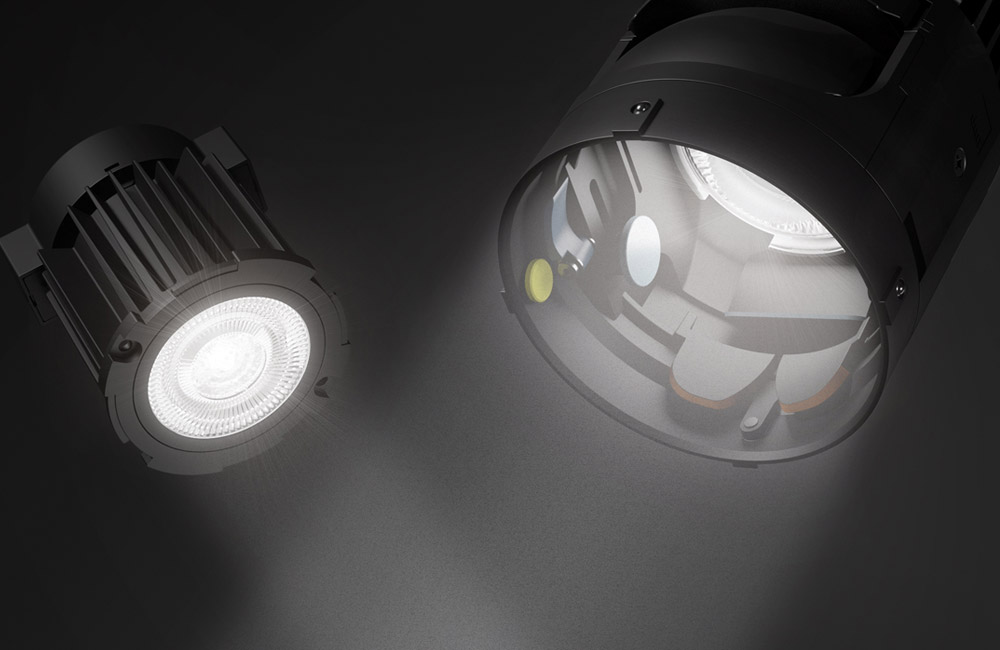
Engineered in-house specifically for the next generation DRD Series, our O1 Driver provides the DRD downlights with smooth, flicker-free 0-10V dimming, fully integrated into the LED module. This high-performance solution in a compact form factor simplifies design, installation, and maintenance.


Things Change

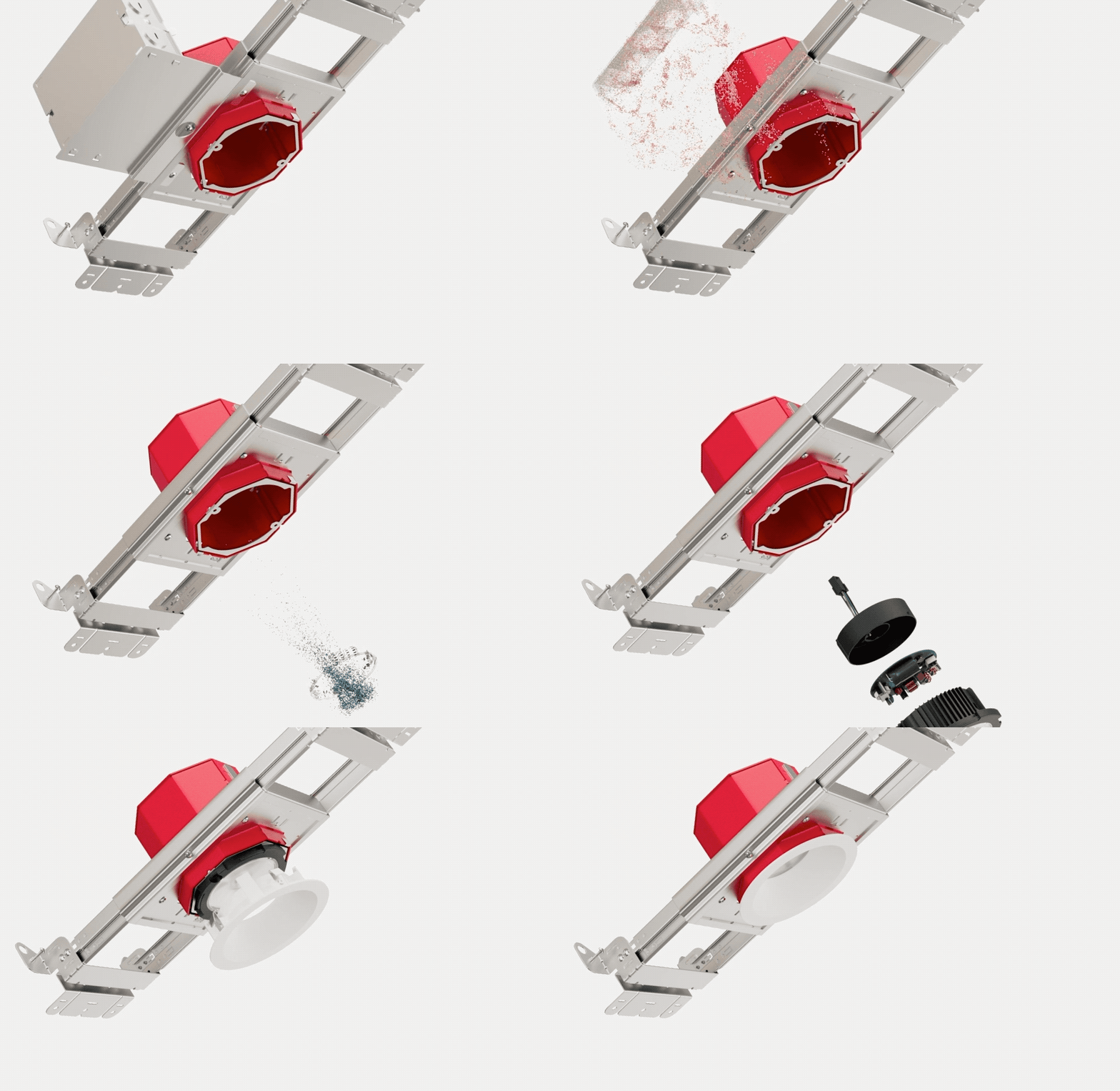
Projects change and evolve at every stage. Traditionally, the light fixture’s 0-10V driver sits on a shelf on the housing. With other manufacturers, once housings are installed, lumen package and dimming protocol are locked in. Ripping open the ceiling and completely replacing the fixture may be required to make design changes.

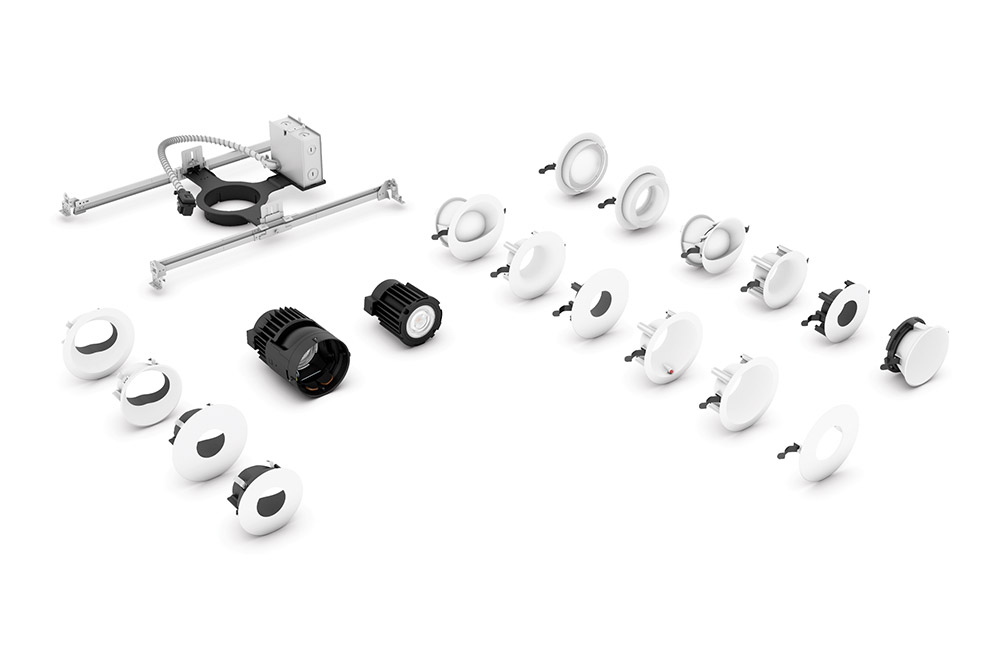
Our DRD modules, with either the integrated O1 0-10V or T2 triac/ELV driver, make change orders a breeze. Because the driver lives inside the module’s heat sink, and is not remotely mounted, all changes can be done from below the ceiling plane. Install either our round OneFrame or SquareFrame housing at rough-in, and determine your dimming protocol, lumen package and beam angles later.


Mis-Orders Happen

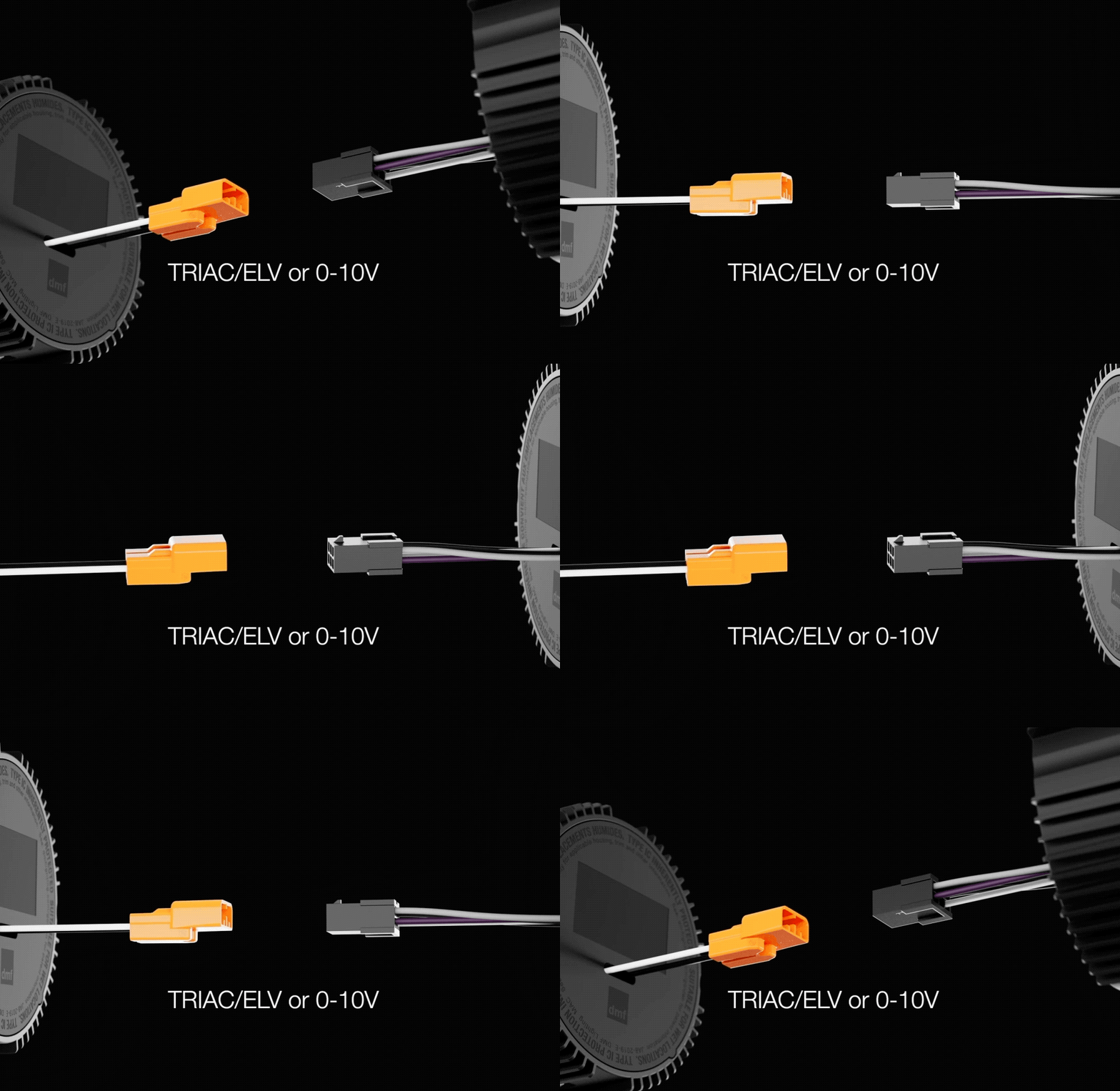
Perhaps TRIAC/ELV was ordered when a 0-10V solution was truly needed. Because the driver is fully integrated into the module, the dimming type and lumen package are not determined by the housing. Swapping between triac/ELV and 0-10V is as simple as changing a light bulb. With quick connects used in both dimming types, this solution truly is plug and play.

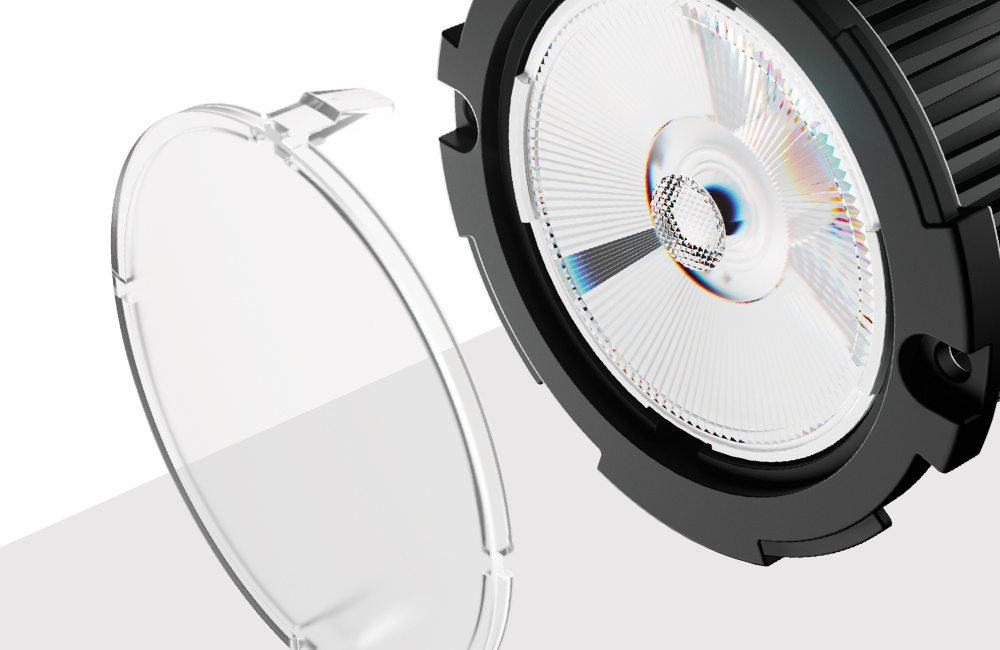
Once installed, any maintenance to the driver or the fixture is done from below the ceiling plane. No need to rip open the ceiling, fish for the driver, replace the complete fixture, patch or paint. If the fixture needs to be replaced, simply twist and unlock the trim, unscrew two Philips Head screws, unplug the module and make the swap.

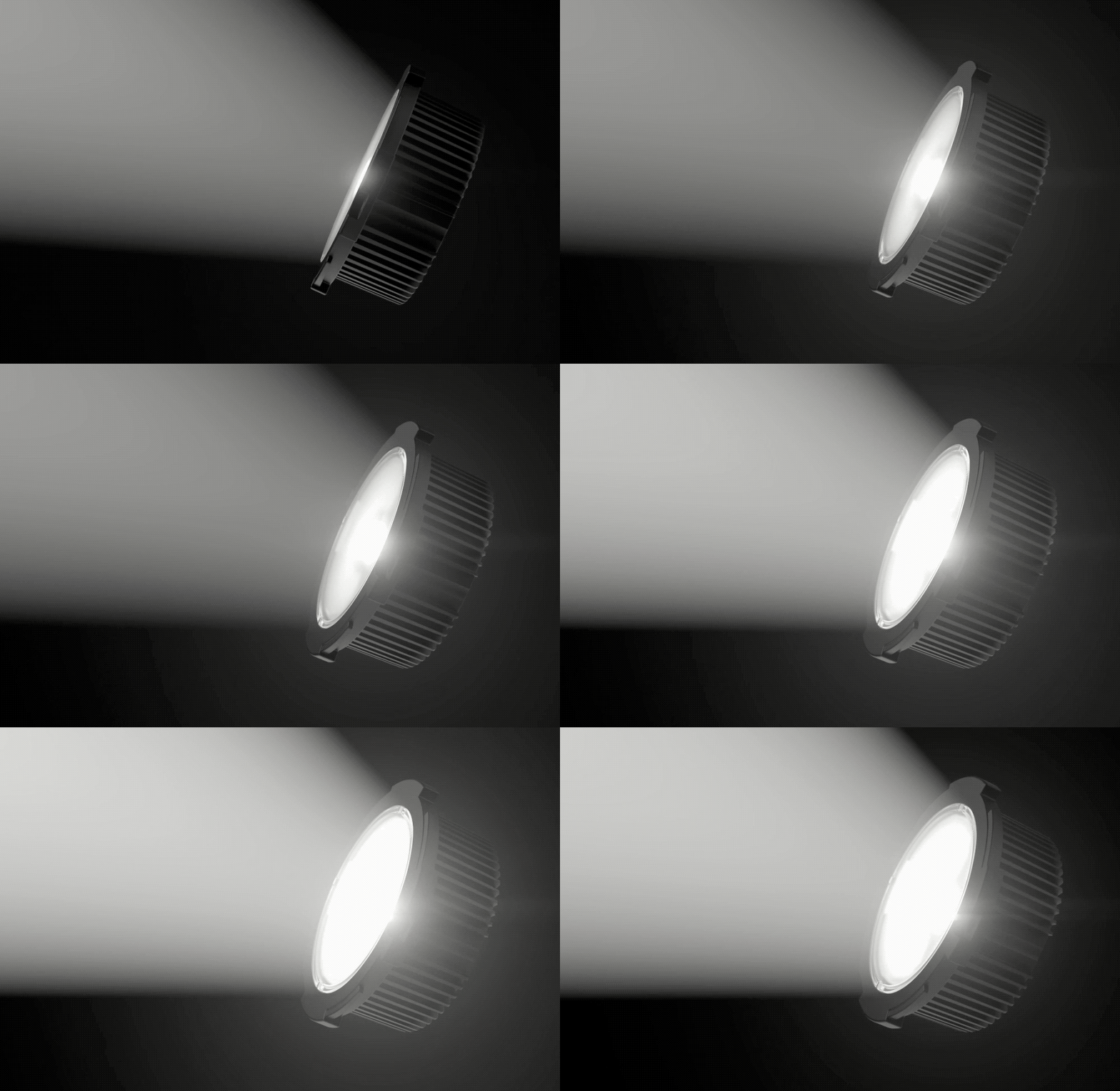
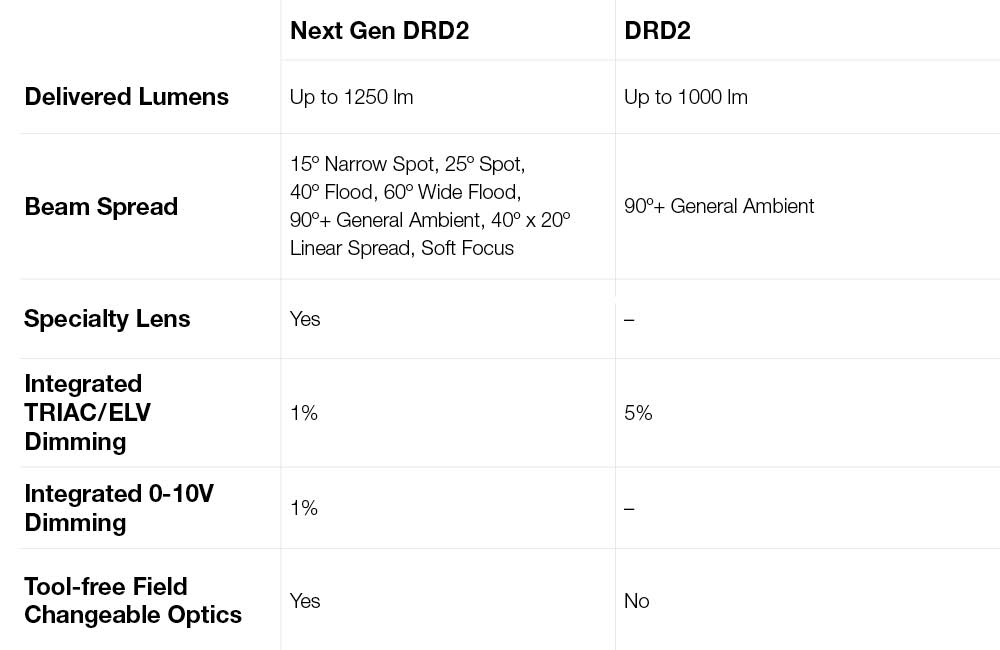
The DRD Series covers 98% of downlight use cases in one product family with either the O1 0-10V  or T2 triac/ELV driver, fixed or adjustable module, tool-free field-changeable beam angles from 15° to 90°+ and 750, 1000 or 1250 lumen options.

No matter the project stage, the modularity of the next generation DRD Series and DMF designed integrated drivers simplifies specification, installation and maintenance.

The O1 and T2 Drivers are available in our next generation DRD2 Fixed and DRD4 Adjustable Downlights.

Learn more about the DRD Series.

– – – – – – – –

Connect on LinkedInInstagramFacebook, or Twitter to stay up to date with everything that’s happening at DMF Lighting.
 

June 7, 2021

We’ve stayed up for hours, so you don’t have to

The next generation DRD Series is engineered for ultimate flexibility. Write fixture schedules with ease using a single housing. This versatile solution can keep up with the fast-paced and ever-changing nature of your projects.

A single family can support 98% of downlighting use cases.

  • Fixed, adjustable, or wall wash downlighting
  • 750 to 1250 lumen output
  • Field-changeable beam angles from 15 to 90+ degrees
  • Integrated 1% dimming with TRIAC/ELV or 0-10V
  • A range of color temperatures including Warm Dim

Learn more about the DRD Series

– – – – – – – –

Connect on LinkedInInstagramFacebook, or Twitter to stay up to date with everything that’s happening at DMF Lighting.
January 8, 2021

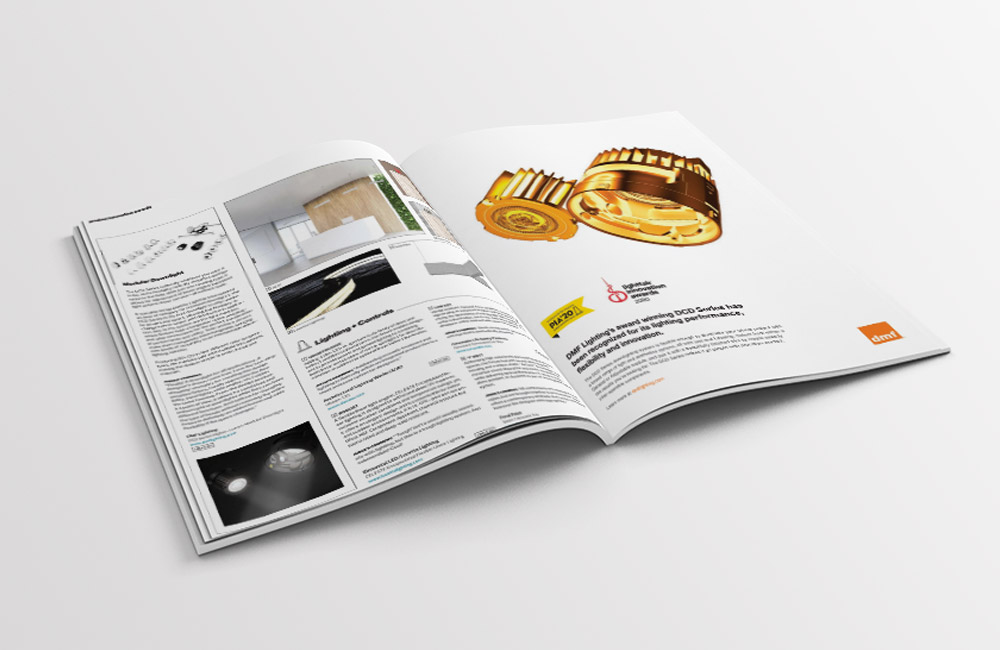
2020 PIA Award Winner

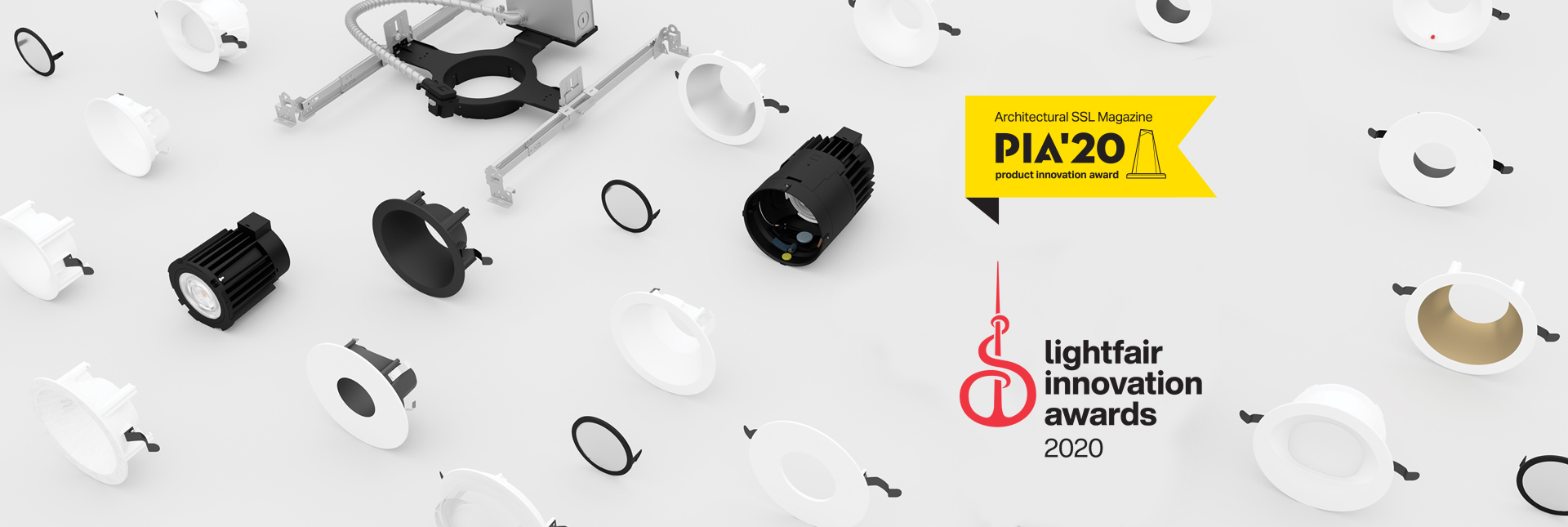
The DCD Series follows up its 2020 LFI Innovation Award with another prestigious accolade, a 2020 Product Innovation Award.

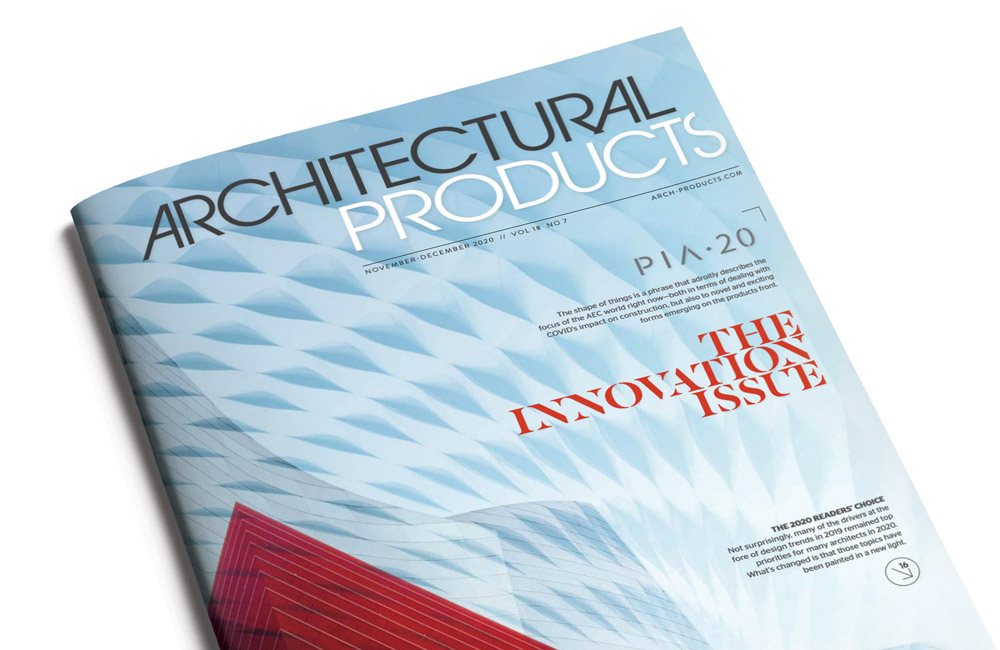
Now in their tenth year, the PIA celebrates the latest advancements and achievements in lighting. Presented by Architectural SSL, the judging panel recognized the DCD Series in the Downlight category, praising how it simplifies the installation process with its breadth of modular features.


JUDGES’ COMMENT:
“Finally! A downlight for all applications. A designer’s dream come true. Love the ‘one-stop shopping’ mentality for creating this design sensitive fixture. I really appreciate the flexibility, (spot lights, wide angles, etc.) within the same housing. From the design aesthetics point of view, it allows for consistent and uniform grid of downlights while they can have different functions. And options for changing the type of heads without removing the entire fixture is definitely an added bonus and adds flexibility if the space changes.”

Modular Downlight

The DCD Series downlighting system is flexible enough to illuminate your whole project with a broad range of light and aesthetics options, all with just one housing. Select from either a General or Adjustable module, and pair it with a beautifully finished trim to create exactly the results you’re looking for. The DCD Series makes it all simple with precision-crafted, inter-operable components.

The DCD Series is literally whatever you want it to be, as its flexibility radically simplifies configuration in the field. With just one housing type, it allows for adjustment of beam angles; increased light output; driver service—all without tools.


Learn more about the award winning DCD Series Higher Lumen Downlight.

Architectural SSL Magazine, November – December 2020


– – – – – – – –

Connect on LinkedInInstagramFacebook, or Twitter to stay up to date with everything that’s happening at DMF Lighting.
November 5, 2020

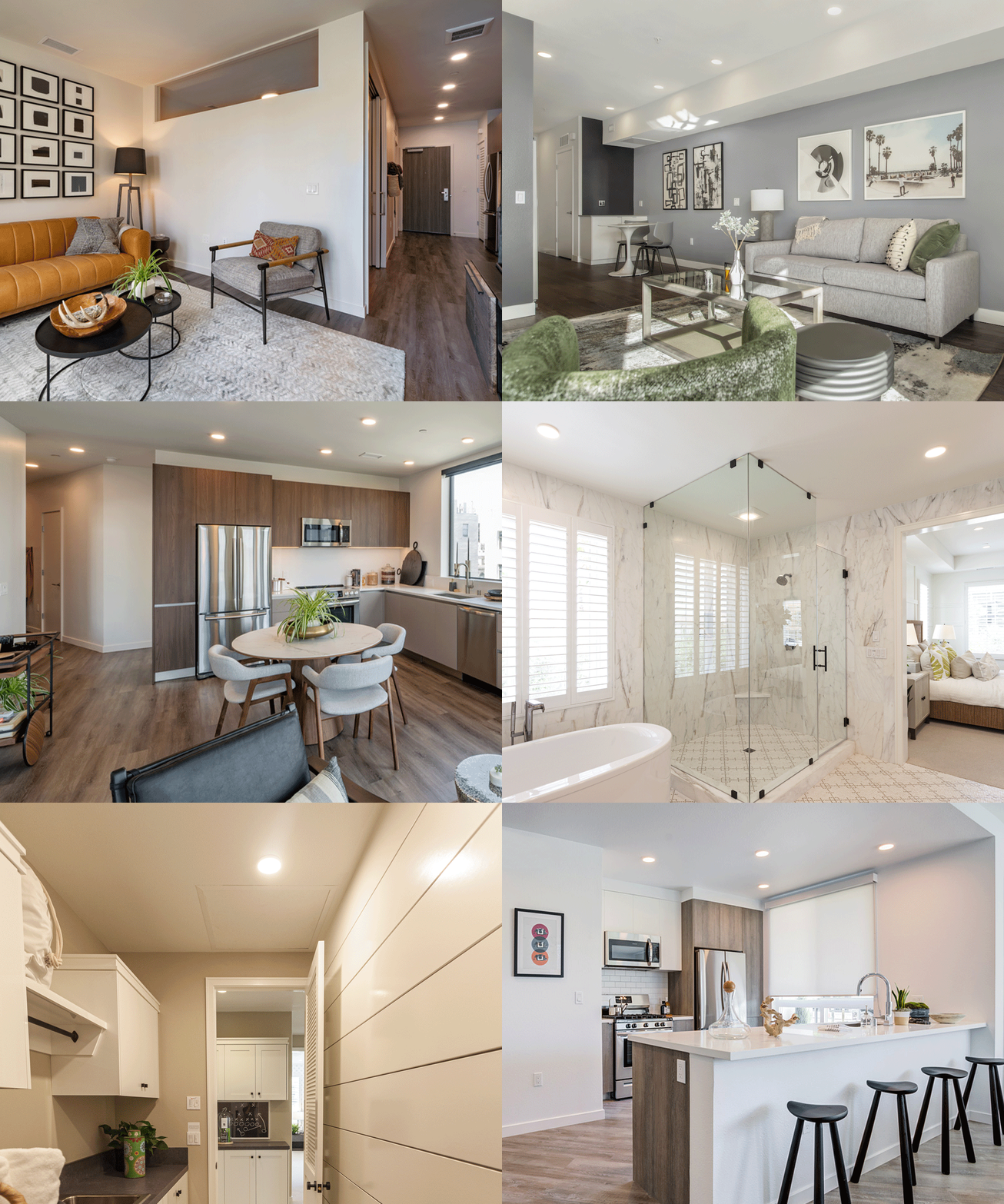
With a bezel-less design, ultra-thin form factor and durable finish, the S Series is striking yet affordable for even the most budget conscious builder. It matches the aesthetic of a high-end recessed downlight while retaining the economy of a surface mount.

But make no mistake, the S Series is not all about looks. It produces class-leading exceptional lighting as well. Here are the top five reasons why the S Series outperforms other surface mount LEDs.


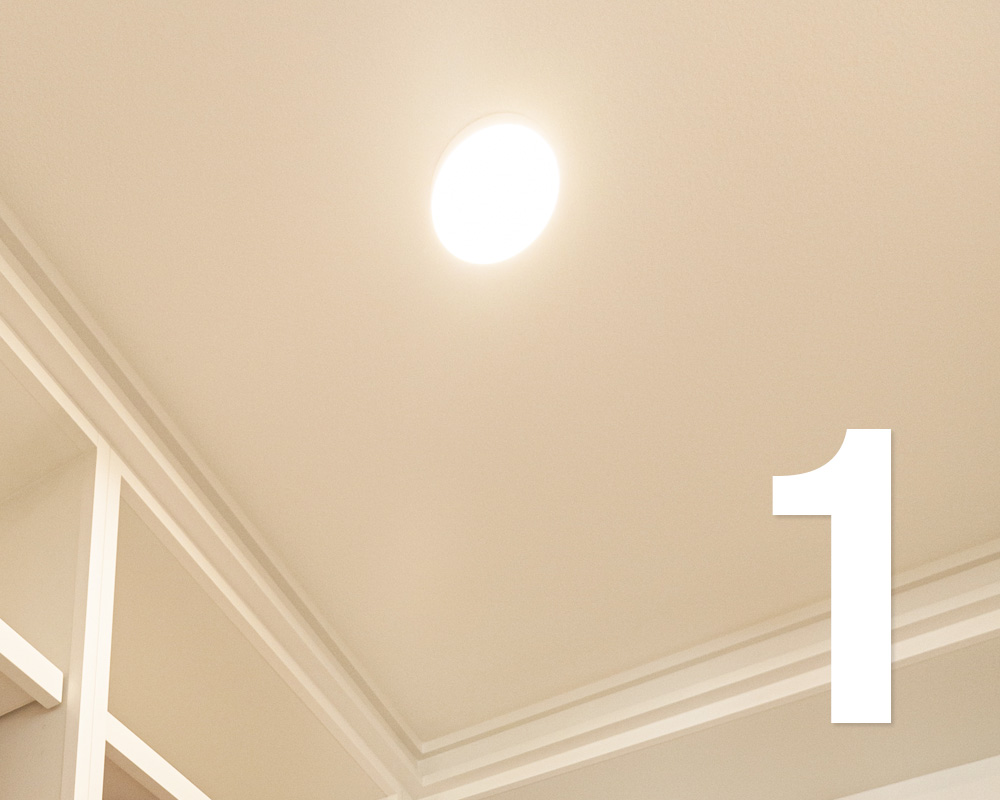
1) Uniform Illumination

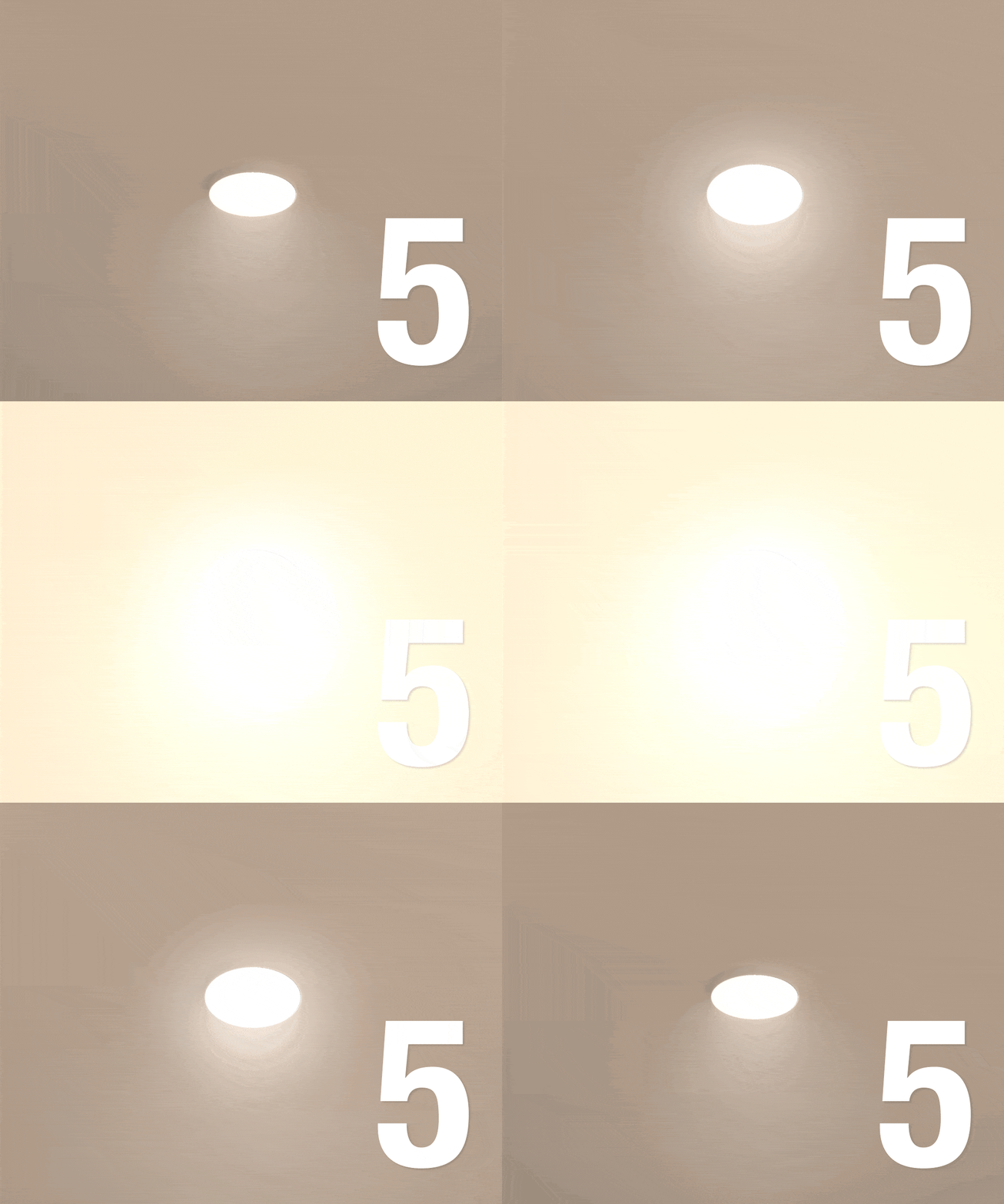
Featuring a precisely optimized array of over 100 LEDs, the backlit S Series delivers smooth, uniform illumination with no visible fasteners. The LEDs are expertly engineered to evenly illuminate the specialized lens edge-to-edge, leaving no hint of hot or dark spots to distract the eye.


2) Reduced Glare

Since the light source is completely visible for all surface mounts, they are susceptible to producing a large amount of glare that detracts from the rest of the room. The S Series combats this with a specialized lens that transmits clear, consistent light with a subtle diffusion to minimize glare even at full light output.


3) Accurate Color Representation

With a 90+ CRI rating, the S Series matches the color rendering capabilities of most premium recessed downlights. This ensures a more accurate color representation so objects don’t appear to be a different shade during day and night.


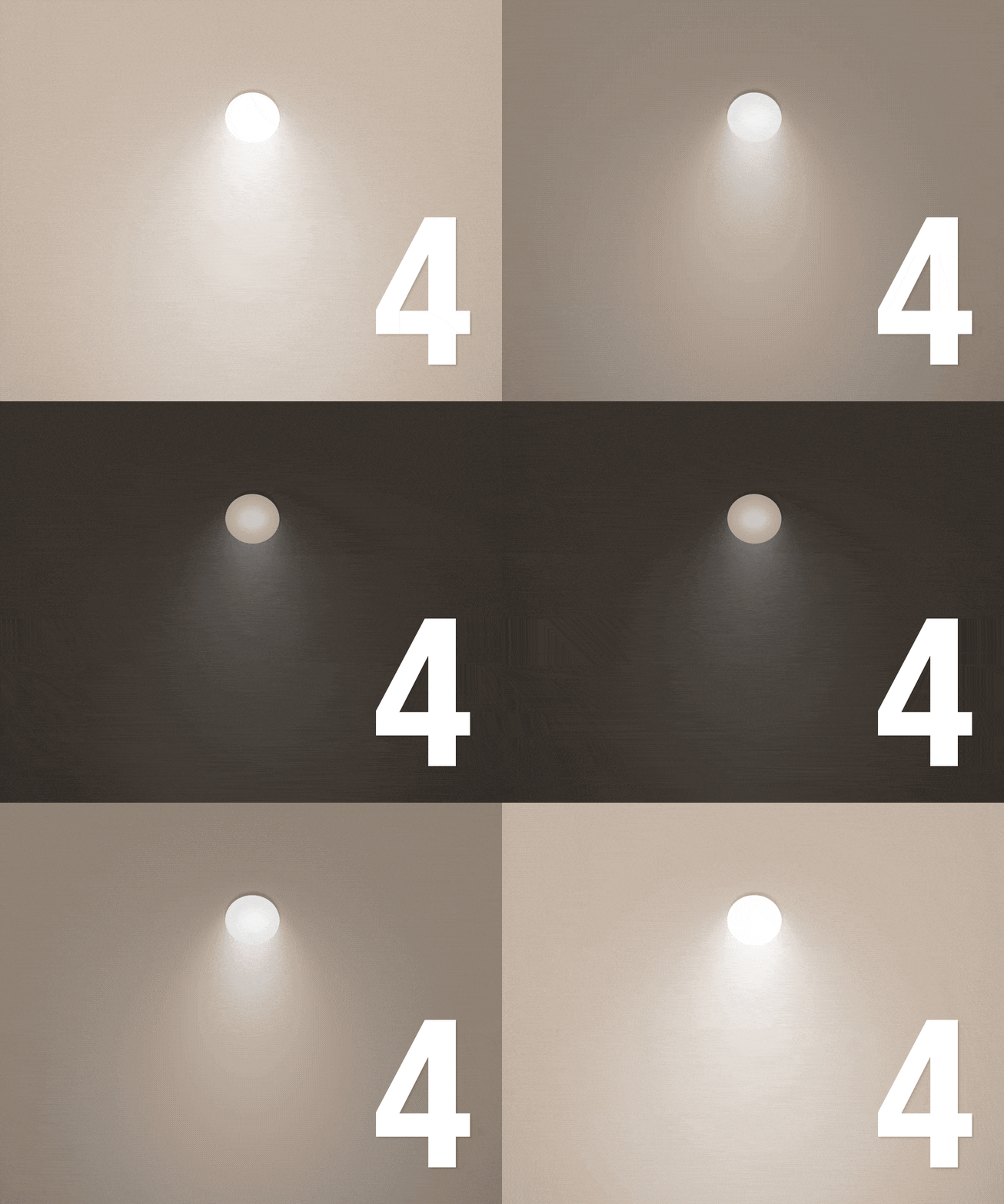
4) Smooth Dimming

Compatible with either TRIAC/ELV or 0-10V dimming controls, the S Series is powered by DMF’s proprietary driver. It provides flicker-free, smooth dimming down to 1% light output.


5) Disappears Into the Ceiling

The primary function of any surface mount is to mimic more expensive recessed fixtures, blending into its surface to create a “quiet ceiling”. While others are close, the S Series excels at this through its combination of glare mitigation, uniform illumination, bezel-less design and slimmest in class design. It’s truly in a class of its own with a disappearing act that leaves the competition behind.


DMF designs products that perform beautifully and are intuitively simple. The S Series epitomizes this, offering incredible lighting capabilities at an unbeatable price point. That’s because we understand that light is more than illumination; light is what makes a space beautiful, useful, and, ultimately, enjoyable.

Learn more about the S Series Surface Mount LED.


_ _ _ _ _ _

Stay up to date with everything that’s happening at DMF:  LinkedInInstagram and + Facebook

October 13, 2020

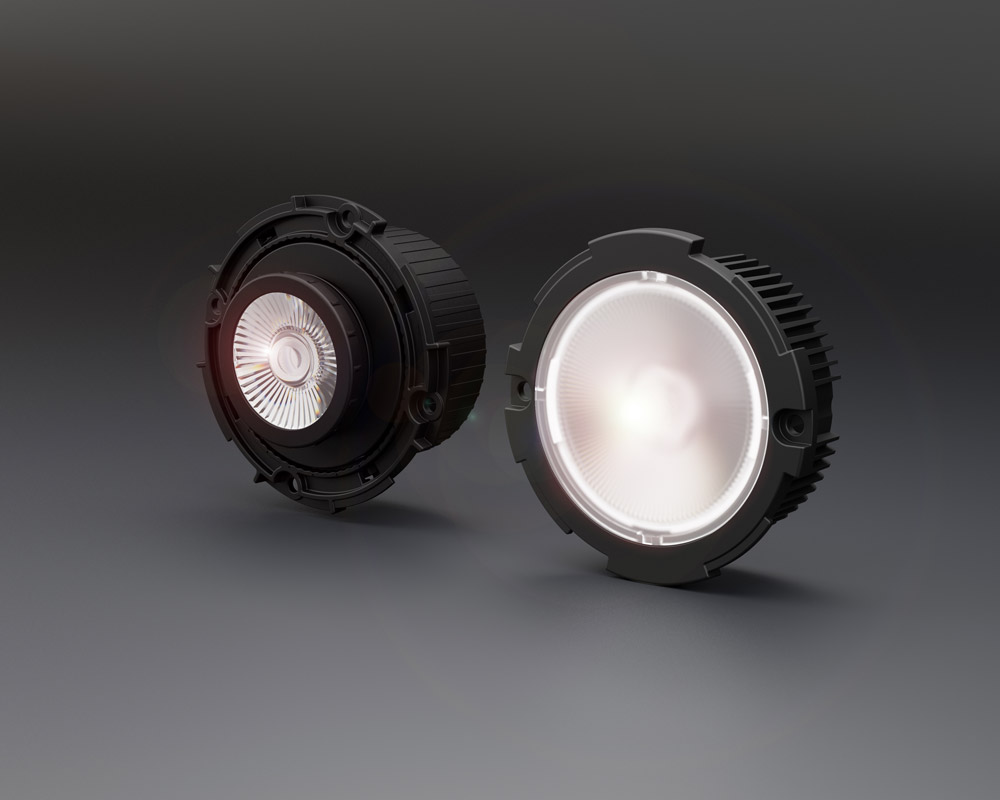
Next up in our continuing series of expert-hosted video training, the recently announced DID Series — the light designed to evolve with your every need.

Available in limited supply this winter, every element of the DID Series is engineered to be interchangeable in the field. Our signature modular design allows the DID to adapt to changing homeowner preferences, future room designs, even retrofits. 

It’s also our best performing fixture ever and designed exclusively for home integrators.

DID Series Training

Go to our training page and use the Custom Webinar form to request a training session.


– – – – – – – –

Connect on LinkedInInstagramFacebook, Twitter or Vimeo to stay up to date with everything that’s happening at DMF Lighting.

August 4, 2020

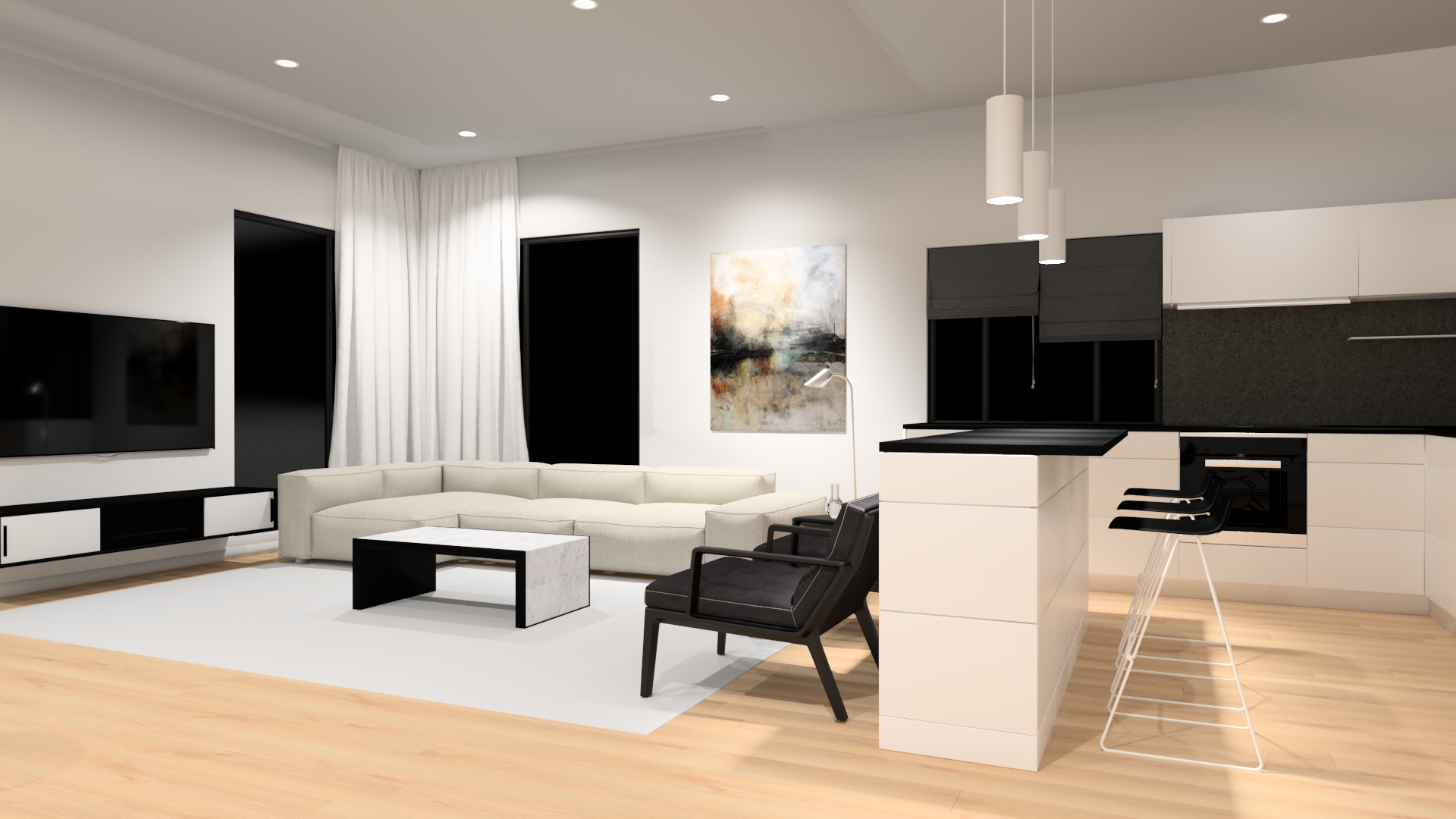
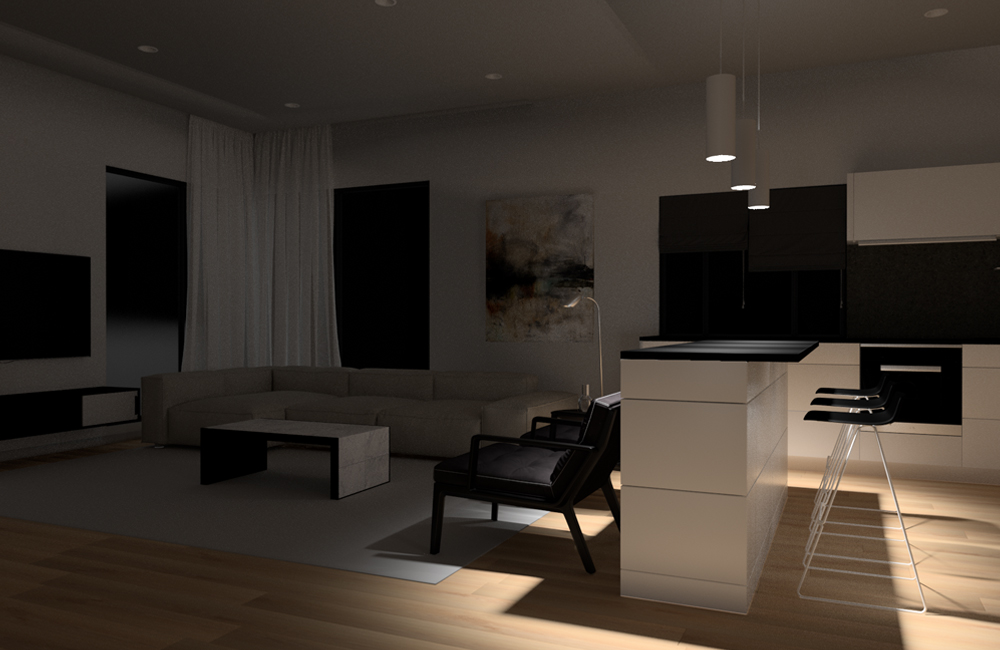
Properly lighting a room requires more than just picking a few bulbs to screw in. Of course, using any general light bulb will sufficiently illuminate an area so you can see. But what if you want to highlight an accent wall? Or need an area to relax or work? That requires lighting design. And today, lighting design lives in three distinct layers: Ambient, Task, and Accent Lighting. All three of which can be achieved using a combination of versatile DMF downlights.

DRD2: Ambient Lighting

Also called General Lighting, the ambient layer provides the illumination required for occupants to see the space in its entirety. Most often, this layer is constructed through recessed downlighting and the DRD2 excels at it. With it’s wide beam angle and shadow-less illumination, the DRD2 makes spaces feel secure and inviting.

DRD2X: Task Lighting

Once the ambient layer sufficiently illuminates the space, use the task layer to enhance function of specific areas. In an office, this might be the desk workspace. In a kitchen, task lighting illuminates cooking surfaces or countertops. This requires a light source with a high center beam candlepower value, like the Apex Series DRD2X. Plus, its controlled optics produce tighter beamer angles, making it a great spotlight over surfaces like work tables.

For higher ceilings, the DCC Cylinder, which suspends from the ceiling, is another option for ensuring the light is focused and makes it to the desired surface.

With both the ambient and task layer in place, any room should be fully functional for its intended purpose. The final layer will take the functional bases of the ambient and task layers and add artistry and style.

DRD4: Accent Lighting

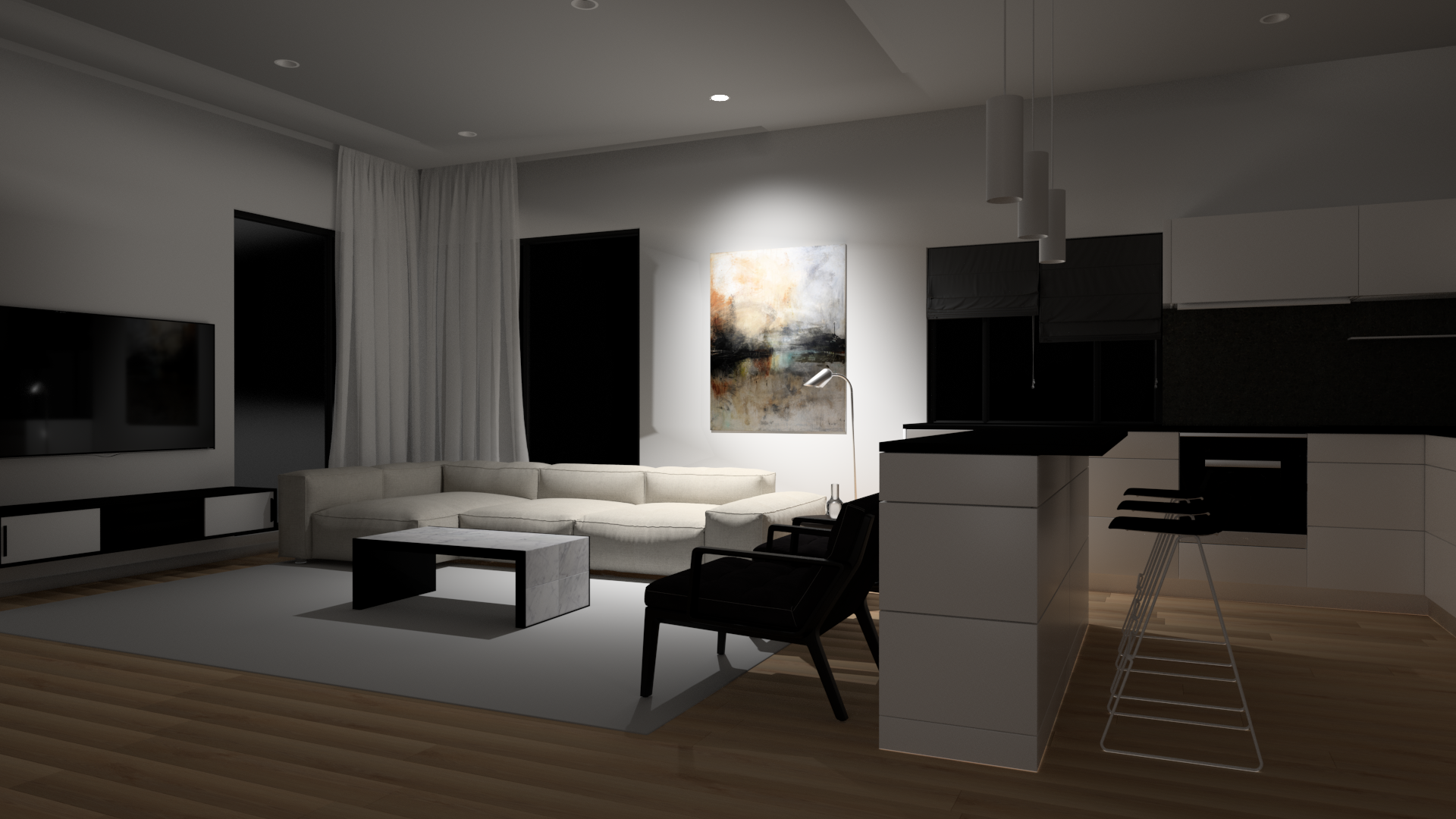
The accent layer adds a decorative finish by complimenting the other two layers and highlighting architectural features like columns, floral arrangements, and wall art. This layer is the most subjective of the three but offers the most opportunity for artistic influence. A great lighting designer can use the accent layer to blend the other two and tie the space together.

The natural fit in this layer is the DRD4 Adjustable Downlight, which pivots smoothly and locks in place to perfectly illuminate the features of the room.

Tying it All Together

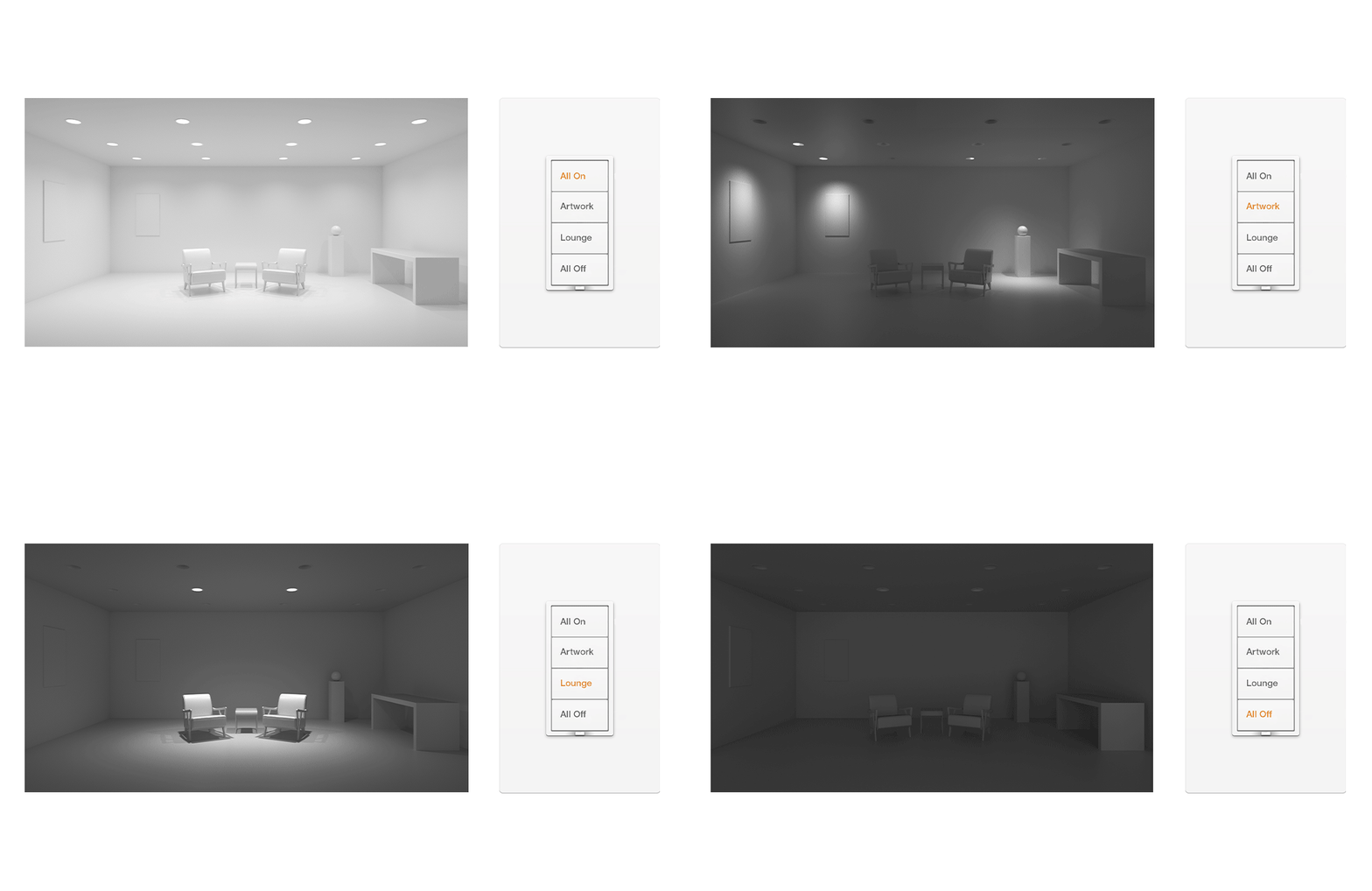
Depending on the usage of the space, a room’s lighting needs may change throughout the day. To achieve this, lighting layers must work in conjunction with each other, but also independently of one another.

Lights off and shades up in the middle of the day. Task lighting at the work station in the late afternoon. Dimmed ambient lighting with contrast accent lighting to relax in the evening. You can automate all these settings with a keypad control, creating different scenes and a room with multiple zones of light at different light levels.

Modular Lighting

Laying out a space with different light sources in different areas to achieve unique lighting effects while interfacing with a specific control system may seem like a daunting proposition, but DMF’s award winning modular systems are up to the task. Compatible with three LED modules, each interchangeable during and after installation, allows your lighting to easily adapt to changing owner preferences and future room redesigns.

Modular lighting reaffirm our commitment to designing products that perform beautifully and are intuitively simple.

Learn more about the benefits of modular lighting.


– – – – – – – –

Connect on LinkedInInstagramFacebook, Twitter or Vimeo to stay up to date with everything that’s happening at DMF Lighting.


June 9, 2020

Recognized for its robust lighting capabilities within a modular system, the DCD Series was named the 2020 Lightfair Innovation Award Category Winner for Recessed Downlights, Wall Washers and Multiples. DMF is proud to have the DCD continue our tradition of designing award winning products and spoke with Amir to learn more about working at DMF and the innovation that went into designing the DCD Series.


Describe what you do here at DMF.
The product development process at DMF has a few different sides to it. One part is the mechanical, another side is electrical, and we have optical systems too. And at the end of the day, all these parts need to come together to become a product. My main task at DMF is really to bring this whole development process together.

So what’s your favorite part of bringing it all together?
The most joyful moment of the product development process comes toward the end. When you have the product in your hand, and you see the iterations from where you started. Once you get to the point of when you can show it to people, show how it performs and behaves in different situations and environments and ultimately, how it’s superior to other products.


What gets you excited about what you do?
During the product development process, what gets you excited on almost a daily basis is when you work on a specific challenge and you start looking at the issues you have on hand. You do these brain storming sessions and then you create prototypes. We’re creating prototypes on a daily basis. The results you can basically see, how step-by-step you’re making it better and better every day. At some point, you make the decision to show it to a broader audience and from that point on, you feel that this unknown challenge you’ve had at the beginning has been solved. That’s what really gets people excited.


Explain what DMF is trying to achieve with their new products.
The way that I see it, DMF is a company that wants to be number one in downlighting. And what that really means is that it doesn’t matter where you start, residential type of construction all the way to commercial, it could be multi-family, every different type of scenario. We want our products to be the number one option people choose. And that can be tricky because a lot of people look at lighting differently. Some people look at the price, some at quality, and some at performance. For us, we try hit all three.  That’s how we want to win in the market, by becoming number one in all three aspects. From quality to how we price the product and ultimately the performance.

What makes DMF products unique in the industry?
How easy and interchangeable and modular our products are. They give different customers different tools. From the contractor to the lighting designer or even the homeowner, people work with our products differently. How easy it is to swap out different products, how easy it is to maintain our products, and how reliable and durable our products are. This is how we make our products unique, and it’s standard across the board in all our products.

Tell us about the engineering team at DMF.
We’re basically a combination of different talents from different industries with multiple different disciplines. We have people from the auto industry, from Aerospace, from the medical industry, and of course lighting. Having all these different backgrounds, experiences, and skill sets really contributes to our product innovation and is unique to DMF.


What drives product development at DMF?
We look to address needs in the market. We normally start the product development process from the perspective of the customers. So you have to do a lot of interviews, talk to people and try to determine where existing products cannot answer their needs. Where do you have issues? Performance? Installation? You have to talk to different groups too. You don’t only focus on the lighting designer and architect. You also go out and talk to the homeowners, the builders, and the contractors. We gather all the pain points from these different groups and design our products to address them.

Is that how the DCD started?
Yes, we discovered that in a commercial application, even though a lot of the planning is done in advanced, there’s always changes. And any changes that occur towards the end of the project are very costly. We set out to design a commercial product that can adapt to those changes. Changing the product had to be easy and the installation had to be forgiving.

“That’s why everything is modular,
simple, and tool-free.”

Once you put it in the ceiling, everything after that point is tool-free. You can swap out modules. Swap out optics. Swap out trims. All by hand. Nearly every piece of this product family is interchangeable.

What were the challenges in achieving that?
Designing a housing that can accommodate both a downlight and adjustable. When you look at other adjustable commercial housings on the market, they have a frame in the ceiling that’s already set for an adjustable. There are a number of structures inside the frame that are needed to hold their adjustable light, so you lose that adaptability.

But not only that, adjustables often have issue with light leakage. That’s why a lot of competitors use a “shoe box” where they put everything in a big box. But the whole system becomes very clunky hard to install. It will interfere with the ceiling insulation, joists, HVAC system.

“We wanted to make sure
everything is minimized and
compacted into a smaller space.”

Combining those requirements of a universal frame and a system that works in a small space were the biggest obstacles. That’s what led us to designing the cold-fused light shield.

Finally, what do you love most about the DCD Series?
It all comes down to performance. We wanted to make sure the DCD is spec grade. There’s a minimum cut off angle you want to hit in order to achieve a quiet ceiling, where you can’t see the light until you are under it. You usually lose a lot of light with this, so it’s important in balancing the recessed depth of the product while at the same time meeting ENERGY STAR efficiency requirements and higher-lumen performance.

We believe we did just that. We were able to basically hit every important aspect you would want from a lighting system in one product.


Learn more about the DCD Series series.


– – – – – – – –

Connect on LinkedInInstagramFacebook, or Twitter to stay up to date with everything that’s happening at DMF Lighting.
April 21, 2020

Whether building a new walk-in closet or renovating an existing storage space, the choice of lights is important. Light fixtures in any small closet can add safety, convenience and even aesthetics. While lighting is not required by the National Electrical Code (NEC), it does contain specific mandates for the types of light fixtures as well as minimum clearance space allowed in closets.

NEC Requirements for Closets and Small Storage Spaces

As outlined in Section 410.16 of the NEC (NFPA 70-2017), luminaries in clothes closets must be:

(1) Surface-mounted or recessed incandescent or LED luminaires with completely enclosed light sources
(2) Surface-mounted or recessed fluorescent luminaires
(3) Surface-mounted fluorescent or LED luminaires identified as suitable for installation within the close storage space

In addition, permitted luminaire types must also meet minimum clearance requirements. Depending on the lighting type, the space between the fixture and closet contents requires up to 12″ of clearance. But what if you don’t have the necessary space?

S Series Surface Mount LED: Closet Ready

Available in Round or Square, the S Series Surface Mount LED is rated for installation within a clothes closet storage space. So no matter the clearance, the 750 lm can be utilized, even in direct contact with closet contents.

This product complies with NEC Section 410.16.A3 and C5.

DMF engineers conduct rigorous thermal testings to ensure the safety of our products. The S Series underwent further third party testing, where it passed the United States UL Closet Rating Test. And like all of our lights, we back the S Series with a five year, 50,000 hour guarantee for even more confidence and peace of mind.

Learn more about the S Series Surface Mount LED


March 25, 2020

DMF is proud to introduce the next evolution in downlighting with its updated DCC series. Including an uplight feature, new shades and trims, and a range of other options, the DCC series is reconfigurable to over one million variations. It centers on a modular system, so it’s exceptionally easy to specify, install and maintain. To learn more about the product and its features, we spoke with the DMF design team.


Walk us through how the new version of the DCC got started.

The first version of the DCC didn’t have much product variation. We did have some options, but it was more functional than aesthetic. So, the project that we are now launching with the shades and the snoot and a shorter version of the trim, that was to diversify the shape and functionality of the fixture.

People wanted functional light that could also be decorative too. So, we figured we have a great platform with the DCC, and we have this twist and lock feature that really gives us the capability to add pretty much whatever we want. How can we use this feature to add more design elements to our fixtures?

That’s where we came up with adding another decorative trim, and some shades to diversify the shape of the cylinder. You can focus light down or you can add different elements to a space from the suspended fixture or surface mounted fixture. We added the snoot because that’s going to help cut down on glare, and a hyperbolic trim, which makes a really cool effect as the light drops off of the surface.


And why did you add the uplight?

We did the uplight because we wanted to be able to add indirect light from our pendant. By adding another light source, you can increase the amount of light in a room as it’s going to be reflected back down to the surface. You are going to get more light back down without any increased glare. So your downlight is still going to be, for example, maybe 600 lumens down, but then your uplight can help you get to maybe 1,000 lumens.


So you see the uplight feature as expanding the applications of the DCC?

Yes. We spoke with a lighting designer and asked where would you put a pendant with an uplight. And he said, “all over the place.” People are focused, now, on more comfortable lighting. People are tired of getting blasted by blue LEDs, and they are much more willing to invest in an indirect light they know is going to make the people in their space much more comfortable. Having efficient light fixtures and more comfortable ways of lighting a space using indirect lighting is definitely the future. So, this uplight was just seeing the demand in the marketplace. Many people offer an uplight, but you don’t see as much diversity with accessories around this type of unit.


What was the goal of the new DCC series in the market?

More options: both in a decorative way, but also in a functional way. It’s making sure that we have not just one point of differentiation, but a number of different points of differentiation that we can provide to our customer base. We wanted to be able to diversify the capabilities within the fixture. It was pretty diverse to begin with, but we wanted to continue to make the DCC as flexible as possible.


Are there specific needs that you tried to meet with this product?

Architects are really keen on what options you have. They want fixtures that are diverse, that are going to highlight the spaces that they’re creating. So, they want something that can basically make the architectural elements look good, and is affordable, is ready to ship immediately, that they can put their trust in, and it’s going to last for five-plus years.

Then, when we get contractors in, they don’t want their guys spending 25 minutes installing a light fixture. The DCC is incredibly easy to install. Maybe four or five minutes tops, and you have your light fixture installed.

People in the hospitality industry come in and their concern is if a light is out in one of the bathrooms, say, in their hotel, they used to take that room out of service. So, by them understanding that it takes five minutes to take out a faulty unit and replace it with a good unit, they don’t have to wait for somebody to ship a new fixture, they don’t have to take out any drywall or anything. They can just replace a single unit within five minutes and they’re not taking a room out of commission for the night or more. This is something that people can stock easily in their maintenance rooms. So, there’s a number of ways to look at this product from a couple different points of view.


Has working with clients in different industries and different points in the chain of use taught you anything?

We always ask what could we do better, or what can we learn from another industry? When we went to the job site of one of the contractors we work with, and we saw how the speakers were installed to the joist on the project. And we thought, we can do that on our stuff. We can learn from other people. We don’t have to do everything the way they do it in lighting. We can take design elements or functional elements from other industries and implement it into what we do to make the installation process, or even the specification process, easier.


How does the customization process work with the DCC fixture?

For a lot of things we build it all custom and to order. So, we have to know how long do we need to make the cord? Do we need to send it out for a custom color sample? Do we need a warm-dim module or do you want just a regular module? Is it an adjustable or is it a downlight? It’s basically building that product and having the customer understand what they’re buying, and then making sure that it’s conveyed to us what they’re buying so when we ship the product, we’ve shipped them what they want and everyone’s going to be happy.

We know we’ve done a good job when we get returning customers. We get success stories a lot, and that comes down to designing products well that are going to work properly at their application. We’ve done all the testing, we’ve done all the qualifications, and there’s not going to be surprises. Sometimes we even do custom jobs for people, or a custom configuration with a certain power supply that they want or certain dimming system they have in their building and they know that we have the resources to do all the necessary testing. There’s a lot of value in that—having that on-hand expertise in-house. Honestly, what people look for is somebody that they can trust and they know they’ve given this project to DMF, and we’ve never let them down.


How is the DCC different from its competitors?

The differentiation comes back to our modular story, and our workhorse of a light engine. Also just the ease of use—how easy is it to change something out if you need to. How easy it is to build the product. We have an incredible support team should something go wrong, and we have product availability. So, if you find that you forgot the lights over the bar, you can call us and we can have it out the door in five days. We have really well-built fixtures that last a long time. The quality that we put into creating the products is a big selling point and why we retain the customers that we have. That kind of goes into the electronics too.


Can you speak more about the light engine?

We build our power supplies custom to the light fixtures that we’re designing. And how long the product lasts is going to come down to how well the electronics are on the inside. How well the driver is built. We build them in-house with our own engineering team, and so this driver is built to the specs of this module.


What are the unique features of the DCC?

The flexibility. That’s what we pushed big time—super flexible, easy to use. Put it anywhere by making a minor change, and it’s still pretty easy to use, especially with the twist-and-lock system. So, its uniqueness would be mechanical but also functionality.


What accomplishment(s) are you most proud of on the DCC?

That we were able to take a very streamlined product, offer more variations that can benefit a space, but also keep our core story the same. You know, modularity, ease of use, ease of configuration. Basically, expanding on something that was already great to make it even better.


How would you describe DMF and its core philosophy?

The ethos of the company is to take something that’s existing and make it better. DMF is taking that to another level with LED: making our own fixtures for universal housings that would perform better than—or similarly, and at a lower cost price point—than the competitor’s.


What makes DMF’s products unique?

We design our products for ease. Everyone finds that the products are really easy to work with—whether it be the specifier, or whether it’s the person doing maintenance. Everything is integrated into the module. So when something has to change, all you have to do is take out the module and the whole unit can be switched out really easily. That’s really good for maintenance, but it’s also good for a lighting designer.

We also focus on design a lot when developing products. The fixture looks good when it’s off, but also when it’s on—the light output is beautiful. The electronics are going to last: it’s not going to overheat, it’s going to meet all the code requirements, and it’s going to function well. It’s going to do everything really well.

Learn more about the DCC Cylinder.


_ _ _ _ _ _

Stay up to date with everything that’s happening at DMF:  LinkedInInstagram and Twitter, Facebook

February 4, 2020

Traditional commercial housings use a big, heavy black box to control light leaks. Measuring as much as 19″ long and 7″ tall, the bulky housings severely limit spacing options for lighting layouts and designs. Heavy boxes are also more costly to ship and more cumbersome during installation.

DMF Lighting revolutionized the commercial industry by decreasing the size and weight of the housing, allowing for more lighting layout options while also making it easier to install.

Smaller is better

Instead of a large box over the entire housing, the Adjustable DCD4 features a module mounted light shield to eliminate light leak. Far smaller and far lighter, the cold-fused shield takes up a fraction of the volume of a traditional can. The smaller size makes it more manageable to handle during installation. The lighter weight means reduced risk of sag.

The smaller size makes installation easier and helps prevent fixture movement below the ceiling.

Sturdy as ever

The DCD Series Housing is not only small, but strong as well. A stable housing makes sure adjustable module movements stay perfect. Specially-engineered, galvanized-steel bar hangers ensure the complete luminaire acts as a perfect single unit.

With a smaller housing that doesn’t sacrifice performance, the DCD Housings install quickly and ensure the aim stays steady.

Learn more about the DCD Series

– – – – – – – –

Connect on LinkedInInstagramFacebook, or Twitter to stay up to date with everything that’s happening at DMF Lighting.